How the Samoyed Smile Prevents Icicles
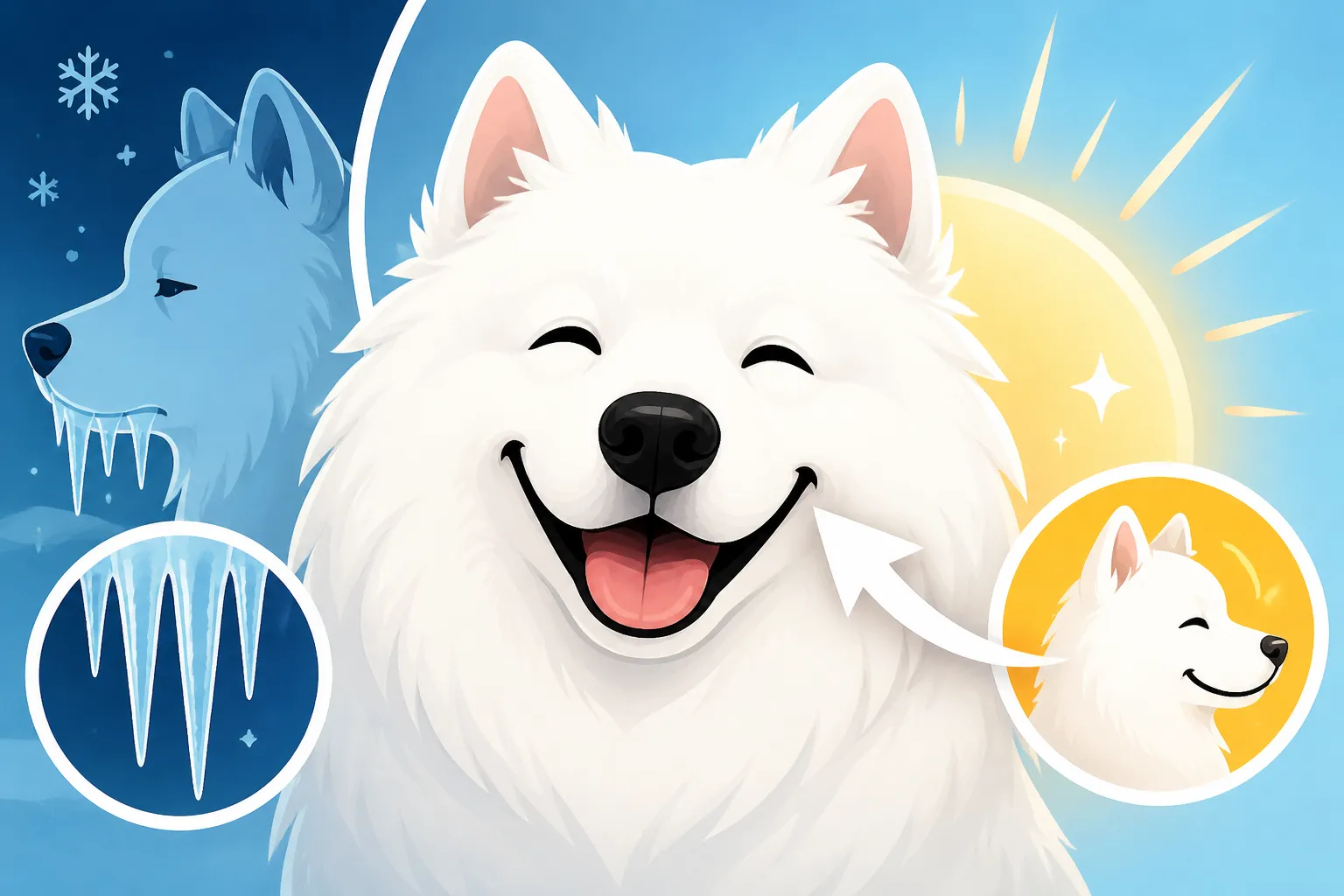
A Samoyed’s curled, upturned mouth is more than the expression behind that famous “smile.” In very cold conditions, the mouth shape may help limit drool that could freeze around the lips and muzzle. It does not make a Samoyed immune to ice, frostbite, or cold-related discomfort, though. Here’s what the smile can—and cannot—do, and how to keep your dog comfortable in winter.
What the Samoyed smile actually is
The shape behind the expression
The Samoyed’s familiar expression comes largely from the shape of its lips and the way the corners of its mouth turn upward. Dark lips often make the outline stand out against the breed’s pale coat, giving the face a cheerful appearance even when the dog is simply resting. The smile is an expression created by anatomy, not proof that a dog is happy at every moment.
That upturned outline is part of the breed’s characteristic look, but it doesn’t mean a Samoyed is holding a fixed grin or deliberately smiling in a human sense. A dog’s comfort and mood are better understood by looking at its whole body: relaxed posture, soft eyes, natural movement, and willingness to engage are more informative than mouth shape alone.
The facial structure is also tied to how the Samoyed’s mouth sits when it is closed. The breed’s lips meet in a way that can reduce visible drooling compared with a dog whose lips hang loosely. To understand how the feature looks and varies, see Why a Samoyed's Mouth Curls Upward and Whether the Samoyed Smile Is Functional.
Why less drool can matter in severe cold
In freezing weather, saliva left on exposed skin or fur can become uncomfortable as it cools and freezes. Ice around the lips may irritate the skin, collect debris, or make a dog reluctant to eat, drink, or move its mouth normally. A mouth that tends to stay relatively neat may leave less wet material around the muzzle to freeze in the first place.
That is the practical idea behind the Samoyed smile’s cold-weather association: the upturned mouth and close-fitting lips may help limit drool around the edges of the mouth. It is a sensible explanation for why the feature could be useful in a cold-climate dog, but it should not be treated as a guarantee that ice will never form. Wet food, snow, drinking water, panting, and the conditions on a particular outing can all leave moisture on the face.
The smile also does not prevent every kind of cold injury. Lips, nose, ears, paws, and other exposed areas still need attention in harsh weather. The breed’s historical cold adaptation is remarkable, but individual dogs vary, and a pet living in a heated home may not be accustomed to prolonged exposure. Why a Samoyed's Upturned Mouth Stops Drool explains the relationship between mouth shape and moisture in more detail.
How the mouth may help prevent icicles
A likely advantage, not a built-in shield
The Samoyed’s mouth shape may reduce the amount of saliva hanging around the lips, which in turn can reduce the opportunity for drool to freeze into small icicles. This is best understood as a possible practical advantage of the anatomy—not a precise mechanism that guarantees a particular result in every climate or dog.
An icicle around a dog’s mouth is more likely when moisture has time to collect and freeze. For example, a Samoyed that has been panting after exercise, drinking outdoors, or nosing through wet snow may have a damp muzzle even if its lips naturally limit drooling. The dog’s environment and activity matter just as much as its breed traits.
It is also easy to mistake snow caught in facial fur for frozen saliva. Snow can cling to the whiskers and hair around the muzzle, then melt and refreeze when temperatures drop. If you notice ice, look gently at where it has formed and whether the surrounding skin seems irritated. Never pull hard at frozen clumps; that can tug painfully on the hair and skin.
What the smile does not protect against
The Samoyed smile does not keep the dog warm by itself. The double coat helps insulate the body, but the face and paws remain exposed. The nose can become dry or irritated, and the ears and feet can be affected by cold, wind, ice, or road salt. A dog that is shivering, lifting its paws, repeatedly trying to turn home, or acting unusually quiet may be uncomfortable regardless of how cheerful its face appears.
Nor does the mouth shape prevent drool from every cause. Excitement, nausea, oral discomfort, dental problems, and some illnesses can increase salivation. A sudden change from the dog’s usual pattern deserves attention, especially if it comes with trouble eating, pawing at the mouth, bad breath, swelling, or a change in energy. The smile is a breed feature, not a health test.
| What you notice | Possible explanation | Sensible next step |
|---|---|---|
| A little snow on the whiskers after play | Snow caught in facial hair | Let it soften indoors and wipe gently |
| Wet fur around the lips after drinking | Water or saliva on the muzzle | Pat dry and check whether it happens repeatedly |
| Ice that is firmly attached to fur | Moisture has frozen in place | Warm it gradually; do not pull or scrape |
| Sudden heavy drooling | Oral discomfort, nausea, or another issue | Contact a veterinarian, especially with other symptoms |
| Shivering, paw lifting, or reluctance to continue | Cold discomfort or another problem | Move to a sheltered, warm place and assess the dog |
Caring for a Samoyed’s face in winter
Check the muzzle after snowy outings
After a walk or a romp in the yard, take a moment to check the muzzle, whiskers, paws, and the hair between the toes. If there is loose snow, brush or wipe it away gently. If it has begun to freeze, bring your dog into a comfortably warm space and allow the ice to soften before removing it. Rubbing, tugging, or using hot water can irritate skin or cause discomfort.
Dry the face with a soft towel if it is wet, taking care not to scrub the lips or nose. This is especially useful after drinking outdoors or digging through wet snow. If your dog has a beard-like fringe of facial hair, check that dampness is not trapped close to the skin. The goal is simple: remove moisture comfortably, without turning a quick check into a wrestling match.
For routine supplies, some owners compare pet-safe wipes or grooming tools through retailers such as Chewy. Whatever the source, choose products made for dogs and follow their labels; avoid household cleaners or fragranced products around the mouth. If the skin looks sore, cracked, swollen, or unusually red, ask your veterinarian before applying anything.
Keep winter outings comfortable
A Samoyed may enjoy cold weather, but enthusiasm is not a reliable measure of safety. Wind, wet snow, ice, and the length of an outing all affect comfort. Let your dog set a reasonable pace, offer breaks, and make sure fresh water is available once you return indoors. If the dog is older, very young, unwell, or not accustomed to outdoor cold, take a more cautious approach.
Pay particular attention to paws. Ice can pack between toes, and de-icing products may irritate the pads or be harmful if licked. Rinse or wipe paws after walks on treated surfaces, then dry them. A pet-safe paw balm may be useful for some dogs, but it is not a substitute for checking the skin or preventing exposure to irritating materials. If you are comparing options at Chewy or another pet retailer, check that the product is intended for dogs and confirm its use with your veterinarian when your dog has sensitive skin or an existing condition.
The coat should be kept clean and well maintained rather than shaved for winter or summer. Mats can trap moisture and make it harder to inspect the skin, while a healthy double coat provides insulation. For a closer look at the coat’s role in temperature regulation, read Whether a Samoyed's Coat Really Keeps It Cool. The breed’s cold-weather history is also worth understanding through How Cold It Gets Where the Samoyed Came From and How a Samoyed Survives Sixty Below.
Know when a vet check is the right move
A little frost or snow on the muzzle after a winter outing is usually a straightforward grooming issue. Persistent drooling, pain when eating, bleeding, a foul odor, or visible sores are different. So are signs that your dog is struggling with the cold, such as weakness, confusion, or difficulty walking. Bring the dog to a warm, sheltered place and contact a veterinarian promptly if symptoms seem serious or do not improve.
If you are unsure whether a change is normal, compare it with your Samoyed’s usual behavior rather than relying on the breed’s reputation for toughness. Dogs can hide discomfort, and a smiling face does not rule out pain. A veterinarian can assess mouth and skin problems and advise you on safe care for your dog’s specific needs.
Owners sometimes look for grooming supplies, gentle towels, or dog-safe skin products through Chewy, but the important part is choosing something appropriate for the problem rather than treating every dry or icy muzzle with a product. If the issue keeps returning, or if the skin is damaged, get veterinary guidance instead of repeatedly trying new topical products.
The smile in context
A charming feature with a plausible purpose
The Samoyed’s upturned mouth is both a recognizable part of its appearance and a feature that may help keep drool from collecting around the lips in cold conditions. Less moisture around the muzzle can mean fewer chances for saliva to freeze there. That connection is plausible and useful to understand, but it does not mean the smile functions like a protective barrier or that every Samoyed will stay free of ice.
It is also one reason the breed’s expression can be misleading. A Samoyed may look delighted while tired, uncomfortable, or simply waiting for dinner. Read the dog’s posture and behavior, and notice changes from its normal routine. Why a Samoyed Always Looks Happy offers more context on why the expression can be so easy to misread.
Practical takeaways for everyday owners
Think of the smile as a small part of a much bigger cold-weather picture. After snowy outings, check for wet fur and ice around the muzzle, dry the face gently, and pay attention to the paws and the dog’s overall behavior. Keep outings appropriate to conditions, and do not assume that a cold-weather breed cannot become chilled or develop skin irritation.
For a healthy Samoyed, these checks usually take only a moment. They are especially helpful after wet snow, outdoor drinking, or vigorous play, when moisture can collect in the face coat. If the dog’s mouth suddenly seems wetter than usual or looks painful, that change matters more than the breed’s signature grin. Use the smile as an interesting clue to Samoyed anatomy—not as a substitute for ordinary observation and care.
Disclaimer
This article is for general informational purposes only and does not constitute professional advice. Laws, prices and regulations vary by location and change over time. Consult a qualified professional for guidance on your specific situation.