Whether the Samoyed Kidney Disease Went by Another Name
Samoyed hereditary glomerulopathy explains older names like nephropathy and nephritis used for this canine kidney disease.
Know what to watch for.
Breed-specific conditions, screening and DNA tests, what surgery actually costs, and the daily habits that stretch a healthy lifespan.

Samoyed hereditary glomerulopathy explains older names like nephropathy and nephritis used for this canine kidney disease.

Neutering an SHG-affected male Samoyed involves complex considerations, potential risks, and careful planning for kidney health.

Samoyed hereditary glomerulopathy testing for male puppies before sale prevents tragic kidney failure and ensures a healthy pet.

Samoyed health guarantees and whether they cover hereditary glomerulopathy, a genetic kidney disease affecting male puppies.

Untested Samoyed litters present significant health risks and hidden costs from unverified genetic conditions in parent dogs.

Samoyed parental health tests and the COL4A5 gene screening prevent hereditary kidney disease and expensive veterinary bills.

Recognizing physical decline in a Samoyed, such as mobility issues, appetite changes, or coat problems, helps owners assess quality of life.

Senior Samoyeds still possess an intrinsic drive to work, even as aging bodies and joint issues limit their physical capabilities.

Senior Samoyed confusion and Canine Cognitive Dysfunction cause memory loss, disorientation, house-soiling, and sleep cycle changes.
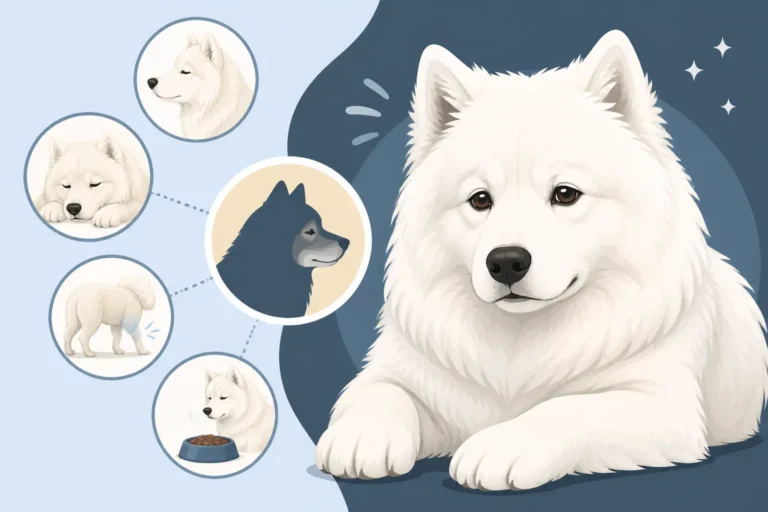
Aging Samoyeds show physical, behavioral, and cognitive changes including decreased energy, increased rest, and altered sleep patterns.