Whether a Samoyed Is Cheaper to Keep in a Cold Climate
Samoyed ownership costs in cold versus warm climates, comparing air conditioning expenses and heatstroke emergency veterinary bills.
The price tag is the smallest number.
Purchase and adoption costs, insurance, routine vet care, food and grooming budgets, and the emergencies that change the total.
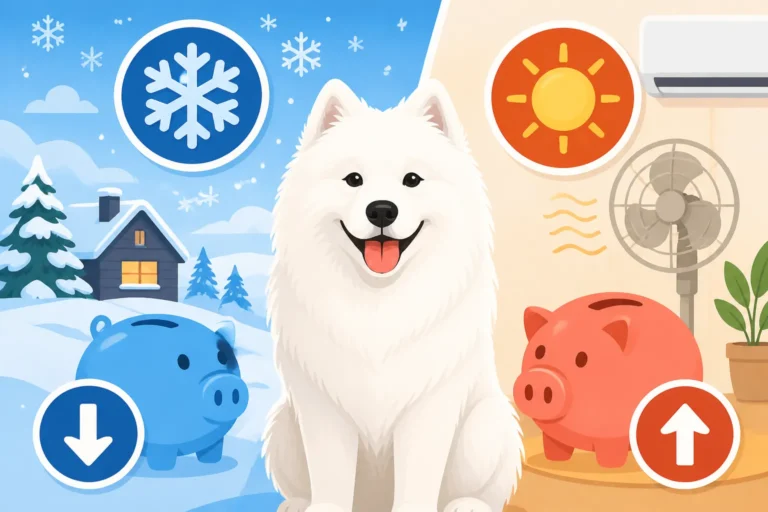
Samoyed ownership costs in cold versus warm climates, comparing air conditioning expenses and heatstroke emergency veterinary bills.

Keeping a Samoyed in hot climates requires budgeting for higher utility bills and specialized cooling gear like cooling mats.

Samoyed insulin budgeting for a healthy puppy is unnecessary because diabetes typically develops between ages seven and ten.

Two Samoyeds require professional grooming every six to eight weeks, significantly increasing ongoing pet expenses and time commitments.

Comparing costs for Samoyed and Siberian Husky puppies reveals why Samoyeds often command higher initial purchase prices.

Samoyed thirteen year lifetime costs include puppy purchase prices, food, vaccinations, vet care, and neutering expenses.

Samoyed fostering provides temporary homes for dogs, offering stability and rehabilitation outside of crowded rescue shelters.

Adopting an older Samoyed avoids puppy hurdles like house training and chewing, offering a calm companion with a known personality.

Samoyed escape artists end up in rescues because nomadic instincts, high prey drive, and four-foot fences fail to contain them.
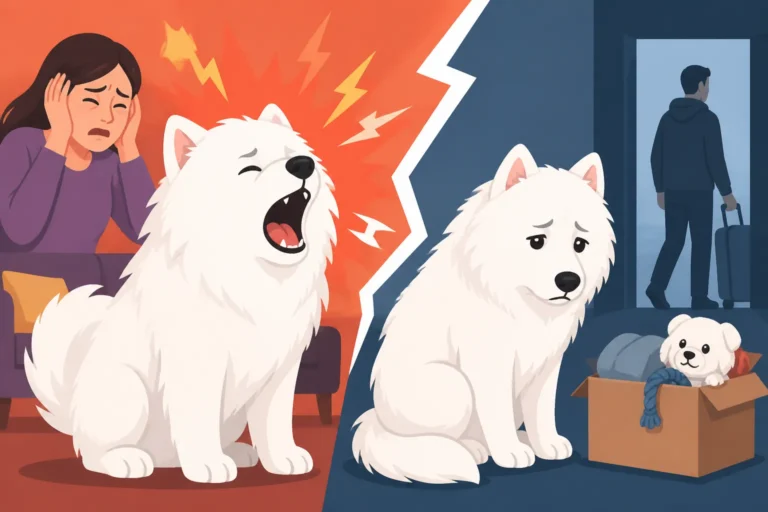
Samoyed vocalizations, including barks, whines, and howls, explain why constant noise leads some overwhelmed owners to give up these dogs.