Whether a Rescue Samoyed Trusts Again
Rescue Samoyeds with past trauma can learn to trust again by understanding their natural behavior and unique breed traits.
Work with the temperament you have.
House-training and crate work, recall, leash manners, separation anxiety, and the behaviors this breed is wired for.

Rescue Samoyeds with past trauma can learn to trust again by understanding their natural behavior and unique breed traits.

A rehomed adult Samoyed needs a two week shutdown period, predictable routines, and safe spaces to reduce anxiety and build trust.

Neutering a male Samoyed reduces roaming and marking, but one to two hours of daily exercise determines overall calmness and behavior.

Biological reasons why intact male Samoyeds roam, including how the powerful scent of a female in heat triggers their primal urge to reproduce.
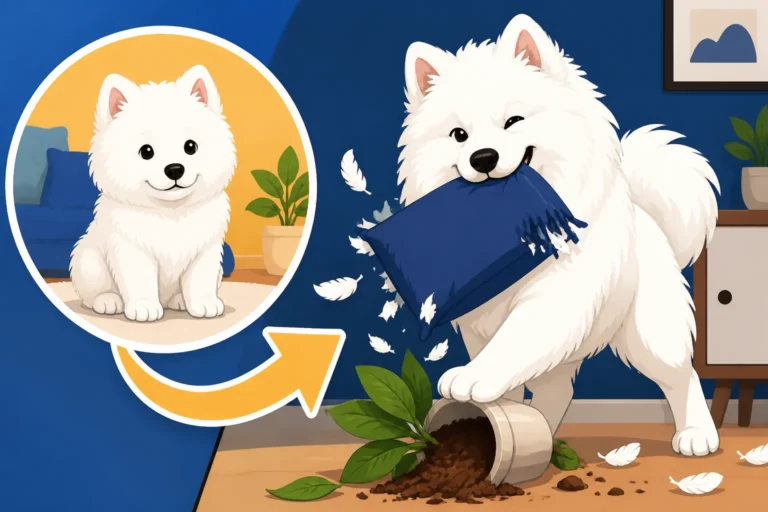
Samoyed puppies begin testing boundaries between three and eight months old, showing early independence and challenging rules.

Samoyed puppy training goes beyond basic classes because these independent dogs need positive reinforcement and high-value rewards.

Safe early socialization methods protect unvaccinated Samoyed puppies from diseases while building confidence during critical developmental weeks.
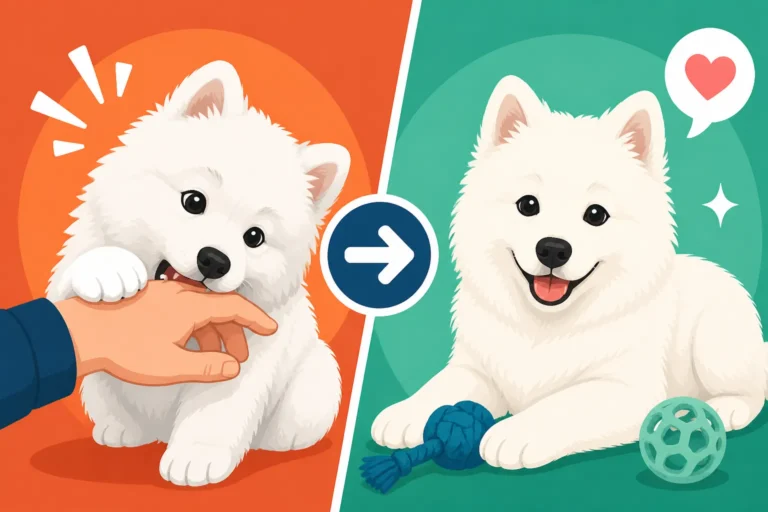
Samoyed puppy mouthing peaks at eight to sixteen weeks and stops by five to seven months when permanent adult teeth emerge.
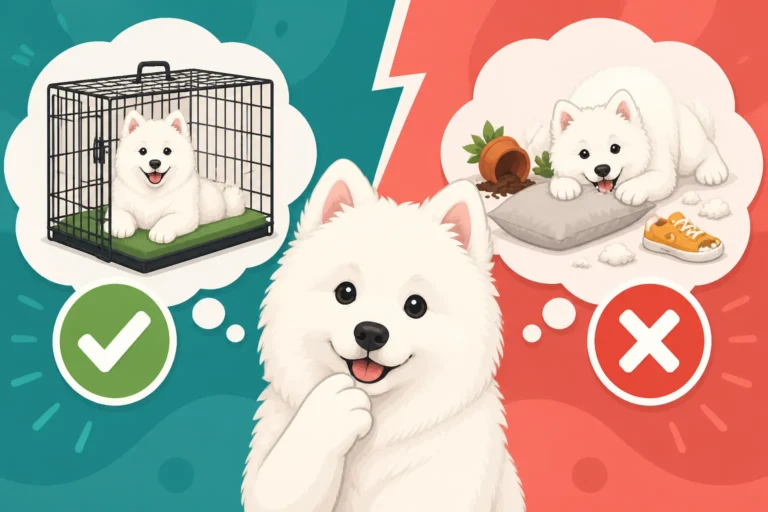
Crate training for a Samoyed puppy provides a safe den for house training and security, though vocalization challenges may occur.
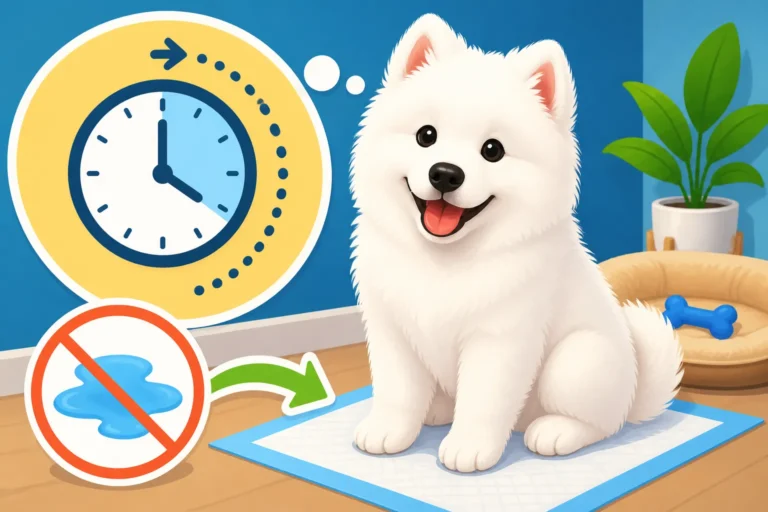
Samoyed puppy house training timelines, factors influencing bladder control, and expectations for achieving complete potty reliability.