How a Samoyed Carries Its Tail
Samoyed tail carriage varies from a high back curl to a low drop depending on alertness, movement, rest, and activity.
Is this the right one for you?
Origins and temperament, size and coat, what living with one is actually like, and how it compares to the breeds people weigh against it.
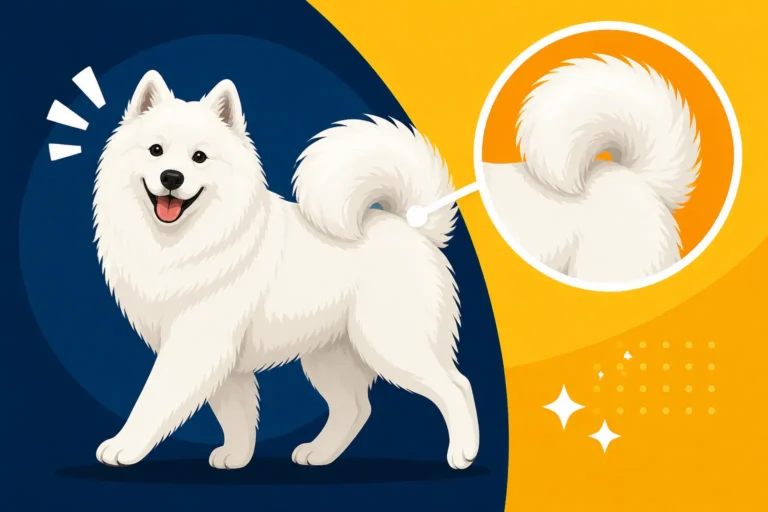
Samoyed tail carriage varies from a high back curl to a low drop depending on alertness, movement, rest, and activity.
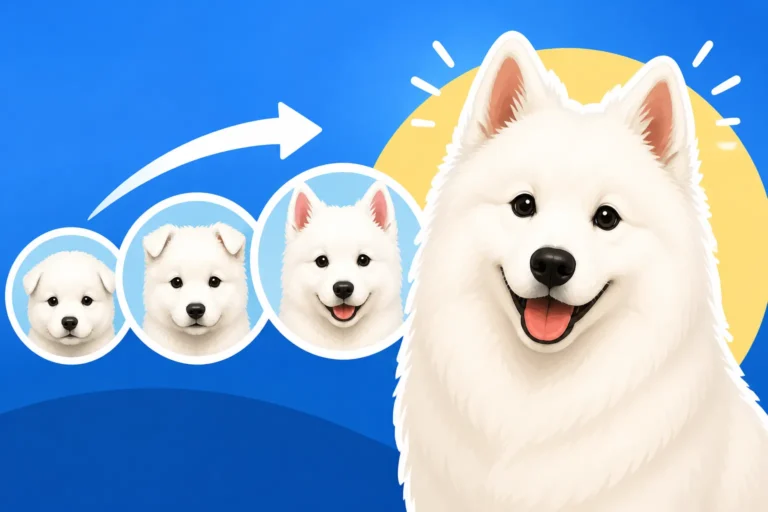
Samoyed puppy ear development timeline explains when cartilage strengthens, normal variation occurs, and veterinary checks become necessary.

Samoyed puppy ear development explains usual timelines, uneven stages, growth variations, and when to consult a veterinarian.
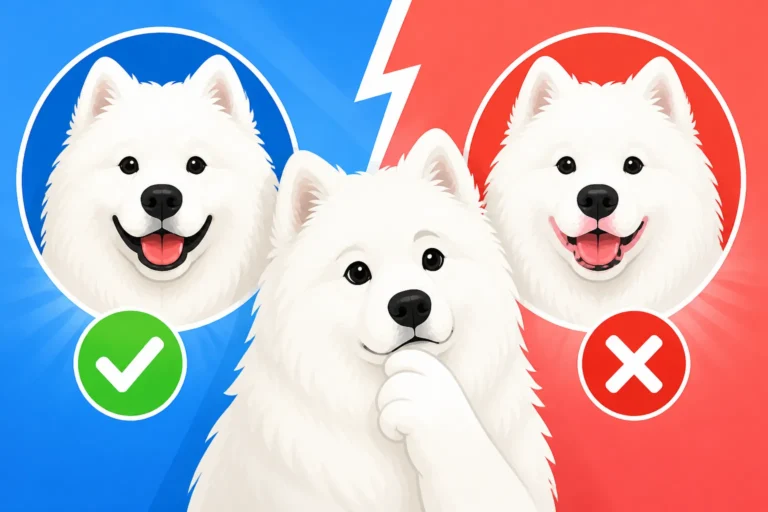
Samoyeds do not require completely black lips, as brown or flesh-colored lips are allowed by the breed standard.

Samoyed snow nose causes harmless winter pigment fading, but texture changes and pain signal illness needing a veterinarian.
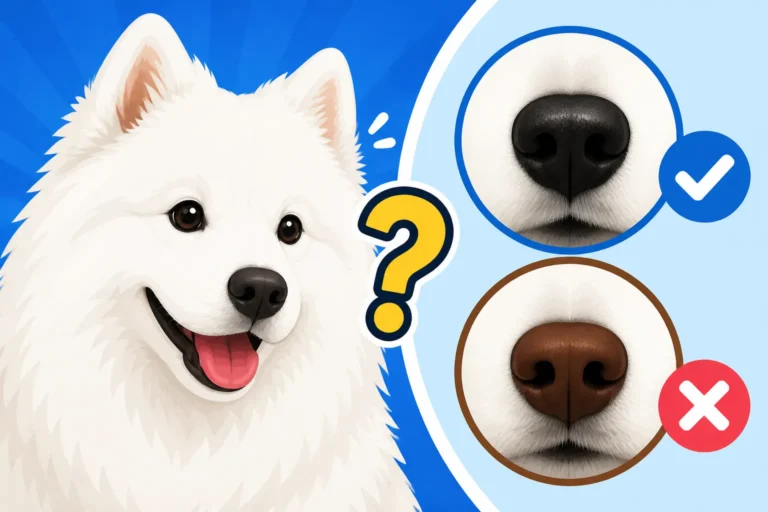
Samoyed nose color variation, seasonal fading, and distinguishing normal pigment changes from health concerns requiring veterinary care.

Blue eyes in a Samoyed deviate from breed standards, signaling possible mixed ancestry or developmental iris pigment changes.

Samoyed eye color, breed standards, and health facts explain why puppies have dark brown eyes and when to call a veterinarian.

The Samoyed standard explains the breed smile, how judges evaluate head expression, and signs of potential health concerns.

The Samoyed smile and facial anatomy explain why the breed looks happy, and how to read dog body language correctly.