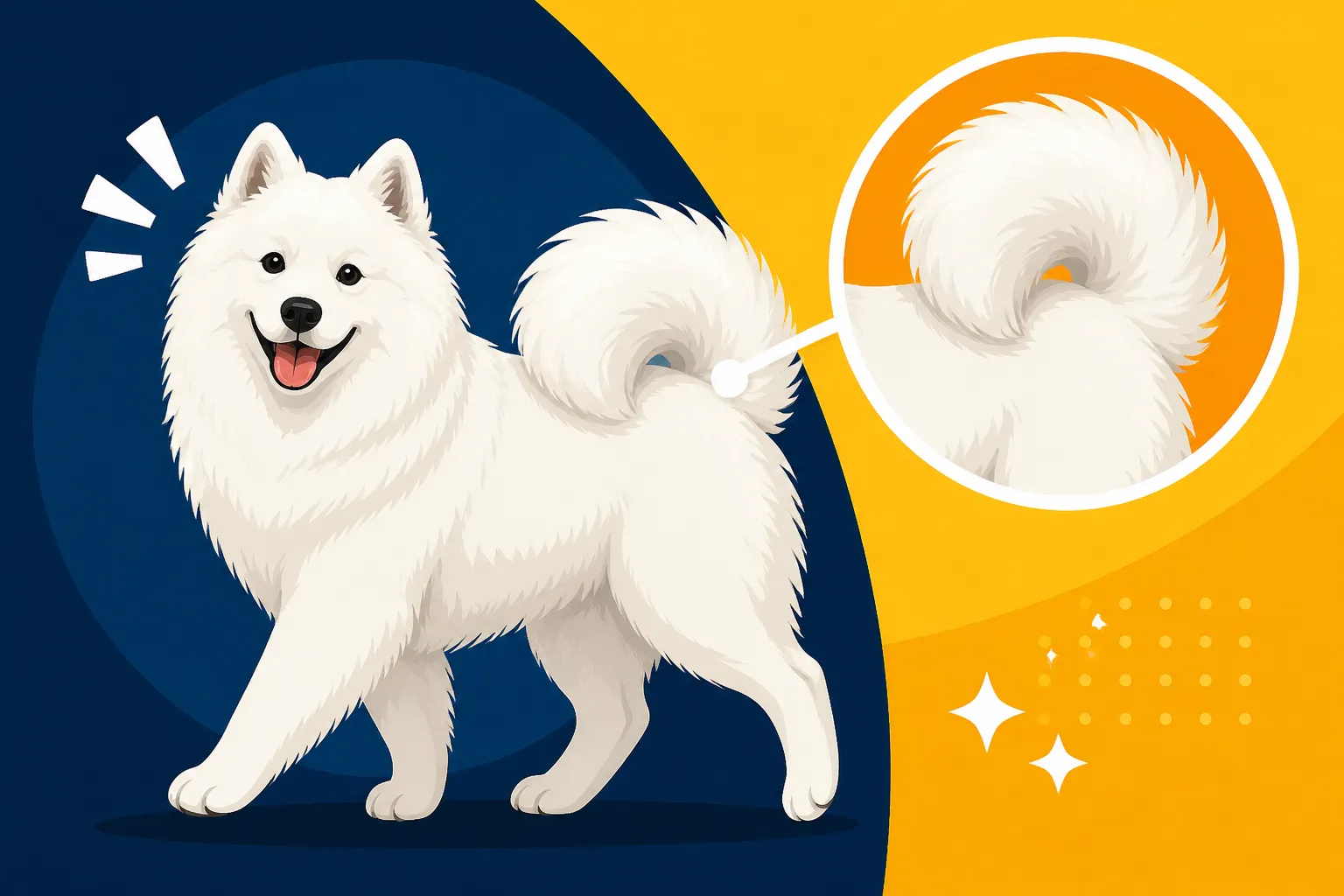
How a Samoyed Carries Its Tail
A Samoyed’s fluffy tail can look dramatically different from one moment to the next: curled over the back on a walk, draped to one side while watching the yard, or hanging low during a quiet nap. That variation is usually normal. This guide explains typical Samoyed tail carriage, why it changes, and which sudden changes deserve closer attention.
What a Samoyed’s Tail Usually Looks Like
The familiar curl over the back
When alert or moving, a Samoyed commonly carries its long, plumed tail curved over its back or to one side. That familiar silhouette is part of what makes the breed so recognizable, but the tail does not have to stay in one fixed position every minute of the day. A dog may raise it when something catches its attention, then lower it as it settles.
The tail is well feathered, so its outline can look fuller or more tightly curled than the tail itself. The coat can also shift with movement: a trot may make the plume bounce, while a still pose can leave it lying more loosely. If you are comparing your dog with photographs, remember that a posed show picture captures one moment, not the only normal way a Samoyed carries its tail.
A tail resting over the back does not, by itself, prove that a dog is cheerful or relaxed. Look at the whole dog: posture, ears, eyes, movement, and the situation around them all provide context. The breed’s characteristic expression is another recognizable feature, but it is not a substitute for reading body language; Why a Samoyed Always Looks Happy explores that familiar smile in more detail.
Relaxed dogs may let the tail drop
A Samoyed’s tail can hang down when the dog is resting, walking calmly, or simply taking a break. Some dogs carry it more loosely than others, and the position may vary throughout the day. If your dog lowers its tail after a lively greeting and then returns to its usual posture once it settles, that change alone is not necessarily a concern.
This is one reason a tail can look different in family snapshots. A Samoyed standing alert at the front window may have its tail curled high; a few minutes later, the same dog may be lying on a cool floor with the tail relaxed. For more on this everyday shift, see Why a Samoyed's Tail Drops When Relaxed.
A quick guide to common tail positions
Tail position can offer a clue about what a dog is doing, but it is not a reliable diagnosis or a complete emotional read. Compare the position with your Samoyed’s usual habits and the rest of its behavior.
| Tail position or change | What it may look like | Helpful context |
|---|---|---|
| Curled over the back | A plume resting in a curl above the back or to one side | Common when alert, moving, or engaged with something |
| Loosely lowered | Tail hanging down while standing or walking calmly | Often seen when relaxed or resting |
| Tucked close to the body | Tail held tightly down or between the legs | Consider the dog’s surroundings and other signs of fear or discomfort |
| Suddenly drooping or held unusually still | A marked change from the dog’s ordinary carriage | Watch for pain, reluctance to move, or other changes and contact a veterinarian if concerned |
These are broad observations, not rules that apply identically to every dog. A tail position is most useful when you know what is usual for your own Samoyed and notice a clear change from that baseline.
Why Tail Carriage Changes
Alertness, movement, and rest
Tail carriage often changes with attention. A sound from the hallway, a squirrel outside, or the sight of a leash can make a Samoyed lift its tail and hold it more prominently. During a walk, the tail may move with the dog’s pace; when the dog stops to sniff or settles indoors, it may relax again.
Rest changes posture, too. A dog curled on its bed may not hold its tail in the same position as a dog standing squarely at the door. If your Samoyed drops its tail when lying down but raises it again naturally when it gets up, the change may simply reflect the change in activity. What Samoyed Owners Wish They Had Known offers more perspective on the breed’s everyday habits and the ways its expressive behavior can surprise new owners.
Individual build and coat can affect the appearance
Not every Samoyed’s tail looks identical in photographs. Differences in coat length, feathering, body shape, and the way a dog is standing can change the apparent height or curl. A thick coat can make the tail look larger, while a damp or recently brushed coat may lie differently. These visual differences do not automatically mean the dog is carrying its tail incorrectly.
Age and development can affect the overall look of a Samoyed as well. Puppies grow into their adult proportions over time, and their coat changes as they mature. Tail carriage is only one part of a dog’s appearance, so it is best not to judge it in isolation from the dog’s frame and stage of development. Related reading includes The Age a Samoyed Stops Growing and How a Samoyed's Coat Changes With Age.
Sleep and cold-weather habits
Some Samoyeds curl up with the tail near the face when sleeping. For a northern breed with a full coat, this can be a comfortable resting posture, but individual dogs choose different sleeping positions. One dog may tuck its nose into its tail, while another stretches out on the floor.
That sleeping curl should not be confused with the tail’s everyday carriage while standing or walking. Nor does it mean a dog needs to be kept in cold conditions. Samoyeds still need a comfortable environment, access to water, and protection from overheating. Their coat and northern-breed background do not remove the need to manage heat carefully.
Reading Tail Signals Without Guessing
Look at the whole body
A raised or curled tail is only one part of a Samoyed’s body language. A dog that is alert may also be leaning forward, watching a sound, or moving with purpose. A relaxed dog may have soft muscles, an easy gait, and a loose expression. Those details help make the tail position easier to interpret.
A low or tucked tail can appear when a dog feels uncertain, but context matters. A new visitor, a noisy truck, or an unfamiliar veterinary waiting room may make a dog behave differently from how it does at home. Give the dog space, avoid forcing an interaction, and watch whether its posture changes once the situation becomes calmer. If the behavior is new or persistent, consider asking your veterinarian or a qualified behavior professional for guidance.
When you are learning to read your dog, observe familiar situations rather than relying on a single snapshot. Notice how the tail looks during a walk, at mealtime, while greeting family, and when resting. Over time, those ordinary patterns provide a more useful reference than a broad rule about what a Samoyed’s tail “should” mean.
When a tail change may need attention
A relaxed, lower tail is not the same as a sudden inability or reluctance to move it. Pay attention if your Samoyed’s tail becomes abruptly limp, stays in an unusual position, or seems painful when the dog sits, walks, or is touched. Changes in movement, appetite, energy, or comfort can also matter. A veterinarian can assess the cause; tail position alone cannot tell you what is wrong.
It can help to note when the change began and what else you have observed. For example, did it appear after vigorous play, a fall, or a long outing? Is the dog moving normally, or avoiding stairs and sitting awkwardly? Those details can help you explain the situation during a veterinary call or appointment.
Seek veterinary advice promptly if the tail change comes with marked pain, weakness, trouble walking, or other concerning symptoms. Avoid repeatedly lifting, bending, or manipulating the tail to test it. If your dog seems uncomfortable, let a professional guide the examination.
Caring for a Samoyed’s Tail and Coat
Keep the plume brushed and check underneath
The tail’s long feathering can collect loose undercoat, leaves, and small tangles. Brush gently and check the areas where the hair is thickest, especially after outdoor play. If you find a knot, work carefully rather than pulling hard; tugging can make grooming uncomfortable and turn a small tangle into a stressful experience.
Make grooming routine and low-pressure. Choose a time when your dog is calm, work in short sessions, and reward cooperation. If you need to replace a comb or brush, you can compare grooming tools through retailers such as Chewy, but choose an appropriate tool for a dense double coat and ask a professional groomer for advice if you are unsure. A groomer can also show you how to work through the tail feathering without scraping or irritating the skin.
The tail is part of the coat, not a reason to shave the dog. If the fur is badly matted or the skin beneath it looks sore, ask a groomer or veterinarian what to do rather than cutting close to the skin at home. More general care information is available in What a Samoyed's Double Coat Is Made Of.
Make a simple baseline for your dog
A quick mental picture of your Samoyed’s usual tail posture can make later changes easier to notice. Note how it looks when your dog is standing comfortably, walking, and resting. You do not need to monitor every movement; the point is simply to know what is ordinary for your individual dog.
If you are shopping for routine coat-care supplies, Chewy may be one place to compare options, alongside local pet stores and groomers. Look for tools suited to brushing a double coat rather than choosing based only on appearance or a product label. If your Samoyed resists brushing around the tail, pause and try again later; repeated struggling can make grooming harder for both of you.
Finally, avoid treating breed appearance as a pass-or-fail checklist. A tail may sit differently from one moment to the next, and photographs can exaggerate small differences in posture. For a broader sense of how structure varies across the breed, see How Tall a Samoyed Stands and Whether a Female Samoyed Is Much Smaller. What matters most at home is that your dog can move comfortably and that any abrupt or troubling change gets appropriate attention.
Disclaimer
This article is for general informational purposes only and does not constitute professional advice. Laws, prices and regulations vary by location and change over time. Consult a qualified professional for guidance on your specific situation.