The Household a Samoyed Was Built For
Samoyed dog breeds require active households providing constant human companionship, physical exercise, and mental stimulation to thrive.
Is this the right one for you?
Origins and temperament, size and coat, what living with one is actually like, and how it compares to the breeds people weigh against it.

Samoyed dog breeds require active households providing constant human companionship, physical exercise, and mental stimulation to thrive.

Samoyed ownership for beginners involves managing an energetic, friendly, and vocal dog with high social needs.
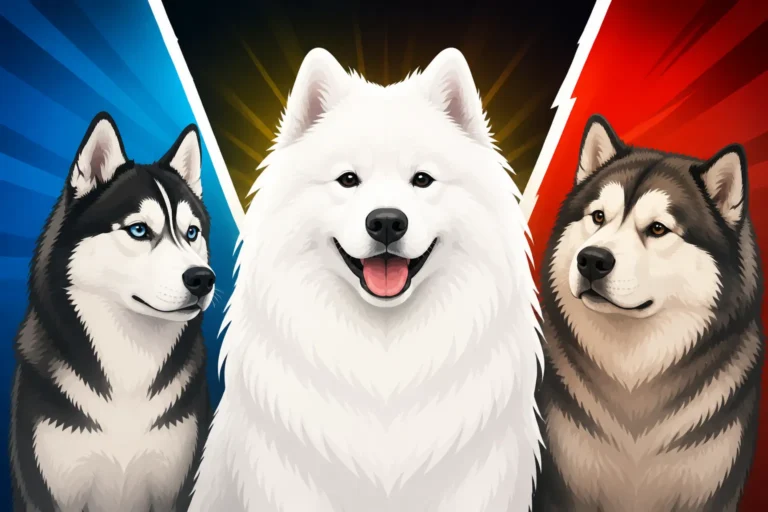
Northern dog breeds compared through ancestral origins, physical traits, and specific historical working roles.

Samoyed weight standards for adult males and females, including factors that cause size variations in this breed.

Samoyed coat colors including brilliant white, cream, and biscuit, detailing the breed standard and Arctic history.

Samoyed facial anatomy and upturned lips explain the origins and functional survival purpose behind the iconic permanent grin.
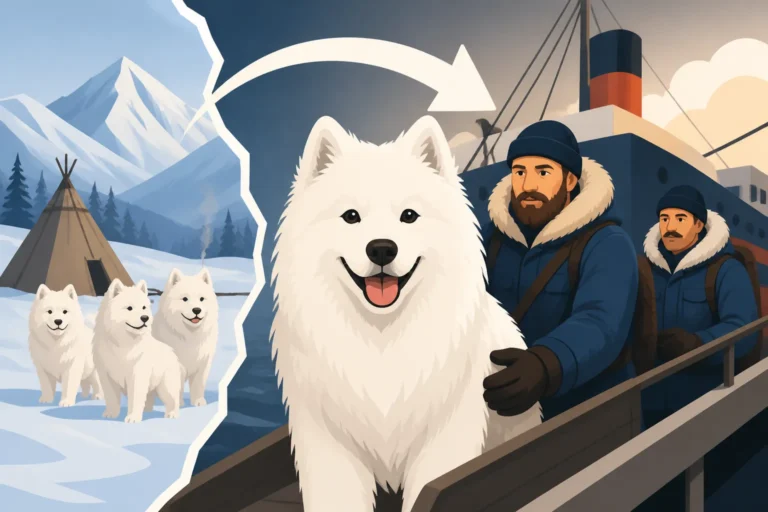
The history of Samoyed dogs explains their transition from Siberian nomads to polar expedition heroes and worldwide pets.
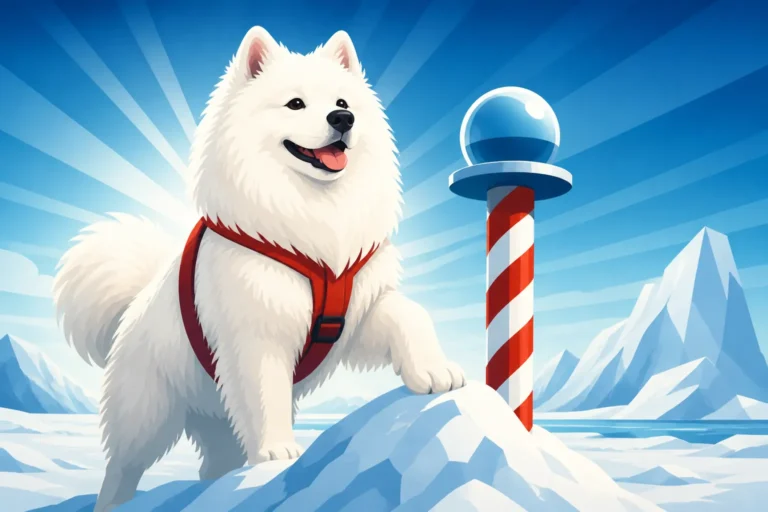
Etah, a Samoyed sled dog, led the historic polar expedition hauling supplies across the harsh ice to conquer the South Pole.
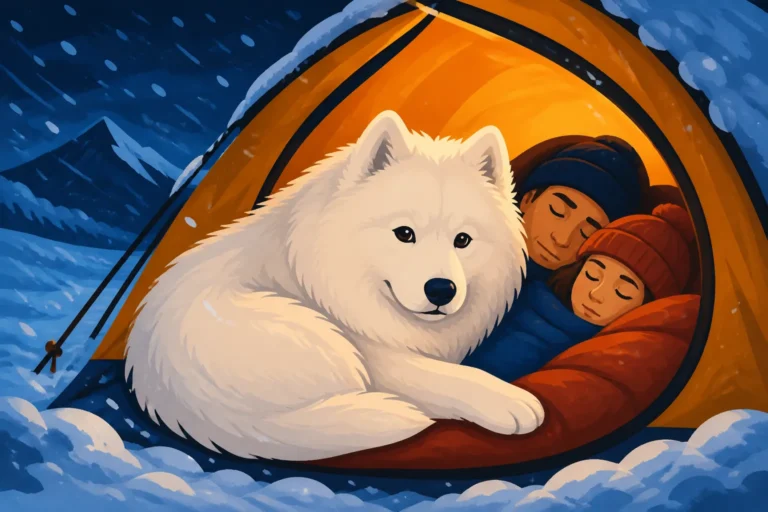
The history of the Samoyed explains how Siberian dogs shared tents to keep indigenous people alive in freezing winters.
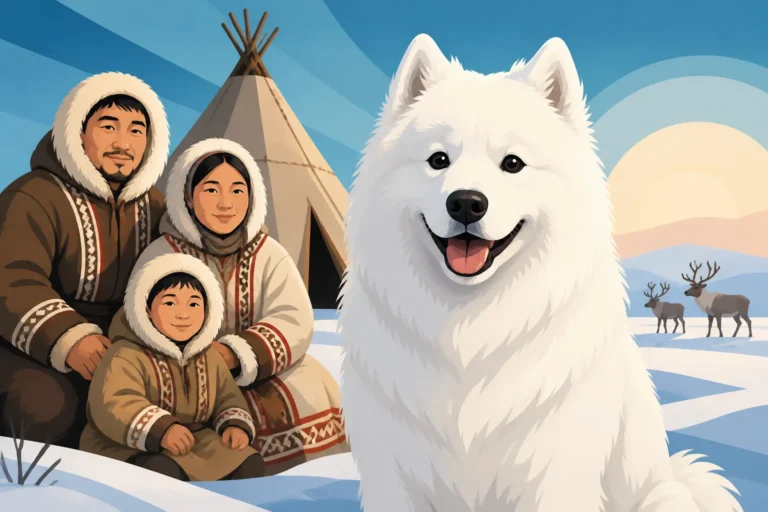
The Nenets people of northern Arctic Russia bred Samoyeds as working dogs to survive extreme cold and migrate with reindeer.