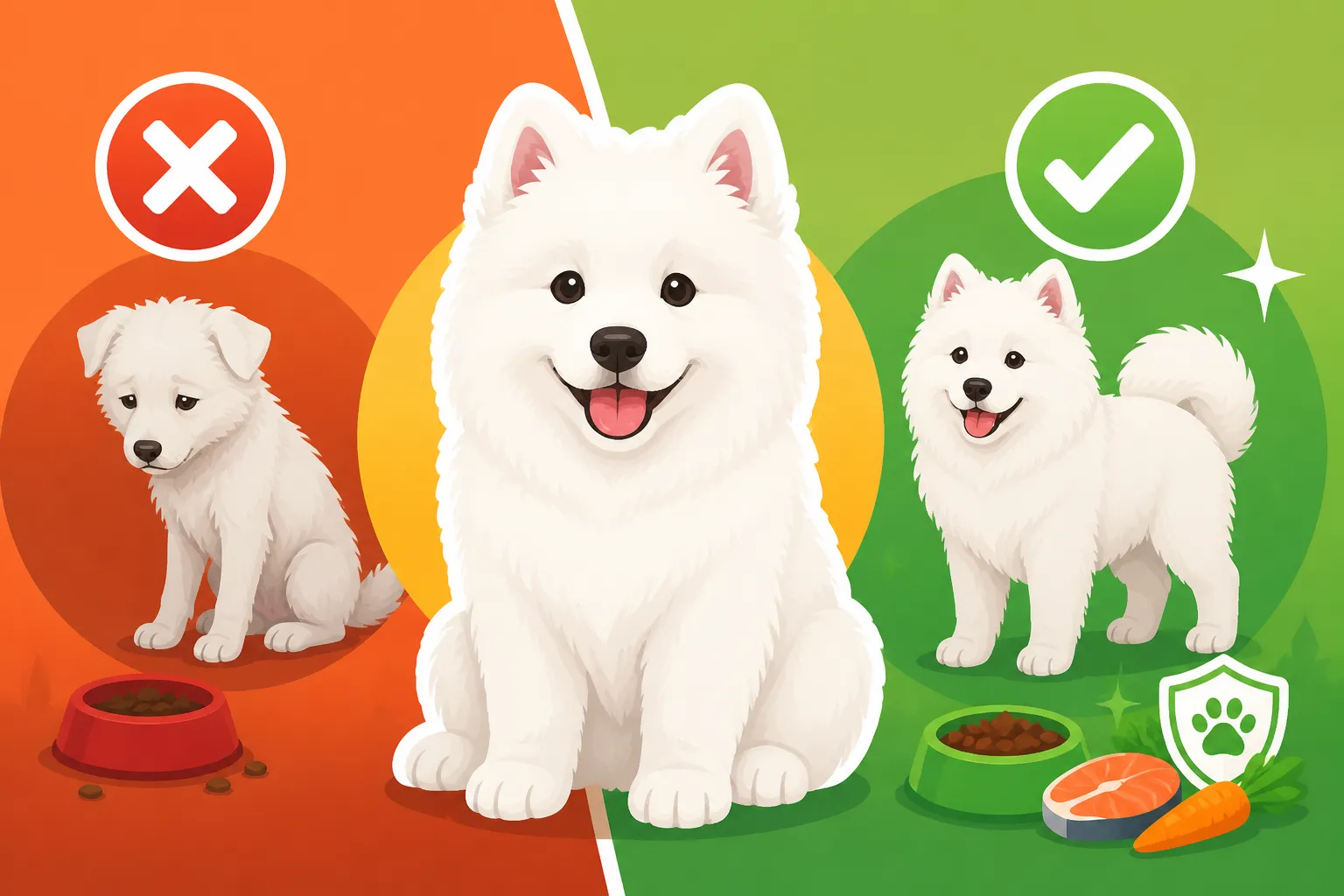
Whether a Samoyed Puppy Should Grow Slowly
Bringing home a Samoyed puppy is an absolute joy, but it also comes with a lot of questions about how to best raise your fluffy companion. One of the most common concerns, especially for owners of large and rapidly growing breeds like Samoyeds, is figuring out the ideal growth rate. Many people worry if their puppy is growing too fast or too slow, and there's a lot of conflicting advice out there, often leading to confusion about how much to feed and exercise them to ensure they develop into healthy, sound adults. This guide will walk you through why a slow, steady growth curve is actually crucial for your Samoyed puppy's long-term health and how you can achieve it.
Why a Steady Growth Rate is Crucial for Large Breeds
When you picture your Samoyed puppy, you likely imagine them growing into that magnificent, sturdy dog with a proud stance. What you might not realize is that the journey to that adult physique is deeply impacted by their early growth. For large breeds, the rate at which they gain weight and size during puppyhood can have profound, lasting effects on their skeletal system. It's not just about looking "big" quickly; it's about building a robust foundation.
Understanding Bone and Joint Development
Samoyeds, like many large and giant breeds, have a long growth period, often not reaching their full skeletal maturity until 18-24 months of age. During this time, their bones are not simply getting longer; they are undergoing complex changes, remodeling, and strengthening. Growth plates, which are areas of cartilage located near the ends of long bones, are actively dividing and expanding. These growth plates are particularly vulnerable to injury and abnormal development during the rapid growth phases of puppyhood. If a puppy grows too quickly, these plates can be subjected to excessive stress, leading to irregularities in how the bones lengthen and ossify (turn into bone).
Think of it like building a house. You want a strong foundation that cures slowly and correctly, not one that's rushed and brittle. The same principle applies to your Samoyed’s skeletal system. A steady, unhurried growth allows the cartilage and bone to develop properly, forming strong, well-aligned joints and resilient bones that can support their adult weight and activity levels without undue strain. Rushing this process can lead to imbalances and weaknesses that manifest later as orthopedic issues.
The Impact of Early Stress on Cartilage
Cartilage plays a vital role in joint health, acting as a shock absorber and providing a smooth surface for bones to glide over. In growing puppies, the cartilage in their joints is still developing and is more delicate than in an adult dog. Rapid growth, often fueled by an excess of calories or an imbalanced diet, can put undue stress on this immature cartilage. This stress can damage the cartilage cells, alter their normal development, or even cause small pieces of cartilage to detach within the joint—a condition known as osteochondritis dissecans (OCD), which we’ll discuss more in the next section.
Imagine a soft, flexible sapling being forced to carry a heavy load too soon. It might bend, break, or grow in a deformed way. Your Samoyed puppy's developing joints are similar. If they are forced to support a rapidly increasing body mass on underdeveloped cartilage, the integrity of those joints can be compromised for life. This isn't just about pain in puppyhood; it can set them up for early-onset arthritis and chronic discomfort as they age. A slower growth curve means less stress on these vulnerable tissues, allowing them to mature robustly and correctly, setting your Samoyed up for a life of comfortable movement.
The Risks of Rapid Growth in Samoyed Puppies
The allure of a big, impressive puppy can be strong, and sometimes owners unknowingly encourage faster growth, thinking it’s a sign of health or superiority. However, for a Samoyed, rapid growth is often a red flag for potential health problems down the line, particularly concerning their bones and joints. These aren't just minor ailments; they can lead to debilitating conditions requiring expensive veterinary intervention and significantly impacting your dog's quality of life.
Hip and Elbow Dysplasia Concerns
Hip and elbow dysplasia are unfortunately common orthopedic conditions in large breeds like Samoyeds. Hip dysplasia occurs when the ball and socket joint of the hip doesn't form correctly, leading to looseness in the joint, pain, and eventually degenerative joint disease (arthritis). Elbow dysplasia is a complex condition involving several developmental abnormalities within the elbow joint, also resulting in pain and arthritis. While genetics play a significant role in both conditions – The Health Tests Both Samoyed Parents Should Have is an important read – environmental factors during puppyhood, especially rapid growth, can exacerbate or even trigger their clinical expression.
When a Samoyed puppy grows too quickly, the bones grow faster than the surrounding soft tissues, like muscles and ligaments, can keep up. This can lead to increased laxity (looseness) in the joints. For hips, this means the femoral head (ball) doesn't fit snugly into the acetabulum (socket), causing wear and tear. For elbows, it can worsen the various bone and cartilage abnormalities. The added weight from rapid growth also puts more pressure on these poorly forming joints, accelerating the damage. Even a genetically predisposed puppy might not develop severe symptoms if their growth is carefully managed, while a puppy with borderline genetics could become severely affected if allowed to grow too quickly. It’s a crucial balance, and controlling their growth rate is one of the most powerful tools an owner has to minimize risk. You can learn more about this by reading How Common Hip Dysplasia Is in Samoyeds.
Other Orthopedic Issues
Beyond hip and elbow dysplasia, rapid growth can contribute to other painful orthopedic issues in growing Samoyeds.
- Osteochondritis Dissecans (OCD): As mentioned earlier, OCD is a condition where a piece of cartilage, usually in the shoulder, elbow, or knee, fails to properly convert to bone and eventually detaches, causing pain and lameness. The cartilage becomes abnormally thick and cannot get proper nourishment, leading to its death and eventual separation. Rapid growth and diets high in calories and calcium can contribute to this problem by interfering with the normal process of cartilage maturation.
- Panosteitis (Pano): Sometimes called "growing pains," panosteitis is an inflammation of the outer surface of the long bones in young, rapidly growing dogs. It typically causes shifting lameness, where the dog might limp on one leg for a few days, then another. While usually self-limiting, it can be quite painful and distressing for the puppy. Though the exact cause isn't fully understood, rapid growth and rich diets are often implicated.
- Hypertrophic Osteodystrophy (HOD): HOD is a severe inflammatory disease affecting the growth plates of long bones, most commonly in the legs. Puppies with HOD experience extreme pain, fever, and lameness, often struggling to stand or walk. While rarer than pano, it's another condition more frequently seen in large, fast-growing breeds, and again, diet and growth rate are thought to be contributing factors. Managing growth rate is a key preventative measure for all these conditions.
Potential for Weight-Related Problems
While the focus is often on skeletal issues, rapid growth also means rapid weight gain, and carrying excess weight, even as a puppy, can lead to a host of other problems. An overweight puppy is naturally putting more strain on its developing joints, worsening any orthopedic predispositions. This extra weight also makes them less agile, potentially leading to clumsiness and accidents.
Furthermore, allowing a puppy to become overweight or obese early in life can set a precedent for future weight management challenges. Fat cells created during puppyhood can persist throughout life, making it harder for an adult dog to maintain a healthy weight. Whether an Overweight Samoyed Is More Likely to Get Diabetes is a very real concern for any breed. Obesity in adult Samoyeds, as in humans, is linked to a higher risk of diabetes, heart disease, respiratory problems, and reduced lifespan. By controlling your Samoyed puppy's growth rate and ensuring they maintain a lean body condition, you're not just protecting their joints today, but also fostering healthy habits and metabolic function for their entire life.
How to Promote Healthy, Slow Growth
The good news is that as a Samoyed owner, you have significant control over your puppy's growth rate. It primarily comes down to thoughtful feeding and appropriate exercise. It’s a dance between providing enough nutrients for healthy development without pushing them to grow too quickly. This isn't about deprivation; it's about balance and moderation, ensuring every calorie counts towards healthy development rather than excessive size.
Controlled Feeding Portions
This is perhaps the most critical factor. Many puppy owners inadvertently overfeed their Samoyeds, either by free-feeding or by giving too much at each meal. Forget the idea of letting your puppy eat all they want. For large breeds, scheduled, portion-controlled meals are essential. You should be feeding a high-quality large breed puppy food that is specifically formulated for slow growth. These foods typically have a slightly lower calorie density and carefully balanced calcium and phosphorus levels compared to regular puppy foods.
Always follow the feeding guidelines on the bag as a starting point, but don't treat them as gospel. Those guidelines are often for intact, highly active puppies and can lead to overfeeding for many pets. Instead, adjust the portion based on your individual puppy's body condition. You want your Samoyed puppy to look lean, even a little "lanky," with easily palpable ribs (but not visible) and a distinct waist when viewed from above. If you notice they are starting to look round or you can't easily feel their ribs, reduce their food intake. A good rule of thumb is to err on the side of slightly less, rather than more. Splitting their daily allowance into 2-3 meals helps manage hunger and digestion. Using a slow-feeder bowl, readily available on sites like Amazon, can also help puppies prone to gobbling their food too quickly.
Appropriate Exercise Regimens
While adequate exercise is vital for a Samoyed's mental and physical health, it's crucial to understand that "appropriate" exercise for a growing puppy is very different from that for an adult dog. High-impact, repetitive activities or forced exercise can put tremendous stress on their still-developing growth plates and joints, increasing the risk of injury and orthopedic issues.
Instead of long runs or intense fetch sessions, focus on short, frequent playtimes and gentle walks. Think multiple 10-15 minute walks or play sessions throughout the day, rather than one hour-long trek. Let your puppy dictate the pace and duration. If they plop down or seem tired, it’s time to stop. Avoid activities like jumping off high surfaces, excessive stair climbing (especially descents), or intense sports like agility until their growth plates have closed, usually around 12-18 months of age, depending on the individual. Structured leash walks on varied, soft terrain are much better than pavement pounding. Puppy socialization classes, where they can play with other puppies in a controlled environment, are excellent for mental stimulation and gentle physical activity without overdoing it. Remember, Keeping a Samoyed Puppy Off Stairs and other high-impact activities in early life is a simple but effective preventative measure.
Avoiding Excessive Calorie Intake
It's not just the main meals that contribute to calorie intake; treats and table scraps can quickly add up, sabotaging your efforts to maintain a lean puppy. Many owners underestimate the caloric content of even small treats. Be mindful of how many treats you're giving, especially during training sessions. Choose low-calorie options or use tiny pieces of their regular kibble as rewards.
Table scraps, while tempting to offer, should generally be avoided. Not only can they contribute to excess calories, but many human foods are not suitable for dogs and can cause digestive upset or even be toxic. A little bit of plain, cooked chicken or vegetables (in moderation) might be okay, but fatty meats or sugary snacks are definitely out. If you're considering supplementing their diet, always consult with your veterinarian first. Over-supplementation, particularly with calcium, can be just as detrimental as under-nutrition for growing large breed puppies. A balanced large breed puppy food should provide everything they need, making additional supplements unnecessary and potentially harmful.
Monitoring Your Samoyed Puppy's Development
Even with the best intentions and careful feeding, monitoring your Samoyed puppy's development closely is key. Every puppy is an individual, and their needs can shift. Regular checks and veterinary oversight will help ensure they are on the right track for healthy, steady growth. It's not just about their weight, but their overall body condition and how they are moving.
The Body Condition Score
The Body Condition Score (BCS) is a more accurate indicator of your puppy's health than simply looking at the number on the scale. A BCS is a subjective assessment of a dog's fat reserves, on a scale typically from 1 to 9, where 1 is emaciated and 9 is obese. For a growing Samoyed puppy, you want them to be on the leaner side, generally a 4 or 5 on a 9-point scale.
Here's a simple guide to assessing your Samoyed puppy's BCS:
| Score (1-9) | Appearance & Feel | Recommendation for Puppy |
|---|---|---|
| 1-3 (Underweight) | Ribs, spine, and pelvic bones easily visible from a distance. No palpable fat. Severe waist tuck. Muscle mass visibly lost. | Increase food intake slowly and consult your vet to rule out underlying health issues. This is too thin for a growing puppy. |
| 4-5 (Ideal/Lean) | Ribs easily palpable without excess fat covering. Waist visible when viewed from above, and abdomen tucked up when viewed from the side. Puppy looks lean and athletic. | This is the ideal range for a growing Samoyed puppy. Maintain current feeding. You should be able to feel the ribs like the knuckles on your hand when flat, but not see them clearly. |
| 6-7 (Overweight) | Ribs palpable with slight difficulty; fat covering present. Waist discernible but not prominent. Abdominal tuck absent or minimal. General roundness. | Reduce food intake and increase gentle exercise. This is heading towards unhealthy growth for a large breed puppy and puts strain on joints. |
| 8-9 (Obese) | Ribs not palpable under heavy fat cover. Heavy fat deposits over lumbar area, base of tail, and neck. No waist. Obvious abdominal distension. | Drastically reduce food and consult your vet for a weight loss plan. This level of obesity is detrimental to a puppy's development and long-term health. |
Regularly assessing your Samoyed’s BCS will help you make adjustments to their diet before they become truly overweight or underweight. It's a skill that takes practice, especially with a fluffy breed like a Samoyed where the coat can hide a lot, so run your hands over their body weekly.
Regular Vet Check-ups
Your veterinarian is your best partner in ensuring your Samoyed puppy grows at a healthy rate. Regular check-ups are not just for vaccinations; they are opportunities for your vet to assess your puppy's overall health, growth, and development. They can perform a professional body condition score, feel their joints, and evaluate their gait for any signs of lameness or discomfort.
Don't hesitate to bring up any concerns you have about your puppy's growth, appetite, or activity level during these visits. Your vet can provide tailored advice on diet, recommend specific large breed puppy foods, and help you determine if any adjustments need to be made. They might also suggest specific screening tests if they have concerns, such as early X-rays for hip or elbow issues if a genetic predisposition or clinical signs are present, though The Age a Samoyed Is Certified by OFA is much later. Remember, early detection of issues can often lead to more effective management.
Tracking Weight and Height Progress
Keeping a simple log of your Samoyed puppy's weight and, if you're ambitious, their height, can be incredibly insightful. Weigh your puppy weekly or bi-weekly at home on a reliable scale (a regular bathroom scale can work if you weigh yourself, then yourself holding the puppy, and subtract). This data allows you to visualize their growth curve. Ideally, you want to see a steady, upward trend, not dramatic spikes or plateaus, unless intentional.
This tracking isn't about hitting certain weight milestones by a specific age, but rather observing the rate of gain. If you notice a sudden, rapid increase in weight, it's a cue to re-evaluate their food portions and activity level. Conversely, if they aren't gaining weight or are losing it, it's time for a vet visit. Many vets also have growth charts specific to large breeds that they can share with you, allowing you to plot your puppy's progress against a healthy average. This data provides objective information to support the subjective BCS and helps you make informed decisions about their care.
Common Misconceptions About Puppy Growth
There are a lot of myths and old wives' tales floating around about puppy growth, and some of them, if believed, can actually be detrimental to your Samoyed's health. It’s important to cut through the noise and understand what truly promotes healthy development versus what might seem intuitive but is actually counterproductive.
The "Bigger is Better" Myth
One of the most pervasive myths is that a bigger, heavier puppy is automatically a healthier or superior puppy. This simply isn't true, especially for large breeds. In fact, for Samoyeds and similar breeds, achieving maximum size as quickly as possible is often associated with the orthopedic problems we've discussed. Owners might feel proud of their large, sturdy puppy, but they could unknowingly be setting their dog up for a lifetime of joint pain and limited mobility.
The goal should never be to make your Samoyed puppy as big as possible, as fast as possible. Instead, the focus should be on healthy growth. This means steady, moderate weight gain that allows the skeletal system to mature properly, resulting in a dog that is structurally sound and well-proportioned for their breed standard. A lean puppy today often means a healthier adult dog tomorrow. Remember, genetics largely determine a Samoyed’s ultimate adult size; forcing rapid growth won't make them significantly larger than their genetic potential, but it can certainly compromise their joint health. Embracing a lanky, slightly awkward puppy stage is a sign you're doing things right.
Believing Free-Feeding is Harmless
Another common misconception, particularly for puppy owners, is that free-feeding (leaving food out all day for the puppy to graze) is harmless or even beneficial. The thinking often goes that the puppy will eat what they need and stop when full. While this might work for some individual dogs or smaller breeds with lower caloric needs, it is generally a recipe for disaster for a rapidly growing large breed puppy like a Samoyed.
Free-feeding makes it almost impossible to control calorie intake accurately. Puppies, like children, don't always know what's best for them, and many will overeat if given the opportunity. This consistent overconsumption of calories directly leads to rapid weight gain, putting excessive stress on developing bones and joints. Moreover, free-feeding can make it difficult to monitor a puppy's appetite, which is an important indicator of health. A sudden loss of appetite might go unnoticed if food is always available, delaying the detection of potential illness. For these reasons, scheduled meals with portion control are almost universally recommended by veterinarians for large breed puppies. It teaches them a routine, helps manage their weight, and allows you to monitor their eating habits.
Choosing the Right Food and Supplements
The food you choose for your Samoyed puppy is a cornerstone of promoting healthy, slow growth. It's not just about getting enough calories, but ensuring the right balance of nutrients that support proper skeletal development without overdoing it. Navigating the myriad of puppy food options can feel overwhelming, but focusing on specific characteristics will simplify the process.
Large Breed Puppy Formulas
For a Samoyed, choosing a food specifically labeled as a "large breed puppy formula" is highly recommended. These formulas are designed with the unique needs of large and giant breeds in mind, aiming to support a slower, more controlled growth rate. What makes them different?
- Calorie Density: Large breed puppy foods typically have a slightly lower calorie density than standard puppy foods. This helps prevent rapid weight gain, making it easier to control their growth curve without leaving them feeling hungry.
- Calcium and Phosphorus Balance: Perhaps most critically, these foods feature carefully adjusted levels of calcium and phosphorus, and a precise calcium-to-phosphorus ratio. Excessive calcium intake in large breed puppies has been strongly linked to developmental orthopedic diseases. These specialized diets ensure they get adequate calcium for bone growth without the detrimental excess.
- Protein and Fat Levels: While puppies need sufficient protein for muscle development, large breed formulas often provide slightly moderated protein and fat levels compared to very high-protein, high-fat performance puppy foods. The key is balance, not excess.
Look for reputable brands that conduct feeding trials and have nutritional statements from organizations like the AAFCO (Association of American Feed Control Officials). You can find a wide range of these specialized formulas from retailers like Chewy or your local pet supply store. If you're considering fresh food options, services like Ollie often provide tailored plans, but it's essential to confirm they have specific formulations and nutritional guidance for large breed puppies to ensure the proper calcium-to-phosphorus ratio.
Calcium and Phosphorus Ratios
This is a technical but incredibly important point. Calcium and phosphorus are essential minerals for bone formation, but their levels and ratio must be tightly controlled in large breed puppies. An ideal calcium-to-phosphorus ratio for large breed puppies is generally considered to be between 1.1:1 and 1.5:1. More importantly, the absolute amount of calcium should also be carefully monitored, typically staying below 1.5% on a dry matter basis.
Feeding a diet with too much calcium, or an imbalance in the calcium-to-phosphorus ratio, can interfere with normal bone modeling and remodeling, leading to conditions like osteochondritis dissecans (OCD) and hypertrophic osteodystrophy (HOD). This is why supplementing calcium, especially with dairy products or raw bone meals, without precise veterinary guidance, is highly discouraged for large breed puppies. It's very easy to accidentally overdo it and cause more harm than good. Trust a commercially prepared large breed puppy food to have these levels accurately balanced.
When (Not) to Supplement
In most cases, if you are feeding a high-quality, complete, and balanced large breed puppy food, your Samoyed puppy does not need additional supplements. In fact, unnecessary supplementation can be detrimental, particularly with minerals and vitamins.
- Joint Supplements: While adult Samoyeds might benefit from joint supplements like glucosamine and chondroitin, it's generally not recommended to start these in young puppies unless specifically advised by your veterinarian due to a diagnosed condition. The focus should be on proper nutrition and controlled growth to prevent joint issues, rather than trying to mitigate them with supplements during critical development. Whether a Samoyed Needs Joint Support Early is a common question, but prevention through diet and exercise is usually the first line of defense.
- Vitamins and Minerals: Over-supplementation with certain vitamins (like Vitamin D) and minerals (especially calcium) can cause toxicity or interfere with nutrient absorption, leading to developmental problems.
- Fatty Acids: Omega-3 fatty acids (like EPA and DHA) are beneficial for brain, vision, and coat health, and many quality puppy foods include them. If your food is lacking, a fish oil supplement might be considered, but always discuss the dosage with your vet.
The golden rule here is: when in doubt, consult your veterinarian. They can assess your puppy's individual needs and advise if any supplementation is truly necessary and safe. More often than not, a well-chosen large breed puppy diet is all your Samoyed needs to grow into a healthy, magnificent adult.
Disclaimer
This article is for general informational purposes only and does not constitute professional advice. Laws, prices and regulations vary by location and change over time. Consult a qualified professional for guidance on your specific situation.