Whether a Diabetic Samoyed Drinks Constantly
Canine diabetes in Samoyeds causes excessive thirst and frequent urination, as high blood sugar pulls water into urine and triggers dehydration.

Canine diabetes in Samoyeds causes excessive thirst and frequent urination, as high blood sugar pulls water into urine and triggers dehydration.

Samoyed diabetes genetics and inheritance patterns, plus environmental triggers like pancreatitis, obesity, and hormonal influences.

Samoyed diabetes risk compared to other dogs, insulin production basics, and the general rate of one in three hundred to five hundred.

Samoyed diabetes prevalence and risk factors explain how this serious condition affects the breed, where the vast majority of cases are Type I.
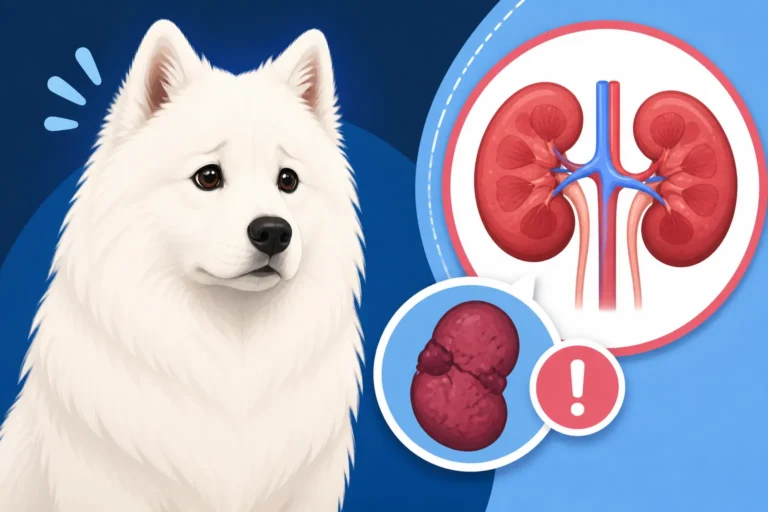
Samoyed kidney failure involves ordinary causes and acute or chronic types beyond the hereditary glomerulopathy condition.
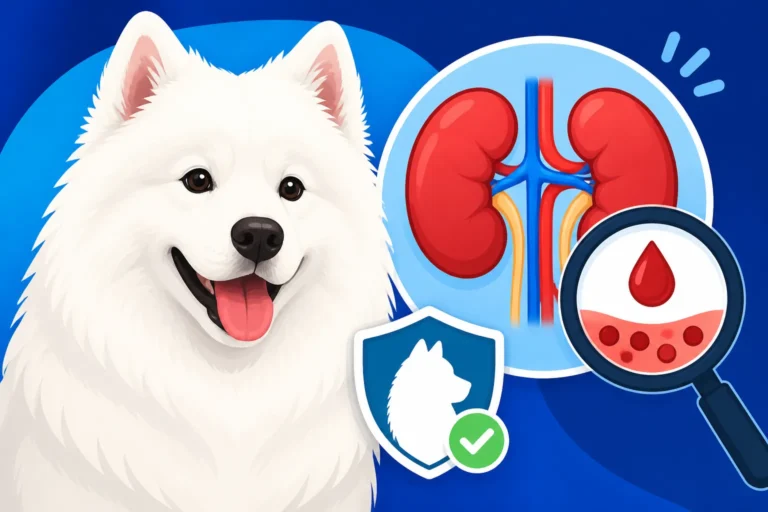
Samoyed creatinine levels indicate kidney function by measuring filtered muscle waste products circulating in the blood.
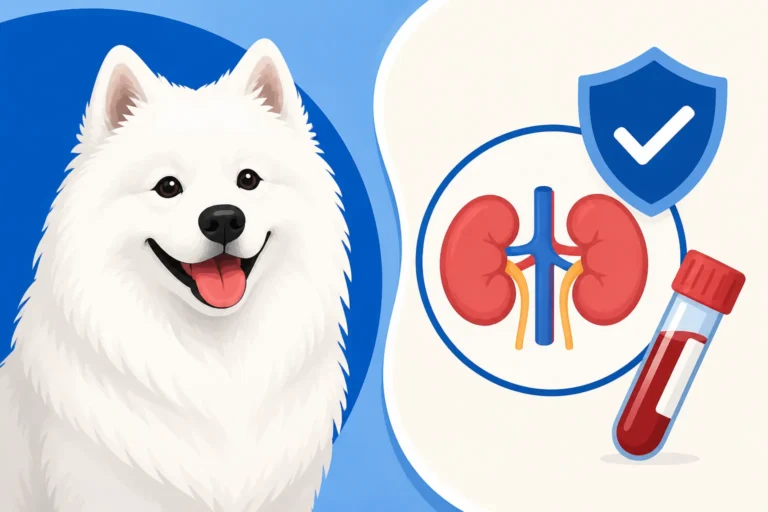
Yearly kidney bloodwork for Samoyeds helps establish baselines and track age-related decline, though early genetic conditions require different monitoring.

Samoyed Hereditary Glomerulopathy is an X-linked genetic disorder caused by the mutated COL4A5 gene affecting male kidneys.
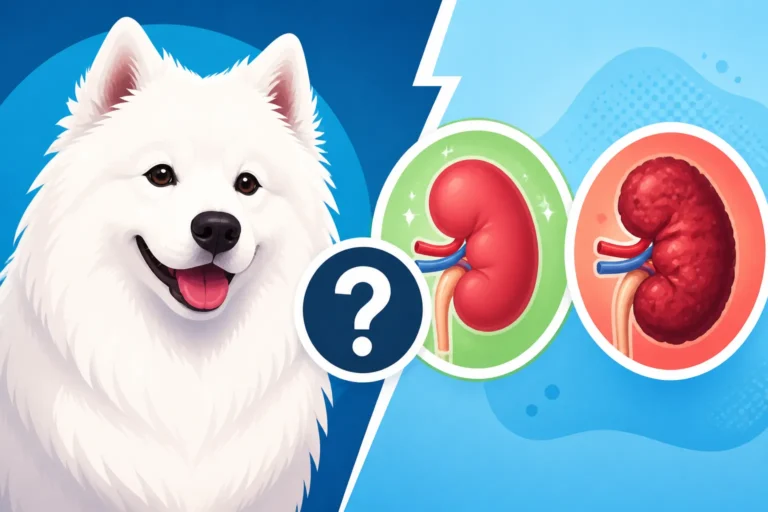
Samoyed Hereditary Glomerulopathy shares genetic roots and symptoms with human Alport Syndrome, affecting male dogs through COL4A5 mutations.

Samoyed kidney transplants are extremely rare procedures involving complex surgeries, high costs, and profound ethical dilemmas regarding live donors.