Which Lab Runs the Samoyed Kidney Test
Veterinary Genetics Laboratory at UC Davis offers the specialized genetic test detecting Samoyed hereditary kidney disease mutations.
Know what to watch for.
Breed-specific conditions, screening and DNA tests, what surgery actually costs, and the daily habits that stretch a healthy lifespan.

Veterinary Genetics Laboratory at UC Davis offers the specialized genetic test detecting Samoyed hereditary kidney disease mutations.

Testing every female Samoyed for the COL4A5 gene mutation prevents fatal hereditary kidney failure in male puppies before fifteen months.

Two DNA-tested clear Samoyed parents cannot produce a puppy affected by Samoyed Hereditary Glomerulopathy or pass the COL4A5 gene.

Breeding a carrier Samoyed female creates a fifty percent chance of producing male puppies that die from kidney failure before fifteen months.

Carrier Samoyed females with the defective COL4A5 gene maintain normal collagen production and experience very slow protein loss.

Carrier Samoyed females with one defective gene usually develop mild kidney issues and often live full, normal lives up to fourteen years.
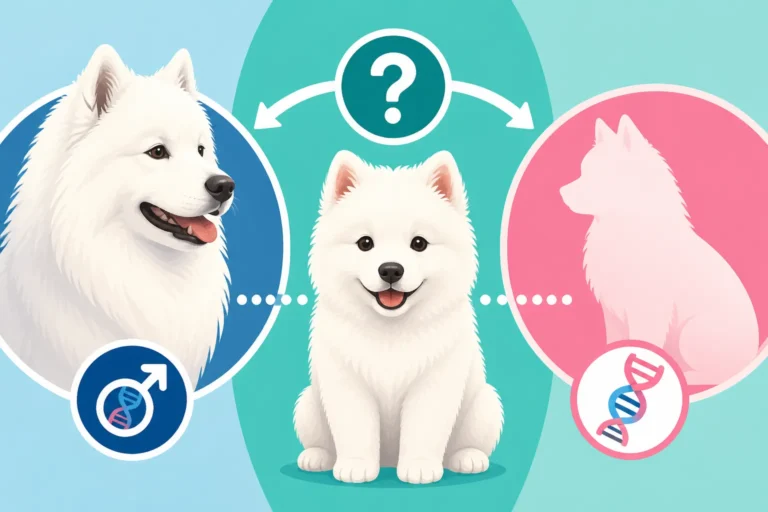
Samoyed Hereditary Glomerulopathy inheritance mechanics determine whether daughters of affected males carrying the COL4A5 gene mutation are carriers.

Samoyed hereditary glomerulopathy is an X-linked kidney disease, meaning an affected father cannot directly transmit it to sons.

Samoyed Hereditary Glomerulopathy inheritance patterns explain how carrier mothers pass the fatal kidney disease gene to male puppies.
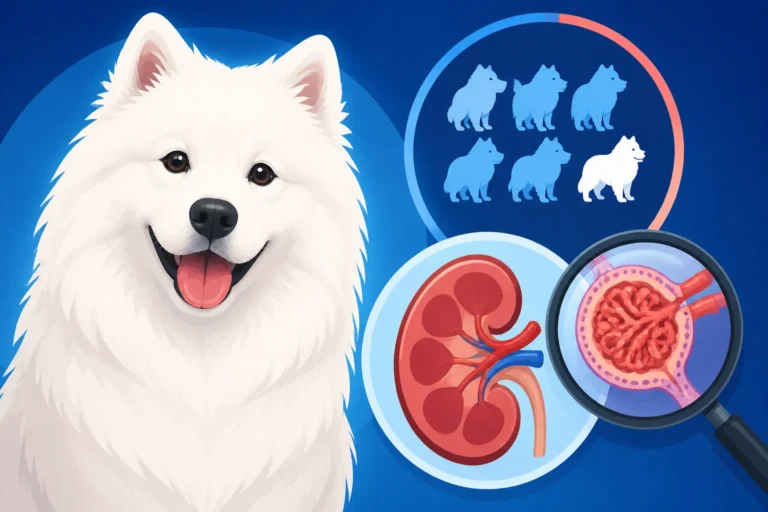
Samoyed hereditary glomerulopathy is an X-linked genetic kidney disorder causing protein loss and fatal failure in young male dogs.