Whether a Samoyed Breeder Must Test Every Female
The heartache of seeing a beautiful Samoyed puppy, full of life and promise, suddenly decline due to a genetic illness is a pain no owner should ever have to endure. For Samoyed enthusiasts, one of the most devastating conditions is Samoyed Hereditary Glomerulopathy (SHG), a kidney disease that disproportionately affects males. This guide will delve deep into why testing breeding females for this X-linked condition isn't just a good idea, but an absolute necessity for the future health of the breed.
Understanding Samoyed Hereditary Glomerulopathy and Its Inheritance
When we talk about Samoyed Hereditary Glomerulopathy, or SHG, we're not just discussing a generic kidney problem; we're referring to a very specific, inherited form of kidney disease. It's caused by a mutation in the COL4A5 gene, which plays a critical role in forming type IV collagen. This collagen is like the foundational scaffolding for tiny filters in the kidneys called glomeruli. When this scaffolding is faulty, these filters break down, leading to protein leaking into the urine and, eventually, kidney failure. It's a cruel disease that manifests differently depending on a dog's sex.
Why Samoyed Males Bear the Brunt of the Disease
The crucial thing to understand about SHG is that it's an X-linked genetic disorder. If you remember your high school biology, females have two X chromosomes (XX), while males have one X and one Y chromosome (XY). The gene responsible for SHG, COL4A5, is located on the X chromosome. This is why you often hear about The Kidney Disease That Kills Samoyed Males Before Fifteen Months.
For males, this single X chromosome means they only have one copy of the COL4A5 gene. If that single copy carries the mutation, there's no backup. They will develop the disease. Sadly, these affected males typically face a grim prognosis, often succumbing to kidney failure before they even reach two years of age. It's a truly heartbreaking reality, highlighting Why Samoyed Hereditary Glomerulopathy Only Devastates the Boys. They don't have the luxury of a second, healthy X chromosome to compensate, making them fully affected if they inherit the mutated gene.
The Role of Female Samoyeds as Carriers
Female Samoyeds, with their two X chromosomes, have a different experience. If a female inherits one mutated COL4A5 gene and one healthy copy, she becomes a carrier. Because she has that second, healthy X chromosome, it often provides enough functional collagen to prevent the severe, early-onset kidney failure seen in males. This doesn't mean carrier females are entirely free from risk; some might show very mild signs of protein loss in their urine later in life, but it's typically nowhere near as severe or as rapidly progressive as in affected males. In fact, many carrier females live long, healthy lives, which sometimes leads to the misconception that they are "clear."
However, the real significance of a carrier female lies in her reproductive potential. She can pass that mutated X chromosome on to her offspring. This makes her the silent link in the chain of transmission. Without testing, a breeder might unknowingly breed a carrier female, continuing the cycle of producing affected males. Understanding Whether a Carrier Samoyed Female Develops Kidney Disease is key to appreciating why proactive testing is so vital.
The Imperative of Testing Every Breeding Female
Given the X-linked nature of Samoyed Hereditary Glomerulopathy, it becomes clear why testing every female intended for breeding is not just recommended, but essential for responsible breeding practices. Skipping this step is akin to gambling with the lives of future puppies and the emotional well-being of their prospective families.
Preventing Affected Male Puppies
The primary goal of testing is to prevent the birth of affected male puppies. When a carrier female is bred to a clear male (who has a healthy X chromosome and a Y chromosome), here's what happens genetically:
- Male Offspring: Each male puppy has a 50% chance of inheriting the mutated X chromosome from his carrier mother, making him affected with SHG. He also has a 50% chance of inheriting the healthy X chromosome from his mother, making him clear.
- Female Offspring: Each female puppy has a 50% chance of inheriting the mutated X chromosome from her mother and the healthy X from her father, making her a carrier. She also has a 50% chance of inheriting the healthy X from her mother and the healthy X from her father, making her clear.
Let's visualize this with a simple table:
| Mother's Status (Carrier) | Father's Status (Clear) | Male Offspring Outcome | Female Offspring Outcome |
|---|---|---|---|
| XMXN | XNY | 50% XMY (Affected) | 50% XMXN (Carrier) |
| 50% XNY (Clear) | 50% XNXN (Clear) | ||
| (Note: XM represents the X chromosome with the mutated gene, XN represents the X chromosome with the normal gene.) |
This table clearly illustrates the very real risk. Without knowing the mother's status, a breeder might be unknowingly producing affected males who will face a short and painful life. This is why The COL4A5 Test Every Samoyed Buyer Should Ask About is paramount, as it informs them about the risk they are taking.
Identifying Carriers for Responsible Breeding Decisions
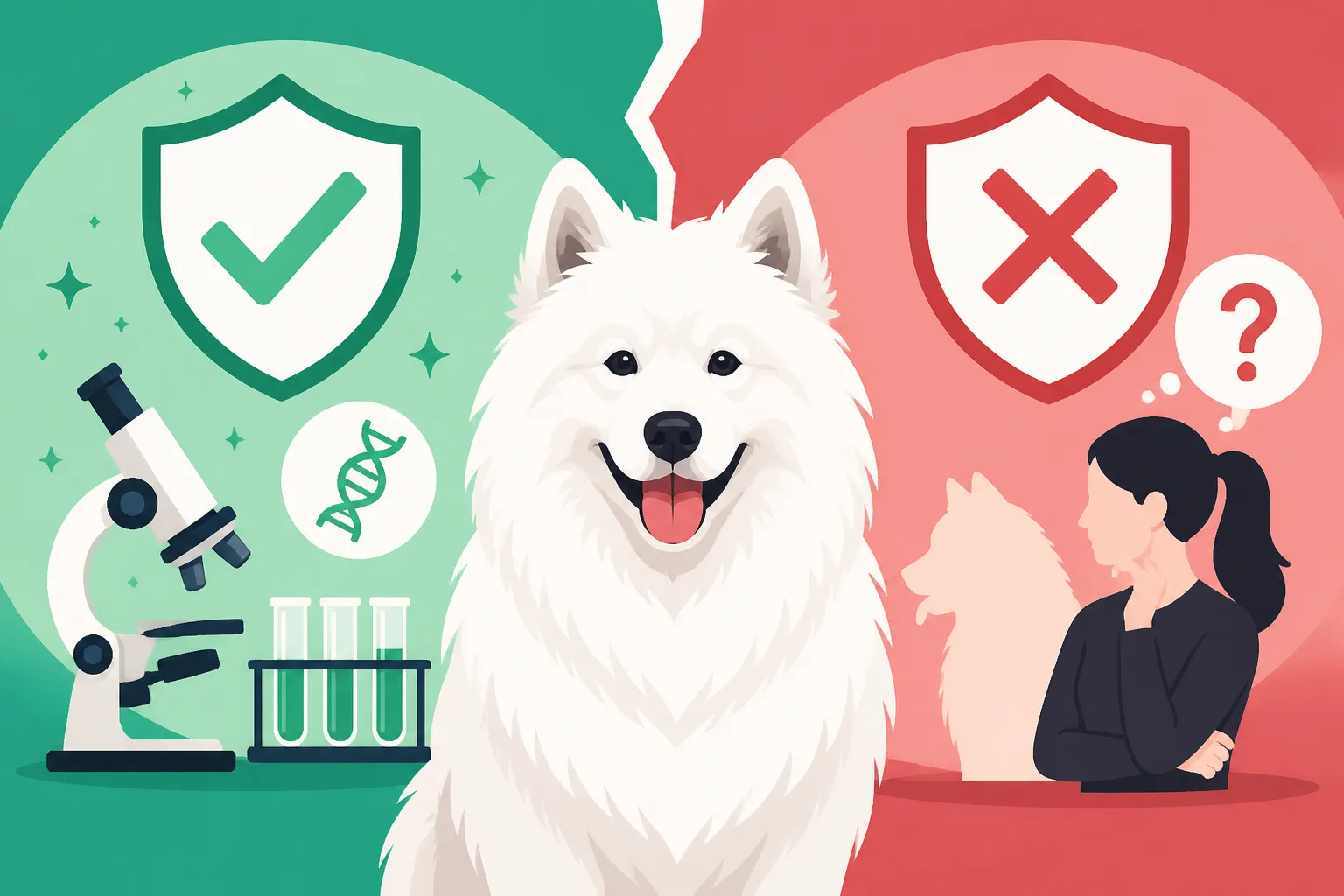
The DNA test for SHG, which looks directly for the COL4A5 gene mutation, is incredibly accurate. This The DNA Test That Finds the Samoyed Kidney Gene allows breeders to definitively classify their females as clear or carriers before breeding.
Knowing a female is a carrier doesn't necessarily mean she should never be bred. If she possesses exceptional qualities that are valuable to the breed (e.g., temperament, structure, working ability), a responsible breeder might choose to breed her only to a clear male. However, this comes with strict protocols:
- Mandatory Testing of All Offspring: Every male puppy from such a breeding must be DNA tested for SHG before placement. Only clear males should be sold as pets, and potential buyers must be fully informed.
- Careful Selection of Female Offspring: Any female puppies from this litter intended for future breeding must also be tested to identify carriers. This helps in making informed decisions for the next generation.
- Transparency: Full disclosure to puppy buyers about the dam's carrier status and the testing of the puppies is non-negotiable.
This approach, while requiring more diligent management, allows breeders to preserve valuable genetic lines without indiscriminately spreading the disease. It's How a Samoyed Breeder Avoids Producing Affected Males while still considering broader genetic health.
The Financial and Emotional Cost of Neglecting Testing
Beyond the ethical imperative, there's a significant practical burden when testing is overlooked. Imagine the scenario: a loving family purchases a seemingly healthy male Samoyed puppy, full of the breed's characteristic joy and mischief. Then, around the age of 6-12 months, symptoms start appearing. They might notice increased thirst, more frequent urination, or a lack of appetite – subtle signs that mask a rapidly progressing disease. The Age a Samoyed Male First Shows Kidney Signs can vary, but it's often tragically early.
Veterinary visits, diagnostics (blood tests, urine tests, ultrasounds), and potential treatments like ACE inhibitors or a specialized renal diet, can quickly rack up substantial bills. While pet insurance providers like Healthy Paws can certainly help mitigate some of these unexpected veterinary costs, especially for unforeseen illnesses, prevention through genetic testing is always the best first line of defense. No insurance policy can truly alleviate the profound grief of watching a young dog suffer and decline, knowing it could have been prevented. The emotional toll on families is immense, far outweighing the cost of a simple DNA test performed years earlier.
Practicalities and Best Practices for Samoyed Breeders
For a Samoyed breeder dedicated to improving the breed and ensuring the health of their puppies, consistent and thorough testing of all potential breeding females is a foundational practice. It’s not just about meeting a minimum standard; it’s about setting a higher one.
Which Lab Runs the Test and How to Get It Done
Several reputable laboratories offer the DNA test for Samoyed Hereditary Glomerulopathy. One of the most recognized for canine genetic testing is OptiGen. They developed the initial test and continue to offer reliable results. Other labs may also offer it, but it's crucial to ensure they are accredited and use the correct markers for the COL4A5 gene. Which Lab Runs the Samoyed Kidney Test is a common question, and breeders should always seek out labs with a strong scientific reputation and proven accuracy.
The process itself is straightforward:
- Order a Test Kit: Breeders can usually order a DNA collection kit directly from the chosen laboratory.
- Collect Sample: The kit typically contains sterile cotton swabs for collecting buccal (cheek) cells from inside the dog's mouth. This is a non-invasive procedure that can be done at home or by a veterinarian.
- Submit Sample: The swabs are then sent back to the lab for analysis.
- Receive Results: Results are usually provided within a few weeks, clearly stating whether the dog is "Clear," "Carrier," or "Affected" (though affected males would typically not be part of a breeding program).
Implementing Test Results into Breeding Programs
Once test results are in hand, a responsible breeder makes informed decisions.
- Clear Females (XNXN): These females can be safely bred to any clear male without risk of producing affected offspring. They will only pass on healthy X chromosomes.
- Carrier Females (XMXN): As discussed, if a carrier female is bred, it must be to a clear male. In this scenario, meticulous record-keeping and puppy testing are vital. Some breeders might choose not to breed carriers at all, depending on the availability of other suitable breeding stock and their personal philosophy. This directly relates to the question of Whether a Carrier Samoyed Female Should Be Bred.
- Affected Males (XMY): These males should never be used for breeding, even if they live long enough to reproduce. Their condition is severe and directly passed to 100% of their female offspring (making them carriers) and 100% of their male offspring (making them affected). This is why Whether a Samoyed Father Can Pass It to His Sons is a misconception; males pass their Y chromosome to sons, and their X to daughters. An affected male passes his affected X chromosome to all his daughters, making them carriers. He cannot pass it to sons.
The Broader Impact on Breed Health
The widespread testing of Samoyed females isn't just about individual litters; it's about the long-term health and reputation of the entire breed. By systematically identifying and managing carrier females, breeders can significantly reduce the incidence of SHG over generations. This proactive approach helps to preserve the genetic diversity of the breed while simultaneously working towards eradicating a devastating disease.
Furthermore, transparency in testing builds trust between breeders and puppy buyers. A breeder who openly shares the results of genetic health tests, including the SHG status of both parents, demonstrates a commitment to ethical practices. This empowers buyers to make informed choices, knowing they are bringing home a puppy with the best possible start in life. Inquire about Whether a Samoyed Puppy Should Be Tested Before Purchase to ensure your potential new family member is clear.
The Breeder's Ethical Obligation and Transparency
Choosing to breed Samoyeds carries a profound ethical responsibility. It's more than just pairing two dogs; it's about safeguarding the future of the breed and ensuring that every puppy born has the best chance at a long, healthy, and happy life. This obligation extends far beyond basic care and delves into the genetic health that impacts generations.
Why Transparency is Non-Negotiable
In the age of readily available genetic testing, there's simply no excuse for a breeder to be anything less than completely transparent about the health status of their breeding stock. This includes not only the COL4A5 gene test for SHG but also other relevant tests for conditions like hip and elbow dysplasia, eye diseases, and cardiac health.
When a breeder provides verifiable health clearances, including the SHG test results for both the dam and sire, they are demonstrating integrity and dedication. This builds immense trust with prospective puppy buyers, who are investing their emotions, time, and significant financial resources into a new family member. Puppy buyers should always feel comfortable asking to see these official results, not just being told "the parents are clear." A reputable breeder will welcome such questions and proudly share the documentation.
The Long-Term Vision for the Samoyed Breed
The goal of testing every female isn't to eliminate all carriers from the breeding pool overnight. Such an extreme approach could severely limit genetic diversity, leading to other unforeseen health issues. Instead, it's about informed breeding. By understanding which females are carriers, breeders can make strategic decisions to minimize the risk of affected puppies while retaining valuable genetic lines.
This meticulous, long-term approach, supported by organizations like the Samoyed Club of America, aims to gradually reduce the frequency of the SHG mutation in the breed's gene pool. It's a testament to the dedication of breeders who prioritize health above all else. For any Samoyed owner, or future owner, understanding the health challenges and the preventative measures taken by responsible breeders is key to truly appreciating this magnificent breed.
Disclaimer
The information provided in this article is for educational and informational purposes only and does not constitute veterinary advice. Always consult with a qualified veterinarian for any health concerns or before making any decisions about your dog's health or medical care. Genetic testing results should always be interpreted in consultation with a veterinarian or a canine genetics expert.