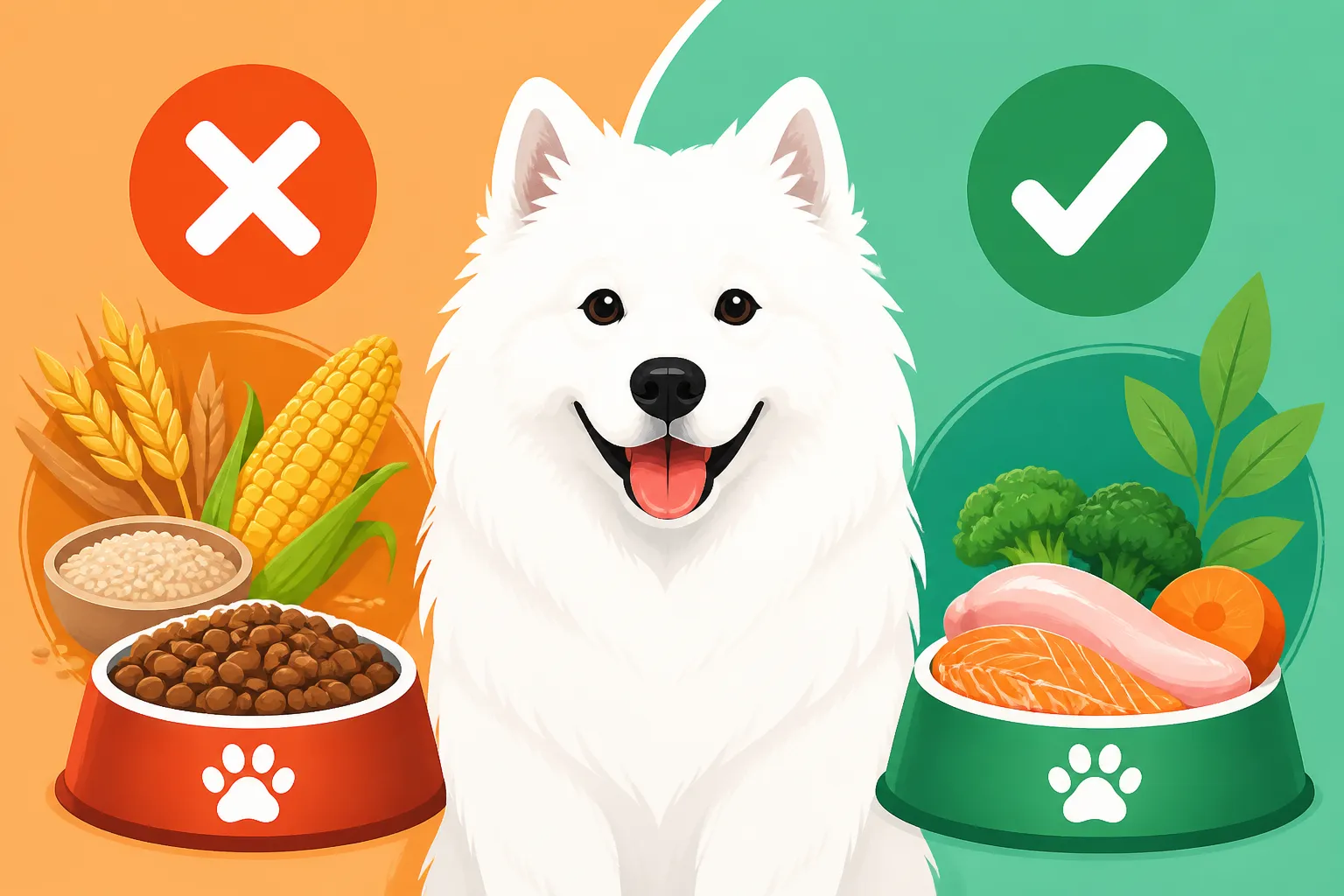
Whether a Samoyed Needs Grain Free Food
The world of dog nutrition can feel like a minefield, with so many trends, strong opinions, and even conflicting information flying around. Many Samoyed owners grapple with the question of whether their fluffy companions absolutely need a grain-free diet, often feeling pressured by clever marketing or well-meaning friends. This guide is here to cut through the noise, validate your confusion, and give you a clear, realistic understanding of grains in your Samoyed's diet, especially concerning recent health concerns.
The Grain-Free Phenomenon: Separating Fact from Fiction for Samoyeds
It feels like overnight, grain-free dog food became the gold standard, lauded as healthier, more natural, and somehow superior. This trend wasn't born out of widespread veterinary recommendations or scientific breakthroughs, but largely from clever marketing that tapped into human health trends and a romanticized view of canine ancestry. For years, we’ve been told that grains are just "fillers" or that dogs, being descended from wolves, shouldn't eat them. For a breed like the Samoyed, whose ancient lineage connects them directly to working alongside humans for millennia, the idea of an "ancestral diet" can sound particularly compelling. However, the reality for our modern Samoyeds is a bit more nuanced than a simple wolf comparison.
The Ancestral Diet Fallacy and Your Samoyed
When you hear arguments for grain-free diets, they often lean heavily on the idea that dogs are direct descendants of wolves, and wolves don't eat grains, so dogs shouldn't either. It's a neat story, but it overlooks thousands of years of canine evolution alongside humans. Over those millennia, as dogs became our companions, hunters, and workers (and yes, Samoyeds were right there, sleeping in tents and herding reindeer), their digestive systems adapted significantly. Unlike their wolf ancestors, domestic dogs evolved specific genes that allow them to efficiently digest starches and grains. This isn't a flaw; it's an evolutionary advantage that enabled them to thrive on human scraps and later, on more varied diets.
Think about your Samoyed: they're not out hunting reindeer every day or scavenging wild berries. They're part of your family, living a domesticated life, and their bodies have changed to reflect that. Dismissing grains entirely based on a wolf comparison ignores a crucial part of what makes our dogs, well, dogs. This isn't to say that all grains are created equal or that quality doesn't matter, but rather to highlight that the premise of "dogs can't digest grains" is largely unfounded for most healthy canines.
Unpacking Grain Allergy Misconceptions
Another major driver behind the grain-free craze was the widespread belief that grains are a common cause of allergies in dogs. Many owners, seeing their Samoyed scratching or experiencing digestive upset, immediately jump to grains as the culprit. It’s understandable; we want to fix our beloved pets, and eliminating something perceived as "bad" seems like a logical first step. However, extensive research and veterinary experience have shown that true grain allergies in dogs are actually quite rare.
The vast majority of canine food allergies are to protein sources like beef, dairy, chicken, or lamb. While a dog can be allergic to a specific grain, it's far less common than an allergy to a protein. If your Samoyed is showing signs of allergies, it’s crucial to work with your veterinarian to identify the actual allergen through a proper food elimination trial, rather than simply guessing and switching to a grain-free diet. Doing so might not only fail to resolve the issue but could also introduce other, potentially more serious, nutritional imbalances.
The Nutritional Value of Grains for Your Samoyed
Far from being mere "fillers," grains offer a powerhouse of essential nutrients that contribute significantly to your Samoyed's overall health and vitality. When formulated correctly in a balanced diet, they provide energy, fiber, and crucial micronutrients. It's important to view food as a whole, not just as individual ingredients. A good dog food, regardless of whether it contains grains, is one that is complete and balanced for your dog's life stage and activity level.
Grains as Sources of Fiber, Vitamins, and Minerals
Whole grains like brown rice, oats, barley, and quinoa are packed with dietary fiber. Fiber is absolutely vital for a healthy digestive system, helping to regulate bowel movements and promote a thriving gut microbiome. For a Samoyed, whose luxurious coat and active lifestyle demand good internal health, proper digestion is key. Beyond fiber, grains also provide B vitamins, which are essential for energy metabolism and nervous system function, and minerals like magnesium, iron, and selenium. These micronutrients play critical roles in everything from oxygen transport in the blood to immune system support.
Think of it this way: when you're considering what your Samoyed needs every day, a balanced array of macro and micronutrients is paramount. Grains contribute significantly to this balance, offering components that other ingredients might lack or provide in lesser quantities. Removing them without a sound nutritional replacement can leave gaps.
Carbohydrates for Energy and a Healthy Digestive System
Carbohydrates are a primary energy source for dogs, fueling their muscles and brain. While proteins and fats also provide energy, carbohydrates offer a readily accessible and efficient form, especially important for active breeds like Samoyeds who love to run, play, and maybe even pull a sled! When sledding is an option for your Samoyed, the sustained energy from complex carbohydrates becomes even more vital.
Moreover, starches from grains, when properly cooked, are highly digestible for dogs. They contribute to a healthy gut by providing fermentable fiber, which feeds beneficial gut bacteria. A thriving gut is linked to a stronger immune system and better nutrient absorption. Removing digestible grains often means replacing them with other carbohydrate sources like peas, lentils, or potatoes. While these can also provide carbohydrates, their nutritional profiles and how they are processed by a dog's body can differ, which brings us to a more serious concern.
The DCM Concern: What Every Samoyed Owner Needs to Know
This is arguably the most critical reason why the "grain-free" discussion shifted dramatically from a trendy preference to a serious health consideration. In recent years, veterinary cardiologists and organizations like the FDA began investigating a potential link between certain grain-free, "boutique," or exotic ingredient diets and an increased incidence of Dilated Cardiomyopathy (DCM) in dog breeds not typically genetically predisposed to the condition. This is a big deal, and it's something every Samoyed owner should be aware of.
What is DCM and Why It Matters
Dilated Cardiomyopathy (DCM) is a serious heart disease where the heart's ventricles, particularly the left ventricle, become enlarged and weakened. This thinning and dilation make it harder for the heart to pump blood effectively to the rest of the body. Over time, this leads to progressive heart failure, characterized by symptoms like lethargy, coughing, difficulty breathing, exercise intolerance, and sometimes sudden death. It's a devastating diagnosis, and traditionally, it has been more commonly seen in large and giant breeds like Doberman Pinschers, Boxers, and Great Danes, often with a genetic component.
The concern arose when vets started seeing DCM in breeds like Samoyeds, Golden Retrievers, Labrador Retrievers, and other dogs with no known genetic predisposition. The common thread in many of these cases was a diet that was grain-free or contained a high proportion of certain ingredients, often legumes. This was a red flag that couldn't be ignored. Aortic Stenosis in a Samoyed is a heart condition that Samoyeds can be predisposed to, so keeping their heart healthy through diet is doubly important.
The FDA's Investigations and "BEG" Diets
The U.S. Food and Drug Administration (FDA) launched an investigation into the potential link between certain diets and DCM. While the precise mechanism isn't fully understood, the focus has been on diets labeled as "Boutique," "Exotic," or "Grain-free" – often referred to as "BEG" diets. These diets frequently substitute traditional grains like corn, rice, and wheat with high levels of ingredients like peas, lentils, potatoes, or other legumes (chickpeas, beans, etc.).
Many veterinary nutritionists theorize that these ingredients, especially in large quantities, may interfere with the absorption or metabolism of essential nutrients like taurine, an amino acid vital for heart health. Some dogs on these diets have shown low taurine levels, and supplementing taurine can sometimes improve their heart condition. However, not all affected dogs have low taurine, suggesting the issue might be more complex, perhaps involving other nutrient deficiencies or toxicities related to ingredient processing or interactions. The research is ongoing, but the strong association is enough for major veterinary organizations to advise caution.
Making an Informed Choice for Your Samoyed
Given the potential risks, the current consensus among veterinary experts is to be very cautious with grain-free diets unless specifically recommended by a board-certified veterinary nutritionist for a medically diagnosed condition. For the vast majority of Samoyeds, a high-quality, grain-inclusive diet from a reputable brand is the safest and most nutritionally sound choice.
When choosing a dog food, look for brands that:
- Employ veterinary nutritionists: Brands with on-staff PhDs in animal nutrition or board-certified veterinary nutritionists are more likely to formulate diets based on scientific research.
- Conduct feeding trials: Look for foods that state they meet AAFCO (Association of American Feed Control Officials) guidelines by undergoing feeding trials, not just by formulation. This means dogs have actually eaten the food and thrived on it.
- Have a long track record: Established brands with a history of research and quality control are generally a safer bet.
- Avoid "exotic" ingredients: Stick to common protein and carbohydrate sources unless there's a specific, diagnosed reason to use novel ingredients.
Retailers like Chewy and Amazon offer a wide variety of reputable, grain-inclusive dog foods that meet these criteria. If you're exploring fresh food options for your Samoyed, such as those offered by Ollie, ensure they are formulated by veterinary nutritionists and are complete and balanced. Don't fall for marketing hype; prioritize scientific backing and expert formulation.
When a Grain-Free Diet Might Be Necessary for a Samoyed
While the general recommendation for Samoyeds is to feed a grain-inclusive diet, there are rare instances where a grain-free approach might be genuinely needed. However, this decision should never be made casually or based on anecdotal evidence. It must be a carefully considered, veterinarian-directed choice, backed by a clear medical diagnosis.
Diagnosed Grain Allergies: The Exception, Not the Rule
As we discussed, true grain allergies are uncommon, but they do exist. If your Samoyed has been thoroughly investigated by a vet and definitively diagnosed with an allergy to a specific grain (e.g., corn or wheat), then a grain-free diet formulated without that particular allergen would be appropriate. This diagnosis usually involves a strict elimination diet under veterinary supervision, followed by food challenges to pinpoint the offending ingredient.
It’s a rigorous process, but it's the only reliable way to confirm a food allergy. Without this formal diagnosis, you risk putting your Samoyed on a diet that doesn't address their actual problem and potentially exposes them to the risks associated with some grain-free formulations. Remember, just because your Samoyed is itchy or has an upset stomach doesn't automatically mean grains are to blame. Often, environmental allergies or other medical conditions are the real culprits. You might want to consider Whether a Samoyed Gets Autoimmune Skin Disease or other skin conditions before assuming a food allergy.
Working with Your Veterinarian for Restricted Diets
If your Samoyed does need a restricted diet, whether it's grain-free or free of a particular protein, working closely with your veterinarian or a board-certified veterinary nutritionist is absolutely essential. They can help you select a commercially prepared diet that is nutritionally balanced and safe, or, if necessary, help formulate a homemade diet that meets all your Samoyed's needs without causing other deficiencies.
Self-prescribing a specialized diet for your Samoyed is risky. The consequences of nutritional imbalances can be severe and long-lasting, particularly for a breed like the Samoyed, known for its robust health and long lifespan when properly cared for. The Twelve to Fourteen Years a Samoyed Lives depends heavily on proper nutrition and care throughout its life. Your vet can also guide you on how to interpret food labels, understand ingredient lists, and monitor your Samoyed for any adverse reactions or signs of nutritional deficiency. They'll also tell you if your Samoyed needs Whether a Samoyed Needs Joint Supplements or other dietary additions.
Transitioning Food Safely
Should your veterinarian recommend a diet change, including moving to or from a grain-free formula, it's crucial to transition your Samoyed's food gradually. A sudden switch can upset their digestive system, leading to issues like diarrhea or vomiting. This is true for any diet change, but particularly important when introducing novel ingredients or significant changes in carbohydrate sources.
A typical transition involves slowly mixing increasing amounts of the new food with decreasing amounts of the old food over a period of 7 to 10 days. For example, you might start with 75% old food and 25% new food for a few days, then move to 50/50, then 25/75, until your Samoyed is eating 100% new food. Pay close attention to your Samoyed's stool quality and overall demeanor during this period. If any digestive upset occurs, slow down the transition. This patient approach ensures your Samoyed's system has time to adjust, minimizing stress and discomfort.
Here's a sample transition schedule:
| Day | Old Food Percentage | New Food Percentage | Notes |
|---|---|---|---|
| Day 1-3 | 75% | 25% | Observe for any digestive upset. |
| Day 4-6 | 50% | 50% | If stools are soft, slow the transition. |
| Day 7-9 | 25% | 75% | Monitor energy levels and appetite. |
| Day 10+ | 0% | 100% | Your Samoyed should be fully transitioned. |
This slow and steady approach is always best when making changes to your Samoyed's diet, ensuring their sensitive digestive system can adapt smoothly.
Disclaimer
This article is for general informational purposes only and does not constitute professional advice. Laws, prices and regulations vary by location and change over time. Consult a qualified professional for guidance on your specific situation.