Signs a Samoyed Is Overweight
It can be incredibly challenging to tell if your beautiful, fluffy Samoyed is carrying a few extra pounds or is genuinely overweight. Their glorious double coat is a master of disguise, making it easy to overlook a thickening waistline until it becomes a significant problem. This guide is here to walk you through the subtle, and not-so-subtle, signs that your Samoyed might be overweight, helping you recognize the indicators before they impact their health and happiness.
The Unique Challenge of Spotting Weight Gain in a Samoyed
Let's be honest, those stunning Samoyed coats are a blessing and a curse. They keep our beloved companions warm in the bitterest cold and surprisingly cool in moderate heat, thanks to their incredible insulation properties. But they also create a fluffy camouflage, making it nearly impossible to gauge their true body condition just by looking at them. You might be petting your dog daily, admiring their soft fur, and completely miss the fact that there's a little too much padding underneath. This isn't just a cosmetic concern; extra weight puts a strain on their bodies and can significantly impact their quality of life.
The Illusion of the Samoyed Coat
That magnificent, dense double coat, a hallmark of the Samoyed breed, is designed to protect them from the harsh elements of their Siberian homeland. It consists of a soft, woolly undercoat and longer, coarser guard hairs. This combination creates a voluminous appearance, making every Samoyed look a bit like a walking cloud. While this is undeniably charming, it also means that visual cues for weight gain—like a sagging belly or visible ribs—are often completely hidden. You could be looking at a dog who appears perfectly proportioned, yet is actually quite pudgy beneath all that fluff. It’s a common frustration for Samoyed owners, who often feel they’re constantly trying to guess what’s truly going on under that snowy exterior.
Many owners only realize their Samoyed is overweight when a vet points it out during a routine check-up, or when other health issues start to surface. The sheer volume of fur means you can't just glance at your dog and know. You have to get hands-on, and even then, it takes a keen sense of touch and understanding of what you're feeling for. This is why it’s so important to be proactive and understand the specific methods for assessing your Samoyed's weight. Don't let the fluff fool you into thinking everything is fine when it might not be.
How a Samoyed's Ruff Hides Weight Gain
One of the trickiest areas to assess on a Samoyed is their neck and shoulder area, often referred to as the "ruff." This thick collar of fur is naturally abundant, giving them that majestic, lion-like appearance. However, it's also a prime location for extra fat deposits to accumulate unnoticed. A truly fit Samoyed will have a distinct neck that flows smoothly into their shoulders, but an overweight one might develop a thicker, less defined neck, with fat blending seamlessly into the ruff.
When you're looking at your Samoyed, the sheer volume of fur around their neck can make it seem like they just have a very full ruff, even if it's actually hiding a substantial amount of fat. This can lead to a false sense of security, as owners might interpret a thick ruff as a sign of a healthy, well-fed dog rather than one carrying excess weight. It's not just the ruff, either; the dense fur over their shoulders and back can also mask a lack of waistline and a general "filling out" that indicates weight gain. This is where relying solely on your eyes will always fail you when it comes to assessing a Samoyed's true physique.
Hands-On Assessment: Beyond What You See
Since visual inspection is unreliable for Samoyeds, the most accurate way to determine if your furry friend is at a healthy weight is through a hands-on examination. This involves feeling for specific anatomical landmarks that would normally be easy to see on a short-coated dog. It takes a bit of practice, but once you know what to feel for, you'll be much better equipped to monitor your Samoyed's condition and make necessary adjustments to their diet and exercise.
Feeling for Ribs Under a Samoyed's Coat
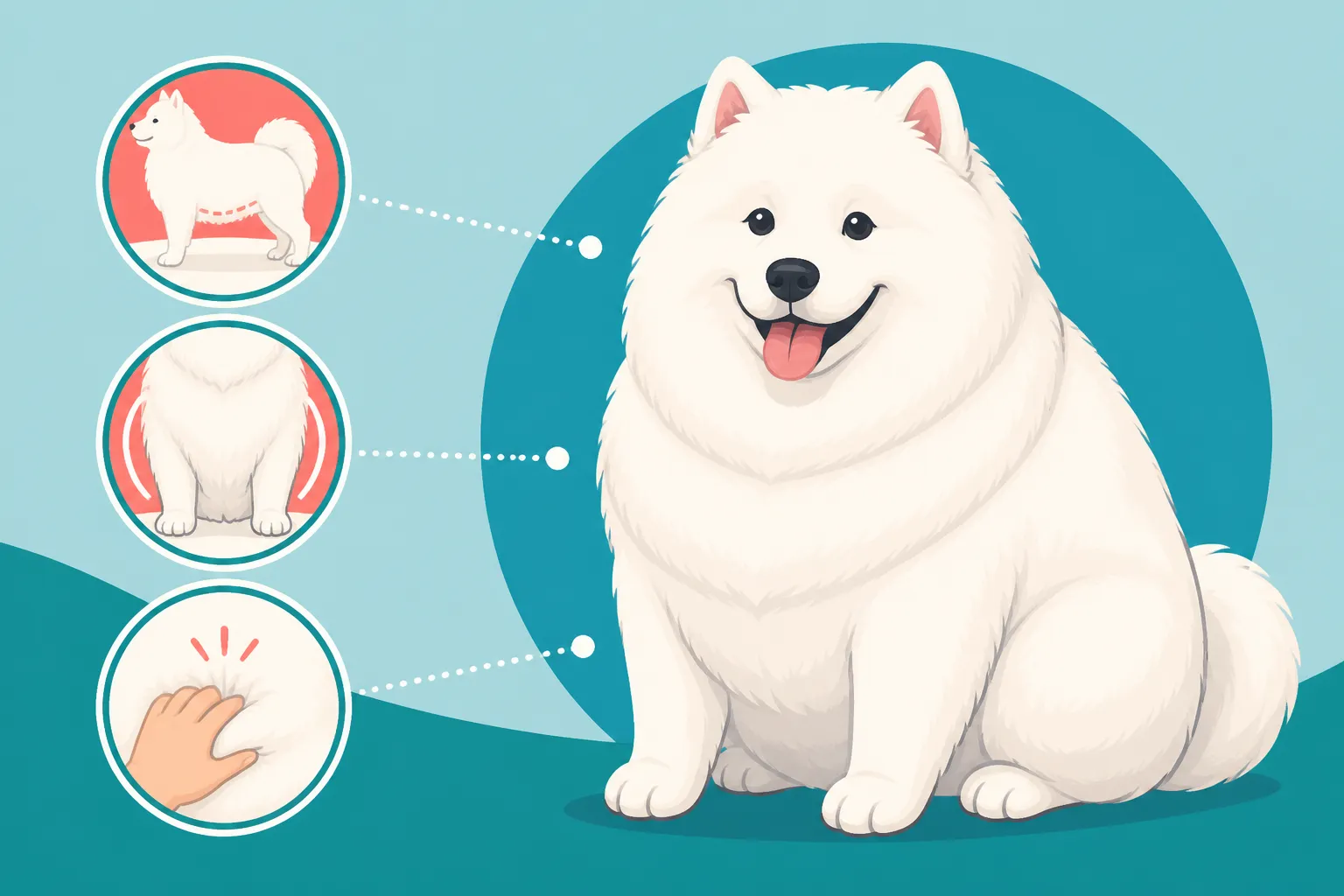
This is perhaps the most crucial part of a hands-on assessment. You need to be able to feel your Samoyed's ribs without pressing too hard. Imagine gently running your fingers along your own knuckles – that's roughly the sensation you're aiming for when feeling your dog's ribs. Here’s how to do it:
First, have your Samoyed stand comfortably. Then, place both hands flat on their chest, just behind their front legs, with your fingers spread. Now, gently run your palms over their rib cage, moving from front to back. You should be able to feel the individual ribs beneath the fur and a thin layer of muscle and fat. You shouldn't see them, but you should definitely feel them. If you have to push hard to feel the ribs, or if you can't feel them at all and it feels like a smooth, soft cushion, then your Samoyed is likely overweight. Conversely, if the ribs are extremely prominent and feel sharp or bony, your Samoyed might be underweight. It's a fine balance, and it’s why understanding the nuances of Why a Samoyed Owner Must Watch Its Weight Closely is so vital for their health.
Practice this regularly. Don't just do it once, but make it part of your routine petting sessions. The more familiar you become with what a healthy rib cage feels like on your dog, the quicker you'll notice any changes. If you’re unsure, ask your veterinarian to guide you through this process during your next check-up. They can give you expert feedback and help you calibrate your touch.
Checking the Waist and Tummy Tuck
Beyond the ribs, the waist and "tummy tuck" are other key indicators. On a dog of healthy weight, you should be able to feel a distinct waistline when you run your hands along their sides from ribs to hips.
To do this, stand above your Samoyed and place your hands on their sides, just behind their rib cage. Gently sweep your hands inwards towards their spine. You should feel a slight indentation or narrowing as you move towards their hips. If it feels like a straight line from ribs to hips, or even bulges outwards, then your Samoyed is likely carrying too much weight. This "lack of tuck" is often hidden by the long fur, so feeling for it is essential.
Now, let's talk about the tummy tuck. When viewed from the side, a healthy Samoyed should have an abdomen that tucks up slightly from the bottom of their rib cage towards their hind legs, rather than hanging low or being parallel to the ground. While the fur will obscure the visual, you can still feel for it. Gently run your hand underneath your Samoyed's belly. If it feels full and rounded all the way along, rather than having a slight upward curve towards their groin, that’s another sign of excess weight. These areas are harder to assess on a Samoyed than on many other breeds, so persistent, gentle palpation is key. A simple way to visualize this for many dogs is with a Body Condition Score chart. While Samoyeds hide the visual, the underlying feeling remains consistent.
| Body Condition Score | Ribs Feel | Waistline (Palpation) | Tummy Tuck (Palpation) | Overall Impression (Hidden by Fur) |
|---|---|---|---|---|
| Too Thin | Very easily felt, often visible | Extremely noticeable indentation | Very pronounced tuck | Gaunt, bony (if fur was removed) |
| Ideal | Easily felt without pressing hard | Clearly felt, slight indentation | Noticeable tuck up | Well-proportioned, athletic |
| Slightly Heavy | Felt with slight pressure | Minimal indentation, almost straight | Less distinct tuck | Rounder, no obvious waist |
| Overweight | Difficult to feel, requires firm pressure | Straight or bulging, no indentation | Full, rounded, no tuck | Barrel-chested, thick, no definition |
| Obese | Cannot feel at all | Bulging, wider than ribcage | Sagging, pendulous belly | Grossly fat, movement inhibited |
Behavioral and Lifestyle Clues
Sometimes, the first signs that your Samoyed is carrying too much weight don't come from a physical examination at all. Instead, they manifest in changes to their daily behavior, energy levels, and even their general demeanor. These are often subtle at first, easy to dismiss as just "getting older" or "being lazy," but they can be strong indicators that something needs to be addressed. Pay close attention to these shifts, as they can tell you a lot about your Samoyed's overall well-being.
Changes in Activity Levels and Stamina
One of the most telling signs that your Samoyed might be overweight is a noticeable decrease in their activity levels and stamina. Samoyeds are, by nature, active dogs. They were bred for endurance and work, so a sudden disinterest in walks, playtime, or even just moving around the house can signal an issue. You might find them panting more heavily than usual after a short stroll, lagging behind on walks that they once bounded through, or simply choosing to lie down rather than engage in play.
Perhaps they're less enthusiastic about their morning romp in the yard, or they seem to tire out much quicker during a game of fetch. It's easy to attribute this to age, especially if your Samoyed is past puppyhood, but often, it's a direct consequence of carrying extra weight. Imagine trying to run or play while carrying a backpack full of bricks – it's exhausting! The same applies to your dog. If you notice your Samoyed constantly seeking out cool spots to lie down, panting excessively, or being reluctant to join in activities they once loved, it’s worth considering their weight as a contributing factor. For tips on managing their energy, you might want to read about How Much Exercise a Samoyed Needs.
Altered Appetite and Eating Habits
You might think an overweight dog would constantly be begging for food, but sometimes altered appetite and eating habits can be more complex. While some overweight Samoyeds might indeed seem ravenously hungry all the time, others might have developed very specific, and unhealthy, eating patterns. This could include being extremely picky about their regular meals, but absolutely insistent on getting treats or human food.
Perhaps they've learned to "hold out" for better options, leading you to inadvertently overfeed them in an attempt to get them to eat. Or maybe, due to boredom or habit, they graze throughout the day if food is always available, consuming more calories than they need without ever truly feeling "full." Sometimes, a Samoyed might even seem less interested in their regular food because they feel sluggish or uncomfortable from the extra weight. It's a vicious cycle where decreased activity can lead to less interest in food, or increased boredom leads to seeking food. Paying close attention to how much and what your Samoyed is eating, including all those little treats and table scraps, is crucial. If you’re struggling with their eating habits, consider What Actually Motivates a Samoyed during training and apply similar principles to mealtime.
The Health Risks of an Overweight Samoyed
Ignoring those extra pounds isn't just about aesthetics; it's a serious health concern that can dramatically shorten your Samoyed's lifespan and diminish their quality of life. Just like in humans, excess weight in dogs can lead to a cascade of health problems, some of which can be debilitating or even life-threatening. Understanding these risks is crucial for motivating owners to take action and keep their beloved companions at a healthy weight.
Joint Strain and Mobility Issues
Samoyeds are generally a robust breed, but like many larger dogs, they can be predisposed to certain orthopedic issues, such as hip dysplasia. When a Samoyed carries extra weight, the strain on their joints, ligaments, and bones is significantly increased. This added stress can accelerate the development of arthritis, worsen existing conditions like hip or elbow dysplasia, and lead to chronic pain. An overweight Samoyed might struggle to get up from a lying position, be reluctant to jump, or show signs of lameness after exercise.
This can create a cruel cycle: the pain from joint issues discourages activity, which in turn leads to further weight gain, exacerbating the joint problems. It's a heartbreaking situation to see a once-athletic dog struggle with mobility. Keeping your Samoyed at an ideal weight is one of the most effective preventative measures you can take to protect their joints and ensure they remain active and comfortable well into their senior years. Regular check-ups with your vet to discuss their joint health, especially if you suspect weight is an issue, are invaluable. For more insight into managing these conditions, consider topics like Arthritis in an Older Samoyed.
Increased Risk of Other Health Conditions
Beyond joint problems, an overweight Samoyed faces a higher risk of developing a myriad of other serious health conditions. One of the most significant concerns is an increased likelihood of developing diabetes. Just as in humans, obesity is a major risk factor for insulin resistance and, eventually, diabetes mellitus in dogs. Imagine the stress of managing Diabetes in a Middle Aged Samoyed – daily insulin injections, careful diet monitoring, and frequent vet visits.
But it doesn't stop there. Excess fat can also lead to heart disease, putting extra strain on their cardiovascular system. Overweight dogs are more susceptible to respiratory problems, struggling to breathe efficiently, especially in warmer weather. Their immune system can be compromised, making them more prone to infections. Even skin conditions can become more prevalent due to folds of skin trapping moisture and heat. The list goes on, including increased risks during anesthesia for any surgical procedures. All these factors contribute to a potentially shorter, less comfortable life for an overweight Samoyed. It truly underscores why maintaining a healthy weight is fundamental to their overall well-being.
Taking Action: What to Do If Your Samoyed Is Overweight
Discovering your Samoyed is overweight can feel daunting, but it's a situation that's entirely within your control to change. The good news is that even small, consistent adjustments to their diet and exercise routine can make a huge difference over time. It's about making sustainable lifestyle changes, not drastic, temporary fixes. Think of it as an opportunity to deepen your bond with your Samoyed through healthy habits.
Revisiting Their Diet
The first and often most impactful step in helping an overweight Samoyed is to critically evaluate their diet. This isn't just about how much they eat, but what they eat.
Start by consulting your veterinarian. They can help you determine an appropriate target weight for your Samoyed and calculate a safe daily calorie intake. Don't guess! Underfeeding can be just as dangerous as overfeeding, and a vet can recommend a suitable weight-loss plan or a specific prescription diet. Many vets might suggest a high-fiber, lower-calorie dog food designed for weight management. You can often find a good selection of these specialized foods on trusted pet supply sites like Chewy, which often carry veterinary diets with a prescription.
Once you have a plan, precise portion control is key. Stop "eyeballing" portions and invest in a kitchen scale to measure their food accurately. Remember to account for all calories, including treats. Those little training rewards or bedtime biscuits add up quickly. If your Samoyed is a treat fiend, switch to low-calorie options like small pieces of carrot, green beans, or specially formulated diet treats. Some owners even explore fresh food delivery services like Ollie, which provide portion-controlled, human-grade meals that can be tailored for weight loss under veterinary guidance. This attention to detail in their food intake is paramount for successful weight management. For more specific guidance, consider learning about How Many Cups a Day an Adult Samoyed Eats to ensure accurate feeding.
Boosting Activity Safely
Increasing your Samoyed's physical activity is the other half of the weight loss equation. However, it's crucial to do this safely and gradually, especially if they haven't been very active or if they have existing joint issues.
Start slow. Instead of one long, strenuous walk, try several shorter, more frequent walks throughout the day. A 15-minute walk, two or three times a day, might be more beneficial and less taxing than trying to force a 45-minute trek that leaves them exhausted and sore. As their fitness improves and they start to lose a little weight, you can gradually increase the duration and intensity. Consider introducing new forms of exercise that are gentle on their joints, such as swimming if your Samoyed enjoys water, or simply more active playtime in the yard with toys.
Remember, Samoyeds are intelligent and thrive on engagement. Incorporate mental stimulation into their activity, too. Scent work or puzzle toys can burn calories and keep them engaged without putting undue stress on their body. Always monitor your Samoyed for signs of overheating, especially in warmer weather, and provide plenty of fresh water. You can find precise measuring cups or even a digital pet scale on Amazon, as well as plenty of engaging puzzle toys to help with both diet and mental stimulation. The goal is to build up their stamina and make exercise an enjoyable, consistent part of their daily routine, rather than a punishment.
Disclaimer
This article is for general informational purposes only and does not constitute professional advice. Laws, prices and regulations vary by location and change over time. Consult a qualified professional for guidance on your specific situation.