Aortic Stenosis in a Samoyed
Finding out your beloved Samoyed has a heart condition can be absolutely terrifying, especially when you hear a complex term like "aortic stenosis." It throws your world into a spin, leaving you with countless questions and a heavy heart, wondering about their future and how you can best care for them. This guide is here to walk you through everything you need to know about aortic stenosis in Samoyeds, from understanding what it is to managing the condition and ensuring your fluffy companion lives their best possible life.
Understanding Aortic Stenosis in Samoyeds
When you picture your Samoyed, you probably think of that happy, smiling face and endless energy. It's hard to imagine something as serious as a heart defect hiding beneath all that fur and joy. But for some Samoyeds, a condition called aortic stenosis can be a real, silent threat, often starting subtly and progressing over time.
What Exactly Is Aortic Stenosis?
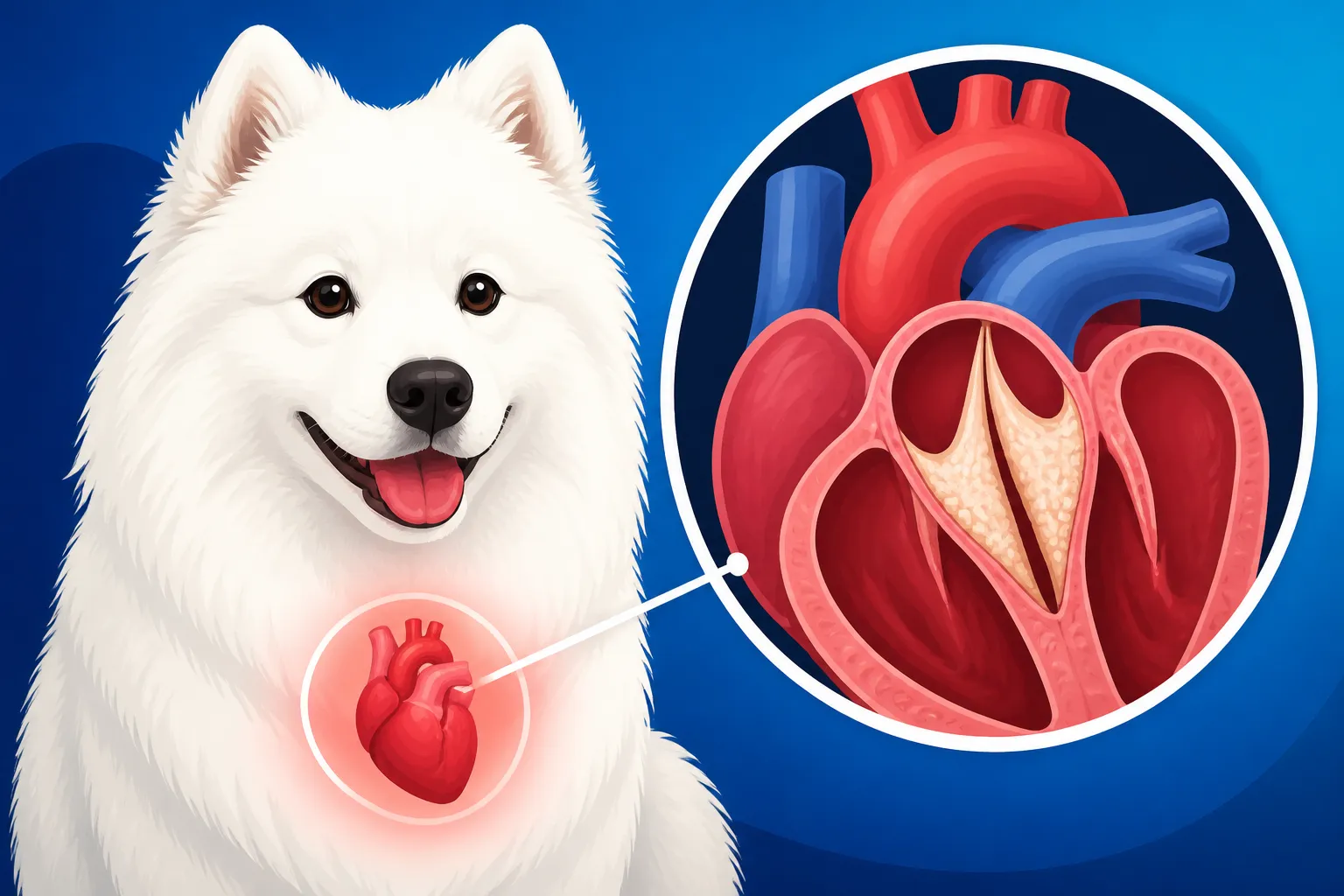
Let's break down the fancy medical jargon into something understandable. Your Samoyed's heart, like yours, is a powerful pump. It has four chambers, and blood flows through them in a very specific order, controlled by valves that open and close. The aorta is the largest artery in the body, responsible for carrying oxygen-rich blood from the left side of the heart, specifically the left ventricle, out to the rest of the body. Think of it as the main highway for all that vital blood.
Now, imagine this highway has an on-ramp, and that on-ramp is controlled by a gate – the aortic valve. Aortic stenosis (AS) means there's a narrowing (stenosis) either at this aortic valve itself, just below it (subvalvular aortic stenosis, or SAS), or, less commonly, just above it. In Samoyeds, it's most frequently the subvalvular type, meaning a ring of fibrous tissue forms just below the valve. This narrowing acts like a kink in a garden hose. The heart has to work much, much harder to push blood through that constricted opening. Over time, this extra effort can cause the heart muscle to thicken (hypertrophy) and eventually lead to heart failure or even sudden cardiac death. It's a progressive disease, meaning it tends to get worse over time, although the rate of progression varies from dog to dog.
Why Samoyeds Are Prone to This Condition
It's heartbreaking to learn that our beloved Samoyeds, like many purebred dogs, can be predisposed to certain genetic conditions, and aortic stenosis is one of them. While not as widely discussed as some other breed-specific issues, it's something responsible Samoyed owners and breeders need to be aware of. The exact mode of inheritance is still being studied, but it's generally understood to be polygenic, meaning multiple genes are involved, or at least a complex hereditary pattern.
This isn't just a Samoyed problem, of course. Other large breeds, such as Newfoundlands, Golden Retrievers, German Shepherds, Boxers, and Rottweilers, are also known to have an increased incidence of AS. For Samoyeds, it's thought that the genetic factors lead to the development of that fibrous ring of tissue beneath the aortic valve. This isn't something that happens overnight or due to environmental factors; it's something they are born with, even if the signs don't manifest until later. This hereditary link is why early screening of breeding animals is so crucial to help reduce the prevalence of the disease in future generations of Samoyeds. It's a sad reality, but knowing about it empowers us to take preventative steps and provide the best care.
The Different Grades of Aortic Stenosis
When a veterinarian or a veterinary cardiologist diagnoses aortic stenosis, they don't just say "your dog has AS." They'll often give it a "grade" – typically mild, moderate, or severe. This grading is incredibly important because it dictates the prognosis and the recommended course of treatment. It's not unlike how human doctors classify heart conditions; it helps them understand the extent of the problem and what to expect.
- Mild Aortic Stenosis: In these cases, the narrowing is slight. Your Samoyed might not show any clinical signs at all, and their life expectancy might not be significantly affected. The primary concern is monitoring, as even mild cases can sometimes progress. Many dogs with mild AS live full, happy lives with minimal intervention, though the risk of complications, however small, always exists.
- Moderate Aortic Stenosis: Here, the narrowing is more pronounced, and the heart has to work harder. While your Samoyed might still seem fine, they could start to show subtle signs of exercise intolerance or fatigue. The risk of developing symptoms or complications is higher than with mild AS, and medication might be recommended to help manage the heart's workload.
- Severe Aortic Stenosis: This is the most serious form. The narrowing is significant, placing immense strain on the heart. Dogs with severe AS are at a much higher risk of developing clinical signs such as fainting, difficulty breathing, or even sudden death. Their life expectancy is often considerably shortened without careful management. These Samoyeds require diligent monitoring and often a combination of medications to support their heart function.
The grading is usually determined by measuring the velocity of blood flow across the narrowed area using a special type of ultrasound called a Doppler echocardiogram. This measurement, called the pressure gradient, gives the cardiologist a clear picture of how hard the heart is truly working to overcome the obstruction. It's a sophisticated way to truly understand the condition's impact.
Recognizing the Signs and Symptoms
One of the most frustrating aspects of heart conditions in dogs, especially in a stoic breed like the Samoyed, is how well they can hide their discomfort. Your Samoyed might still greet you with a wagging tail and a smile, even when their heart is struggling. This is why it's so important for us as owners to be incredibly observant and not dismiss subtle changes. It brings to mind the challenge of how a Samoyed hides illness behind a smile.
The Subtle Early Indicators
In the early stages, especially with mild to moderate aortic stenosis, many Samoyeds are completely asymptomatic. This is why a heart murmur is often the very first indicator a vet will find during a routine check-up. They might just pick up that tell-tale "whooshing" sound while listening to your pup's chest. This underscores why every single time your puppy goes to the vet, their heart should be listened to, as early detection can make a world of difference.
However, as the condition progresses, you might start to notice some subtle changes that are easy to dismiss as just "getting older" or "being lazy" – especially in a fluffy dog that likes to conserve energy!
- Exercise Intolerance: Your Samoyed, who once joyfully bounded through a long walk, might now tire more quickly. They might lag behind, want to cut the walk short, or be less enthusiastic about playing fetch. This isn't just them being a couch potato; it's their heart struggling to keep up with the demands of their body.
- Lethargy or Reduced Activity: A general decrease in energy levels, sleeping more, or just not having their usual zest for life can be a red flag. They might not be interested in their usual games or may seem less responsive to calls for play.
- Slow Recovery After Exercise: After a short burst of activity, it might take them much longer to catch their breath and calm down compared to how they used to. Excessive panting after minimal exertion is something to pay close attention to.
These signs are vague, which makes them tricky, but knowing that they could be related to a heart issue means you should bring them to your vet's attention promptly.
More Advanced Clinical Signs
As aortic stenosis becomes more severe, the symptoms tend to become more obvious and alarming. This is when the heart is really struggling to maintain adequate blood flow to the body, and its compensatory mechanisms are starting to fail.
- Fainting (Syncope): This is one of the most dramatic and terrifying signs. Your Samoyed might suddenly collapse or pass out, especially during or after exercise, excitement, or even during a bowel movement. This happens because the heart can't pump enough blood to the brain, causing a temporary loss of consciousness. It's usually very brief, and they might recover quickly, but it's a clear indication of a serious problem.
- Difficulty Breathing (Dyspnea) or Coughing: While coughing is more typical of left-sided heart failure (which can be a consequence of severe AS) causing fluid in the lungs, it can also be a sign of increased pressure in the lungs. Difficulty breathing might manifest as rapid, shallow breaths, or an increased effort to breathe, even at rest. Their gums might also appear pale or bluish.
- Weakness or Collapse: Beyond just fainting, your Samoyed might experience generalized weakness or collapse, not necessarily losing consciousness, but simply unable to stand or move. This indicates widespread inadequate blood flow to muscles and organs.
- Poor Growth (in puppies): If a puppy has severe AS, they may not grow at the same rate as their littermates, appearing smaller and less robust. They might also show early signs of exercise intolerance.
Seeing any of these advanced signs warrants an immediate veterinary visit. It means your Samoyed's heart is under significant distress, and they need urgent medical attention.
The Dreaded Sudden Collapse
Perhaps the most devastating aspect of severe aortic stenosis is the risk of sudden cardiac death. This is the scenario every owner fears, and sadly, it can happen without much warning, especially in young adult Samoyeds with severe, undiagnosed AS. Imagine your happy, seemingly healthy Samoyed playing in the yard one moment, and then collapsing the next, never to get up again. It's a truly heartbreaking reality.
This sudden collapse is often due to a fatal arrhythmia – an electrical disturbance in the heart that causes it to stop beating effectively – or acute heart failure due to the overwhelming strain. The extreme pressure and turbulence caused by the narrowing can irritate the heart muscle and coronary arteries, leading to these catastrophic events. For many owners, it's the ultimate frustration because their Samoyed seemed so vibrant just moments before. This is a stark reminder of why, if a heart murmur is detected, especially in a young dog, a thorough cardiology workup is not just recommended, but absolutely essential. It's about mitigating this risk and ensuring that if the condition is severe, you have every chance to manage it and hopefully prevent such a tragic outcome.
Diagnosis and Initial Steps After a Murmur is Heard
The journey to understanding your Samoyed's heart health often begins with a routine check-up, a quick listen with a stethoscope, and an unexpected sound. That sound—a heart murmur—is often the first hint that something might be amiss. It’s a moment that can send a wave of panic through any dog owner, but it’s also the first step toward getting answers and finding solutions.
The Routine Vet Visit and Heart Murmur Discovery
Every time your Samoyed visits the vet for a check-up, vaccinations, or even a minor concern, one of the first things they do is listen to their heart. This simple act of auscultation is incredibly powerful. A healthy heart makes a distinct "lub-dub" sound, which is the sound of the valves opening and closing. A heart murmur, on the other hand, is an extra sound—a "whoosh" or "swish" that accompanies or obscures the normal heart sounds. It's caused by turbulent blood flow, meaning the blood isn't flowing smoothly through the heart or blood vessels.
When your vet detects a murmur, they'll usually note its intensity (how loud it is, graded from I to VI), its location, and when in the cardiac cycle it occurs. For aortic stenosis, the murmur is typically heard loudest over the left chest wall, near the base of the heart, and is described as a "systolic ejection murmur" (meaning it happens when the heart is contracting and ejecting blood). While discovering a murmur can be scary, it's crucial to remember that a murmur doesn't automatically mean your Samoyed has a life-threatening condition. Many murmurs, especially in puppies, can be "innocent" or physiological, meaning they aren't indicative of structural heart disease. However, any murmur, particularly one that persists past puppyhood or is loud, warrants further investigation. It's the veterinary equivalent of a check engine light coming on – it needs to be looked at. This is particularly true for Samoyeds, given their known predisposition to specific conditions like subaortic stenosis in a Samoyed.
Referral to a Veterinary Cardiologist
Once a heart murmur is detected, especially if it's moderate to loud, or if your Samoyed is showing any concerning symptoms, your general practice veterinarian will almost certainly recommend a referral to a board-certified veterinary cardiologist. And let me tell you, this is absolutely the right move. While your regular vet is amazing, a cardiologist is a specialist who has dedicated years to understanding the intricate workings of animal hearts. They have specialized equipment and expertise to diagnose and manage complex cardiac conditions.
The thought of seeing a specialist can feel overwhelming, both financially and emotionally. But think of it this way: your Samoyed's heart is a vital organ, and you want the best possible person examining it. A cardiologist will be able to perform a comprehensive cardiac workup, including advanced diagnostics that aren't available in most general practices. They can definitively tell you what's causing the murmur, if it's serious, and what the prognosis looks like. It’s an investment in your Samoyed's health and your peace of mind. They can differentiate between an innocent murmur and a serious structural defect like aortic stenosis, and provide clarity on whether a Samoyed with a heart murmur is in trouble.
Understanding the Diagnostic Tests
When you visit the cardiologist, they'll perform several key tests to get a complete picture of your Samoyed's heart health. These aren't just random tests; each one provides specific, crucial information.
- Echocardiogram (Echo): This is essentially an ultrasound of the heart. It’s non-invasive and provides real-time images of your Samoyed's heart structure, including the chambers, valves, and surrounding blood vessels. The cardiologist can see if there’s a fibrous ring below the aortic valve, how well the heart muscle is contracting, and if there are any other structural abnormalities. It’s like getting a detailed blueprint of the heart. For Samoyeds suspected of having AS, the echo will reveal the characteristic thickening of the left ventricle wall and the presence and severity of the subvalvular lesion.
- Doppler Ultrasound: This is often performed as part of the echocardiogram. The Doppler specifically measures the speed and direction of blood flow through the heart. This is incredibly important for diagnosing and grading aortic stenosis, as the blood rushing through a narrowed opening will move much faster. The higher the velocity, the more severe the stenosis. This measurement helps determine if the AS is mild, moderate, or severe, directly correlating with the pressure gradient across the obstruction.
- Electrocardiogram (ECG/EKG): An ECG records the electrical activity of the heart. It's used to detect arrhythmias (irregular heartbeats) or other electrical disturbances that can be associated with AS. While AS itself is a structural problem, the strain it puts on the heart can lead to abnormal rhythms, which can be life-threatening. The ECG helps the cardiologist assess if your Samoyed is at risk of sudden cardiac death due to these arrhythmias.
- Thoracic Radiographs (X-rays): While not directly diagnostic for AS, chest X-rays can provide information about the overall size and shape of the heart and check for fluid accumulation in the lungs (pulmonary edema), which would indicate congestive heart failure. This helps the cardiologist assess the overall impact of the heart disease on your Samoyed's respiratory system.
These tests, especially the echocardiogram with Doppler, are the gold standard for diagnosing aortic stenosis. They allow the cardiologist to precisely assess the severity of the condition and formulate the most appropriate management plan for your Samoyed.
Managing Aortic Stenosis: Treatment Options and Strategies
Once your Samoyed receives a diagnosis of aortic stenosis, the focus shifts to management. It’s important to understand that, like many chronic heart conditions, AS is typically not curable. However, with the right approach, we can significantly improve your Samoyed’s quality of life and potentially extend their lifespan. This involves a combination of medical therapies, lifestyle adjustments, and, in some rare cases, surgical interventions.
Medical Management for Different Grades
The treatment plan for aortic stenosis is highly individualized and depends heavily on the severity (grade) of the condition, your Samoyed's age, and whether they are showing any clinical signs.
- Mild Aortic Stenosis: For Samoyeds with mild AS who are not exhibiting any symptoms, active medical treatment might not be necessary initially. The primary focus will be on regular monitoring. This usually means follow-up appointments with the cardiologist every 6 to 12 months, including repeat echocardiograms, to ensure the condition isn't progressing. We'll want to watch for any changes in their energy levels or breathing. Sometimes, just maintaining an ideal body weight and avoiding excessive strenuous activity is enough.
- Moderate to Severe Aortic Stenosis: For Samoyeds with more significant narrowing, or those who are starting to show symptoms like exercise intolerance or fainting, medication is typically prescribed. The cornerstone of medical therapy for AS is usually a class of drugs called beta-blockers. A common one is atenolol. These medications work by slowing the heart rate and reducing the force of the heart's contractions. By doing this, they effectively decrease the workload on the heart, which is constantly struggling against the narrowed outflow tract. This reduction in workload can help protect the heart muscle from further thickening (hypertrophy) and also reduce the risk of arrhythmias, which can lead to sudden collapse.
- Think of it this way: if your heart is a pump trying to push water through a small opening, a beta-blocker tells the pump to work a little slower and less forcefully, making the task less damaging over time.
- Other Potential Medications: If your Samoyed develops complications, such as congestive heart failure (fluid in the lungs), other medications might be added to the regimen. These could include diuretics (to reduce fluid buildup), ACE inhibitors (to reduce blood pressure and heart workload), or specific anti-arrhythmics if particular abnormal heart rhythms are detected. The choice and combination of drugs are always made by the veterinary cardiologist based on your Samoyed's specific needs.
It's a delicate balance, and regular communication with your cardiologist is key to fine-tuning the medication dosages and ensuring your Samoyed is responding well.
Lifestyle Adjustments for Your Samoyed
Medical management goes hand-in-hand with making thoughtful adjustments to your Samoyed's daily life. These changes aren't about restricting their joy, but about managing their energy and protecting their heart.
- Controlled Exercise: This is paramount, especially for Samoyeds with moderate to severe AS. While exercise is important for overall health, strenuous or prolonged activity can put excessive strain on an already compromised heart and increase the risk of fainting or sudden death. Instead of vigorous games of fetch or long, fast runs, focus on shorter, leash-controlled walks. Multiple shorter walks throughout the day are often better than one long, intense outing. Avoid situations that cause extreme excitement or stress, as these also elevate heart rate and blood pressure. It's about moderation and listening to your Samoyed's cues. Don't push them if they seem tired.
- Maintaining Ideal Body Weight: An overweight Samoyed places extra strain on all their organs, including the heart. Keeping your Samoyed at a lean, healthy weight is one of the easiest and most impactful things you can do to support their cardiac health. Discuss diet and caloric intake with your vet or cardiologist.
- Dietary Considerations: While there isn't a specific "aortic stenosis diet," some general principles apply. Avoiding high-sodium foods is often recommended, particularly if there's any risk of congestive heart failure, as sodium can contribute to fluid retention. Your vet might recommend a heart-healthy diet, which is usually a high-quality, balanced commercial dog food.
- Stress Reduction: Emotional stress can cause a surge in adrenaline, which increases heart rate and blood pressure – precisely what we want to avoid in a Samoyed with AS. Try to maintain a calm, consistent routine. If your Samoyed gets anxious in certain situations (e.g., thunderstorms, car rides), discuss strategies with your vet to manage their anxiety. This could range from behavior modification to calming supplements or even anti-anxiety medications if necessary.
These lifestyle changes, when implemented consistently, can significantly contribute to your Samoyed's comfort and well-being.
Surgical and Interventional Options
When you hear "heart condition," you might immediately think of surgery. However, for aortic stenosis in dogs, surgical intervention is far less common and considerably more complex than medical management. It's not a routine procedure and is usually reserved for very specific circumstances.
- Balloon Valvuloplasty: This is the most widely discussed interventional procedure for subvalvular aortic stenosis. It's a minimally invasive procedure performed by a specialized veterinary cardiologist. During a balloon valvuloplasty, a catheter with a small balloon is inserted into an artery (usually in the leg) and guided up to the heart, specifically to the narrowed area beneath the aortic valve. The balloon is then inflated, stretching the constricted tissue and hopefully widening the opening to improve blood flow.
- When is it considered? This procedure is typically considered for young Samoyed puppies or juvenile dogs with severe aortic stenosis who are showing clinical signs and have a very high pressure gradient. The goal is to improve the quality and length of life, as these dogs have a poor prognosis without intervention.
- Risks and Benefits: While it can provide significant relief, it's not without risks. These can include complications during the procedure (e.g., vessel damage, arrhythmias, tearing of the valve), and there's no guarantee of a perfect outcome. The success varies, and the narrowing can sometimes re-stenose over time. It's also often very expensive.
- Why it's not a common solution: For many adult Samoyeds, especially those with mild to moderate AS or those whose fibrous ring is very thick and stiff, balloon valvuloplasty may not be recommended or effective. The procedure is aimed at stretching congenital tissue, and a very mature, rigid fibrous ring is less likely to respond well. Additionally, there are few facilities equipped to perform such specialized procedures, and it requires highly skilled cardiologists.
- Open-Heart Surgery: Unlike in humans, open-heart surgery to remove the fibrous ring or replace the aortic valve is generally not a viable option for dogs. The complexity, risks, and post-operative care make it prohibitively challenging and largely unsuccessful in veterinary medicine.
So, while medical management and diligent monitoring are the cornerstones of care for most Samoyeds with aortic stenosis, it's good to be aware that for very specific, severe cases in young dogs, interventional procedures might be discussed with a specialist.
Living with a Samoyed with Aortic Stenosis
Receiving an AS diagnosis for your Samoyed isn't a death sentence, but it does mean a new chapter in their care. It's about adaptation, dedication, and ensuring their remaining years are as comfortable and joyful as possible. Living with a dog with a chronic heart condition can feel like walking a tightrope, balancing careful management with letting them enjoy life.
Regular Monitoring and Follow-Up Care
This is absolutely crucial. Aortic stenosis is a progressive disease, and even if your Samoyed's condition is currently stable, it can change over time.
- Consistent Vet and Cardiologist Visits: Expect regular check-ups with your veterinary cardiologist. For mild cases, this might be annually, but for moderate to severe AS, it could be every six months, or even more frequently if adjustments to medication are needed or symptoms worsen. These visits are vital for reassessing the murmur, performing repeat echocardiograms with Doppler studies to track the progression of the stenosis, and conducting ECGs to monitor for arrhythmias. These tests allow the cardiologist to ensure the medications are working effectively and to make any necessary dosage adjustments.
- Observing Your Samoyed at Home: You are your Samoyed's best advocate. You see them every day and are most likely to notice subtle changes that a vet only sees periodically. Keep a close eye on their energy levels, breathing patterns (both at rest and after activity), appetite, and any signs of coughing, weakness, or fainting. It can be helpful to keep a journal of these observations, as even small details can be significant for your cardiologist. If you notice any concerning changes, don't wait for your next scheduled appointment; contact your vet or cardiologist immediately.
- Medication Adherence: If your Samoyed is on medication, it's critical to administer it exactly as prescribed. Missing doses or giving incorrect amounts can significantly impact their heart health. If you have trouble giving pills, talk to your vet about different methods or formulations. For instance, some medications might come in a liquid form or can be compounded into palatable treats.
This diligent approach to monitoring gives your Samoyed the best chance at a stable and prolonged quality of life.
Quality of Life and Prognosis
The prognosis for a Samoyed with aortic stenosis varies widely depending on the severity of the condition at diagnosis.
- Mild AS: Samoyeds with mild AS generally have a good prognosis and can often live a normal lifespan of twelve to fourteen years a Samoyed lives, with careful monitoring and minimal to no medication. Their quality of life is usually excellent.
- Moderate AS: The prognosis is more guarded. These dogs might experience a reduced lifespan compared to unaffected Samoyeds, but with proper medical management and lifestyle adjustments, many can live several years with a good quality of life. The goal is to prevent progression and manage symptoms effectively.
- Severe AS: This carries the most serious prognosis. The risk of complications, including sudden cardiac death, is much higher, and the average lifespan is often significantly reduced without aggressive management. However, even with severe AS, dedicated owners and expert veterinary care can sometimes provide a decent quality of life for a period, focusing on comfort and symptom control.
It's a tough reality, but understanding these possibilities helps you make informed decisions. The aim is always to maintain a good quality of life. If your Samoyed is happy, eating, enjoying gentle walks, and not in pain, then you are succeeding. It’s about managing symptoms and giving them joy, not necessarily achieving a complete cure. You might wonder if a Samoyed with Aortic Stenosis can work, and the answer is generally no, especially if it's moderate to severe, as strenuous activity is too risky.
The Emotional Toll on Owners
Let's be real: managing a chronic illness in a beloved pet is incredibly hard. It takes an emotional toll. The constant worry, the medication schedules, the vet visits, the financial burden – it can all feel overwhelming. You might find yourself constantly watching your Samoyed, scrutinizing every breath, every pause, wondering if it's a sign of decline. It's natural to feel anxious, sad, and even frustrated.
- Acknowledge Your Feelings: It's okay to feel all of these emotions. You're not alone. Many pet owners go through this. Don't bottle it up. Talk to trusted friends, family, or even your vet team.
- Seek Support: There are online forums and local support groups for owners of pets with chronic illnesses. Sharing experiences and advice with others who understand can be incredibly validating and helpful.
- Open Communication with Your Vet: Don't hesitate to ask your cardiologist any question, no matter how small. Clarify prognoses, understand medications, and discuss your concerns about your Samoyed's quality of life. A good veterinary team will be empathetic and help you navigate this journey.
- Celebrate the Good Days: While the diagnosis brings challenges, it also sharpens your appreciation for every happy moment. Cherish the gentle cuddles, the soft Samoyed smile, and the joyful wags. Focus on making their days comfortable and full of love.
- Financial Planning: Veterinary care for chronic conditions can be expensive. Exploring pet insurance, like policies from Healthy Paws, early on can be a huge relief, especially for unexpected issues or long-term medication costs. Having a plan for what a Samoyed's vet bills look like can ease some of the burden.
Remember, you are doing your absolute best for your Samoyed, and that dedication and love are the most important things you can give them.
Breeding Considerations and Prevention
For a condition like aortic stenosis, which has a clear hereditary component in Samoyeds, responsible breeding practices are the most effective way to reduce its incidence in future generations. This isn't just about individual dogs; it's about the health of the entire breed.
The Hereditary Link and Screening
We know that aortic stenosis is not just a random occurrence; it's a genetic predisposition passed down from parent to offspring. This means that dogs carrying the genes for AS, even if they only have a mild form themselves, can pass those genes on. This is why screening breeding stock is critically important.
- OFA Cardiac Exams: The Orthopedic Foundation for Animals (OFA) offers a cardiac database that includes advanced auscultation (listening with a stethoscope) and, more importantly, echocardiogram evaluations by board-certified veterinary cardiologists. For a Samoyed to be considered "clear" for breeding, they should undergo an echocardiogram, which will specifically look for subvalvular aortic stenosis. This is a more definitive test than just listening for a murmur, as an echo can identify mild forms of AS that might not produce an audible murmur, or conversely, rule out AS in a dog with an innocent murmur. The results are then registered with OFA, creating a public record of the dog's cardiac health status.
- Importance of Clearances: Responsible breeders will ensure that both the sire (father) and dam (mother) of a litter have current OFA cardiac clearances, specifically noting "Normal" for aortic stenosis. This significantly reduces the risk of producing puppies that will develop this heartbreaking condition. Any Samoyed with a diagnosis of AS, even mild, should ideally not be bred, to avoid perpetuating the condition.
Choosing a Reputable Samoyed Breeder
As a prospective Samoyed owner, you play a vital role in encouraging responsible breeding practices. Your choices directly impact the health of the breed.
- Ask for Health Clearances: This is non-negotiable. When you're speaking with a breeder, politely but firmly ask to see the OFA cardiac clearances for both parents of the litter. Don't just take their word for it; ask for the certificates or look up the dogs on the OFA website (offa.org) using their registered names or registration numbers. Reputable breeders will be transparent and proud to share this information. These are part of the broader health tests both Samoyed parents should have.
- Understand the "Why": A good breeder will be able to explain why they do these tests and what they mean. They won't dismiss health testing as unnecessary or too expensive. If a breeder tries to tell you that "none of their dogs have ever had a heart problem" without offering proof of testing, or that a murmur in a parent is "nothing to worry about," that should be a major red flag.
- Beware of Red Flags: Be wary of breeders who offer puppies significantly cheaper than average, especially if they can't provide health clearances. The cost of comprehensive health testing (which also includes hips, eyes, and sometimes other DNA panels) is an investment in the health of the puppies and is reflected in the price. Skipping these vital tests to save money often leads to heartache and expensive veterinary bills down the road. You can usually tell if an untested Samoyed litter is worth buying by looking for these clearances.
Impact on the Samoyed Breed's Future
The future health of the Samoyed breed, including the reduction of genetic diseases like aortic stenosis, lies in the hands of dedicated breeders and informed owners.
- Collective Responsibility: Every breeding decision, every puppy purchased, contributes to the genetic health of the breed. When breeders commit to health testing and making informed choices, and when buyers demand those clearances, it creates a powerful incentive for positive change. This is the essence of the push to breed healthier Samoyeds.
- Reduced Incidence Over Generations: By systematically screening breeding dogs and removing affected or at-risk individuals from breeding programs, the prevalence of AS can be gradually reduced over multiple generations. This takes time, dedication, and collaboration within the breed community. It's a long-term commitment, but one that is invaluable for the health and welfare of Samoyeds worldwide.
- Education and Awareness: Educating prospective owners about genetic conditions like AS and the importance of health testing empowers them to make responsible choices. The more informed owners are, the more they will seek out ethical breeders, further driving the improvement of the breed's genetic health.
While dealing with a diagnosis of aortic stenosis in your Samoyed can be incredibly challenging, understanding its hereditary nature and supporting responsible breeding practices offers hope for a healthier future for these beautiful, smiling dogs.
| AS Grade | Severity of Narrowing | Typical Symptoms | Prognosis (with treatment) | Typical Management |
|---|---|---|---|---|
| Mild | Slight | Often none; may have subtle exercise intolerance | Good to excellent; near normal lifespan | Regular monitoring (6-12 months); maintain ideal weight; avoid strenuous activity |
| Moderate | Significant | Exercise intolerance, lethargy, occasional syncope | Guarded; may have reduced lifespan | Regular monitoring (4-6 months); beta-blockers (e.g., atenolol); controlled exercise; ideal weight |
| Severe | Marked | Frequent syncope, weakness, coughing, breathing difficulty | Poor to guarded; significantly reduced lifespan | Frequent monitoring (2-4 months); beta-blockers, possibly other cardiac medications; strict exercise restriction; ideal weight |
Disclaimer
The information provided in this guide is intended for educational purposes only and should not be considered a substitute for professional veterinary advice. Always consult with a qualified veterinarian or veterinary cardiologist regarding any medical concerns or conditions affecting your Samoyed. Individual results and prognoses can vary.