Whether a Samoyed Has Any Guarding Instinct
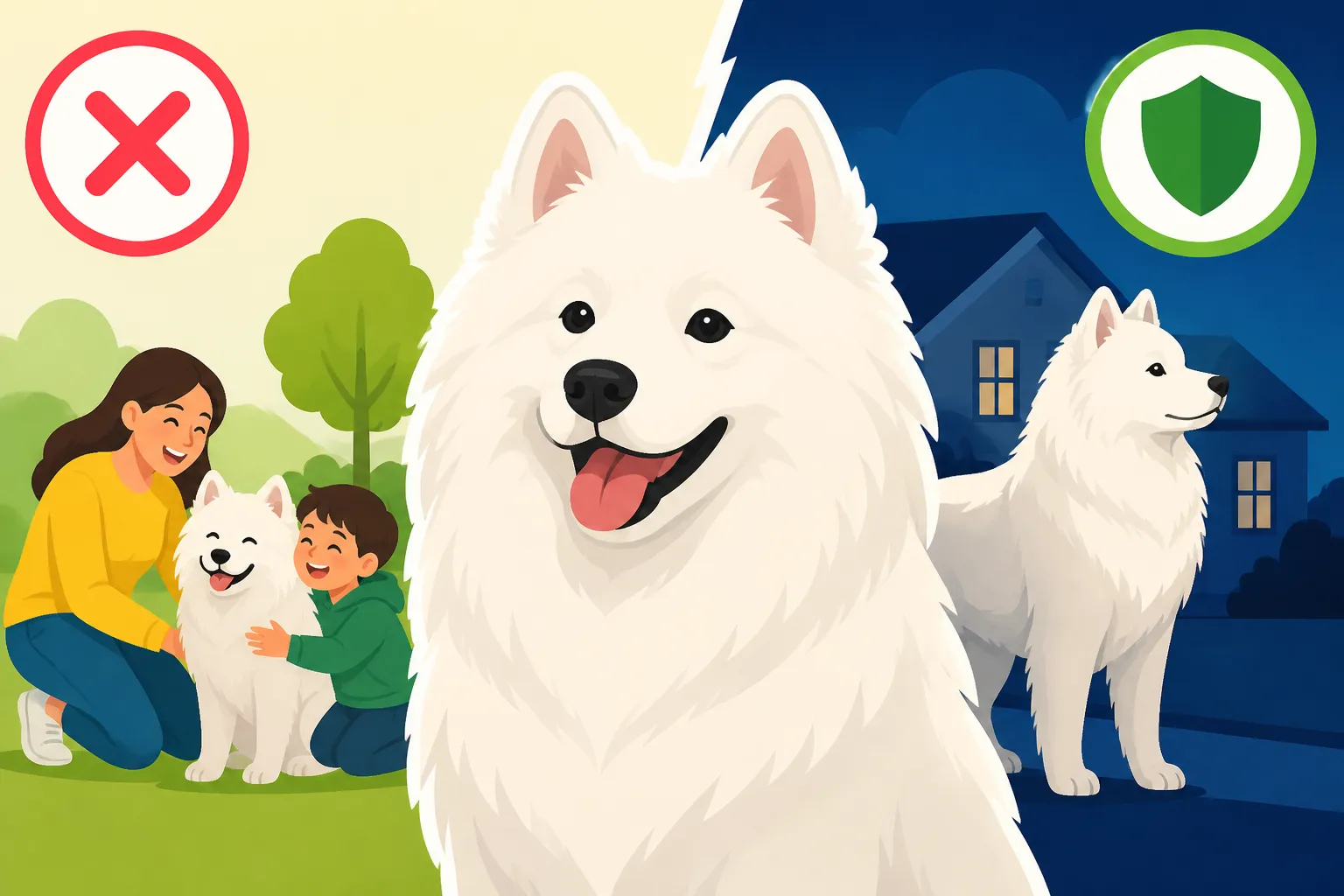
It's a common misconception, especially for first-time owners drawn to the Samoyed's striking appearance, that a large, fluffy dog with a loud bark would naturally be a protector. But the truth is, if you're looking for a dog to guard your home or deter intruders, the charming Samoyed is likely to offer a wagging tail and an invitation to play instead. This guide will delve into why the Samoyed's ancient lineage and inherent temperament make them utterly unsuited for guarding roles, helping you understand their true nature.
The Ancient Origins of the Samoyed Temperament: A History of Partnership
To understand why Samoyeds don't possess a guarding instinct, we need to look back at where they came from. Their history isn't one of protection in the conventional sense, but of deep, symbiotic partnership.
Companionship in the Arctic Tundra
For thousands of years, the Samoyed's ancestors lived with the Nenets people in the frigid Siberian tundra. These dogs weren't kept in kennels or left to roam property as sentinels. Instead, they were integral members of the family, sleeping inside the tents (called chums or chooms) with the Nenets. This close proximity wasn't just for companionship; it was a matter of survival. The dogs provided warmth, acting as living blankets against the brutal cold. Imagine sharing your tiny living space, your very breath, with these animals night after night. Such an existence naturally forged a bond of deep trust and mutual reliance, rather than suspicion or aloofness towards anyone entering the family circle.
Their primary roles were herding reindeer and pulling sleds, tasks that required cooperation, intelligence, and a friendly disposition, not aggression or territoriality towards humans. A dog that bit or threatened the very people it was supposed to herd or live with would not have survived, let alone been selectively bred. This continuous selection for biddable, sociable dogs has deeply ingrained their friendly nature into the breed's DNA. They were partners in life, sharing the harsh realities of the Arctic, not stand-alone protectors against human threats.
The very concept of a "guard dog" as we might think of it today – a dog specifically bred to confront or deter human intruders – simply didn't exist in the context of the Nenets' interactions with their Samoyeds. Their world revolved around survival, where every living being within the family unit contributed to the collective good. The dogs were an extension of the family, a crucial part of the communal effort to thrive in one of the planet's most unforgiving environments. This millennia-long history of living shoulder-to-shoulder with humans, offering warmth and practical assistance, solidified their inherently gentle and social temperament.
The Role of the "Samoyed People"
The name "Samoyed" itself is derived from the "Samoyede people," an archaic term for various indigenous groups in Siberia, including the Nenets. This nomenclature highlights the profound connection between the dog and its human companions. These dogs were so intertwined with human life that they were named after the people who bred and relied upon them. This isn't the history of a tool or a weapon, but of a loyal, benevolent companion.
There are no historical accounts or evidence suggesting that these dogs were ever primarily utilized for guarding against human intruders. Their primary threats were often natural predators, like wolves, which they might deter or bark at, but their focus was on the herd, not the homestead from human trespassers. While they would certainly alert their families to the presence of strangers, this was more a general alarm system, a loud announcement, rather than an aggressive, deterrent posture. Unlike breeds specifically developed to protect castles, estates, or livestock from human theft, the Samoyed's genetic blueprint was never imprinted with suspicion of people. They were bred to trust and work alongside humans, seeing them as friends and family, regardless of origin.
When you compare this history to breeds known for their guarding instincts, like a German Shepherd, Rottweiler, or Akita, the contrast is stark. These guarding breeds often have a history of being aloof, suspicious of strangers, and possess a strong territorial drive, traits that were actively selected for by their breeders. They were meant to be formidable deterrents. The Samoyed, on the other hand, was chosen for its ability to integrate seamlessly into a human family, contribute to the daily struggle for survival through herding and pulling, and provide unconditional affection. This fundamental difference in their ancestral purpose explains why a modern Samoyed, even with extensive training, will almost certainly default to friendliness rather than aggression when faced with an unfamiliar human.
Beyond the "Smile": Understanding Samoyed Social Nature
That iconic "Samoyed Smile" isn't just a physical characteristic; it's a perfect visual representation of their deeply ingrained social nature. They are, at their core, joyful and outgoing.
The Universal Welcome Mat
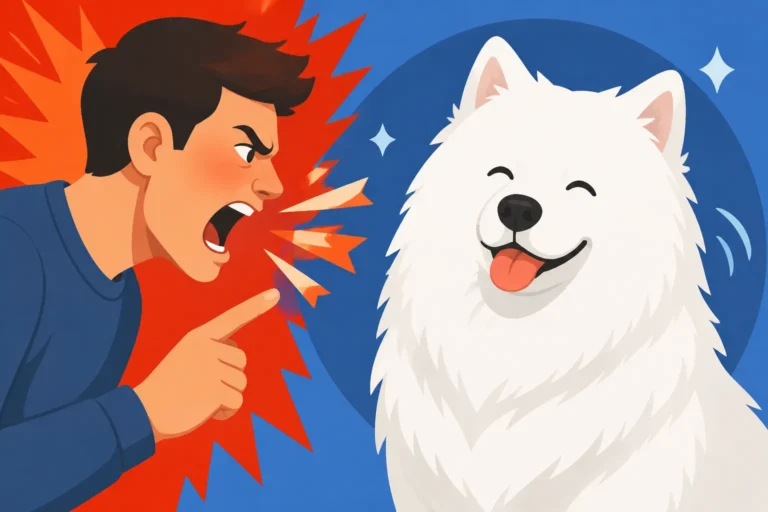
The Samoyed's famous upturned mouth, giving them the appearance of perpetually smiling, perfectly encapsulates their disposition. This "smile" isn't merely for show; it reflects a genuinely friendly, outgoing, and jovial nature that is characteristic of the breed. These dogs tend to see every new person as a potential friend, someone who might offer a head scratch, a belly rub, or even just a kind word. When someone approaches your home, be it the mail carrier, a delivery driver, or an unexpected visitor, your Samoyed is far more likely to greet them with enthusiastic tail wags and happy vocalizations than with aggressive posturing.
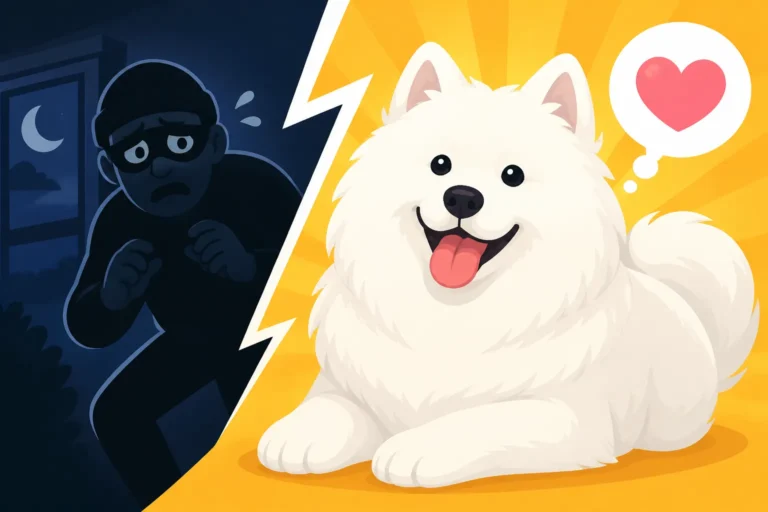
I've had countless experiences where my own Sammy, Snowball, has practically knocked over delivery drivers in her excitement to say hello, not in any aggressive way, but with pure, unadulterated joy. She views every human as an opportunity for affection. This isn't a behavior you train out of them; it's deeply wired into their being. Expecting a Samoyed to be a fierce protector is akin to asking a golden retriever to be a stoic guard dog – it's simply not what they were bred for, and it goes against their very nature. Their social drive is so strong that often, the biggest "threat" they pose to an intruder is smothering them with fluffy affection. This deeply ingrained friendliness is why you'll often hear Samoyed owners joking about how their dog would likely help a burglar carry out the valuables. Indeed, many owners lament that Why a Samoyed Welcomes Everyone, and would likely greet a potential threat as an exciting new playmate.
A Lack of Stranger Danger
Unlike breeds specifically designed for protection, which are often characterized by a natural wariness or suspicion towards unfamiliar individuals, Samoyeds generally exhibit a profound lack of "stranger danger." This trait, while endearing to family and friends, can be a bit of a shock for owners who might assume their large, wolf-like dog will naturally deter unwelcome guests. A Samoyed doesn't categorize people into "friend" and "foe" based on familiarity; rather, they tend to see all humans as part of their extended, friendly pack.
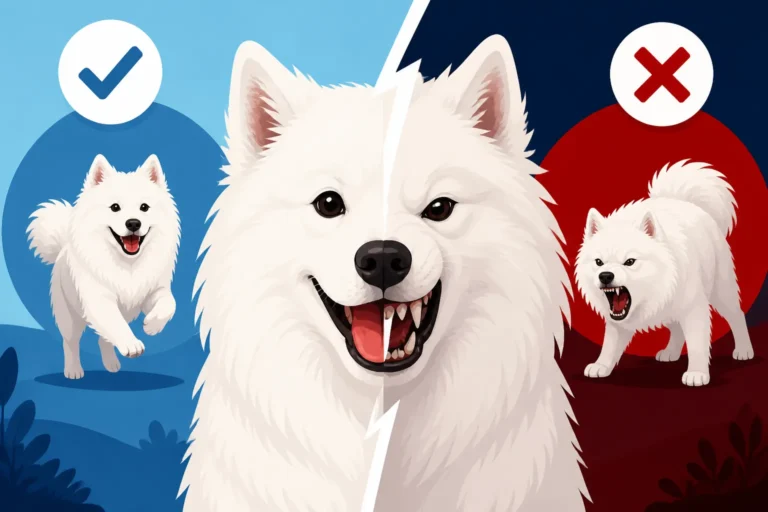
This inherent trusting nature means that a Samoyed will rarely display the classic signs of a guarding dog facing an intruder: stiff posture, low growls, baring teeth, or intense, unblinking stares. Instead, their body language will likely be open and inviting, often accompanied by their characteristic "Samoyed talk" or a happy bark. If an unfamiliar person were to enter their territory, a Samoyed would probably approach with curiosity and a hopeful expectation of positive interaction. While this makes them wonderful family pets and incredibly tolerant of new situations, it also means they offer very little in the way of a genuine deterrent to someone with malicious intent. They simply don't have the hardwired instinct to view an unfamiliar human as a threat to be guarded against.
Distinguishing Samoyed Vocalizations from True Guarding
Samoyeds are undeniably vocal dogs, but it's crucial to understand the nature of their vocalizations. There's a vast difference between making noise and genuinely guarding.
The Samoyed Scream and Other Sounds
If you've spent any time around Samoyeds, you know they are far from silent. They are masters of vocal expression, utilizing a wide range of sounds from barks and howls to grumbles, chirps, and the infamous "Samoyed Scream." This unique vocalization, often described as a high-pitched, almost operatic wail, is frequently heard when they are excited, frustrated, or simply trying to get your attention. It's a sound that certainly grabs attention, but it is not a sound of aggression or territorial threat. It's their way of communicating, expressing their feelings loudly and clearly.
This "Samoyed Scream," while startling to the uninitiated, is typically an expression of joy, demand, or even protest, rather than a warning of impending danger or an aggressive stance. The Samoyed Scream and Why It Is Not Barking delves deeper into this fascinating aspect of their communication. It's important for owners to differentiate this expressive talk from the deep, guttural barks and growls associated with true guarding breeds. A Doberman's low rumble at the door signifies a serious challenge; a Samoyed's loud "woo-woo" or scream is often just them announcing the arrival of a friend, or perhaps demanding their dinner right now. While their sheer volume might deter some, it's the surprise and annoyance of the sound, not the menace, that might make someone think twice.
Territory, Possessions, and Alertness
Samoyeds do have a sense of their territory and may certainly bark at things they perceive as unusual or out of place. This might be a squirrel running across the yard, a leaf blowing past the window, or a new car parked down the street. This is what's commonly referred to as "alert barking"—they are letting you know something is happening. However, this is distinct from true territorial guarding, where a dog actively prevents entry or challenges an intruder with aggressive intent. A Samoyed's alert bark is more of a broadcast, a general announcement to the household, rather than a specific, targeted threat.
They might also exhibit what's known as resource guarding, a behavior where a dog becomes protective of a valuable item like a favorite toy, a bone, or their food bowl, especially from other dogs in the household. This behavior stems from an instinct to protect resources for survival, but it is typically directed at other animals, or sometimes humans who attempt to take the item, and it is not indicative of a guarding instinct against external human threats to the home. It's a possessive behavior, not a protective one in the sense of a guard dog. For example, my Samoyed, Comet, will gather all his favorite squeaky toys into a pile and give a low grumble if another dog tries to take one, but he'd happily drop all of them for a stranger offering a treat. This distinction is vital for owners: a Samoyed might tell you that someone is at the door with a flurry of barks, but don't expect them to stand between you and the perceived threat with aggressive intent. They are merely informants, not enforcers.
What to Expect: Samoyed Reactions to Intruders and New Situations
When evaluating a dog for guarding capabilities, it’s essential to consider their most likely reaction to an unfamiliar or threatening presence. For a Samoyed, this reaction is almost universally friendly.
The Friendly Foe Encounter
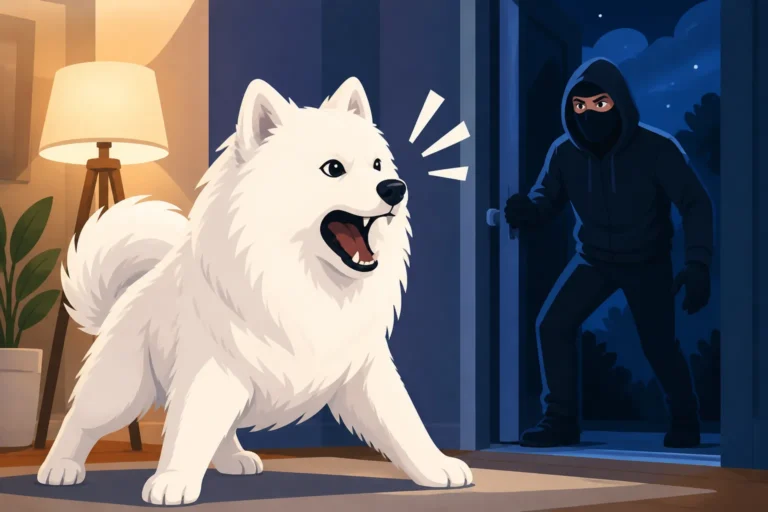
Let's play out a hypothetical scenario: an intruder manages to gain entry to your home. In a household with a true guard dog, you might expect a swift, decisive, and potentially aggressive confrontation aimed at neutralizing the threat. The dog would likely use its size, strength, and vocalizations to drive the intruder away or pin them down. Now, envision the same scenario with a Samoyed. While the initial noise might be startling – a flurry of excited barks, perhaps even a "Samoyed Scream" – the subsequent action is likely to be far less intimidating.
Instead of lunging or growling menacingly, a Samoyed's most probable response is to approach the intruder with an open, friendly demeanor, tail wagging, perhaps even soliciting pets. They might jump on the person, not with aggression, but with pure, joyful exuberance, thinking they're just a new friend who's come to visit. I've heard countless stories from Samoyed owners who've had packages stolen or had someone enter their yard, only for their beloved Sammy to act like a welcoming committee. Why a Samoyed Greets a Burglar is a very real, often humorous, but ultimately serious, aspect of their temperament that potential owners need to understand. Their good nature, while endearing, makes them incredibly ineffective as guardians against human threats. The sheer noise might momentarily startle an intruder, but it's unlikely to be backed up by any genuine aggression or protective action.
Unlikely Protectors: Comparing Roles
When we talk about protection, we're really talking about a dog's willingness and ability to actively defend its territory or its family members. Breeds like Rottweilers, German Shepherds, or Belgian Malinois are specifically bred and trained for this purpose. They have a natural suspicion of strangers, a strong protective drive, and the physical and mental fortitude to engage a threat. Their body language signals menace, their intent is clear, and they are prepared to follow through.
A Samoyed, however, lacks these critical traits. They don't have the genetic predisposition for aggression towards humans, nor do they possess the inherent suspicion that fuels a true guard dog's response. They are more likely to perform the role of a "watchdog" rather than a "guard dog." This means they will alert you to something amiss – a person at the door, a strange sound outside – through their barks and vocalizations. But the moment that person crosses the threshold, the "guard" function generally ceases, replaced by curiosity and friendliness. Whether a Samoyed Makes a Poor Watchdog is not an insult to their intelligence or loyalty, but a simple statement of fact regarding their inherent nature. They are fantastic at noticing things and telling you about them, but terrible at acting as a physical deterrent. Their friendly nature extends to How a Samoyed Behaves With Other Dogs as well, usually greeting canine newcomers with the same open, playful energy. This makes them wonderful companions, but utterly ineffective as personal or property protection.
Cultivating a Well-Adjusted Samoyed: Training and Environment
Since a Samoyed's strength lies in companionship and sociability, rather than guarding, training should always focus on reinforcing their positive attributes and channeling their intelligence and energy in constructive ways.
Nurturing Natural Goodness
Given that Samoyeds are not inherently built for guarding, the focus of any training regimen should be on enhancing their natural good nature, developing excellent manners, and providing appropriate outlets for their intelligence and boundless energy. Instead of trying to force them into a role they were never designed for, we should nurture the qualities that make them such wonderful family members. This means prioritizing consistent, positive-reinforcement-based obedience training from a young age.
Early and thorough socialization is absolutely paramount. While Samoyeds are naturally friendly, proper socialization ensures that this friendliness develops into polite and appropriate interactions with new people, places, and other animals, rather than an overwhelming, enthusiastic (and potentially disruptive) greeting. Enrolling in puppy classes, taking them to dog-friendly parks, and exposing them to a variety of sights and sounds during their critical developmental period are essential. The First Year With a Samoyed Puppy is a foundational time for setting these positive behavioral patterns. Instead of trying to instill a guarding instinct, aim to refine their social skills so they can be a well-behaved and joyous presence wherever they go. For teaching good manners, useful tools like a sturdy long line or a comfortable harness can be found readily on platforms like Amazon, helping you manage their enthusiasm in various public settings while still allowing them safe exploration.
Setting Clear Boundaries Without Expecting Guarding
Training a Samoyed isn't about making them guard; it's about making them a polite, respectful member of the household. Crucial commands like "leave it," "stay," and a reliable "come" are far more valuable than any attempt to cultivate a guarding instinct. Boundary training, teaching them to wait patiently at doorways, or to stay within designated areas of the home, helps establish order and prevents common Samoyed antics like counter-surfing or bolting out the door. These skills are about control and safety, not protection.
For owners looking for structured training programs that embrace positive reinforcement, online platforms can be incredibly helpful. Companies like BAXTER & Bella offer comprehensive online puppy and dog training programs that guide owners through everything from potty training to advanced obedience, all while fostering a strong, positive bond between dog and owner. Their methods align perfectly with the Samoyed's intelligent yet sensitive nature, avoiding harsh corrections that can confuse or shut down a Samoyed. Remember, Training a Samoyed That Finds Obedience Negotiable is often the reality; they are intelligent but independent thinkers who need clear, consistent, and engaging training to truly thrive. By providing consistent positive training and channeling their energy through activities like long walks, play, or even dog sports, you build a relationship based on trust and cooperation, leading to a much happier and better-adjusted Samoyed than one burdened with an inappropriate guarding expectation.
| Behavior Trait | True Guarding Breed (e.g., German Shepherd) | Samoyed (Sammie) |
|---|---|---|
| Response to Stranger | Suspicious, reserved, wary. May growl or challenge. | Enthusiastic, friendly, tail-wagging. Seeks attention. |
| Vocalizations | Deep, guttural barks/growls with clear intent to deter. | Wide range of vocalizations: happy barks, "woo-woos," "Samoyed Scream" (often not aggressive). |
| Body Language | Stiff, forward posture, direct stare, hackles raised, ears alert, low tail. | Loose, wiggly, open posture, soft eyes, wagging tail, often jumps excitedly. |
| Territoriality | Strong drive to protect perceived territory from intruders. | Alert to presence in territory, but typically welcomes rather than repels. |
| Protectiveness | Actively defends family members or property from perceived threats. | Protects through alert barking, but rarely engages in physical defense against humans. |
| Biddability | Highly biddable in guarding work, taking cues from handler. | Highly intelligent but independent; obedience requires consistent positive reinforcement. |
| Socialization Goal | Controlled exposure to foster discernment, not universal friendliness. | Broad exposure to foster polite, positive interactions with all. |
Disclaimer
This article is for general informational purposes only and does not constitute professional advice. Laws, prices and regulations vary by location and change over time. Consult a qualified professional for guidance on your specific situation.