Whether a Samoyed Is Ever Aggressive
The adorable, perpetually smiling face of a Samoyed often paints a picture of pure joy and unwavering friendliness. It’s a wonderful reality for most owners, but it can also make it incredibly unsettling and confusing if your fluffy companion starts displaying signs of aggression. This guide is here to unravel the complex question of whether a Samoyed can be aggressive, delve into the root causes of such behavior, and provide practical, empathetic strategies for understanding and managing these challenges.
The Samoyed Temperament: A Foundation of Friendliness and What Can Alter It
When we think of a Samoyed, we picture a dog that's been bred for centuries to live and work closely with humans, often sleeping in their tents to keep them warm. This unique history has ingrained a profoundly social and gentle nature into the breed. They are known for being affectionate, playful, and generally good-natured with people and other animals. But no dog, regardless of breed, is a robot, and even the most well-bred Samoyed can exhibit aggression under specific circumstances. It's crucial to understand their typical disposition to better recognize when something is amiss.
Bred for Cooperation, Not Confrontation
Historically, the Nenets people relied on Samoyeds for herding reindeer, pulling sleds, and providing warmth. These tasks demanded a dog that was cooperative, intelligent, and non-aggressive towards its human family and the herd animals. They weren't bred to be guard dogs or fighters. In fact, aggression towards humans would have been a detriment, making them unsuitable for their vital roles. This deep-seated drive to be part of the "pack" – whether human or canine – makes true, unprovoked aggression rare.
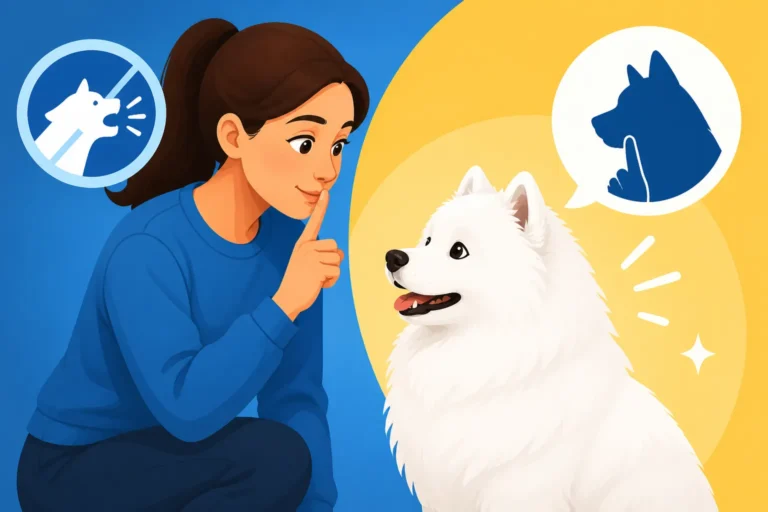
Instead, a Samoyed’s natural response to perceived threats is often avoidance, vocalization (hello, The Samoyed Scream and Why It Is Not Barking!), or a playful distraction. They want to engage, to be included, and to please their people. When aggression does manifest, it’s almost always a symptom of an underlying issue, not a default personality trait. It’s like a sunny day suddenly turning stormy – there's a reason for the change in atmospheric pressure.
How Early Experiences Shape Behavior
A Samoyed's early life experiences play an enormous role in shaping their adult temperament. Pups need proper socialization during their critical developmental window, typically between 3 and 16 weeks of age. This involves positive exposure to a wide variety of sights, sounds, people, and other well-behaved dogs. A puppy raised in isolation, or one that experiences frightening or traumatic events during this period, can develop fear-based behaviors that may later manifest as aggression.
Think of a young Samoyed puppy, bright-eyed and curious. If it's constantly confined, rarely meets new people, or is frightened by loud noises without reassurance, its world shrinks, and fear can take root. This isn't about blaming the owner, but about recognizing the profound impact of environment. If you're looking at a Samoyed, especially a puppy, inquire about their early socialization. A responsible breeder will prioritize this, ensuring their puppies are well-adjusted. The article The First Year With a Samoyed Puppy goes into more detail about these crucial developmental stages.
Understanding the "Why" Behind Samoyed Aggression
It's tempting to label a dog as simply "aggressive," but that doesn't help anyone. Aggression is a symptom, a form of communication. It's your Samoyed telling you, in the loudest way it knows how, that something is wrong. Pinpointing the specific type of aggression and its triggers is the first step toward effective management and resolution.
Fear-Based Aggression: A Common Culprit
Fear is perhaps the most common underlying cause of aggression in Samoyeds. Despite their fluffy, friendly appearance, some Samoyeds can be naturally shy or become fearful due to inadequate socialization or negative experiences. When a fearful dog feels trapped, cornered, or overwhelmed, its "fight or flight" instinct kicks in. If flight isn't an option, they might resort to a bite to create distance or make the scary thing go away.
A fearful Samoyed might growl or snap when a stranger reaches for them too quickly, or when approached by an unfamiliar dog in a confined space. This isn't about dominance; it's about survival. They're saying, "Please stop, I'm scared!" A classic example might be a Samoyed at the vet, already stressed, reacting defensively when someone attempts to examine a painful area. Their beautiful "smile" can sometimes make it harder for strangers to read their subtle signs of discomfort, leading to a missed signal and a quicker escalation.
Resource Guarding: Protecting Prized Possessions
Resource guarding is another form of aggression where a dog protects items it perceives as valuable – food, toys, sleeping spots, or even people – from others. While not inherently a "Samoyed trait," it can occur in any breed, including Samoyeds. This behavior stems from an instinct to preserve resources for survival, and it can be directed towards humans or other animals in the household.
Imagine your Samoyed happily chewing a prized bone. If another dog or a child approaches too closely, the Samoyed might stiffen, give a hard stare, growl, or even snap to warn them away. They're not being "mean," they're signaling, "This is mine, and I don't want to share." It’s important to address this early and understand that it’s not about defiance but an ingrained instinct. Addressing this involves careful management, training, and sometimes professional intervention to teach the dog that approaching their resources can lead to more good things, not less.
Pain or Medical Conditions
Never, ever rule out pain or an underlying medical issue when a normally sweet-natured Samoyed suddenly becomes aggressive. A dog in pain might lash out defensively when touched, especially if the touch exacerbates their discomfort. Something as common as hip dysplasia or arthritis can make them sensitive to touch, leading to an unexpected growl or snap from a dog who would normally tolerate anything.
Dental disease, ear infections, internal injuries, or neurological conditions can all cause a change in temperament, making a dog irritable, disoriented, or prone to lashing out. If your Samoyed exhibits a sudden, unexplained change in behavior, especially aggression, a vet visit should be your absolute first step. They can rule out medical causes, which is a huge relief if it's just a sprained paw, or an urgent concern if it's something more serious.
Recognizing the Early Warning Signs in a Samoyed
Samoyeds are often masters of subtle communication, and their signature "smile" can sometimes make it harder to read their distress signals. It’s crucial for owners to learn to interpret the nuances of their body language before aggression escalates to a bite. Dogs almost always give warnings; it's our job to notice them.
Body Language Cues Beyond the Smile
Before a Samoyed resorts to a growl or a snap, they typically display a cascade of calming signals and stress cues. Learning these can help you intervene early and prevent escalation. Look for:
- Lip licking or yawning: Out of context, these are often signs of stress or appeasement.
- Turning head or body away: An attempt to disengage or avoid a perceived threat.
- Whale eye: When you can see the whites of their eyes, often accompanied by a stiff posture. This indicates tension.
- Stiffening of the body: The dog becomes rigid, ready to react. Their tail might be low and stiff, or held tightly over their back.
- Raised hackles: The hair along their spine stands up, an involuntary sign of arousal or fear.
- Growling or snarling: This is a clear "stay away" signal. Never punish a growl, as it's the dog's way of telling you they're uncomfortable before they bite. Punishing it teaches them to skip the warning and go straight to the bite.
- Muzzle punch/air snap: A warning where the dog bumps or snaps near the target without making contact.
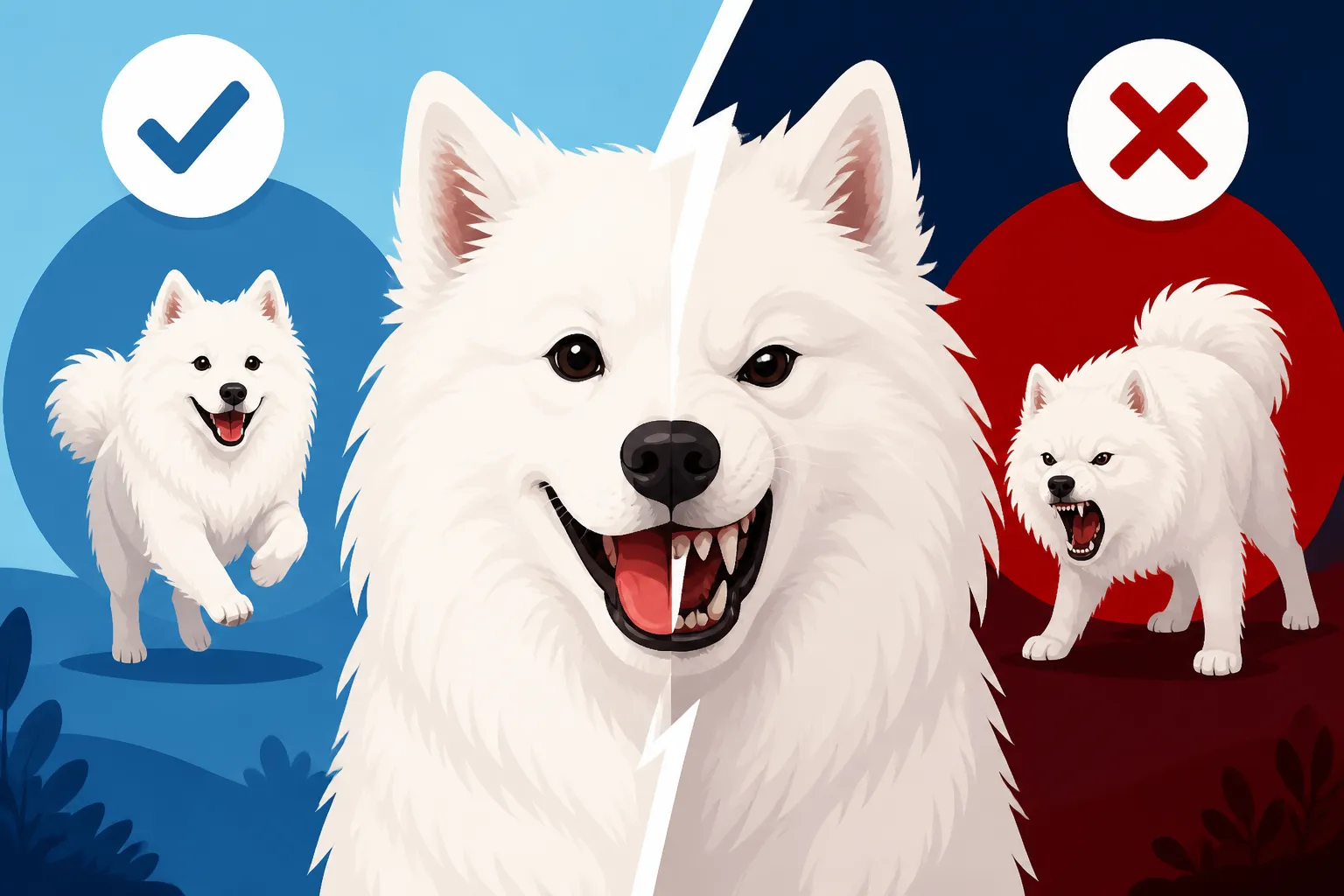
It’s about understanding the whole picture, not just one signal. A wagging tail doesn't always mean happiness; a stiff, low tail wagging slowly can indicate anxiety, not joy. The "Samoyed smile" itself can be a mask. A truly happy Samoyed smile is accompanied by relaxed body language, soft eyes, and a loose, happy wag. A tense Samoyed might still "smile" but their eyes will be hard, their body stiff, and their posture wary.
A Samoyed's Communication Continuum
Think of your Samoyed's communication as a ladder, with very subtle signals at the bottom and a bite at the top. Most dogs will try to climb down the ladder before jumping off the top.
| Aggression Ladder Step | Samoyed Behavior Example | Interpretation |
|---|---|---|
| Lowest Rung | Yawning, lip licking, averting gaze | "I'm a little uncomfortable, please notice." |
| Low Rung | Turning head/body away, freezing, slow tail wag (stiff) | "I really don't like this, I want to disengage." |
| Middle Rung | Stiff body, whale eye, low growl, raised hackles | "I'm very uncomfortable and might react if you don't stop." |
| High Rung | Hard stare, snarl, air snap, muzzle punch | "I'm warning you directly, back off now!" |
| Highest Rung | Bite (nip, quick bite, sustained bite) | "My warnings weren't heard, I'm defending myself." |
Understanding this continuum helps you intervene at the lowest rung, before things escalate. The earlier you address the discomfort, the less likely your Samoyed is to feel the need to escalate their communication. For more on understanding how your Samoyed communicates, check out What a Samoyed Sounds Like When It Talks.
Common Triggers for Aggressive Behavior in Samoyeds
Understanding typical Samoyed behavior helps us recognize what might trigger an aggressive response. While Samoyeds are generally tolerant, certain situations can push any dog past their comfort zone. Knowing these common triggers allows you to anticipate and manage situations before they become problematic.
Intruders and Unfamiliar Situations
While Samoyeds are not natural guard dogs – they're more likely to welcome a burglar with a wagging tail than to challenge them, as highlighted in Why a Samoyed Greets a Burglar – they can sometimes react aggressively to novel or overwhelming situations, especially if they are fearful or undersocialized. A sudden, loud intrusion into their space, such as a maintenance worker appearing unexpectedly, or a chaotic party with many strangers, can overwhelm a sensitive Samoyed.
Their reaction might not be an aggressive defense of territory, but rather a fearful response to something unfamiliar or perceived as threatening. This is particularly true if they feel trapped or cannot retreat. Imagine a Samoyed, accustomed to a quiet home, suddenly surrounded by boisterous children or strangers reaching for them. Their "smile" might be plastered on, but their body language screams stress. If their signals are ignored, they might snap to create space.
Handling and Touch Sensitivity
Most Samoyeds adore being petted, brushed, and cuddled. They are velcro dogs who want to be near you Why a Samoyed Wants to Be in the Room With You. However, some individuals can develop touch sensitivity, especially if they've had negative experiences with grooming, vet visits, or rough handling. If a Samoyed has a painful spot, such as an ear infection or a sensitive paw, even a gentle touch can elicit a defensive growl or snap.
This isn't about being "mean," it's about avoiding pain. This can also apply to specific types of handling, such as having their nails clipped or their teeth brushed, if these experiences have been consistently unpleasant. If your Samoyed shows discomfort with routine handling, it's essential to investigate medical causes first and then work on desensitization and counter-conditioning, making handling a positive experience with lots of treats. Products like specific grooming tools found on Amazon can help make the process more comfortable for your Samoyed.
Inter-Dog Issues and Resource Conflicts
While Samoyeds generally get along well with other dogs, conflicts can arise, particularly around resources or if personalities clash. Resource guarding, as discussed earlier, can escalate into aggressive encounters between dogs over food, toys, or even attention from a favorite human. Introducing a new dog into the household or navigating dog parks can be challenging.
A Samoyed might also react defensively if another dog is overly boisterous or pushy, especially if the Samoyed is older, more reserved, or feeling unwell. It's not uncommon for Samoyeds to have a certain "personal space" that, if invaded repeatedly by an insistent canine, could lead to a correction. This is why careful introductions and supervision are key, especially in multi-dog households or social settings. Understanding how A Samoyed With Children and Other Animals can help you navigate introductions with care.
Proactive Training and Management Strategies
Preventing aggression is always easier than treating it. For Samoyeds, whose foundational temperament is typically docile, proactive training and thoughtful management are incredibly powerful tools to ensure they remain the happy, friendly companions we adore. This involves understanding their needs and setting them up for success.
Early Socialization and Positive Reinforcement
The importance of early, positive socialization cannot be overstated for a Samoyed puppy. From a young age, expose your puppy to a wide range of people (different ages, genders, appearances), sounds (traffic, vacuums, children playing), environments (parks, stores, quiet walks), and other vaccinated, well-behaved dogs. The goal is to create positive associations with these experiences. Always pair new experiences with high-value treats and praise.
Utilize puppy classes that emphasize positive reinforcement. These are invaluable for building confidence and good manners. Organizations like BAXTER & Bella offer online puppy training programs that can guide you through critical socialization and obedience, teaching your Samoyed that the world is a fun, safe place. Continuing this positive exposure throughout their lives helps maintain a well-adjusted dog. Remember, a well-socialized Samoyed is less likely to feel threatened or fearful in new situations.
Consistent Training and Clear Boundaries
Samoyeds are intelligent but can be independent thinkers, sometimes finding obedience "negotiable," as explored in Training a Samoyed That Finds Obedience Negotiable. Consistent, positive reinforcement training is vital for establishing clear boundaries and building a strong, trusting relationship. Teaching cues like "sit," "stay," "come," and "leave it" provides you with tools to manage their behavior in various situations.
Beyond basic obedience, focus on impulse control exercises. Teaching your Samoyed to wait patiently for food, to walk calmly on a leash, or to settle on a mat can significantly reduce reactivity and improve their overall self-control. Use short, engaging training sessions and always end on a positive note. A well-exercised and mentally stimulated Samoyed is also a calmer Samoyed. Ensure they get enough physical activity (How Much Exercise a Samoyed Needs) and mental enrichment to prevent boredom-induced behaviors.
Environmental Management and Trigger Avoidance
Sometimes, the best strategy is simply to manage the environment to avoid situations that trigger aggression. If your Samoyed becomes agitated around children, for example, ensure they are always supervised, or provide a safe, separate space for your dog when children are visiting. If they guard their food bowl from another dog, feed them separately.
For dogs with fear-based aggression towards strangers or unfamiliar dogs, use a leash and harness that gives you good control, and avoid crowded areas during walks. If you anticipate a stressful situation (e.g., a vet visit, visitors), you can work with your vet or a certified professional to implement strategies like counter-conditioning or desensitization. A comfortable muzzle, properly introduced, can also be a valuable safety tool for specific situations, allowing a fearful dog to be handled safely without the risk of a bite while you work on behavior modification.
When to Seek Professional Help
If your Samoyed is displaying aggressive behavior, even if it's just a growl or a snap, it's a serious issue that warrants professional attention. This isn't something to ignore or try to fix with guesswork. Early intervention is key to preventing escalation and ensuring the safety of everyone involved.
Consulting a Veterinarian First
As we discussed, pain or underlying medical conditions can be significant contributors to sudden changes in behavior. Your very first step should always be a comprehensive veterinary check-up. Explain all the behaviors you've observed, no matter how minor. Your vet can perform physical exams, blood work, and other diagnostic tests to rule out medical causes.
This step is critical because treating a behavioral problem without addressing an underlying physical discomfort is futile and unfair to your dog. If your vet gives your Samoyed a clean bill of health, then you know you're dealing purely with a behavioral issue, and you can move on to a specialist. They might also be able to refer you to a reputable behaviorist.
Working with Certified Professional Dog Trainers or Behaviorists
Once medical causes are ruled out, seek help from a qualified professional specializing in canine behavior. Look for:
- Certified Professional Dog Trainer (CPDT-KA): These trainers have demonstrated knowledge in canine behavior and positive training methods. They can help with foundational obedience and behavioral modification, but complex aggression cases might need a higher level of expertise.
- Certified Applied Animal Behaviorist (CAAB) or Veterinary Behaviorist (DACVB): These individuals have advanced degrees and extensive experience specifically in animal behavior. A veterinary behaviorist is a veterinarian who has completed additional training and certification in animal behavior, making them uniquely qualified to diagnose and treat behavioral disorders, including prescribing medication if necessary.
Avoid trainers who use punishment-based methods, harsh corrections, or e-collars, especially for aggression. These methods can suppress warning signals, intensify fear, and ultimately worsen aggression. A good behaviorist will work with you to understand the root cause of the aggression and develop a humane, effective plan tailored to your Samoyed's individual needs. The cost of such expertise is an investment in your dog's future and your family's safety; you can find more information about this in What a Behaviorist Costs a Samoyed Owner With a Barker.
The Importance of Consistency and Patience
Behavior modification takes time, consistency, and patience. There are no quick fixes for aggression. You'll need to commit to following the professional's advice, implementing management strategies, and continuing training exercises diligently. This might involve adjusting your daily routine, supervising interactions, or teaching your Samoyed new ways to cope with triggers.
Be kind to yourself and your Samoyed throughout this process. It can be emotionally taxing, but remember that aggression stems from a place of fear or discomfort, not malice. With the right professional guidance, consistent effort, and a deep understanding of your Samoyed's needs, most aggressive behaviors can be significantly managed, and many can be resolved, allowing your beloved fluffy companion to truly embody that joyful Samoyed smile.
Disclaimer
This article is for general informational purposes only and does not constitute professional advice. Laws, prices and regulations vary by location and change over time. Consult a qualified professional for guidance on your specific situation.