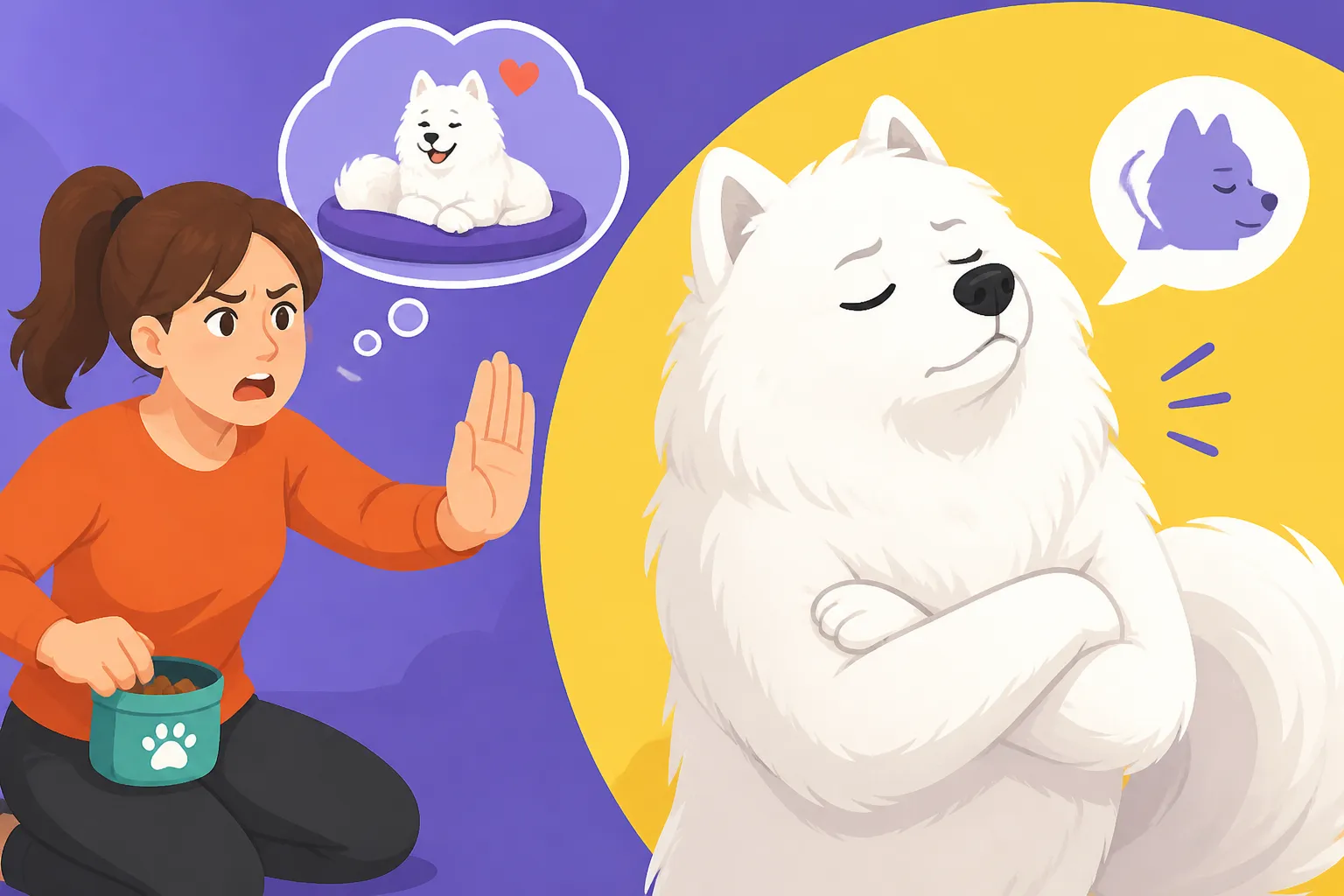
Training a Samoyed That Finds Obedience Negotiable
You’ve brought home that fluffy cloud of joy, that smiling face, and then you quickly realize something: your Samoyed, despite all the love and treats, often acts like your commands are merely suggestions up for a spirited debate. It’s not just you! Many Samoyed owners face the unique challenge of a dog that finds obedience somewhat…negotiable. This comprehensive guide is here to unravel the charmingly stubborn Samoyed psyche and equip you with the understanding and strategies needed to foster a truly cooperative and well-behaved companion.
Understanding the Samoyed Mindset: It's Not Stubbornness, It's History
Before you throw your hands up in exasperation, it's crucial to understand that your Samoyed's "negotiable" approach to obedience isn't malice or spite. It's deeply ingrained in their history and breeding. These aren't your typical "yes sir, how high?" kind of dogs. They were developed for a very different purpose, in a very different way.
Independent Spirit and Breed History
Imagine the vast, frozen tundra of Siberia, where the ancient Samoyede people (now known as the Nenets) relied on these dogs for their very survival. Samoyeds weren't just pets; they were integral working partners. They herded reindeer, pulled sleds across treacherous terrain, and even slept with the families in their tents for warmth and companionship. Crucially, these dogs had to think for themselves. When out herding, they needed to make decisions about moving the herd, spotting predators, and navigating storms without constant human direction. They weren't bred to slavishly follow every command but to be intelligent collaborators. This independent spirit is still very much alive in your fluffy friend today. They assess a situation, consider your request, and then decide if it aligns with their own perceived best interest or immediate desire. It’s part of what makes them so captivating, but also so challenging.
Their lineage as independent problem-solvers means they're not always looking to you for every single instruction. They're weighing the options, often with a mischievous twinkle in their eye. You might tell them to "come," and they might pause, sniff the interesting scent a few more times, and then, maybe, decide it's worth trotting over for that high-value treat. It’s a far cry from a breed like a Border Collie, whose entire genetic makeup screams, "Tell me what to do!" Instead, the Samoyed's internal monologue is more akin to, "Hmm, is that really necessary right now? What's in it for me?" Understanding this core difference is the first step in building an effective training strategy.
High Intelligence, Low Motivation for Repetition
Samoyeds are incredibly intelligent. They pick up new commands with surprising speed when they're engaged. The problem often isn't a lack of understanding, but a lack of desire to perform the same action repeatedly, especially if the reward isn't exciting enough. They get bored quickly with drills and rote memorization. If you ask a Samoyed to "sit" ten times in a row for the same piece of kibble, by the fifth time, they might just lie down and give you that famous "Sammy smile," daring you to make it more interesting.
This high intelligence, coupled with their independent streak, means they excel at creative problem-solving – often in ways you didn't intend! They might figure out how to open gates, dismantle crates, or find the most ingenious ways to get to that forbidden treat on the counter. Their minds are constantly at work, and if you don't provide sufficient mental stimulation, they'll invent their own entertainment, which rarely aligns with your household rules. They need variety, challenge, and an understanding that training isn't just about repetition but about engagement and partnership. Many owners find their Samoyeds are incredibly quick learners for the first few repetitions of a new trick, but then their enthusiasm wanes if the excitement isn't maintained. This makes things like obedience competitions a unique challenge, as the dog needs to perform with precision and enthusiasm, not just grudging compliance.
The Samoyed "Smile" and Misinterpretation
Ah, the famous Samoyed smile! That upturned mouth, the sparkling eyes, the general aura of fluffy happiness. It's one of their most endearing traits, but it can also be incredibly misleading in a training context. When your Samoyed is looking at you with that charming grin, you might mistakenly think they're happily agreeing to your command, even as they trot off in the opposite direction. That smile is a physical characteristic, evolved to prevent icicles from forming around their mouths in freezing temperatures, not necessarily an indicator of their immediate obedience intent.
It's easy to forgive a little mischief when it's delivered with such an angelic expression. However, it's vital not to let that charming smile derail your consistency. They are masters of using their cuteness to get their way. Picture this: you've asked your Samoyed to "stay" while you answer the door. They break the stay, bound over to greet the guest, and then turn back to you with a wide, innocent smile as if to say, "Oops! My bad! But aren't I adorable?" If you laugh or let it slide, you've just reinforced that breaking a command can be charmingly rewarded (or at least not punished). You have to learn to separate the beautiful, happy-go-lucky appearance from the need for clear boundaries and consistent follow-through in training. That smile is wonderful, but it doesn't mean "I'm always going to listen."
Building a Foundation of Trust and Respect
Successful training with a Samoyed isn't just about teaching commands; it's about forging a deep, respectful bond where your dog genuinely wants to cooperate with you. This takes time, patience, and a consistent approach that acknowledges their unique nature.
The Importance of Relationship-Based Training
For a Samoyed, your relationship is everything. They aren't robots, and they respond best when they feel respected and understood. Relationship-based training focuses on building mutual trust and clear communication, rather than simply enforcing dominance. Think of yourself as a benevolent leader, not a dictator. This means investing time in playing with your Samoyed, understanding their body language, and providing a predictable, safe environment. If your Samoyed trusts you and feels secure in your leadership, they're far more likely to engage with you in training.
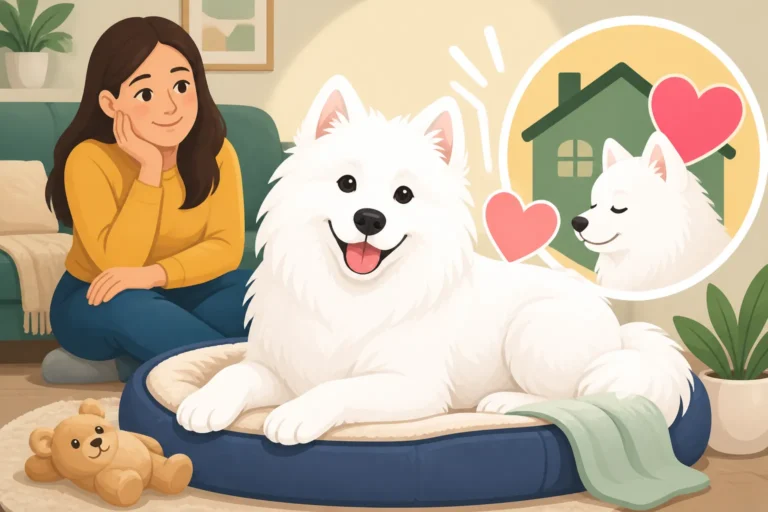
This approach emphasizes positive reinforcement, fair consequences, and understanding your dog's individual personality. It means celebrating their successes and calmly redirecting when they make mistakes, rather than resorting to harsh corrections that can damage your bond. A Samoyed who feels a strong, positive connection to you will often choose to perform a command simply because they value your praise and attention, almost as much as the treats. This foundational trust is what makes them want to be near you and Why a Samoyed Wants to Be in the Room With You, even if they're not always perfectly compliant. They thrive on companionship and being an active part of the family, and leveraging that desire for connection is a powerful training tool.
Consistency is Key
This cannot be stressed enough when training a Samoyed: consistency, consistency, consistency! Every single person in the household needs to be on the same page with commands, expectations, and rules. If one person lets the "stay" slide, or another finds it endearing when the dog jumps up, your Samoyed will quickly learn who to "negotiate" with and when. They are incredibly smart at picking up on inconsistencies.
Imagine you're trying to teach your Samoyed not to pull on the leash. If you use a front-clip harness and stop every time they pull, but your partner occasionally walks them with a regular collar and lets them pull you along, your Samoyed will quickly realize that pulling is sometimes acceptable. This undermines all your hard work. Establish clear house rules and stick to them. This means everyone in the family uses the same command words ("come" not "here," "stay" not "wait"), enforces the same boundaries, and provides consistent rewards. Without this unified front, your Samoyed will happily exploit the loopholes, because why wouldn't they? They're smart, and they'll take the path of least resistance. This applies from puppyhood through adulthood, ensuring your Samoyed understands what is expected of them in every situation.
Clear Communication and Boundaries
Samoyeds thrive on predictability. Clear communication about what you expect and what the boundaries are will help them understand their role in the household. Use short, precise commands, and always follow through. If you say "sit," ensure they sit, even if you have to gently guide them into position initially. Once they perform the action, reward them immediately. This clear cause-and-effect helps them understand what each word means and what action earns them a reward.
Boundaries are equally important. Decide what is and isn't allowed – on the furniture, in certain rooms, begging at the table – and enforce these consistently. A Samoyed will test boundaries, often repeatedly, just to see if the rules have changed. If they jump on the counter once and get a snack, they'll remember that. If they're never allowed on the furniture, but one day you invite them up, you've created confusion. Establishing clear, unwavering boundaries from day one helps them understand the structure of their world and reduces the need for constant negotiation. They might still give you that look, but they'll know the answer is "no." This also extends to managing their infamous escape artist tendencies; if a gate is left open even once, they'll know that opportunity exists, reinforcing behaviors like How a Samoyed Gets Out of Anything You Build.
Motivation: Finding Your Samoyed's "Why"
Getting a Samoyed to consistently perform requires tapping into what truly motivates them. What makes their fluffy tail wag with genuine enthusiasm for training? It's rarely just pleasing you; it's usually about what they get out of it.
High-Value Rewards are Non-Negotiable
Forget the dry kibble for anything beyond the most basic "sit." For a Samoyed to find obedience truly worth their while, you need to bring out the big guns: high-value rewards. This means small pieces of cooked chicken, cheese, hot dogs, freeze-dried liver, or even a dollop of peanut butter. These aren't everyday treats; these are the "jackpot" rewards reserved for successful training sessions, especially when you're working on challenging commands like recall or impulse control in distracting environments.
The value of the reward should match the difficulty of the task and the level of distraction. If you're practicing "stay" in your quiet living room, regular treats might work. But if you're trying to get them to come when called at the dog park, you'll need something irresistible. Keep a variety of high-value treats on hand and rotate them to keep things exciting. What's high-value for one Samoyed might not be for another, so experiment to find your dog's absolute favorite. You'll know you've found it when their focus sharpens, and their eyes light up the moment they see it. These special rewards become the key to making "negotiable" commands a lot less debatable.
Making Training a Game
Samoyeds are intelligent and playful, but they get bored easily with repetitive drills. The trick is to make training feel like a fun game, not a chore. Keep sessions short (5-10 minutes is often plenty), upbeat, and end on a high note. Incorporate elements of play, like hiding treats for them to find after a command, or using a favorite toy as a reward. A Samoyed will work much harder for a game of tug or a chase after a squeaky toy than for a boring repetition.
Vary your training locations too. Start in a quiet area, then gradually introduce distractions. One day, train in the backyard; the next, at a local park. This helps them generalize commands, understanding that "sit" means sit everywhere, not just in the kitchen. Think creatively: instead of just asking for a "down-stay," turn it into a game where they have to "down" and "stay" while you walk around them, eventually coming back to reward them. Or use commands during walks: "sit" at every curb, "wait" before going through a door. Integrating training into daily life makes it less of a formal lesson and more of an ongoing, interactive game that builds your bond and their responsiveness. This playful approach helps keep their sharp minds engaged and stops them from deciding the task isn't worth their time.
Harnessing Their Natural Drives
Samoyeds were bred for specific jobs, and tapping into those natural drives can be a powerful motivator for training and engagement. They have a strong desire to pull, a surprising herding instinct, and a keen sense of smell. Ignoring these inherent traits is a missed opportunity.
Consider activities like urban mushing, canicross, or bikejoring if your Samoyed loves to pull. These activities allow them to engage in their innate desire to work and expend energy in a constructive way. You can use these activities as rewards for good behavior or as a foundation for teaching directional commands. Even if you don't pursue formal sports, encouraging them to pull a wagon or a light cart in your yard can be a huge outlet. Some Samoyeds also exhibit a strong prey drive and a latent herding instinct, often seen in how they might try to "herd" children or other pets. Instead of suppressing this, you can channel it into productive games or even explore actual herding instinct tests. The Herding Instinct Nobody Expects From a Samoyed is a real thing! Furthermore, their excellent noses make them great candidates for scent work or nose games. Hiding treats or toys and having them find them uses their brain and their natural abilities, which can be incredibly fulfilling for them. Providing these outlets reduces boredom and frustration, making them more amenable to other forms of training.
Common Training Challenges and How to Overcome Them
Every breed comes with its quirks, and Samoyeds certainly have their signature challenges. Understanding these common hurdles is the first step to developing effective strategies.
The "Selective Hearing" Samoyed
This is perhaps the most frustrating trait for many Samoyed owners. You call their name, you give a command they know perfectly, and they look at you, perhaps even smile, then proceed to completely ignore you. It's not that they don't hear you; it's that they often choose not to listen. This "selective hearing" is particularly evident with recall, especially when there are exciting distractions like squirrels, other dogs, or interesting smells. Why a Samoyed's Recall Cannot Be Trusted is a common refrain among owners.
Overcoming this requires making yourself the most exciting thing in the environment. This goes back to those high-value rewards and making training a game. Practice recall frequently in low-distraction environments first, gradually increasing the challenge. Start in your living room, then your yard, then a quiet park. Always reward generously when they come, even if it took a moment. Never punish them for a delayed recall, as this will only make them less likely to come next time. Use a long line (a 15-30 foot leash) in secure areas to practice recall with more freedom, allowing them to feel off-leash while still giving you control. When using a long line, a sturdy harness is recommended rather than a flat collar, as sudden stops can be jarring on the neck. Always keep it positive and fun, as your Samoyed's independent nature makes them highly resistant to force or fear.
Leash Manners and the Urge to Pull
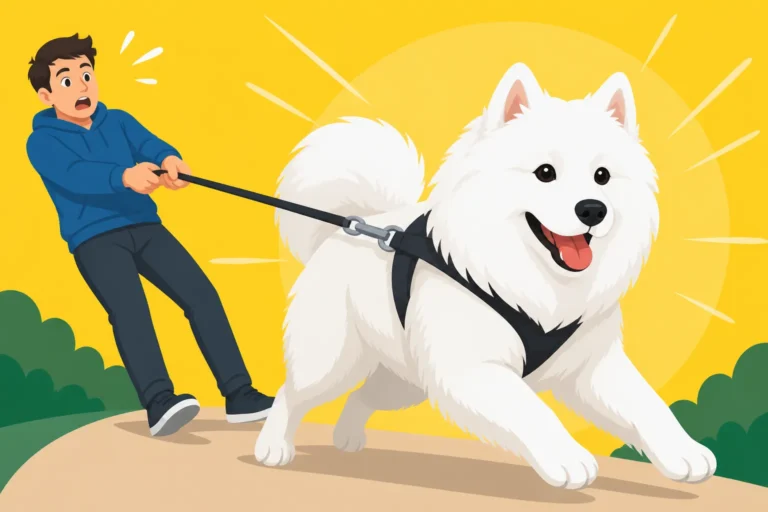
Another classic Samoyed trait: the desire to pull. These dogs were literally bred to pull sleds, and that instinct is strong. Walking a Samoyed can quickly turn into an arm workout if you don't teach loose-leash walking from an early age. They often see the leash not as a boundary, but as a mechanism to get where they want to go faster. This often means walking a Samoyed can feel like you're being taken for a walk instead of the other way around. You can find a vast array of harnesses and leashes on Amazon that might help.
The key to loose-leash walking is consistent practice and making it more rewarding to walk politely than to pull. Start by teaching them that a loose leash means forward movement, and a tight leash means stopping. Every time they pull, stop walking immediately. Only resume when the leash goes slack. This might mean your walks are slow at first, but patience pays off. Use a front-clip harness, like those widely available, which redirects their pulling energy to the side, making it harder for them to drag you. Reward them frequently for walking with a loose leash, especially when they check in with you or walk nicely beside you. Make walking a dynamic experience, changing directions frequently, and practicing commands like "sit" or "heel" intermittently. Remember, Pulling: What a Samoyed Was Actually Bred to Do so don't be surprised by this strong instinct. It takes a lot of patient work to re-channel that natural drive.
Curbing Excessive Vocalization
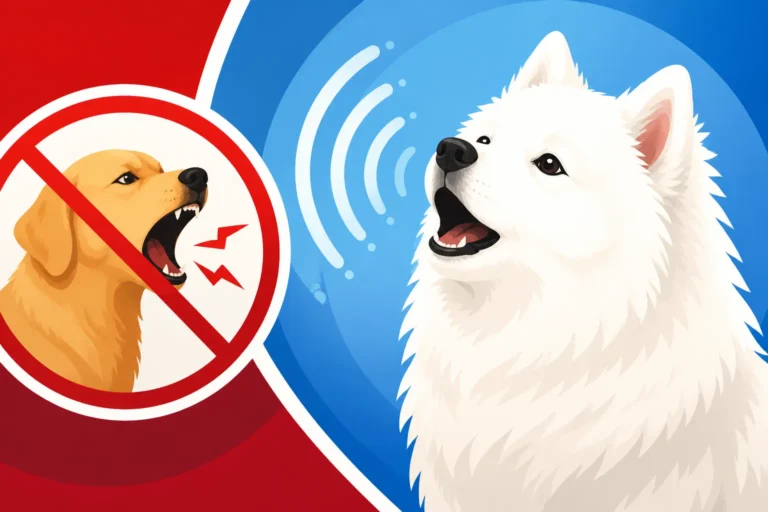
Samoyeds are known for their wide range of vocalizations – from barks and howls to "woo-woos" and that famous "Samoyed scream." While their talking is often endearing, it can become excessive, especially if they're bored, seeking attention, or reacting to stimuli. The Samoyed Scream and Why It Is Not Barking can be quite startling to new owners and neighbors alike.
Addressing excessive vocalization starts with identifying the trigger. Are they barking at every person who walks past the window? Are they "screaming" for attention? Once you know the cause, you can develop a strategy. For attention-seeking vocalization, the best approach is often to ignore it. Turn your back, leave the room, or simply refuse to acknowledge them until they are quiet. The moment they are quiet, even for a second, reward them calm and generously. For alert barking, teach a "quiet" cue. Let them bark once or twice at the trigger, then say "quiet," and immediately offer a high-value treat to distract them. Gradually increase the time they need to be quiet before getting the reward. Ensure your Samoyed is getting enough physical and mental exercise; a tired Samoyed is often a quieter Samoyed. Boredom is a huge culprit for vocalization, so regular walks, play sessions, and puzzle toys can make a big difference. It's a conversation you need to learn how to manage, rather than silence completely.
Essential Commands for a "Negotiable" Samoyed
Even if your Samoyed considers obedience somewhat flexible, there are a few commands that are absolutely non-negotiable for their safety and your peace of mind. Mastering these is paramount.
Reliable Recall: Your Lifeline
A reliable recall is not just a polite request; it's potentially life-saving. For an independent, sometimes prey-driven Samoyed, the ability to call them back from a tempting distraction like a squirrel or an open gate is critical. Whether a Samoyed Can Ever Be Off Leash is often debated, but a strong recall is the best way to ensure safety.
Start training recall in a completely distraction-free environment. Use an excited tone and a unique "come" cue (a whistle or a specific phrase works well, too). The moment they orient towards you, start praising and backing away, making yourself even more exciting. When they reach you, give them the biggest, highest-value reward possible – a handful of chicken, a vigorous game of tug, or their absolute favorite treat. Never use recall to do something unpleasant, like giving them a bath or putting them away, unless you immediately follow it with a reward. This poisons the cue. Gradually introduce distractions, always setting them up for success. If you know they'll ignore you for a deer, don't call them when a deer is present. Always make coming to you the most amazing, rewarding experience possible. Practice in a variety of places, always making it fun.
"Leave It" and Impulse Control
"Leave It" is another crucial command for Samoyeds, given their curiosity and propensity to pick up interesting (and sometimes dangerous) things on walks. Whether it's a discarded chicken bone, a dead critter, or something less savory, being able to tell your Samoyed to leave it alone can prevent serious health issues or vet visits.
Teach "Leave It" by placing a low-value treat on the floor and covering it with your hand. When your Samoyed tries to get it, say "Leave It." The moment they look away from your hand, even for a split second, praise them and reward them with a different, higher-value treat from your other hand or pocket. Gradually progress to leaving the treat uncovered, and then to placing it further away, still rewarding for turning away from the forbidden item. Once they understand the concept, practice with increasingly tempting items and in more distracting environments. This teaches impulse control, which is vital for a breed that often acts on instinct and immediate gratification. A well-trained "Leave It" means you can navigate unexpected discoveries on your walks with confidence, knowing your Samoyed will respect your command.
Loose-Leash Walking: A Shared Pleasure
Walking a Samoyed should be an enjoyable experience for both of you, not a test of strength. As we discussed, their natural inclination is to pull. Teaching a consistent loose-leash walk transforms your daily outings from a battle into a pleasant stroll.
Beyond the "stop when they pull" method, incorporate targeted training sessions focused solely on leash manners. Practice walking in a small area, rewarding every step they take with a loose leash. Use a consistent cue like "let's walk" or "heel" (if you want them at your side). When they walk nicely, praise them generously and give them treats. If they pull, stop, wait for the leash to slacken, then resume. Using a front-clip harness can provide immediate relief and assist in the learning process by redirecting their momentum. Consistency is key here; every walk, every time. If you sometimes let them pull, you'll undo all your hard work. Think of it as a dance: you lead, they follow, and it should be a graceful movement, not a tug-of-war. For some owners, a dedicated dog walking class can be incredibly helpful in solidifying these skills in a distracting group environment.
Beyond Basic Obedience: Keeping a Samoyed Engaged
Once your Samoyed has a handle on the essential commands (or at least mostly, you know, negotiates less often), it's vital to keep their intelligent minds and active bodies stimulated. A bored Samoyed is a destructive, noisy, and generally "naughty" Samoyed.
Exploring Dog Sports
Samoyeds excel in various dog sports that tap into their natural abilities and love for activity. Agility, Rally Obedience, Scent Work, and particularly drafting (carting) or mushing activities like canicross or bikejoring are fantastic outlets. These sports provide both mental and physical challenges, strengthening your bond and making training fun and engaging.
- Agility: Navigating obstacle courses is a fantastic way to burn off energy and engage their minds. It teaches focus, body awareness, and teamwork.
- Rally Obedience: This is a more relaxed form of obedience competition where you move through a course of numbered stations, performing a different exercise at each. It's great for building handler-dog communication and focus.
- Scent Work: Using their incredible noses to find hidden scents is immensely satisfying for Samoyeds and a wonderful way to tire them out mentally.
- Drafting/Mushing: If your Samoyed loves to pull, teaching them to pull a cart or engage in canicross (running with your dog harnessed to you) or bikejoring (biking with your dog harnessed to your bike) can be incredibly fulfilling. This is what they were bred to do, and channeling that energy appropriately makes for a happier, more settled dog. The Age a Samoyed Can Start Sledding is generally around 18 months to two years, once their growth plates have closed.
Mental Enrichment and Puzzle Toys
Even on days when you can't hit the trails or an agility course, providing mental enrichment at home is crucial. Samoyeds thrive on problem-solving. Puzzle toys that dispense treats when manipulated, snuffle mats where they have to forage for food, or even DIY games like hiding treats around the house for them to find can keep their minds sharp and prevent boredom.
Rotate toys and puzzles to keep them novel and exciting. Don't leave all the toys out all the time; bring out one or two new ones each day. Incorporate short training sessions throughout the day, teaching new tricks or refining old ones. Even just 5-10 minutes of brain games can be as tiring as a long walk for a Samoyed. Think of it as feeding their intellectual hunger. Many excellent puzzle toys are available on platforms like Amazon, offering varying levels of difficulty to keep your clever Samoyed challenged. A well-exercised and mentally stimulated Samoyed is far less likely to chew on your furniture or bark incessantly.
Socialization and Exposure
A well-adjusted Samoyed is one that has had plenty of positive socialization experiences from a young age. This means exposure to a wide variety of people, places, sounds, and other friendly dogs. Early and ongoing socialization helps them develop confidence and good manners, making them less reactive and more adaptable in different situations.
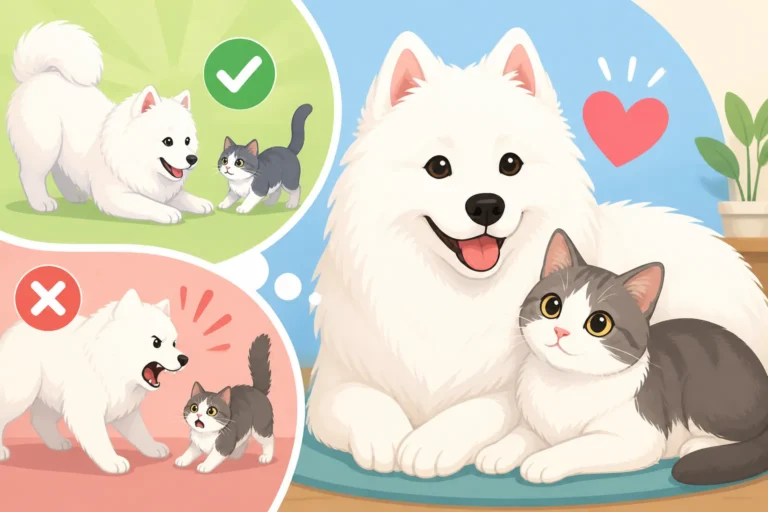
Continue to expose your adult Samoyed to new experiences. Take them on car rides to different parks, visit dog-friendly stores, or simply sit on a bench and let them observe the world. Ensure these experiences are positive, with plenty of treats and praise for calm behavior. While Samoyeds are generally friendly, a lack of socialization can still lead to fearfulness or reactivity. A well-socialized Samoyed is typically confident and friendly, happily greeting strangers and other dogs without excessive fuss. If you got your puppy from a reputable breeder, they will have already started this process for you; if not, there's no time like the present to begin. The First Year With a Samoyed Puppy is critical for this foundational socialization.
Training Tools and Resources That Actually Help
Navigating the world of dog training tools can be overwhelming. For Samoyeds, certain items and resources stand out for their effectiveness in managing their unique traits.
Effective Leash and Collar Choices
Given their strength and desire to pull, the right equipment can make a world of difference.
- Front-Clip Harnesses: These are often a godsend for Samoyed owners. Unlike back-clip harnesses that can encourage pulling by allowing the dog to lean into it, a front-clip harness has the leash attachment at the dog's chest. When your Samoyed pulls, it gently redirects their body to the side, making it uncomfortable to continue pulling forward. This encourages them to walk beside you. They are widely available and can dramatically improve walks while you work on loose-leash training.
- Flat Collars: A well-fitting flat collar is fine for ID tags and light leash work, but generally not sufficient for strong pullers or for safety in high-distraction environments. Ensure it's snug enough that it can't slip over their head but loose enough for comfort.
- Long Lines: As mentioned, a long line (15-30 feet) is invaluable for practicing recall in safe, open areas, giving your Samoyed the sensation of freedom while maintaining control. Always attach a long line to a harness, never a flat collar, to avoid neck injury.
- Treat Pouches: Having treats readily accessible is crucial for timely rewards, especially when working with a Samoyed. A sturdy treat pouch that clips to your belt or waistband means you can reward the instant your Samoyed performs the desired behavior, reinforcing it powerfully. Many functional and stylish options can be found on Amazon.
Online Training Programs and Community Support
Sometimes, you need more than just a blog post. Online training programs can provide structured guidance, video demonstrations, and even community support to help you through various training challenges. These can be particularly beneficial for Samoyed owners who might struggle with consistency or need fresh ideas for engaging their smart, independent dogs.
For instance, platforms like BAXTER & Bella offer comprehensive online puppy and dog training programs that cover everything from basic obedience to more advanced behaviors, all through positive reinforcement methods. Such programs can walk you step-by-step through exercises, offer troubleshooting tips, and provide a supportive community of fellow dog owners. This can be an excellent resource for new Samoyed owners or those looking to refresh their skills and find new ways to connect with their dogs. Access to experienced trainers and a structured curriculum can make a huge difference in turning those "negotiable" behaviors into reliable responses.
Smart Treat Pouches and Puzzle Toys
Beyond the harnesses and leashes, a few other tools can significantly aid your training journey.
- Treat Pouches: We can't say it enough: access to treats is paramount. A good treat pouch is easy to open and close quickly, holds a generous amount of treats, and is comfortable to wear. This prevents fumbling in pockets and missing the crucial moment to reward your dog. Look for options on Amazon that suit your style and needs.
- High-Quality Puzzle Toys: These are essential for mental enrichment. They come in many forms, from treat-dispensing balls to complex feeders that require multiple steps to access food. These toys tap into your Samoyed's natural intelligence and problem-solving skills, providing a productive outlet for their energy and preventing boredom-induced mischief.
- Chew Toys: Samoyeds love to chew, especially as puppies. Providing appropriate, durable chew toys can redirect this natural urge away from your furniture or shoes. Look for toys made for strong chewers.
Patience, Persistence, and a Sense of Humor
Training a Samoyed isn't a linear path to perfection. It's a journey filled with ups, downs, breakthroughs, and moments where you'll wonder if your dog understands a single word you've ever said. Embracing this reality with patience and a good dose of humor is perhaps the most important "tool" you can have.
Understanding Setbacks Are Normal
No dog is perfect, and Samoyeds, with their independent spirits, are certainly no exception. You will have days where your Samoyed seems to have forgotten everything they've learned, or where they choose to completely disregard a command they've performed flawlessly a hundred times before. These setbacks are normal. They don't mean you're a bad trainer, or that your dog is untrainable. They simply mean you need to reassess, go back to basics, or re-evaluate your motivation strategy.
Perhaps the distraction was too high that day, or your treats weren't exciting enough. Maybe your dog is tired, overstimulated, or simply having an "off" day. Don't get discouraged. Every dog learns at their own pace, and for Samoyeds, the learning is often punctuated by moments of charming defiance. Use setbacks as opportunities to learn more about your dog and refine your approach. Acknowledge the frustration, but don't let it derail your overall commitment. It's a marathon, not a sprint. Training a Samoyed That Finds Obedience Negotiable is about recognizing this long-term commitment.
Celebrating Small Victories
Given the challenges, it's incredibly important to celebrate every small victory. Did your Samoyed come when called from a slightly further distance than before? Celebrate! Did they walk politely for a full block? Throw a party! Did they "leave it" without a moment's hesitation? Jackpot! Focusing on progress, no matter how incremental, helps maintain your own motivation and keeps the training positive for both you and your dog.
These small wins are proof that your efforts are paying off. They reinforce your belief in your Samoyed and in your training methods. Share your successes with your family or online communities; positive reinforcement isn't just for dogs! It's also important to recognize when your Samoyed is trying, even if they don't quite get it right. Reward the effort, not just the perfect execution. This builds their confidence and willingness to keep trying. The path to a well-behaved Samoyed is paved with many small, joyful successes.
Embracing the "Sammy Smile" for What It Is
Ultimately, your Samoyed's "negotiable" approach to obedience is part of their unique charm. It speaks to their intelligence, their independence, and their strong sense of self. While it requires a dedicated and consistent training approach, it also means you have a thinking, feeling partner, not a robot. Embrace that famous "Sammy smile" for what it is: a beautiful breed characteristic that, while sometimes misleading in a training context, reflects their generally happy and affectionate nature.
Your Samoyed may never be the kind of dog that performs every command with military precision, but with the right understanding, motivation, and a whole lot of patience, you can build a relationship of mutual respect and cooperation. You'll have a dog that understands what you ask, even if they occasionally need a little more convincing. They'll be a loyal, loving, and endlessly entertaining companion who brings immense joy to your life, even when they're charmingly debating whether "sit" is truly the best course of action right now. Enjoy the journey, the fluffy cuddles, and that iconic smile!
Disclaimer
This article is for general informational purposes only and does not constitute professional advice. Laws, prices and regulations vary by location and change over time. Consult a qualified professional for guidance on your specific situation.