Feeding an Old Samoyed
Senior Samoyed nutrition adjustments manage metabolic rate declines, prevent weight gain, and maintain muscle mass during aging.
The daily stuff, done right.
Feeding amounts by life stage, coat and skin routines, dental and nail care, exercise needs, and what changes as they age.

Senior Samoyed nutrition adjustments manage metabolic rate declines, prevent weight gain, and maintain muscle mass during aging.

Samoyed dental care prevents severe bacterial infections and organ damage by stopping plaque, tartar, and periodontal disease.

Samoyed ear care requires understanding unique upright anatomy, natural self-cleaning mechanisms, and specific signs of infection.
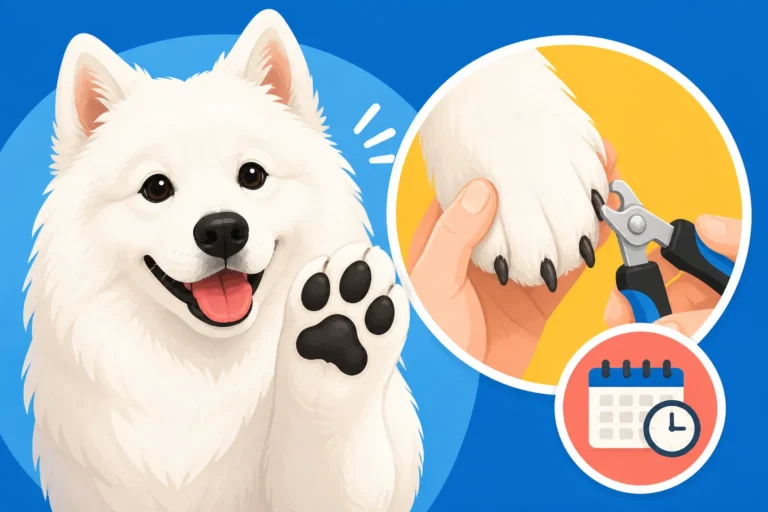
Samoyed nail trimming schedules and proper paw care prevent overgrown nails that cause pain, gait issues, arthritis, and joint strain.
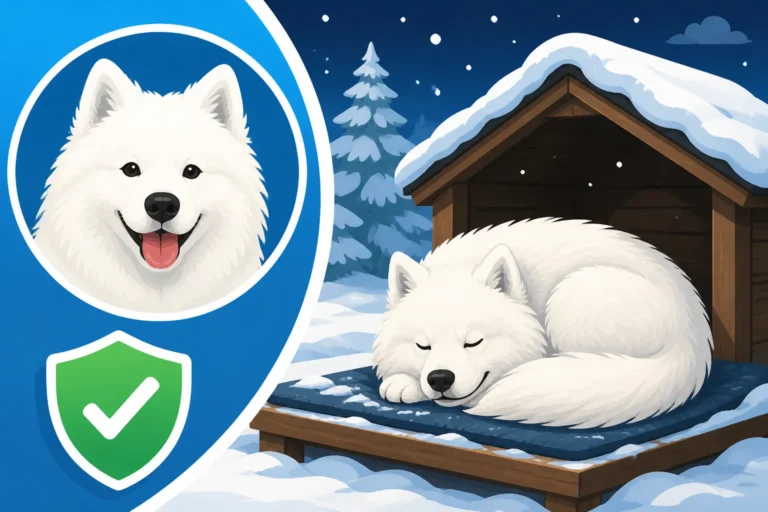
Samoyed dogs possess ancestral Arctic adaptations for extreme cold, but sleeping outside in winter remains risky for modern pets.
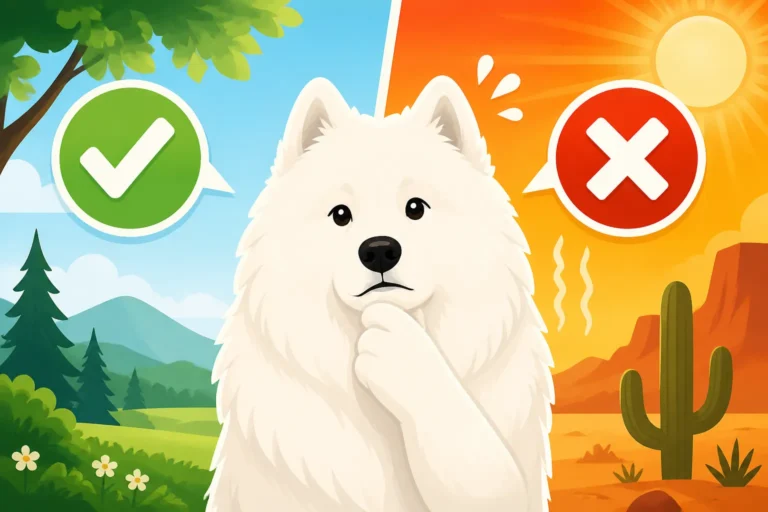
Samoyed dogs struggle in hot climates because their Arctic double coats trap heat, risking life-threatening heatstroke in warm weather.
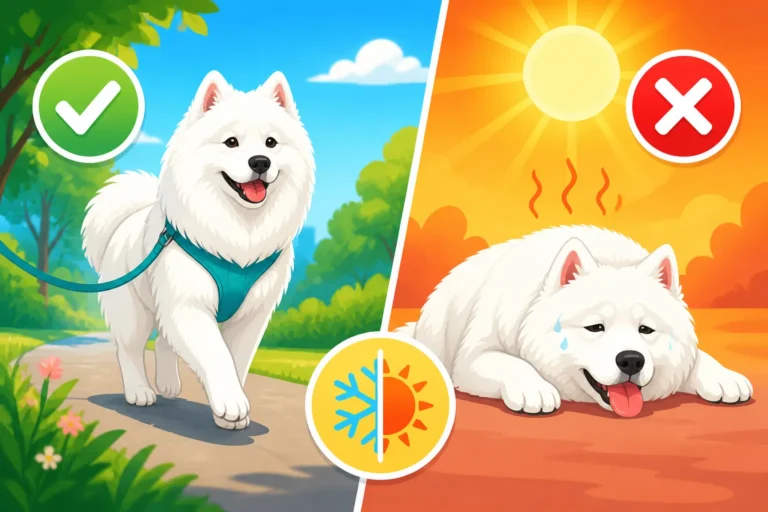
Samoyed summer walking safety rules explain how ancestral traits and double coats affect heat tolerance and exercise needs.
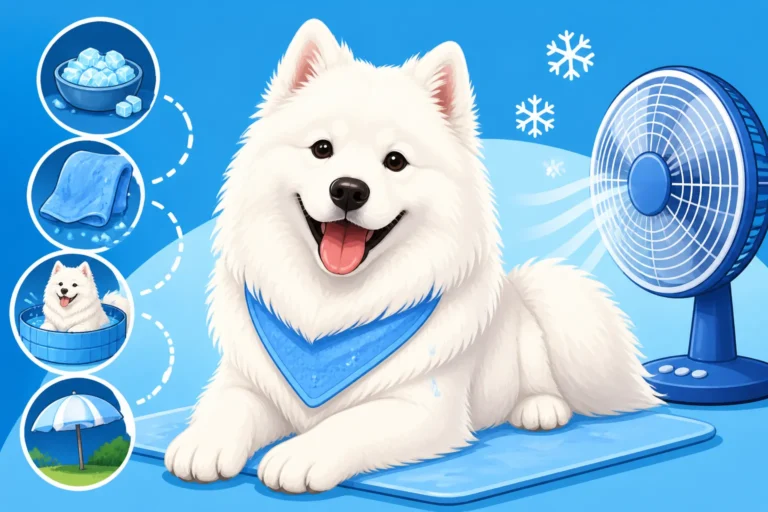
Samoyed cooling strategies and emergency heatstroke signs help owners protect arctic dogs when temperatures rise above seventy degrees.
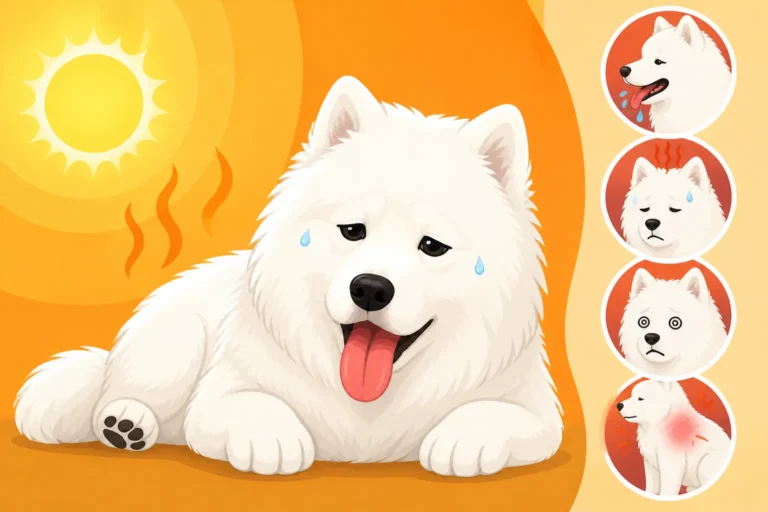
Samoyed overheating signs include heavy panting and thick coat traps. This text explains symptoms to watch for in hot weather.

Samoyed temperature thresholds and environmental factors indicate the exact point when double-coated dogs must stay indoors.