How Often a Samoyed’s Nails Need Cutting
One of the most overlooked aspects of owning a Samoyed, yet one of the most critical for their comfort and long-term health, is proper nail care. So many Samoyed owners grapple with how often their fluffy companion's nails truly need trimming, often leading to overgrown nails that cause pain, gait issues, and even serious health problems. This guide aims to demystify Samoyed nail care, providing practical advice to keep your happy cloud comfortable and sound on their feet.
The Importance of Regular Nail Care for Your Samoyed
It's easy to get caught up in the glorious white coat, the perpetual smile, and the endless energy of a Samoyed, but underneath all that fluff, their paws are doing a lot of hard work. Neglecting nail care can turn a joyous romp into a painful ordeal, impacting their ability to walk, run, and even just stand comfortably. Think of it like walking in shoes that are a size too small, day in and day out – it quickly becomes unbearable.
Why Long Nails Are a Big Problem
When a Samoyed's nails get too long, they start to touch the ground when your dog stands. This isn't just an aesthetic issue; it's a structural one. The pressure from the ground pushes the nail back into the nail bed, which can be incredibly uncomfortable, even painful. Over time, this constant pressure can force the toes to splay and rotate, changing the natural alignment of the paw and putting undue stress on the entire limb. Imagine the stress this puts on their joints, from their toes all the way up to their hips and spine. This seemingly small issue can lead to significant discomfort and even permanent changes in their paw structure.
Moreover, excessively long nails can get caught on carpets, furniture, or rough terrain, leading to painful tearing or even avulsion of the nail from the quick. This is not only excruciating for your Samoyed but also often requires veterinary intervention, antibiotics, and weeks of careful bandaging and recovery. It’s a preventable injury that no Samoyed owner wants to experience.
Understanding the Quick and How It Grows
To truly understand nail trimming, you need to know about the "quick." The quick is the sensitive part of the nail that contains blood vessels and nerves. It's living tissue. When your Samoyed’s nails are kept short and trimmed regularly, the quick naturally recedes, making it easier to maintain shorter nails without fear of "quicking" them (cutting into the quick, which causes pain and bleeding).
However, if nails are allowed to grow long, the quick grows along with them. This is where the challenge comes in. If your Samoyed has very long nails, you can't just hack them back to a desirable length immediately without hitting the quick. You have to trim a little bit at a time, allowing the quick to recede over several weeks or months. It’s a gradual process, almost like training the quick to stay shorter. This is why consistency is key; occasional trims often mean you're always trying to catch up to the quick rather than keeping it at bay.
Health Risks Beyond Discomfort
The issues don't stop at discomfort or splayed toes. Long nails can contribute to more serious health problems. The altered gait caused by long nails can lead to chronic pain and conditions like arthritis, particularly in older Samoyeds. If your Samoyed is constantly shifting weight to avoid putting pressure on painful toes, this can strain other joints in their legs, hips, and back. Arthritis in an Older Samoyed can be exacerbated by poor foot posture originating from neglected nails.
Furthermore, long nails can harbor dirt, bacteria, and yeast, increasing the risk of infections, especially if they curve and grow into the paw pad. This can lead to persistent licking, skin irritation between the toes, and costly vet visits. Remember, a Samoyed is built for movement and activity, and anything that hinders their ability to move freely directly impacts their overall quality of life and happiness. How a Samoyed Hides Illness Behind a Smile means you might not even realize how much pain they're in until the problem is quite advanced.
How to Determine the Ideal Frequency for Your Samoyed's Nail Trims
So, how often is often enough? There's no one-size-fits-all answer, as every Samoyed is an individual, and their lifestyle plays a huge role. However, there are clear indicators and factors to consider to tailor a perfect schedule for your furry friend.
The "Clicking" Test: A Simple Indicator
The easiest and most reliable way to tell if your Samoyed's nails are too long is the "clicking" test. When your Samoyed stands on a hard, flat surface (like hardwood or tile), you shouldn't hear their nails clicking against the floor. If you do, it means their nails are too long and are making contact with the ground, pushing up into the nail bed.
Ideally, their nails should be just short enough that they don't touch the floor when they're standing naturally. This usually means you should aim for a trim every 2 to 4 weeks for most Samoyeds, but for some, especially those with naturally fast-growing nails or less activity, it might be even more frequent. Think of it as a regular maintenance task, like How Often a Samoyed Needs Brushing or refilling their water bowl.
Factors Influencing Nail Growth Rate
Several factors influence how quickly your Samoyed's nails grow and wear down:
- Activity Level: A highly active Samoyed who regularly walks on concrete, pavement, or rough terrain will naturally wear down their nails more than a dog who spends most of their time indoors or on soft surfaces like grass. Sledding, hiking on rocky trails, or even just consistent daily walks on sidewalks can help keep nails shorter. However, even very active dogs often need their dewclaws trimmed, as these rarely touch the ground.
- Genetics: Just like humans, some dogs naturally have faster-growing nails or harder nails that resist wear. You might have one Samoyed that needs weekly trims and another that can go three weeks comfortably.
- Diet and Health: A balanced diet and good overall health can contribute to healthy nail growth. However, extremely rapid, brittle, or discolored nail growth could sometimes indicate an underlying health issue, though this is less common.
- Age: Puppy nails tend to be softer and grow quickly, requiring frequent attention. As dogs age, their nails might become thicker and harder, but still require regular care.
Consider a Samoyed who lives in a suburban home with a grassy yard versus a Samoyed who accompanies their owner on daily 5-mile jogs on asphalt. The jogger's nails will likely wear down more, but both will still need checks and trims. My own Samoyed, Nimbus, is a whirlwind of energy, but most of his exercise is on trails or grass, so his nails grow like weeds! His brother, who lives in a city, barely needs trims thanks to all the pavement walking.
Observing Your Samoyed's Gait
Beyond the audible clicking, take a moment to observe your Samoyed walking and standing. Do their toes appear splayed or spread out more than usual? Does their walk look a bit "off" or hesitant, especially on hard floors? Are they spending an unusual amount of time licking or chewing their paws? These can all be subtle signs that their nails are causing discomfort.
A healthy Samoyed should walk with confidence, their paws moving freely and comfortably. If you notice any changes in their gait or posture that coincide with longer nails, it's a clear signal that it's time for a trim and to establish a more consistent schedule. Early intervention can prevent minor discomfort from escalating into chronic pain or joint problems that are much harder to address.
Here's a quick guide to common nail care frequencies:
| Samoyed Activity Level | Nail Growth Rate | Recommended Trimming Frequency | Key Indicators |
|---|---|---|---|
| Highly Active (Pavement) | Moderate | Every 3-4 weeks | Slight clicking on hard floors, dewclaws grow fast |
| Moderately Active (Mixed) | Moderate-Fast | Every 2-3 weeks | Clear clicking, toes splaying slightly |
| Less Active (Mostly Indoors) | Fast | Every 1-2 weeks | Constant clicking, discomfort, poor paw posture |
| Puppies | Very Fast | Every 1 week | Soft nails, easy to quick if neglected |
Essential Tools and Techniques for Samoyed Nail Trimming
Approaching nail trims with the right tools and a calm, consistent technique can make all the difference. It's often the anticipation or a bad past experience that creates resistance, so let's set your Samoyed (and you!) up for success.
Choosing the Right Nail Clippers or Grinder
There are two main types of tools for Samoyed nail care: clippers and grinders. Both have their pros and cons, and the best choice often comes down to personal preference for both you and your dog.
Nail Clippers:
- Scissor-style (Resco or Miller's Forge type): These are often preferred for larger, stronger nails. They offer a clean, quick cut. Brands like Miller's Forge are widely available and well-regarded for their durability. You can often find these on Amazon or at your local pet supply store.
- Guillotine-style: Less common for large breeds like Samoyeds, as they can sometimes crush the nail if not sharp or used correctly.
When choosing clippers, ensure they are sharp. Dull clippers can crush the nail rather than cut it cleanly, which is painful and can make future trims more difficult. Replace blades or clippers regularly.
Nail Grinders:
- These tools use a rotating abrasive head to file down the nail. They are excellent for slowly removing small amounts of nail, which reduces the risk of hitting the quick, especially if your Samoyed has black nails where the quick isn't visible.
- Grinders can also create a smoother, rounded edge, which is nicer for your floors and for your dog's paws.
- The downside is the noise and vibration, which some dogs find alarming. Introduction needs to be gradual and positive.
Many Samoyed owners find a combination works best – clippers for the initial bulk removal and a grinder for shaping and refining. Don't forget to have styptic powder (like Kwik Stop) on hand, just in case you accidentally cut into the quick. This quickly stops bleeding and provides pain relief.
Mastering the Art of the Trim
Trimming your Samoyed’s nails doesn't have to be a wrestling match. Here's a step-by-step approach:
- Find a Calm Environment: Choose a quiet time and place where your Samoyed is relaxed.
- Gather Your Tools: Clippers/grinder, styptic powder, and plenty of high-value treats.
- Position Your Samoyed: For many, having the dog lie down or sit comfortably with a paw extended works well. If they are accustomed to grooming, a grooming table might be helpful, which you can also find on Chewy or Amazon.
- Identify the Quick:
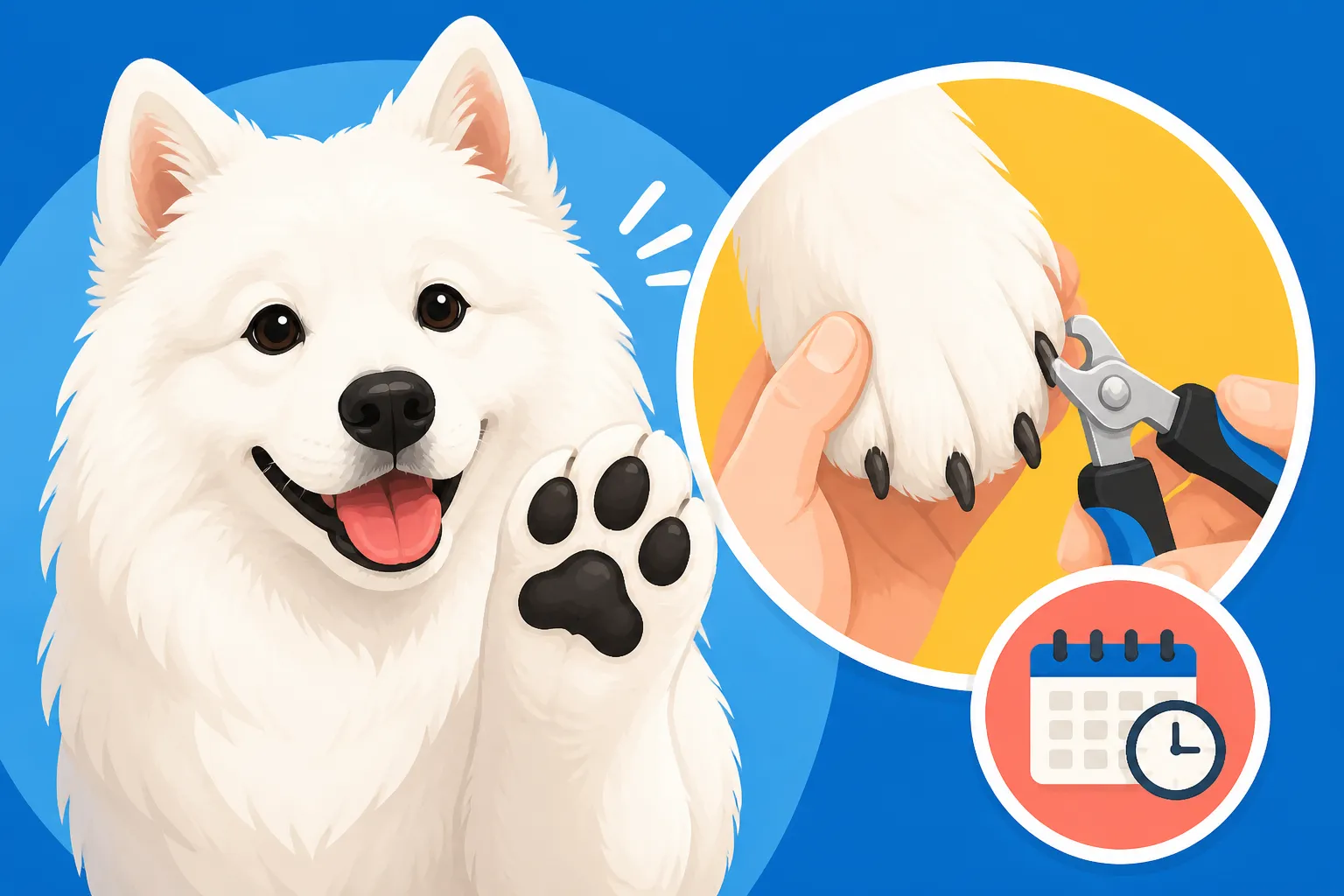
- Clear/White Nails: You can usually see the pink quick inside the nail. Trim only the white tip, staying a few millimeters away from the quick.
- Black Nails: This is trickier. Trim small, thin slices off the end of the nail. As you get closer to the quick, you'll see a tiny gray or black dot appear in the center of the cut surface, surrounded by a white ring. Stop here! That dot is the start of the quick.
- Trim in Small Increments: It's always better to take off too little than too much. You can always trim more, but you can't put it back.
- Don't Forget Dewclaws: These don't touch the ground and can grow into the leg if neglected.
- Reward Heavily: Every nail, every paw, should be followed by praise and treats.
Consistency is key. Regular, positive experiences will build your Samoyed's confidence. If you only trim when their nails are painfully long and it becomes a huge ordeal, they’ll dread it every time. Starting young with a The First Year With a Samoyed Puppy and making it a positive routine is ideal.
Making it a Positive Experience
Building a positive association with nail trims is paramount. Here's how to do it:
- Start Slow: If your Samoyed is new to nail trims, don't expect to do all four paws at once. Start by just touching their paws, then touching the clippers to a nail, then clipping one nail, then two.
- Treats, Treats, Treats: Use high-value treats generously. Every interaction with the clippers or grinder should result in a delicious reward. Think small bits of cooked chicken, cheese, or even special training treats you might order from Ollie.
- Positive Reinforcement: Speak in a calm, soothing voice. Praise them profusely for even the smallest cooperation.
- Never Punish: If your Samoyed resists, don't scold or punish them. This will only increase their fear. Simply stop, try again later, or re-evaluate your approach.
- Desensitization: For dogs fearful of grinders, turn it on without touching them, give a treat. Then touch it briefly to a non-sensitive area (like their elbow), give a treat. Gradually work your way to the nails.
Remember, a little patience goes a long way. Building trust around grooming procedures like nail trims will make life easier for both of you for years to come.
When Professional Help Might Be Necessary
Even with the best intentions, some Samoyed owners find nail trimming to be a daunting task. There's absolutely no shame in seeking professional help; in fact, it's often the safest and least stressful option for everyone involved.
Fear, Phobias, and Overgrown Nails
Some Samoyeds develop an intense fear or phobia of nail trims, often due to a previous bad experience (like being quicked) or simply their personality. If your Samoyed becomes aggressive, panics, or you genuinely fear injuring them or yourself, it's time to call in the professionals. Veterinary technicians and professional groomers are skilled at handling dogs with nail anxiety. They have techniques, tools, and sometimes even medical interventions (like mild sedation, if approved by your vet) to make the process safer and less traumatic.
Don't let embarrassment stop you. Many dogs, not just Samoyeds, struggle with nail trims. An experienced groomer knows how to work quickly and efficiently, often getting the job done before your dog has a chance to fully escalate their anxiety. Sometimes, just a few positive experiences with a calm, confident professional can turn the tide.
Maintaining Consistency Between Vet Visits
Perhaps you take your Samoyed to the vet for nail trims, but they still get long between appointments. This often happens because people wait until the nails are really long before scheduling. If your vet recommends trims every 3-4 weeks, but you can only get an appointment every 6-8 weeks, you're always playing catch-up.
Discuss with your vet or groomer a realistic schedule. If your Samoyed absolutely hates it, perhaps shorter, more frequent visits are needed. Some vet clinics offer "walk-in" nail trim times or dedicated technician appointments that are quicker and potentially less expensive than a full exam. You could also try a mobile groomer who comes to your home, which can sometimes reduce stress for your Samoyed. Remember, consistent short appointments are often better than infrequent, traumatic long ones.
The Benefits of Professional Grooming
Beyond just nail trims, professional groomers offer a host of services that can be a lifesaver for Samoyed owners. What a Full Groom on a Samoyed Costs might seem like an indulgence, but it often includes nail trims, ear cleaning, and thorough brushing that keeps their magnificent coat healthy.
A professional groomer understands the intricacies of a Samoyed's double coat and grooming needs. They often have specialized equipment, like force dryers, that can get your Samoyed dry quickly and thoroughly, preventing skin issues. They can also spot other issues like skin irritations, lumps, or ear infections that you might miss. Regular professional grooming, perhaps every 6-8 weeks, can complement your at-home care and keep your Samoyed looking and feeling their best, including keeping those nails in check.
Addressing Specific Nail-Related Challenges
Even with the best intentions and tools, Samoyed nail care can present unique hurdles. Knowing how to navigate these common challenges will make you a more confident and effective caregiver for your fluffy friend.
Dealing with Black Nails
Black nails are perhaps the biggest challenge for many dog owners, Samoyed or otherwise. Because you can't see the quick through the dark nail, there's always a fear of cutting too deep. This fear often leads to owners leaving the nails too long, which, as we've discussed, causes its own set of problems.
The key to black nails is to take very small, thin slivers off the end of the nail. After each cut, look at the exposed surface of the nail head-on. You'll initially see a white or grayish ring around a darker center. As you get closer to the quick, this center will change, becoming a slightly darker gray or black dot. This "bullseye" or "eye" indicates you're right at the edge of the quick. Stop cutting when you see this, or you'll enter the quick itself.
If you're using a grinder, it's even easier as you have more control over the removal of minute amounts of nail. The friction from grinding will also warm the quick slightly, and some dogs will pull their paw away before you hit it, giving you an extra warning. Practice and patience are vital here. If you're still uncomfortable, ask your vet tech or groomer to demonstrate their technique.
The Importance of Dewclaw Care
Dewclaws are those little nails located higher up on the inside of your Samoyed's leg, similar to a human's thumb. Not all Samoyeds have them, but many do, sometimes even on all four paws. Unlike other nails, dewclaws typically don't touch the ground and therefore don't wear down naturally through walking or playing.
Because they don't get natural wear, dewclaws can grow incredibly long and eventually curl around, growing into the soft paw pad or skin of the leg. This can be extremely painful, leading to infection, lameness, and requiring veterinary intervention to remove. It's often compared to a human's ingrown toenail, but much worse.
Therefore, dewclaws must be trimmed regularly, often even more frequently than the main nails. Make sure to check them every time you do a nail trim. If your Samoyed has dewclaws, remember they are just as important, if not more so, to keep short and healthy.
What if You Cut the Quick?
It happens to the best of us. Even experienced groomers or vets can accidentally nick the quick, especially with a squirming dog or a nail with a quick that extends further than expected. Don't panic!
- Stay Calm: Your Samoyed will likely yelp and pull away. Your calm demeanor will help them recover faster.
- Apply Styptic Powder: Immediately apply styptic powder (or cornstarch/flour in a pinch, though styptic powder is best) directly to the bleeding nail and apply gentle pressure for a few seconds. The bleeding should stop fairly quickly. You can find styptic powder at any pet store or often on Amazon.
- Offer Comfort and Treats: Once the bleeding stops, comfort your Samoyed with soft words and offer a high-value treat. End the session on a positive note, even if it means just successfully trimming one more non-quicked nail afterward.
- Monitor: Keep an eye on the nail for the next day or two to ensure no infection develops, though this is rare.
The fear of cutting the quick is often a bigger deterrent than the actual event. By having styptic powder ready and knowing what to do, you can confidently address it if it ever happens and minimize the stress for your Samoyed. Regular, small trims are the ultimate prevention, as they slowly encourage the quick to recede, making future trims safer.
Remember, consistent and gentle nail care is a vital part of your Samoyed's overall well-being. It contributes to their comfort, prevents pain, and supports their active lifestyle. What a Samoyed's Vet Bills Look Like can definitely be impacted by neglected nail care leading to bigger issues! Embrace the routine, and your happy, healthy Samoyed will thank you for it with every joyful bounce.
Disclaimer
This article is for general informational purposes only and does not constitute professional advice. Laws, prices and regulations vary by location and change over time. Consult a qualified professional for guidance on your specific situation.