The Temperature at Which a Samoyed Should Stay Indoors
The unique beauty and thick, fluffy coats of Samoyeds are undeniably charming, but they often leave owners wrestling with a critical question: how hot is too hot for these Arctic beauties? The anxiety is real when you see your beloved companion panting heavily in even mild summer weather, and it's easy to second-guess every decision about outdoor time. This guide is here to provide clarity on the temperatures and environmental factors that mandate keeping your Samoyed safely indoors, ensuring their comfort and preventing dangerous heat-related illnesses.
Understanding the Samoyed's Unique Adaptation to Temperature
It's easy to look at a Samoyed's glorious cloud of fur and immediately assume they must be boiling the moment the temperature nudges past sixty degrees Fahrenheit. While they are indeed built for extreme cold, their coat is far more complex and protective than many realize. It's a finely tuned piece of natural engineering.
The Marvel of the Double Coat
A Samoyed's coat isn't just one layer; it's a sophisticated double-layer system designed to insulate them from the harshest elements. The outer layer consists of long, coarse guard hairs. These hairs are straight and stand off the body, creating a protective barrier that repels water, dirt, and surprisingly, even a good amount of solar radiation. Think of them as the roof tiles on a house. Beneath this outer layer lies the truly remarkable undercoat. This dense, woolly, and soft layer is what provides the primary insulation. It traps a layer of air close to the dog's body, which then acts as a thermal buffer.
In winter, this trapped air warms up, keeping the Samoyed cozy in sub-zero temperatures. But here's the magic trick for summer: this same principle applies in reverse. When properly groomed and free of mats, the undercoat prevents external heat from easily reaching the skin. It acts as an air conditioner, slowing the transfer of heat from the outside environment to the dog's body. This is why you often hear the phrase, A Samoyed's Coat Is Insulation, Not Decoration. It's not just a beautiful aesthetic; it's a vital survival tool. This remarkable design explains Why a Samoyed's Coat Insulates Against Heat as Well as Cold.
Beyond the Fur: Other Thermoregulatory Mechanisms
While the coat is a primary defense, Samoyeds, like all dogs, rely on other physiological mechanisms to regulate their body temperature. They don't sweat all over their bodies like humans do. Instead, their main cooling mechanism is panting. When a Samoyed pants, it rapidly evaporates moisture from its tongue, mouth, and upper respiratory tract. This evaporative cooling effect helps lower their core body temperature. The faster and shallower the panting, the more heat they are trying to dissipate.
Their paw pads also play a minor role in temperature regulation. While not as significant as panting, they do have sweat glands on their paw pads that can help with some heat loss. Furthermore, when a dog gets warm, blood vessels near the surface of their skin, particularly in areas with less fur like the ears and belly, can dilate. This increases blood flow to these areas, allowing heat to radiate away from the body. However, with the Samoyed's thick coat, this radiation is less effective than in short-coated breeds, placing an even greater reliance on panting. Understanding these mechanisms helps us appreciate just how hard a Samoyed works to stay cool and why we need to be vigilant about preventing overheating.
Identifying Dangerous Temperatures for Samoyeds
Determining when a Samoyed needs to stay indoors isn't just about looking at a number on a thermometer. It's a combination of temperature, humidity, and individual factors unique to your dog. Thinking that a certain temperature is always safe or always dangerous is a common pitfall that can lead to problems.
The "Danger Zone" Thresholds
For Samoyeds, the "danger zone" starts much earlier than for many other breeds. While a crisp, dry day in the mid-70s might feel lovely to us, it can already be a moderate risk for a Samoyed, especially if they are exercising. Once temperatures climb into the high 70s and 80s Fahrenheit, the risk of overheating escalates significantly, even with minimal activity. When you hit the 90s, especially with any humidity, it becomes extremely dangerous, and outdoor time should be severely limited to essential potty breaks.
Humidity is a silent killer for dogs. When the air is saturated with moisture, the evaporative cooling process through panting becomes much less effective. It's like trying to sweat in a sauna – the sweat doesn't evaporate, so it doesn't cool you down. A temperature of 80°F with high humidity can be far more dangerous than 85°F in a very dry climate. Always consider the "feels like" temperature, which takes humidity into account.
Here's a general guide, but remember, every dog is an individual and these are just guidelines:
| Air Temperature (F) | Relative Humidity (%) | Risk Level for Samoyed | Recommended Action |
|---|---|---|---|
| Below 60 | Any | Low | Generally safe for outdoor activities. |
| 60-70 | Low-Moderate | Low-Moderate | Monitor closely during strenuous exercise. |
| 70-75 | Moderate-High | Moderate | Limit vigorous exercise. Seek shade and provide water. |
| 75-80 | Any | High | Short walks only. Supervise constantly. Keep indoors. |
| 80-85 | Low | High | Very short potty breaks only. Strictly indoor time. |
| 80-85 | Moderate-High | Very High | Absolutely minimal outdoor time. Extreme caution. |
| Above 85 | Any | Extreme | Avoid going outside except for quick, essential potty breaks. |
Individual Variation and Risk Factors
It's crucial to remember that these thresholds are not absolute. Your Samoyed's individual characteristics play a huge role in their heat tolerance. A young, fit Samoyed living in a cooler climate might handle 70°F with low humidity better than an older, overweight Samoyed living in a consistently warm environment.
- Age: Puppies and senior Samoyeds are more vulnerable to heat. Puppies often don't regulate their temperature as efficiently, and seniors may have underlying health conditions that compromise their ability to cool down. Caring for a Samoyed Past Nine often involves extra vigilance regarding temperature.
- Health Conditions: Dogs with pre-existing heart conditions, respiratory issues (like collapsing trachea), or obesity will struggle significantly more in the heat. Their bodies are already working harder, and the added stress of heat can be dangerous.
- Weight: An overweight Samoyed has more insulating fat, which exacerbates the problem. Excess weight also puts more strain on their cardiovascular system, making them less efficient at cooling themselves down.
- Activity Level: Even on moderately warm days, intense exercise like running or extended play can quickly lead to overheating. What might be safe for a leisurely stroll could be dangerous for a fetch session.
- Acclimatization: A Samoyed that has spent its entire life in a cool, northern climate will be far less tolerant of heat than one that has gradually acclimatized to a warmer region. Sudden changes in weather are especially risky.
Always observe your specific Samoyed. They will give you clues, even if they're subtle, when they're starting to feel uncomfortable.
Recognizing the Signs of Overheating and Heatstroke
Knowing the dangerous temperatures is one thing, but being able to recognize the physical signs that your Samoyed is in trouble is paramount. Heatstroke can be deadly if not addressed quickly and decisively. Don't wait until it's too late; early intervention can make all the difference.
Early Warning Signals
Your Samoyed will usually try to tell you they're too hot before things become critical. Learning to read these subtle cues can save their life. The most obvious sign is excessive panting. While normal panting is a dog's way of cooling down, if it becomes rapid, labored, and doesn't subside even when resting, it's a red flag. Their breathing might sound louder or more strained than usual.
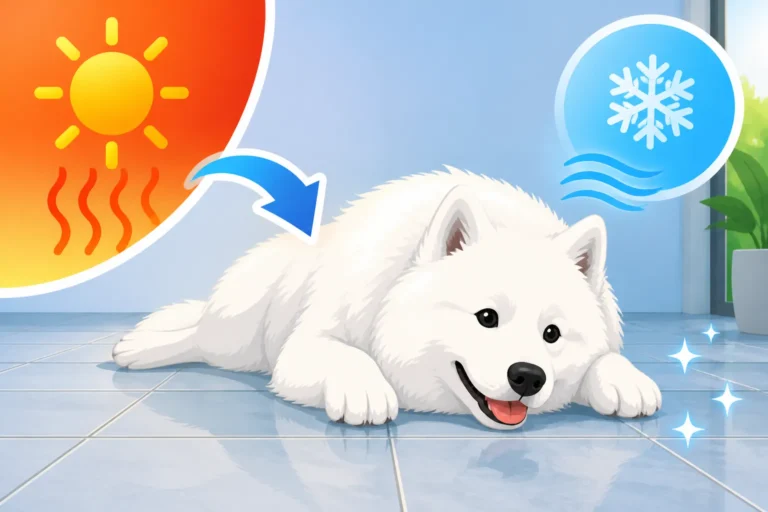
Another common sign is drooling. A hot Samoyed might drool excessively, often with thick, ropey saliva. They will likely be actively seeking cooler spots, lying on tile or concrete, or constantly searching for shade. You might notice them acting more lethargic or less responsive than usual, even refusing to engage in activities they normally love. Their gums might appear a brighter red than normal, indicating increased blood flow as their body tries to dissipate heat. These are all indicators that your Samoyed is working hard to cool down and needs immediate help getting to a cooler environment. These are the Signs a Samoyed Is Overheating.
Critical Symptoms of Heatstroke
If the early warning signs are missed or ignored, a Samoyed can quickly progress to heatstroke, which is a medical emergency. At this stage, symptoms become much more severe and life-threatening. You might see vomiting or diarrhea, which can sometimes be bloody. Their gums might shift from bright red to pale, gray, or even bluish as their circulation becomes compromised.
Disorientation is another grave sign. Your Samoyed might appear confused, stumble, or even collapse. Their eyes might look glazed, and they may be unresponsive to your voice or touch. In the most severe cases, they can experience seizures or fall into a coma. If you observe any of these critical symptoms, it's absolutely vital to begin cooling your Samoyed immediately and get them to a veterinary emergency clinic. Every second counts in preventing irreversible organ damage or death. Never hesitate; act quickly and decisively.
Creating a Safe Indoor Environment for Your Samoyed
When outdoor temperatures become too risky, your home becomes your Samoyed's sanctuary. Proactive measures to keep your indoor environment cool and comfortable are key to their well-being. This isn't just about turning on the AC; it's about optimizing their entire living space.
Maintaining Optimal Indoor Temperatures
For a Samoyed, an ideal indoor temperature range is generally between 70-75°F (21-24°C). This might feel a bit chilly to some humans, but it's crucial for a breed designed for much colder climates. Air conditioning is often the most effective way to maintain this temperature, especially during peak summer heat. What Air Conditioning Adds to a Samoyed Household is a significant consideration for any Samoyed owner in a warm climate. Setting your thermostat to kick on even when you're out can be a literal lifesaver, preventing the house from becoming a sauna while you're away.
Beyond just cooling the air, good air circulation is essential. Ceiling fans or oscillating fans can help move cooler air around and improve the evaporative cooling effect of panting. Just make sure the fan isn't blowing directly into their face for extended periods, as this can dry out their eyes. Consider setting up a dedicated "cool zone" in your home, perhaps a tiled bathroom floor or a shaded room where the air conditioner vent is particularly strong, giving your Samoyed a go-to spot for relief.
Cooling Aids and Strategies
While air conditioning does the heavy lifting, a variety of cooling aids can provide extra comfort and help your Samoyed manage the heat. Cooling mats are a fantastic option. These mats often contain a gel that activates with pressure, providing a cool surface for your dog to lie on. Brands available on platforms like Amazon or Chewy offer a range of sizes and materials. Whether a Cooling Mat Helps a Samoyed is often answered with a resounding yes by happy owners whose dogs seek them out. Elevated dog beds, which allow air to circulate underneath, can also be a more comfortable alternative to traditional stuffed beds on hot days.
Hydration is critical. Always ensure your Samoyed has access to multiple bowls of fresh, cool water. Adding ice cubes to their water bowl can make it more appealing and help keep it cooler for longer. You can also offer frozen treats, like Kongs stuffed with peanut butter or plain yogurt and frozen, or even ice cubes as a low-calorie snack. Whether a Kiddie Pool Cools a Samoyed is another great question, and for many Samoyeds, a shallow pool of water in a shaded part of the yard can offer immense relief and fun, though some Samoyeds aren't big fans of getting wet. Just make sure the water is clean and refresh it regularly.
Adapting Outdoor Activities for Hot Weather
When the temperatures rise, your Samoyed's outdoor routine needs a drastic overhaul. Gone are the long midday walks and enthusiastic park visits. It's about careful planning and prioritizing their safety above all else. Ignoring these adjustments can quickly lead to distress and potential heatstroke.
Timing is Everything
The single most impactful change you can make to your Samoyed's outdoor schedule during hot weather is when you go outside. Midday, typically from 10 AM to 4 PM, is almost always too hot for a Samoyed, even for short excursions. The sun is at its strongest, and heat radiates from pavement, creating a sauna-like environment close to the ground where your dog walks. Whether a Samoyed Should Walk at Midday is an emphatic no.
Instead, shift all outdoor activities to the coolest parts of the day. This typically means very early in the morning, right after sunrise, and late in the evening, after the sun has set and the pavement has had a chance to cool down. How Early a Samoyed Should Be Walked in Summer might mean setting an alarm for 5 AM, but it's a small price to pay for your dog's safety and comfort. Even then, keep these walks shorter than usual and stick to shaded, grassy areas as much as possible.
Monitoring and Shortening Outdoor Exposure
Even during cooler times of the day, constant monitoring is crucial. Look for any signs of discomfort: increased panting, lagging behind, or seeking shade. If you see these, it's time to head home. Never push your Samoyed to continue if they seem tired or hot. Shorten walks considerably; sometimes, just a quick 5-10 minute trip to the grass for a potty break is all they need or can safely handle.
The "five-second rule" for pavement is an excellent guideline: place the back of your hand on the pavement. If you can't hold it there comfortably for five seconds, it's too hot for your Samoyed's paws. Hot pavement can cause painful burns and quickly increase their core body temperature. Stick to grass or dirt trails whenever possible. If your Samoyed is showing resistance or Whether a Samoyed Refuses to Walk in Heat, listen to them. They know their limits. Always carry water with you on walks, even short ones, and offer it frequently. A collapsible water bowl from Chewy or Amazon can be a lifesaver.
Debunking Myths: Why Shaving is NOT the Answer
It's a common misconception, especially among those new to double-coated breeds, that shaving a Samoyed in summer will help them stay cool. The thought process is understandable: less hair equals less heat, right? Unfortunately, for a Samoyed, nothing could be further from the truth. Shaving a Samoyed is one of the worst things you can do for their heat management and overall coat health.
The Detrimental Effects of Shaving
The core problem with shaving a Samoyed is that it destroys the very system designed to protect them from both heat and cold. When you remove that dense undercoat and protective guard hairs, you strip away their natural insulation. This leaves their delicate skin exposed to the sun's harsh UV rays, dramatically increasing their risk of sunburn and even skin cancer. Sunburn on a dog can be just as painful and damaging as it is for humans.
Furthermore, shaving often damages the hair follicles, leading to improper regrowth. The guard hairs, which are meant to be coarse and straight, may never grow back correctly, or they might come in patchy. The undercoat can grow back thick and matted, without the protective outer layer, making future grooming a nightmare and actually trapping heat against the skin. This phenomenon is often referred to as "coat blow damage" or "clipper alopecia." This is the fundamental reason Why Shaving a Samoyed Makes the Heat Worse. It removes the cooling system, rather than enhancing it.
Proper Coat Care for Heat Management
Instead of shaving, the best way to help your Samoyed stay cool with their double coat is through consistent, proper grooming. The goal is to remove all dead and loose undercoat, allowing air to circulate freely. This is especially important during their seasonal "coat blows," when they shed profusely. How Often a Samoyed Needs Brushing really depends on the time of year, but during a heavy shed, daily brushing might be necessary.
Using a high-velocity force dryer (like those found at professional groomers or purchased for home use on Amazon) after a bath can also help blast out loose undercoat and ensure the coat is completely dry, preventing skin issues. Regular brushing with a good quality slicker brush and undercoat rake helps prevent mats, which can block airflow and trap heat. Think of it as thinning out their natural insulation in summer by removing the old, dead hair, rather than removing the entire insulation system. This way, their coat can continue to do its job: keeping them cool in the summer by regulating their body temperature, just as nature intended.
Disclaimer
This article is for general informational purposes only and does not constitute professional advice. Laws, prices and regulations vary by location and change over time. Consult a qualified professional for guidance on your specific situation.