Signs a Samoyed Is Overheating
There's nothing quite as alarming as seeing your beautiful, fluffy Samoyed struggling in the heat. Their thick, luxurious coats, while perfect for snowy Siberian winters, can become a real challenge when temperatures rise, turning a joyful romp into a dangerous situation quickly. It's a worry every Samoyed owner faces, especially those of us living in warmer climates or during those unexpected summer heatwaves. Knowing the signs of overheating, both subtle and severe, isn't just helpful – it's absolutely crucial for your Samoyed's well-being. This guide will walk you through what to look for, so you can act fast and keep your smiling companion safe.
Understanding Why Samoyeds Are Prone to Overheating
Samoyeds are, by their very nature, built for cold. This isn't just a preference; it's a fundamental aspect of their physiology, honed over thousands of years living alongside the Nenets people in the Arctic. Their incredible double coat is a marvel of natural engineering, but it's also the primary reason they're so susceptible to overheating when the mercury climbs. Understanding this design is the first step in recognizing potential danger.
The Double Coat's Role in Temperature Regulation
Let's talk about that amazing coat. A Samoyed's fur isn't just one layer; it's two distinct ones, each with a vital job. The outer layer consists of long, coarse guard hairs. These hairs are straight and stand off the body, designed to shed snow, ice, and even dirt. They're also quite good at reflecting sunlight, offering a degree of protection from the sun's rays. Beneath this impressive outer layer lies the truly dense part: the undercoat. This soft, woolly, incredibly thick layer is what provides the insulating power, trapping warm air against the skin in cold weather.
Now, here's the crucial part: in cold weather, this undercoat keeps them warm. In warm weather, if maintained properly, it can actually help insulate them from the heat by preventing hot air from reaching the skin and allowing cooler air to circulate. Think of it like the insulation in your house – it keeps the cold out in winter and the heat out in summer. However, this delicate balance relies on the coat being clean, dry, and free of mats. If the undercoat becomes matted or shed hair isn't removed, it can trap heat right against their body, turning their natural defense into a dangerous liability. This is why proper grooming is non-negotiable, not just for looks, but for their very health. A matted coat prevents air circulation, which is vital for any dog to dissipate heat. You can learn more about A Samoyed's Coat Is Insulation, Not Decoration.
Environmental Factors and Lifestyle Risks
It's not just the coat; it's the environment, too. A Samoyed in the desert heat of Arizona will struggle far more than one enjoying a brisk summer in Alaska, even though both might experience "summer." Humidity plays a huge role because dogs cool themselves primarily through panting. When the air is already saturated with moisture, evaporation from their tongue and respiratory tract becomes much less efficient, making it harder for them to cool down. It's like trying to sweat in a sauna – it doesn't work as well.
Beyond the ambient temperature and humidity, strenuous exercise, especially during the warmer parts of the day, dramatically increases their body temperature. Even a seemingly short walk or a playful game of fetch in the park can become risky. Remember that Samoyeds are bred for endurance, not short bursts of speed, and they will often push themselves to please you, even when they're starting to feel unwell. Leaving a Samoyed in a car, even with windows cracked, is a recipe for disaster; car interiors heat up at an alarming rate, turning into ovens quickly. Even simply lying in direct sunlight for too long without access to shade can lead to problems. Owners need to be extra vigilant about Water, Shade and the Summer Plan for a Samoyed.
Early, Subtle Signs of Overheating to Watch For
It's tempting to think that overheating signs are always dramatic, but often, the earliest warnings are subtle. These are the moments when a proactive owner can intervene and prevent a serious situation from escalating into an emergency. Paying close attention to your Samoyed's normal behavior is key.
Changes in Breathing and Panting
Panting is a dog's primary way of cooling down, so naturally, you'll see more of it when they're hot. But there's a difference between normal, post-play panting and panting that signals distress. A Samoyed who is just warm will pant with an open mouth, perhaps a slightly extended tongue, and the breathing will be relatively regular, deep, and controlled. They might be taking quicker breaths, but it won't seem labored.
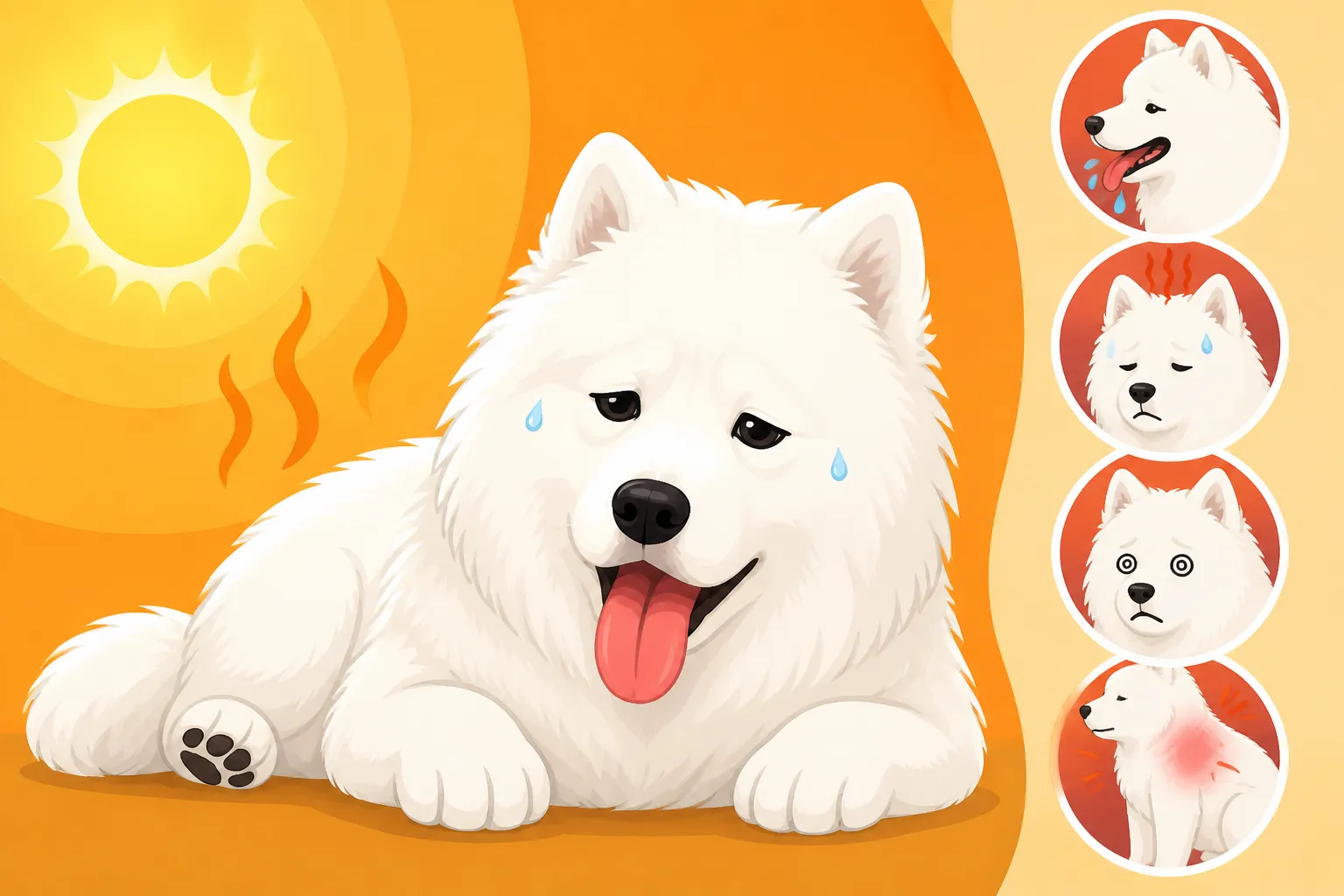
However, if your Samoyed is starting to overheat, their panting will become more intense, shallow, and rapid. You might notice their flanks moving in and out much more forcefully, almost like they're struggling to catch their breath. The tongue might extend further out than usual, appearing wider or even thicker. You might hear a louder, raspy sound with each breath, rather than just the soft "huff huff" of normal panting. If you notice this sustained, intense panting without any recent strenuous activity, or if it doesn't slow down quickly after they've rested in a cool spot, it's a red flag. Their body is working overtime, and it's not effectively cooling them down.
Behavioral Shifts and Discomfort
Samoyeds are generally known for their joyful, outgoing personalities. They love to be involved, to play, and to be near their people. So, a change in their typical demeanor is often one of the first and most telling signs of discomfort. If your normally bouncy Samoyed suddenly seems lethargic, unwilling to engage in play, or simply wants to lie down and not move, it's time to investigate. They might resist going for a walk, even if it's a favorite route, or refuse to retrieve a toy they usually adore.
You might also observe them actively seeking out cooler spots in your home or yard. They might press their belly against a tile floor, a concrete patch, or even try to dig a shallow hole in the dirt The Digging a Samoyed Does Because It Is Hot – all attempts to get closer to a colder surface. They may seem restless, shifting positions frequently, unable to get comfortable, or conversely, they might become unusually still, almost "shut down." If they're usually shadow dogs, following you from room to room, but suddenly prefer to stay put in a cool corner, take note. This isn't just them being lazy; it's their body telling them they're struggling. Remember that How a Samoyed Hides Illness Behind a Smile, so a subtle shift in their usual happy-go-lucky attitude can be a major clue.
More Obvious and Worrying Symptoms
As overheating progresses, the signs become less subtle and more indicative of a serious problem. These symptoms suggest that your Samoyed's body is losing its ability to cope with the rising internal temperature, and immediate action is required. Don't wait if you see these.
Excessive Drooling and Bright Red Gums
When a dog's body temperature starts to climb rapidly, their system goes into overdrive to try and cool down. One of the more visible signs of this struggle is excessive drooling. This isn't just a little slobber; it's usually thick, ropy saliva that might string from their mouth, or you'll notice a significant wet patch on the floor where they've been lying. This hyper-salivation is the body's attempt to dissipate heat through evaporation from the mouth.
Accompanying this, or sometimes even before the drooling becomes dramatic, you might observe a change in the color of their gums. Normally, a Samoyed's gums should be a healthy bubblegum pink. When they're overheating, the gums often become noticeably brighter red, almost brick red or even purplish. This is due to the dilation of blood vessels as the body tries to shunt blood to the surface to release heat. Pressing a finger gently on the gum should cause the color to blanch (turn white) and then return quickly within 1-2 seconds. If the refill time is delayed, it can indicate poor circulation, which is another worrying sign.
Vomiting, Diarrhea, and Dizziness
These gastrointestinal and neurological symptoms are clear indicators that your Samoyed's body is under significant stress and its internal systems are beginning to fail under the heat load. Vomiting and diarrhea are not just uncomfortable; they can accelerate dehydration, making the situation even more precarious. The body's natural response to extreme stress can often involve these types of gastric upset as blood flow is redirected away from digestive organs and towards critical cooling mechanisms, disrupting normal function.
Along with the GI issues, you might notice your Samoyed appearing disoriented or dizzy. They might sway when standing, stumble when walking, or even seem to lose their balance entirely. They might bump into furniture or walls, or just stand in a confused manner. This indicates that the overheating is starting to affect their central nervous system. A Samoyed that is usually agile and graceful but suddenly seems clumsy or lost is in real trouble. These symptoms are a dire warning and demand immediate attention.
Physical Changes in Coordination and Awareness
As heatstroke progresses, the impact on the brain and nervous system becomes even more pronounced and alarming. The dog's ability to coordinate their movements deteriorates significantly. You might see them staggering wildly, unable to maintain a straight line, or even struggling to stand up after lying down. Their legs might give out from under them, leading to repeated falls. This lack of coordination is a critical sign that their body's essential functions are severely compromised.
Beyond physical coordination, their mental awareness will also be affected. A Samoyed in this state might appear confused, unresponsive to their name, or even seem to be staring blankly into space. They might not react to familiar sights or sounds. In the most severe cases, they may become completely unresponsive, collapsing and losing consciousness. At this point, their body is in crisis, and every second counts. These are not signs to observe and wait; these are signs to act immediately.
Recognizing When It's an Emergency (Heatstroke)
When the signs described above escalate to a severe level, your Samoyed is experiencing full-blown heatstroke. This is a medical emergency that can rapidly become fatal without immediate and intensive veterinary intervention. It's not just "being very hot"; it's a systemic shutdown, and recognizing these critical indicators can be the difference between life and death.
Collapse and Loss of Consciousness
This is perhaps the most frightening and unmistakable sign of severe heatstroke. If your Samoyed suddenly collapses and cannot get back up, or if they become unresponsive to your voice or touch, it means their body's core temperature has reached a dangerous level, affecting vital organs, including the brain. Their muscles might become limp, or they might seem stiff. This isn't just profound lethargy; it's a complete physical shutdown.
When a dog loses consciousness, it means their brain is no longer functioning normally due to the extreme heat. This can lead to irreversible damage to brain cells and other organ systems. At this stage, time is of the essence. You need to initiate emergency cooling measures while simultaneously getting them to the nearest emergency veterinary clinic. Do not delay, even for a moment, to get them into your car and on the way.
Seizures and Muscle Tremors
Seizures and uncontrolled muscle tremors are profoundly disturbing and critical symptoms of advanced heatstroke. The brain's electrical activity becomes disrupted by the extreme internal temperature, leading to involuntary muscle contractions. A seizure might manifest as full-body convulsions, rigid limbs, paddling of the legs, foaming at the mouth, or loss of bladder and bowel control. Even more subtle tremors or twitching of muscles can be a precursor to a full seizure.
These neurological events indicate severe damage is occurring. The body's core temperature has overwhelmed its ability to regulate, causing widespread cellular dysfunction. If you witness your Samoyed having a seizure, it's a dire emergency. Keep them safe from injuring themselves during the episode, but your primary goal must be immediate transport to a veterinary facility while attempting to cool them.
Dark Red Gums and Petechiae
As heatstroke progresses to its most severe stages, the appearance of your Samoyed's gums can shift dramatically from bright red to a much darker, almost purple or blue-tinged red. This dark coloration suggests that blood circulation is severely compromised, and the blood itself might not be adequately oxygenated. This is a sign of impending organ failure.
Even more alarming is the appearance of petechiae. These are tiny, pinpoint-sized red or purple spots on the gums, inside the ear flaps, or on the belly. Petechiae indicate that the tiny blood vessels (capillaries) are rupturing, leading to small hemorrhages under the skin. This is a sign of disseminated intravascular coagulation (DIC), a life-threatening bleeding disorder that can develop rapidly with severe heatstroke. It means the body's clotting mechanisms are failing, and internal bleeding can occur throughout the body. The presence of petechiae is a critical indicator of a grave prognosis and requires immediate, aggressive veterinary care.
Immediate Actions to Take When Overheating Is Suspected
Recognizing the signs is only half the battle; knowing what to do and acting quickly is the other, equally vital half. If you suspect your Samoyed is overheating, you cannot afford to wait and see. Every minute counts.
Moving to a Cooler Environment and Initial Cooling Steps
The very first thing you must do is get your Samoyed out of the heat source immediately. Move them into the shade, inside an air-conditioned building, or even into a cool car with the AC blasting. Once they are in a cooler spot, the goal is to gently and gradually lower their body temperature. Do not plunge them into an ice bath; this can cause their blood vessels to constrict too quickly, hindering heat dissipation, and can even lead to shock.
Instead, use cool (not cold) water. Soak towels or a t-shirt in cool water and apply them to pulse points – the belly, armpits, and groin area. You can also wet their paws and the ear flaps. If you have access to a hose, you can gently wet their coat, particularly the underbelly and the inside of their legs. A fan can also be incredibly helpful to promote evaporative cooling. If possible, try to get them to stand in a shallow kiddie pool of cool water. The key is consistent, gentle cooling. Remember that How a Samoyed Should Be Cooled Down.
Offering Water and Monitoring Closely
Once you've started the cooling process, offer your Samoyed small amounts of cool, fresh water. Don't force them to drink, especially if they are disoriented or unconscious, as they could aspirate the water into their lungs. If they are alert enough to drink, allowing them to do so voluntarily is beneficial for rehydration. Continue to talk to them calmly and reassuringly.
During this time, you need to monitor their condition constantly. Watch their breathing, gum color, and level of consciousness. You might be able to feel their ears or paws; as they cool down, these areas should start to feel less hot. If you have a rectal thermometer (and know how to use it safely), take their temperature every 5-10 minutes. Your goal is to get their temperature down to around 103°F (39.4°C). Once it reaches that point, stop the active cooling to avoid over-cooling them, which can be just as dangerous. However, even if their temperature is coming down, seeking veterinary advice is often still crucial.
When to Seek Veterinary Attention
Let me be absolutely clear: if your Samoyed is exhibiting any of the severe signs of heatstroke – collapse, unconsciousness, seizures, severe disorientation, dark red gums, or petechiae – you need to get them to an emergency veterinary clinic immediately. Do not wait to see if your at-home cooling efforts work. Call the vet while you're on your way so they can be prepared for your arrival. Even if you've managed to bring their temperature down, internal damage might have occurred that you cannot see. The vet will need to check for organ damage, administer IV fluids, and provide other supportive care.
Even for less severe signs, if your Samoyed isn't showing rapid improvement with your cooling efforts, or if you're just unsure, it's always best to err on the side of caution and consult your veterinarian. A quick phone call can help you decide if a trip to the clinic is necessary. It's far better to make a precautionary visit than to regret waiting too long.
Preventing Overheating in Your Samoyed
As the saying goes, an ounce of prevention is worth a pound of cure, and nowhere is this truer than with Samoyeds and heat. By proactively managing their environment and daily routine, you can significantly reduce the risk of them overheating and keep them comfortable year-round.
Managing Exercise and Outdoor Time
This is perhaps the most critical preventative measure. Samoyeds are active dogs, but their exercise schedule needs to be carefully adjusted during warmer weather. Avoid exercising them during the hottest parts of the day, which are typically between 10 AM and 4 PM. Instead, plan walks, runs, or play sessions for the early morning hours or late in the evening when temperatures have dropped. Even on cooler summer days, always be mindful of the pavement temperature – if it's too hot for your bare hand, it's too hot for their paws.
Keep exercise sessions shorter and less intense than you might in cooler weather. Instead of a long hike, opt for several shorter, leisurely strolls. If you live somewhere truly hot, like Florida or Texas, consider if a Samoyed is really the right fit for your lifestyle, or commit to a very strict indoor schedule during the summer. Even a pleasant day with a moderate temperature can be risky if your Samoyed is doing strenuous activity. Always remember The Temperature at Which a Samoyed Should Stay Indoors.
Providing Ample Hydration and Shade
Access to fresh, cool water is non-negotiable for a Samoyed, especially in warmer weather. Always have multiple water bowls available throughout your home and yard, and clean and refill them frequently. When you're out and about, always carry water for your dog. Portable water bottles with attached bowls are excellent for walks or car rides.
Shade is equally important. If your Samoyed spends any time outdoors, they must have constant access to a shaded area. This could be a tree, a covered patio, or even a pop-up canopy. Never leave them tied up in direct sunlight. Many Samoyed owners find that cooling mats, available from retailers like Amazon or Chewy, can be a fantastic way to offer relief indoors or on a patio. Some even enjoy a small kiddie pool with a few inches of water, allowing them to cool their paws and belly. Consider if A Cooling Mat Helps a Samoyed.
Grooming for Climate Control
Proper grooming isn't just about keeping your Samoyed looking pristine; it's a vital part of their heat management system. That thick double coat, when healthy and well-maintained, actually insulates them from the heat. However, if the undercoat is matted or full of old, dead hair, it traps heat. Regular brushing, especially during seasonal "coat blows," is essential. This helps to remove loose undercoat, allowing air to circulate close to the skin. You can find excellent undercoat rakes and force dryers on Chewy or Amazon that will help you tackle this task effectively. Learn How Often a Samoyed Needs Brushing to ensure their coat is doing its job.
One crucial point to remember: never, ever shave your Samoyed's coat. Despite what some might think, shaving actually removes their natural insulation and exposes their sensitive skin to sunburn, making them more susceptible to overheating and other skin issues. The guard hairs reflect the sun, and the undercoat creates an airy barrier. Removing this compromises their natural defenses. If you're considering shaving, please read Why Shaving a Samoyed Makes the Heat Worse first. Keeping their coat clean, brushed, and allowing it to air dry fully after a bath are all part of supporting their natural ability to regulate their temperature. For maintaining overall health, which includes better heat tolerance, ensure your Samoyed is on a balanced diet. Some owners explore fresh food options, like those offered by Ollie, as part of a comprehensive health regimen.
| Sign Category | Early & Subtle Indicators | Moderate & Worrying Symptoms | Emergency (Heatstroke) Signals |
|---|---|---|---|
| Breathing | Increased panting, slightly faster. | Rapid, shallow, labored panting. | Extreme difficulty breathing, struggling. |
| Behavior | Lethargy, seeking shade, restlessness. | Disorientation, stumbling, unwillingness to move. | Collapse, unresponsiveness, loss of consciousness. |
| Mouth | Normal gum color, minimal drooling. | Bright red gums, excessive drooling, thick saliva. | Dark red/purple gums, petechiae (pinpoint red spots). |
| GI | Normal | Vomiting, diarrhea. | Severe vomiting/diarrhea, internal bleeding signs. |
| Neurological | Normal | Dizziness, mild confusion. | Seizures, muscle tremors, uncoordinated movements. |
| Overall | Reduced energy, lying on cool surfaces. | Visible distress, unsteady gait. | Life-threatening condition, immediate vet needed. |
Disclaimer
This article is for general informational purposes only and does not constitute professional advice. Laws, prices and regulations vary by location and change over time. Consult a qualified professional for guidance on your specific situation.