Whether Escaping Is Why Samoyeds Reach Rescue
It’s a heartbreaking reality that many dogs find themselves in shelters and rescues, often through no fault of their own. For Samoyeds, a breed renowned for their stunning looks and joyful "Sammy smile," the idea of them ending up in rescue can be particularly puzzling. One common, and often devastating, reason is their incredible talent for escaping. This guide will delve into the profound natural instincts that make Samoyeds escape artists, explore the methods they employ, and explain why this behavior can sadly lead to them being rehomed, offering insights into prevention for frustrated owners.
The Samoyed's Instinct for Adventure and Independence
To truly understand why Samoyeds are so prone to escaping, we need to look back at their origins. These aren't dogs bred for strict obedience or to be constantly underfoot. They come from a lineage that required a strong sense of self-preservation and the ability to think for themselves.
A History of Free-Ranging Life
The Samoyed breed originated with the Nenets people of Siberia, where they lived a semi-nomadic existence. These dogs weren't just pets; they were integral working members of the family, herding reindeer, pulling sleds, and even sleeping in the family tents for warmth and companionship. While they were cherished, they weren't confined to small yards or leashed walks. Their role demanded a certain level of independence and the ability to range freely, making decisions about where to find reindeer, how to navigate the vast, open tundra, and how to protect themselves. This deeply ingrained history means that even generations later, a Samoyed still carries that innate drive to explore, to follow a scent trail, or simply to see what's over the next hill. It's not disobedience in their eyes; it's simply following their natural calling.
When a Samoyed sees an open gate or an opportunity to slip past a door, they're not necessarily running away from you; they're running towards an adventure, a call from their ancient ancestors to explore the world. This can be incredibly frustrating for an owner who just wants their beloved dog to stay safe and within bounds, but understanding this fundamental drive is the first step toward managing it.
High Prey Drive and Wanderlust
Beyond their history of free-ranging, Samoyeds also possess a significant prey drive. The world is full of interesting smells and darting creatures – squirrels, rabbits, even a blowing leaf can trigger that instinct. Once that chase drive kicks in, much of their training can go right out the window. They'll lock onto a scent or a movement and their singular focus becomes pursuing it, often oblivious to their surroundings, traffic, or your frantic calls.
This potent combination of wanderlust and prey drive makes them particularly challenging to contain. A secure fence might be seen not as a barrier, but as an interesting puzzle to solve to get to the "fun" on the other side. This isn't a malicious act; it's just a Samoyed being a Samoyed, driven by instincts that have served their breed well for centuries. Unfortunately, in our modern world, these instincts can put them in dangerous situations, from busy roads to getting lost in unfamiliar territory. Many owners report that Why a Samoyed's Recall Cannot Be Trusted is directly tied to this powerful drive once a scent or sight captures their attention.
Common Escape Routes and Methods
If you own a Samoyed, you've likely witnessed their cunning first-hand. They aren't just pretty faces; they're intelligent problem-solvers when it comes to boundaries. They analyze, they test, and they often succeed.
The Houdini Samoyed: Digging, Climbing, and Jumping
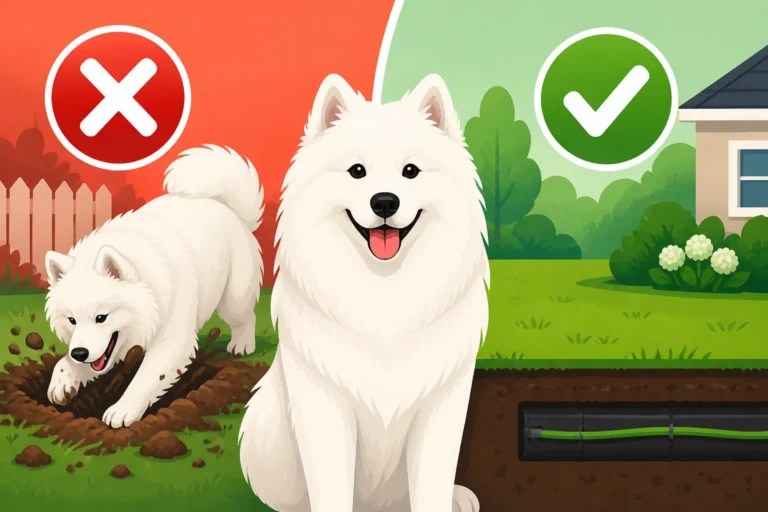
Samoyeds are incredibly resourceful when it comes to finding or creating an escape route. A simple four-foot fence might as well be a suggestion to many of them. They are surprisingly agile and powerful for their fluffy appearance. Many can jump surprisingly high, using their strong back legs to clear fences that other dogs wouldn't even consider. If jumping isn't an option, they'll often resort to digging. Their thick coats mean they can tolerate cold weather, but they also get hot quickly, and The Digging a Samoyed Does Because It Is Hot can lead to escape tunnels. They'll methodically excavate under fences, often testing various spots until they find a weak point or create one.
And don't underestimate their climbing abilities. While they might not scale a sheer wall, they can often use objects near a fence, like a woodpile, a planter, or even a sturdy bush, as a launching pad to get over. Owners often joke that their Samoyed is a "Houdini" because How a Samoyed Gets Out of Anything You Build seems to be their life's mission. Chain link fences, for instance, can become a ladder for a determined Samoyed. It's a constant battle of wits, and the Samoyed often has the upper paw.
The Open Door Policy: Bolting and Gate Crashing
Beyond actively working to breach barriers, Samoyeds are also masters of opportunistic escapes. The moment a door is ajar, or a gate is unlatched for a split second, they can be out like a flash of white lightning. They learn quickly that the sound of a key in the lock, the squeak of a gate, or the opening of a car door can mean freedom. They’re quick, silent, and incredibly fast when they decide to make a break for it.
This is where human vigilance becomes paramount. Even the most careful owners can have an off moment – a distraction, a heavy grocery bag, a child running in or out – and that’s all it takes. A Samoyed doesn't need to be encouraged; they just need an opening. This behavior isn't about being mean or disobedient; it's deeply wired into them to seize an opportunity for exploration. Trying to use an "invisible fence" or electronic containment system with a Samoyed often proves futile, as the motivation to chase a squirrel or explore a scent often outweighs the momentary discomfort, leading many owners to question Whether an Invisible Fence Holds a Samoyed.
Why Escaping Leads to Rehoming
The constant worry and repeated incidents of a Samoyed escaping can take a significant toll on owners, often leading to the difficult decision of rehoming. It’s a sad situation for everyone involved, especially the dog.
The Frustration of Constant Vigilance
Imagine living in a constant state of anxiety, always checking locks, double-checking gates, and scanning the yard for potential escape routes. This is the reality for many Samoyed owners with a dedicated escape artist. The joy of having a beautiful, loving companion can be overshadowed by the sheer exhaustion of managing their escape tendencies. It's not just the physical effort; it's the mental and emotional drain. The fear of your dog getting hurt, lost, or causing an accident can be overwhelming. Each escape feels like a failure, leading to frustration, guilt, and a sense of helplessness.
When an owner feels they've tried everything – reinforcing fences, investing in GPS trackers like those discussed in Whether a GPS Collar Is Worth It for a Samoyed, attending training classes – and the escapes continue, it can erode the bond and make living with the dog incredibly stressful. This constant stress is a significant factor in why owners may seek to rehome their Samoyed, hoping a new environment or a more experienced owner might provide a better solution.
Legal and Financial Repercussions
Escaping isn't just a nuisance; it can have serious legal and financial consequences. If your Samoyed gets out and causes a car accident, bites someone, or damages property, you, as the owner, are responsible. This can lead to hefty fines, legal fees, and even civil lawsuits. Animal control often imposes impound fees, and repeated escapes can result in escalating fines or even mandatory euthanasia orders in some extreme cases. The vet bills alone from an escaped dog can be astronomical – emergency visits for injuries from traffic, encounters with other animals, or ingesting something harmful. While pet insurance providers like Healthy Paws can help mitigate these unexpected veterinary costs, repeated incidents can still strain a budget.
Beyond the immediate costs, there's the long-term impact on your peace of mind and your community relations. Neighbors might complain about a wandering dog, local authorities might become involved, and the overall stress can build to a breaking point. For many, the financial burden combined with the legal risks becomes too much to bear, contributing directly to the decision to surrender their Samoyed to a rescue or shelter. The Full Cost of Thirteen Years With a Samoyed is already substantial, and adding recurring escape-related expenses can make it truly unsustainable.
Misunderstanding the Breed's Needs
A significant contributor to Samoyed escapes, and subsequently rehoming, is a fundamental misunderstanding of the breed's intrinsic needs. Many people are drawn to the Samoyed's stunning white coat and smiling face, often without fully researching their temperament and exercise requirements. These are intelligent, active dogs that require substantial physical exercise and mental stimulation. How Much Exercise a Samoyed Needs is often underestimated. A quick walk around the block simply won't cut it. A bored Samoyed is a destructive Samoyed, and an escape artist Samoyed.
If a Samoyed isn't given enough outlets for their energy and intelligence, they will find their own "jobs" – and those jobs often involve digging, chewing, and, yes, escaping. Owners who work full-time and don't have the capacity to provide adequate daily exercise, training, and enrichment might find their Samoyed constantly testing boundaries. The dog isn't being "bad"; it's simply trying to fulfill its natural drives. When owners don't recognize this or can't meet these needs, the resulting problematic behaviors, including escaping, can lead to frustration and eventually, rehoming. Understanding What a Bored Samoyed Does to a House is crucial for preventing these issues.
Preventing Escapes and Promoting a Safe Home
While Samoyeds are notorious for their escape artistry, it's not an insurmountable challenge. With the right approach, commitment, and understanding, you can create a secure and fulfilling environment for your beloved companion.
Secure Fencing and Environmental Enrichment
The first line of defense against a Samoyed escape artist is secure containment. A standard four-foot fence is rarely enough. For most Samoyeds, a solid six-foot fence, preferably without horizontal rails they can use for climbing, is a good starting point. Consider adding "L-footers" or burying wire mesh along the bottom of the fence line, extending inwards into the yard, to deter digging. The Tunnel a Samoyed Digs Under a Fence is a real risk. Regularly inspect your fence for weak spots, loose boards, or areas where they might be starting to dig.
Beyond physical barriers, environmental enrichment is crucial. A tired Samoyed is a less mischievous Samoyed. Provide plenty of opportunities for vigorous exercise, whether it's long walks, runs, hikes, or safe off-leash play in a truly secure area. Mental stimulation is just as important. Puzzle toys, KONGs stuffed with treats (Chewy offers a wide array of options for enrichment toys), scent work, or even just regular training sessions can keep their intelligent minds engaged. Rotate toys, hide treats around the yard for them to "hunt," and consider enrolling in dog sports like agility or rally obedience to tap into their working drive.
Consistent Training and Management
While a Samoyed's recall may never be 100% reliable when faced with a compelling distraction, consistent training is still vital. Focus on a solid "leave it" and "stay" cue, and practice them diligently in various environments. Leash training is also paramount; teach your Samoyed to walk nicely on a leash from a young age to prevent them from pulling or darting off. A well-fitting harness can provide better control than a flat collar, especially for strong pullers.
Management is key to preventing opportunistic escapes. Always be mindful of open doors and gates. Train your Samoyed to "wait" at thresholds before exiting. If you have guests, educate them about the dog's escape tendencies. Consider using baby gates inside your home to create secure zones, especially near entryways. When you leave the house, even for a short time, ensure your Samoyed is in a secure area, whether it's a strongly constructed crate or a truly escape-proof room. For some Samoyeds, particularly those prone to Separation Anxiety in a Samoyed, leaving them alone can trigger frantic escape attempts. Providing high-value, long-lasting chews or a meal from a fresh food provider like Ollie (whose food can also make fantastic, high-value training treats) can help keep them occupied and less inclined to focus on escaping when you're not around.
The table below summarizes common Samoyed escape tactics and the proactive prevention methods you can employ to keep your furry friend safe and sound.
| Escape Tactic | Samoyed Motivation | Prevention Strategy |
|---|---|---|
| Jumping Fences | High energy, desire to explore, prey drive | 6-foot solid fencing, vertical extensions, no climbing aids |
| Digging Under Fences | Seeking coolness, boredom, following scents | Bury wire mesh or L-footers, regularly inspect fence base |
| Bolting Through Doors/Gates | Opportunistic, curious, desire to join family | Consistent "wait" training, secure latches, educate visitors |
| Chewing Through Barriers | Boredom, separation anxiety, frustration | Mental stimulation, durable chew toys, strong crates |
| Ignoring Recall | High prey drive, independence, strong wanderlust | Always use a leash/long line, focus on management, GPS tracker |
Ultimately, preventing a Samoyed from escaping requires a deep understanding of their breed traits, a commitment to meeting their physical and mental needs, and a proactive approach to securing their environment. It’s a labor of love, but one that ensures your Samoyed stays where they belong – safely by your side.
Disclaimer
This article is for general informational purposes only and does not constitute professional advice. Laws, prices and regulations vary by location and change over time. Consult a qualified professional for guidance on your specific situation.