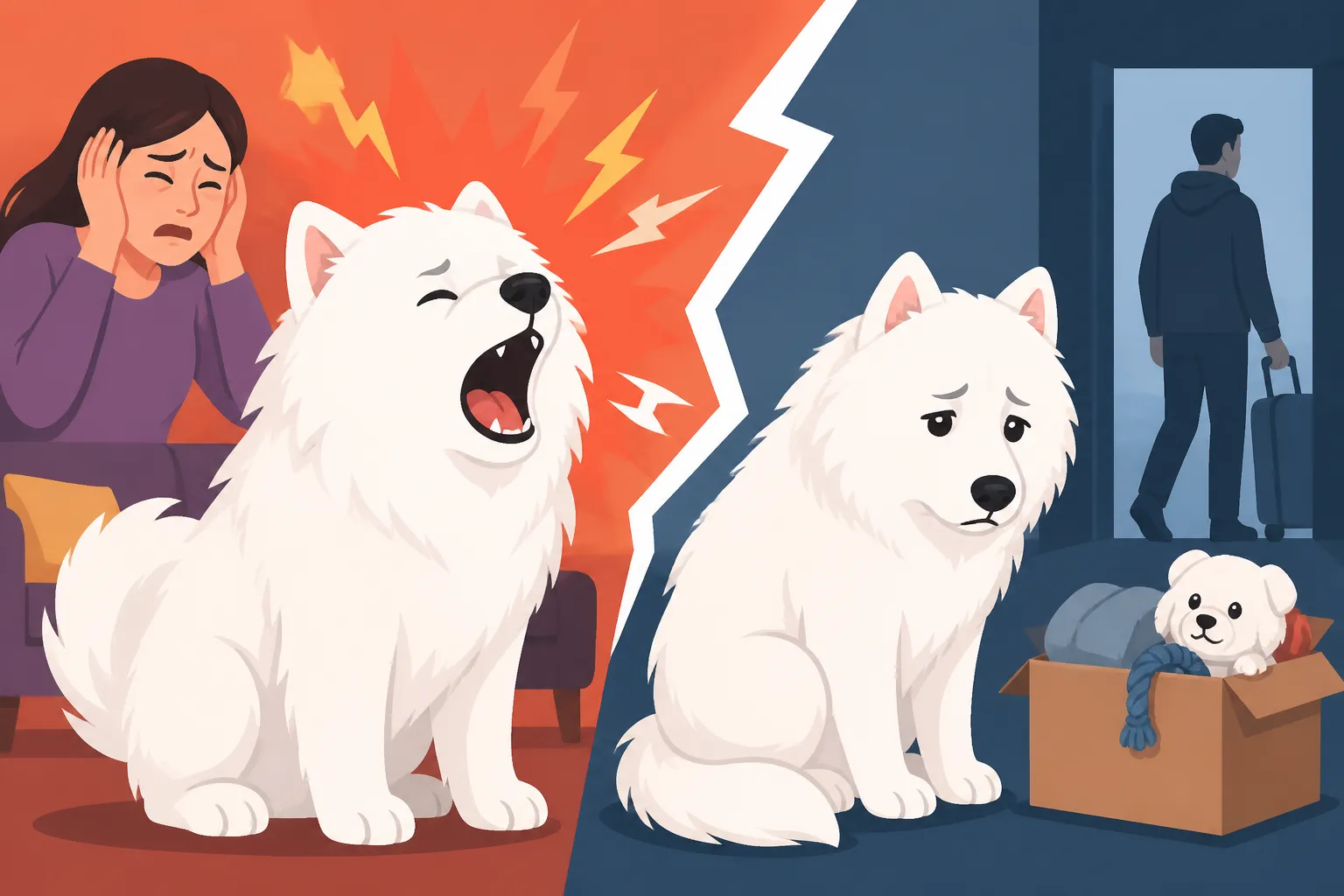
Whether Noise Is Why Samoyeds Are Given Up
It's a heartbreaking reality that sometimes, the very traits we adore in a breed can become overwhelming, leading to difficult decisions for owners. For many Samoyed enthusiasts, their unique vocalizations are part of their charm, but for others, the constant "talking" can become a genuine source of stress, and sadly, a reason why these beautiful dogs are given up. This guide aims to explore the multifaceted world of Samoyed noise, shedding light on why they're so vocal, the challenges it presents, and proactive strategies to manage it, helping owners navigate these struggles before they reach a breaking point.
The Symphony of a Samoyed: Understanding Their Vocalizations
When you first meet a Samoyed, you're instantly drawn to that iconic smile, that fluffy white coat, and their friendly demeanor. What often takes new owners by surprise, however, is the sheer volume and variety of sounds that emanate from these dogs. They aren't just barkers; they possess a full orchestral range of vocal expressions that can be both endearing and, at times, incredibly challenging. Understanding this unique communication style is the first step toward living harmoniously with a vocal Samoyed.
Beyond the Bark: The Samoyed's Unique Language
Samoyeds are truly talkers, and their vocabulary extends far beyond a simple "woof." While they can bark, they often prefer a more nuanced approach to communication. You'll hear a full spectrum of sounds: the happy trill when they greet you, the plaintive whine for attention, the soft grumble when they're settling down, and yes, that infamous "Samoyed scream" or howl. This isn't just noise for noise's sake; it's how they express their emotions, needs, and opinions on everything from the mail carrier to a passing leaf. It’s part of What a Samoyed Sounds Like When It Talks.
Many owners describe their Samoyeds as having conversations, answering back when spoken to, or simply narrating their day. This vocal complexity can be delightful, making you feel more connected to your furry companion. However, for those unaccustomed to such expressiveness, it can quickly become overwhelming, especially in environments where quiet is highly valued. It's a fundamental aspect of their breed character, deeply ingrained.
Consider a typical evening: your Samoyed might let out a soft "oof" to alert you to something outside, then escalate to a series of enthusiastic barks as a squirrel dashes across the yard, followed by a theatrical groan when you don't immediately drop what you're doing to investigate. This constant ebb and flow of sound is normal for them, but it requires a human companion who understands and appreciates, or at least tolerates, this rich soundscape.
Instinctual Drivers Behind the Vocal Outbursts
The Samoyed's vocal nature isn't just a quirk; it's rooted deeply in their history and original purpose. Bred by the Nenets people in Siberia, these dogs were working companions, herding reindeer and sleeping in the tents with their families. Communication was key in these roles. They needed to alert their human companions to dangers, warn off predators, and signal their location to the herd. This ancestral need to communicate effectively and loudly has been passed down through generations.
Their instinct to alert is strong. A Samoyed doesn't just bark at intruders; they bark at anything new or unusual in their environment. A delivery person, a leaf blowing past the window, a distant siren – all can trigger an alert bark or a long, drawn-out howl. It's their way of saying, "Hey, human! Something's happening!" and they genuinely believe they're being helpful. This can lead to situations where The Samoyed That Wakes the Neighbors.
Furthermore, Samoyeds are incredibly social animals. They thrive on companionship and interaction. When they feel neglected, bored, or simply want to engage, their vocalizations are their primary tool for getting attention. It’s not aggression; it’s a plea for interaction, a call to action. This deep-seated need for connection often manifests as persistent barking, whining, or those distinctive "back-talk" sounds that can be hard to ignore.
When Emotion Turns into Volume: Boredom, Excitement, and Anxiety
While some vocalizations are just part of a Samoyed's daily charm, others are direct expressions of their emotional state, often amplified by their inherent talkativeness. High levels of excitement, profound boredom, or underlying anxiety can all manifest as incessant noise, pushing the boundaries of an owner's patience. It's important to differentiate these triggers to address the root cause.
A Samoyed thrilled by a new toy, a walk, or simply your arrival home might erupt into a flurry of happy barks and bounces, sometimes accompanied by their signature scream. This is usually joyful noise, though its volume can still be startling. On the flip side, a Samoyed left alone with nothing to do can quickly become bored. They might start barking at shadows, howling at distant sounds, or whining persistently, simply because they lack mental or physical stimulation. How Much Exercise Quiets a Samoyed is a pertinent question, as insufficient activity is a major contributor to noise.
Anxiety, particularly separation anxiety, is another significant driver of excessive vocalization. A Samoyed who struggles with being alone might engage in prolonged howling, barking, and whining, not out of mischief, but out of genuine distress. This is often the noise a Samoyed makes when left alone, and it can be incredibly disruptive to neighbors and distressing for the dog itself. Identifying whether the noise stems from excitement, boredom, or anxiety is crucial, as each requires a different approach to management.
Living with a Loud Samoyed: The Real-World Challenges
While a Samoyed's vocal personality can be endearing, the reality of living with a consistently loud dog can be incredibly taxing. It's not just about personal preference; it impacts housing situations, relationships with neighbors, and the mental and physical well-being of the owners. For many, this is where the dream of owning a fluffy cloud turns into a daily battle against noise.
The Neighborhood Echo Chamber and Apartment Woes
One of the most immediate and impactful challenges of a vocal Samoyed is its effect on neighbors, especially in close-quarter living situations like apartments or townhouses. Samoyeds are not built for silence, and their powerful voices carry, making them less than ideal companions for quiet residential areas or shared walls. Whether a Samoyed Suits an Apartment Building is a common concern, and often, the answer leans towards "probably not" without significant management.
The constant barking, howling, or screaming can quickly lead to neighbor complaints, strained relationships, and even threats from landlords or homeowner associations. Imagine the frustration of neighbors trying to work from home, put a baby to sleep, or simply enjoy some peace and quiet, only to be constantly interrupted by a Samoyed's protests or greetings. This isn't just a minor annoyance; it can be a source of significant conflict.
For owners living in these environments, the pressure is immense. Every vocalization becomes a source of anxiety, and instead of enjoying their dog, they might find themselves constantly stressed, worried about the next complaint. The sound barrier of an apartment building is often no match for the determined vocalizations of a Samoyed, and the sheer reach of their voice, or How Far a Samoyed's Voice Carries, can be a real eye-opener for unprepared owners.
The Toll on Owners: Stress, Frustration, and Sleep Loss
Beyond external pressures, the internal impact on owners living with a constantly vocal Samoyed cannot be overstated. The incessant noise can lead to chronic stress, deep frustration, and severe sleep deprivation, creating a ripple effect on daily life and overall well-being. It's a battle that can slowly erode the joy of pet ownership.
Imagine trying to concentrate on work, have a phone conversation, or simply relax at home when your Samoyed is launching into a full-throated conversation with a passing breeze. This constant background noise can make it incredibly difficult to focus, leading to decreased productivity and heightened irritability. Many owners report feeling on edge, constantly bracing themselves for the next outburst.
Sleep deprivation is another critical issue. Nighttime barking, howling at sirens, or simply the pacing and grumbling of a restless Samoyed can disrupt sleep patterns, leading to exhaustion, mood swings, and even health problems. This cumulative effect of stress and lack of rest can make even the most patient owner feel overwhelmed and resentful, transforming what should be a loving relationship into a source of unending struggle.
Unrealistic Expectations and the Path to Rehoming
Often, the decision to rehome a Samoyed due to noise stems from a fundamental mismatch between owner expectations and the reality of the breed. Many people are drawn to the Samoyed's stunning looks and friendly disposition, perhaps seeing them as glorified stuffed animals, without truly understanding their deeply ingrained characteristics, including their vocal nature.
When owners adopt a Samoyed expecting a quiet, serene companion, they are often blindsided by the breed's talkativeness. They might not realize that Why a Samoyed Vocalizes Instead of Barking is a historical trait, not a behavioral flaw. This clash of expectations can lead to immense disappointment and a sense of being unprepared. The owner might feel they've "failed" their dog, or that the dog is "defective" in some way, when in reality, it's just being a Samoyed.
The emotional toll of these challenges can be devastating. Owners may exhaust all their resources – time, money, and patience – trying to silence their dog, only to find themselves at a dead end. This journey, fraught with frustration and guilt, can ultimately lead to the heartbreaking conclusion that the dog would be better off in a different home, one better equipped to handle its vocal personality. This is a significant factor in Why Samoyeds Are Surrendered.
Proactive Strategies for a Quieter Home Life
While you might not be able to turn a Samoyed into a completely silent companion, there are numerous proactive strategies that can significantly reduce excessive vocalizations and create a more peaceful home environment. The key lies in understanding your dog, consistent training, and providing appropriate outlets for their energy and intelligence.
Deciphering the Whys: Addressing the Root Cause of Noise
Before you can effectively manage your Samoyed's vocalizations, you need to become a detective and figure out why they're making noise. Is it boredom? Anxiety? Attention-seeking? Alerting? Each "why" demands a different solution, and a blanket approach rarely works with a clever Samoyed. Start by keeping a journal to track when your Samoyed barks, what triggers it, and what happens just before and after.
For example, if your Samoyed consistently barks or howls when you leave the house, it might be Separation Anxiety in a Samoyed. If they bark at every person or dog passing by the window, it's likely alert barking or territoriality. If they only get vocal when you're busy with something else and ignore them, they're probably seeking attention. Once you pinpoint the trigger, you can start to address the underlying need rather than just trying to suppress the symptom.
It's also important to assess their general well-being. A dog that is physically uncomfortable or unwell might vocalize more. Ensure they're on a high-quality diet; sometimes, addressing dietary needs can contribute to overall calmness. Services like Ollie, which offer fresh, tailored meal plans, can sometimes help support a dog's general health, potentially impacting their emotional state.
Training Your Samoyed for Appropriate Vocalization
Training isn't about silencing your Samoyed entirely; it's about teaching them when and when not to use their voice. This involves a combination of impulse control, positive reinforcement, and clearly defined boundaries. Consistency is paramount, as Samoyeds are notoriously intelligent and will test boundaries relentlessly.
One of the most effective training techniques is teaching a "quiet" cue. When your Samoyed barks at something appropriate (like a doorbell), let them bark a few times, then say "quiet" and offer a high-value treat when they stop. Gradually, you'll pair the cue with the silence, rewarding them for choosing quiet. This is how you start Teaching a Samoyed a Quiet Cue. Conversely, ignoring attention-seeking vocalizations is crucial. If your Samoyed barks for attention, turn your back, walk away, and only engage when they are quiet. This teaches them that barking doesn't get them what they want.
You can also use counter-conditioning for alert barking. If they bark at people walking past the window, keep them on a leash indoors and reward them with treats before they start barking, as soon as they notice someone. This changes their emotional response from "intruder!" to "treat time!" This method requires patience and consistency, but it helps shift their perception of potential triggers.
Enrichment, Exercise, and Environmental Management
Often, excessive vocalization is a symptom of unmet needs: a lack of mental stimulation, insufficient physical exercise, or an overstimulating environment. Addressing these core needs can dramatically reduce noise levels, as a tired and mentally engaged Samoyed is a quieter Samoyed.
Samoyeds are intelligent working dogs who thrive on having a job to do. Provide plenty of mental enrichment through puzzle toys, training sessions, and scent work. Interactive toys that dispense treats, available from retailers like Chewy, can keep them occupied and mentally stimulated for long periods. These activities tap into their problem-solving instincts and can be far more tiring than a simple walk.
Physical exercise is equally important. These are dogs bred for endurance! Ensure your Samoyed gets plenty of vigorous exercise every day – not just a short stroll around the block. Running, hiking, sledding (even without snow, with wheeled carts), or long games of fetch can burn off excess energy that might otherwise be channeled into vocalizations. The Age a Samoyed Can Start Pulling is an excellent time to explore these working outlets.
Finally, managing their environment can make a big difference. If window-gazing triggers endless barking, restrict access to windows or use privacy film. Create a "den" space for them, like a comfortable crate in a quieter part of the house, where they can retreat and feel secure. This can be especially helpful for dogs prone to anxiety, giving them a safe haven from external triggers.
Navigating the Hard Choices: When Noise Becomes Overwhelming
Despite best efforts, some Samoyeds remain persistently vocal, and the challenges can become truly overwhelming. This section addresses the difficult reality of when noise impacts quality of life to an unbearable degree, and the steps owners might need to take, including seeking professional help or, in the most painful scenarios, considering rehoming.
Seeking Expert Intervention and Support
When you've tried everything you can think of and your Samoyed's vocalizations are still problematic, it's time to bring in the experts. Don't feel like a failure; professional help can provide fresh perspectives and tailored strategies that you might not have considered. This could involve consulting with a certified professional dog trainer, a veterinary behaviorist, or even your regular veterinarian.
A professional dog trainer can assess your Samoyed's behavior in person, identify specific triggers, and teach you advanced techniques for managing vocalizations. They can help implement structured training plans and provide hands-on guidance. For more severe cases, especially if anxiety or compulsive vocalization is suspected, a veterinary behaviorist is often the best route. These are veterinarians with specialized training in animal behavior, who can diagnose underlying medical or psychological conditions and prescribe medication if necessary. Don't forget that covering the cost of expert help, such as What a Behaviorist Costs a Samoyed Owner With a Barker, can be significantly aided by pet insurance. Providers like Healthy Paws offer various plans that might help cover such expenses, depending on your policy.
It's also crucial to rule out any medical reasons for increased vocalization. A dog in pain, experiencing hearing or vision loss, or suffering from cognitive dysfunction might become more vocal. A thorough veterinary check-up can identify and address any underlying health issues that contribute to the noise.
The Emotional Burden of Considering Rehoming
Even with professional help, some situations remain intractable. For owners who have reached their absolute limit, the thought of rehoming a beloved Samoyed due to noise can be a profoundly painful and guilt-ridden experience. It's important to acknowledge the immense emotional burden this carries and to be kind to yourself.
The decision to rehome is rarely made lightly. It usually comes after months, or even years, of struggling, sacrificing, and feeling like you've failed your dog. Owners often wrestle with feelings of inadequacy, shame, and betrayal. They might worry about what others will think or how the dog will cope in a new environment. This is a heavy cross to bear, and it's essential to recognize that sometimes, despite your best intentions, a particular dog's needs are simply incompatible with your living situation or capacity.
When considering such a drastic step, reflect honestly on your own well-being and that of your family. If the constant noise is causing severe stress, impacting your relationships, jeopardizing your housing, or leading to an overall diminished quality of life for everyone involved, including the dog (who may be stressed by the constant tension), then rehoming might be the most responsible, albeit painful, decision.
Preparing an Overly Vocal Samoyed for a New Beginning
If, after exhausting all other avenues, you come to the heartbreaking conclusion that rehoming is necessary, your focus should shift to ensuring the best possible outcome for your Samoyed. This means transparently preparing them and finding a new home that is fully equipped to handle their vocal nature.
Be completely honest about your Samoyed's vocal tendencies with potential new owners or rescue organizations. Downplaying the issue will only set the dog up for another failure. Explain the types of noises they make, the triggers you've identified, and what strategies you've attempted. Provide all their veterinary records, training history, and a detailed account of their daily routine and personality. Reputable Samoyed rescues are invaluable in this process, as they specialize in the breed and understand their unique needs, including their vocalizations. They are often best positioned to find a suitable home that understands and can manage How Loud a Samoyed Gets.
By being open and transparent, you increase the chances of your Samoyed finding a "forever home" where their vocalizations are understood, accepted, and managed proactively. It's a testament to your love for the dog that you prioritize their future well-being, even if it means letting them go.
Disclaimer
This article is for general informational purposes only and does not constitute professional advice. Laws, prices and regulations vary by location and change over time. Consult a qualified professional for guidance on your specific situation.