Retinal Dysplasia in a Samoyed
Retinal dysplasia is a congenital eye defect in Samoyeds causing visual impairment ranging from subtle quirks to blindness.

Retinal dysplasia is a congenital eye defect in Samoyeds causing visual impairment ranging from subtle quirks to blindness.
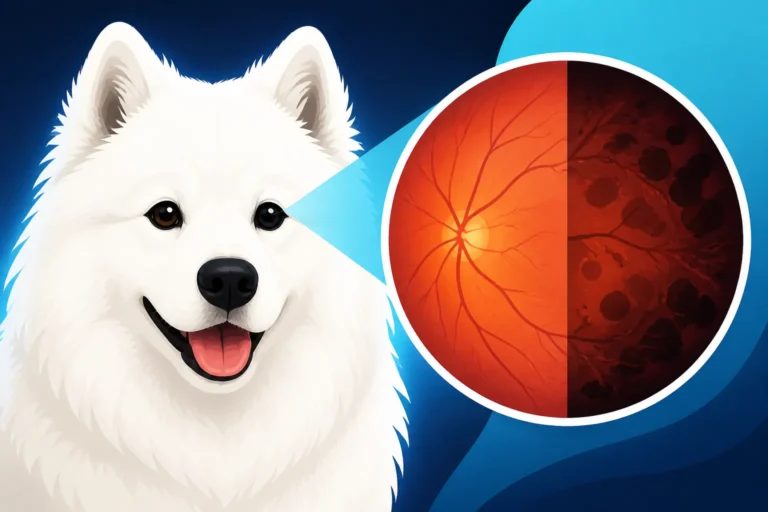
Progressive Retinal Atrophy in Samoyeds is an inherited genetic disease causing gradual vision loss from photoreceptor cell degeneration.

Official OFA hip and elbow certifications require Samoyeds to reach twenty-four months of age for final skeletal evaluation.
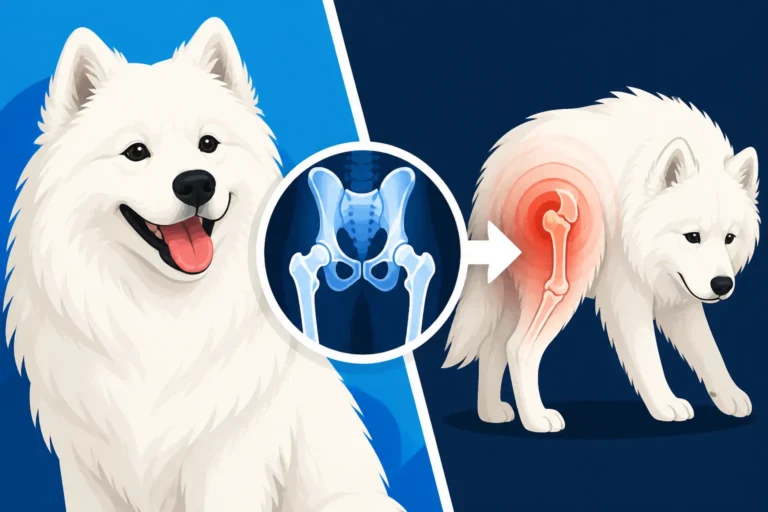
Samoyed hip scores and their genetic and environmental causes of hip dysplasia are explained to help owners understand later arthritis.

Samoyed diabetes diagnosis details, insulin injections, and early medical intervention help affected dogs maintain a normal lifespan.

Managing diabetes in a Samoyed involves daily insulin injections and careful weight monitoring to regulate blood sugar levels.

Diabetes symptoms in Samoyeds include increased thirst, frequent urination, and high blood sugar levels from insulin issues.
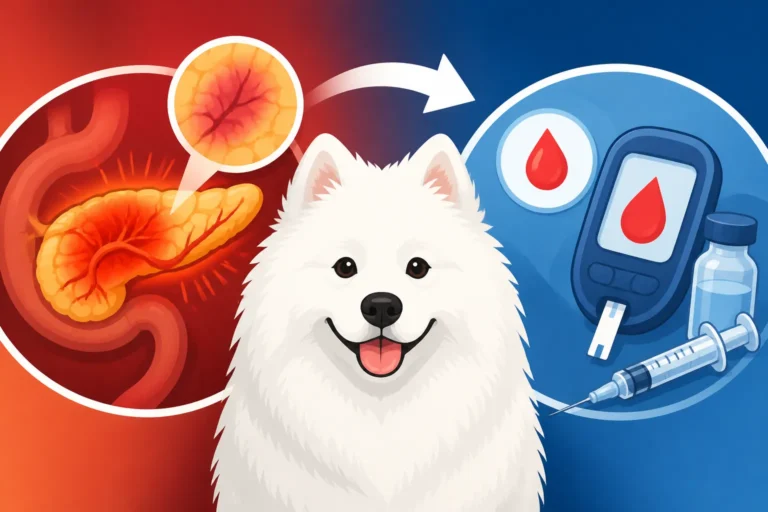
Samoyed pancreatitis causes premature enzyme activation, destroying insulin-producing beta cells and directly triggering diabetes.

Middle age is the most vulnerable window when Samoyeds typically develop diabetes mellitus and require lifelong insulin injections.

Diabetes mellitus in Samoyeds is a metabolic disorder requiring lifelong insulin injections and careful monitoring of blood sugar.