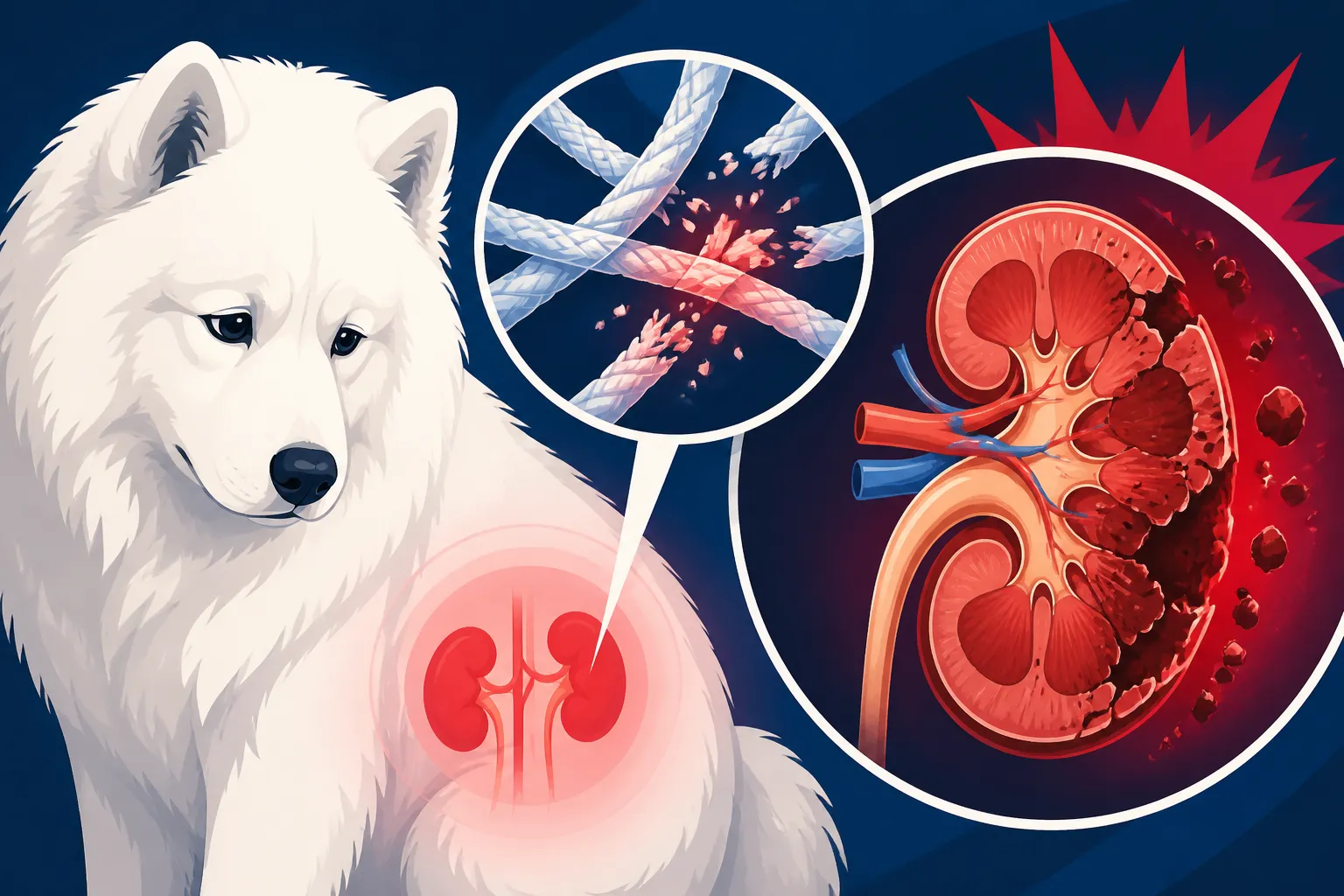
Why Collagen Failure Destroys a Samoyed’s Kidney
The heartbreak of discovering your beloved Samoyed puppy, full of life and joy, is destined for an early, devastating end due to kidney failure is a pain no owner should ever have to bear. This isn't just "bad luck" or generic kidney disease; for Samoyed males, it's often a cruel genetic twist known as Samoyed Hereditary Glomerulopathy (SHG). This guide delves deep into the specific reason behind this tragedy: the catastrophic failure of collagen, the very material that holds their kidney filters together, explaining why this silent destroyer claims lives far too young.
The Genetic Blueprint Gone Awry: Understanding Samoyed Hereditary Glomerulopathy
When we talk about Samoyed Hereditary Glomerulopathy, we're not just discussing a run-of-the-mill kidney problem that might develop later in life from age or diet. This is a very specific, inherited disorder, a ticking time bomb built right into the dog's genetic code. It's a devastating condition that fundamentally undermines the structural integrity of the kidneys, particularly for male Samoyeds. Understanding this condition means going down to the molecular level and appreciating the vital role of collagen.
More Than Just "Bad Kidneys" – It's a Collagen Problem
At its core, Samoyed Hereditary Glomerulopathy (SHG) is a defect in the production of a crucial protein called Type IV collagen. Imagine collagen as the scaffolding that gives structure and support to many tissues in the body – skin, bones, cartilage, and, yes, even the delicate filters within the kidneys. Specifically, it's a structural component of the glomerular basement membrane (GBM), which is the essential filtering barrier in the kidney. When this specific type of collagen is faulty, it's like building a house with weak beams and crumbling foundations.
The genetic root of this problem lies in a specific gene called COL4A5. This gene provides the instructions for making a particular chain of Type IV collagen. In affected Samoyeds, there’s a mutation in the COL4A5 gene, meaning the instructions are garbled, and the collagen produced is abnormal. Instead of forming a strong, resilient mesh, it creates a compromised, leaky structure. This isn't something that can be fixed with diet or medication once the damage starts; it's a fundamental architectural flaw that directly impacts how the kidney functions, or rather, fails to function.
X-Linked Inheritance: Why Males Are More Severely Affected
The devastating truth about SHG is that it hits male Samoyeds disproportionately hard, and understanding why requires a quick dive into genetics. This condition is inherited in an X-linked dominant fashion. In simple terms, the problematic COL4A5 gene is located on the X chromosome.
Males, as you might remember from biology class, have one X chromosome and one Y chromosome (XY). They inherit their single X chromosome from their mother. If that X chromosome carries the defective COL4A5 gene, there's no backup copy. There's no "good" X to compensate, so the male will develop the full, severe form of the disease. This is why you so often hear about The Kidney Disease That Kills Samoyed Males Before Fifteen Months.
Females, on the other hand, have two X chromosomes (XX). They can inherit one defective COL4A5 gene from either parent. If they get one normal X and one X with the faulty gene, they are considered carriers. Because they have a functional copy of the gene on their other X chromosome, they typically don't develop the severe, rapidly progressive form of the disease seen in males. While they might show some milder, later-onset kidney changes, they generally live a normal lifespan. This explains Why a Carrier Samoyed Female Stays Mild. This genetic reality also underscores the critical importance of a test like The COL4A5 Test Every Samoyed Buyer Should Ask About when considering a puppy.
The Kidney's Delicate Filters: How Collagen Keeps Them Intact
To truly grasp why defective collagen is so destructive in Samoyeds, we need to appreciate the incredible complexity and fragility of the kidney's filtration system. These organs are masterpieces of biological engineering, working tirelessly to clean the blood, maintain fluid balance, and keep the body healthy. The problem in Samoyeds strikes right at the heart of this intricate system.
Inside the Glomerulus: The Kidney's Tiny Sieve
Think of the kidneys as the body's super-sophisticated purification plant. Within each kidney are millions of tiny, microscopic filtering units called nephrons. And at the beginning of each nephron is a structure known as the glomerulus. The glomerulus is essentially a dense tuft of capillaries, all bundled up, acting as the primary filter. Its job is to filter waste products, excess water, and toxins from the blood while ensuring that essential proteins and blood cells remain in circulation.
The actual filtration magic happens at the glomerular basement membrane (GBM). This is an incredibly thin, yet remarkably strong and selectively permeable barrier that separates the blood from the initial urine filtrate. Imagine it as a super-fine sieve, designed to let small molecules like water, salts, and waste pass through, but block larger, vital components like proteins and blood cells. The GBM is largely composed of a specialized network of Type IV collagen, along with other proteins like laminin. This collagen network provides the crucial structural support and plays a key role in the filter's charge selectivity, helping to repel negatively charged proteins and keep them in the blood. It's an elegant design, but one that is tragically vulnerable in Samoyeds with SHG.
When the Mesh Breaks Down: The Impact of Defective Collagen
Now, picture what happens when that perfectly designed glomerular basement membrane is built with faulty Type IV collagen. Instead of a tight, robust, and uniformly structured mesh, the GBM becomes weak, disorganized, and full of microscopic imperfections. It's like having a sieve where the holes are too large and uneven, or where the material itself is weak and prone to tearing.
Initially, these defects might be subtle. But over time, especially under the constant pressure of blood flow, these structural weaknesses worsen. The delicate filtering barrier starts to fail. Instead of effectively holding back vital proteins like albumin, the "holes" in the GBM allow them to leak out of the blood and into the urine. This is the hallmark of the disease: proteinuria, or protein in the urine. It’s a critical early indicator of What Samoyed Hereditary Glomerulopathy Does to the Kidneys. This leakage isn't just an inconvenience; it's a direct sign of kidney damage and sets off a cascade of further destruction within the kidney, eventually leading to kidney failure.
The Slow, Insidious Progression of Kidney Damage
One of the most frustrating and heartbreaking aspects of Samoyed Hereditary Glomerulopathy is its insidious nature. The disease doesn't hit suddenly like a bolt of lightning; it's a slow, relentless erosion of kidney function that often goes unnoticed until significant, irreversible damage has already occurred. This silent progression makes early detection a challenge, but not an impossibility.
Early Signs: Microscopic Leakage and Proteinuria
In the earliest stages of SHG, the changes are microscopic. Your Samoyed puppy might appear perfectly healthy, full of energy, and showing no outward signs of illness. Yet, internally, the defective collagen in their glomerular basement membrane is already causing problems. Tiny amounts of protein, which should be retained in the bloodstream, are beginning to slip through the damaged filters and into the urine. This is what we call proteinuria.
Because these amounts are small and the dog is otherwise asymptomatic, this early proteinuria can only be detected through specific urine tests, most commonly a urine protein:creatinine ratio (UPC). This test measures the amount of protein in the urine relative to creatinine, providing a more accurate assessment of protein loss over time. The Age a Samoyed Male First Shows Kidney Signs can be as early as 3-6 months, sometimes even younger. This is why it’s absolutely vital for Samoyed breeders and owners to prioritize regular urine testing, particularly a Why a Samoyed's Urine Should Be Tested Young. The sad reality is that Samoyeds are incredibly stoic, and How a Samoyed Hides Illness Behind a Smile, making it all the more important for owners to be proactive with health screenings rather than waiting for obvious symptoms.
Escalating Damage: From Leakage to Scarring
As time goes on, that initial microscopic leakage becomes more pronounced. The continuous loss of protein through the damaged glomeruli isn't just a symptom; it actively contributes to further kidney damage. Proteins leaking into the tubules (the part of the nephron after the glomerulus) are toxic to those cells, causing inflammation and oxidative stress. This triggers a vicious cycle: the damaged filters allow more protein to leak, which then causes more damage to the rest of the kidney.
This chronic inflammation and injury lead to progressive scarring, a process known as glomerulosclerosis (scarring of the glomeruli) and interstitial fibrosis (scarring in the tissue surrounding the nephrons). As kidney tissue becomes scarred, it loses its ability to function. Healthy nephrons are destroyed and replaced by non-functional scar tissue. This means the kidney's overall capacity to filter blood, reabsorb nutrients, and produce hormones steadily declines. It's a relentless march of destruction, and How Fast a Samoyed Male Declines can be alarmingly quick once clinical signs become apparent. The goal of any intervention at this stage is to slow this progression, though a cure remains elusive.
Clinical Manifestations: What You See as the Kidneys Fail
For owners, the most painful part of SHG is witnessing the gradual, yet ultimately inevitable, decline of their beloved companion. While the initial damage occurs silently, eventually, the cumulative loss of kidney function begins to manifest as noticeable and distressing clinical signs. It's at this point that many owners first realize something is terribly wrong, but by then, the disease is typically advanced.
The Tell-Tale Signs of Kidney Disease Progression
When enough nephrons have been destroyed by the relentless progression of SHG, the kidneys can no longer effectively remove waste products from the blood. These toxins build up in the body, leading to a condition called uremia, which causes a wide range of symptoms. One of the earliest and most common signs is an increase in thirst (polydipsia) and, consequently, increased urination (polyuria). Your Samoyed might be emptying their water bowl more frequently and needing to go outside more often, perhaps even having accidents indoors. This is because the damaged kidneys struggle to concentrate urine, leading to more water being passed.
Beyond changes in water intake and urination, you might start to notice more generalized signs. A previously enthusiastic Samoyed might become lethargic or seem less interested in play or walks. Their appetite might wane, leading to noticeable weight loss despite seemingly normal food intake. Owners might also observe a dullness in their once bright, sparkling eyes, or a subtle change in their coat quality. It's crucial to be vigilant for these subtle Signs a Samoyed Is Losing Protein in Its Urine, as they indicate the disease is progressing. Unfortunately, by the time many of these signs become obvious to the casual observer, significant kidney damage has already occurred, and the prognosis is often grave.
Terminal Stages: The Unavoidable Reality
As Samoyed Hereditary Glomerulopathy advances, the kidney failure becomes severe, leading to profound systemic effects. The buildup of toxins in the bloodstream reaches critical levels, impacting almost every organ system. Dogs in the terminal stages of SHG will often experience severe gastrointestinal distress, including persistent vomiting and diarrhea. They might develop painful oral ulcers due to the circulating toxins irritating the mucous membranes. Their breath can take on a distinct, unpleasant, ammonia-like odor.
Neurological symptoms can also emerge, such as disorientation, weakness, tremors, and even seizures, as the brain is affected by the toxic environment. At this point, the dog's quality of life rapidly deteriorates. They become severely emaciated, weak, and may show signs of severe discomfort or pain. Despite the best efforts of owners and veterinarians, SHG for affected males is a progressive, ultimately fatal disease. The decision to provide comfort care and, eventually, euthanasia, becomes an unavoidable and heartbreaking reality, a final act of love to prevent further suffering for a dog that has been robbed of a full lifespan due to this cruel genetic condition.
Managing the Inevitable: Supportive Care and Research
While there is currently no cure for Samoyed Hereditary Glomerulopathy, understanding the disease allows for proactive measures and supportive care that can help manage symptoms, slow progression, and improve quality of life for affected dogs. For any Samoyed owner facing this diagnosis, it's about making the most of the time you have and ensuring your dog's comfort.
The Role of Dietary Management and Medications
Once a Samoyed male is diagnosed with SHG, especially if proteinuria is significant, the veterinary team will typically recommend a multi-faceted approach to supportive care. Dietary management is paramount. This usually involves a prescription renal diet, which is specifically formulated to be lower in protein, phosphorus, and sodium, while often being supplemented with beneficial omega-3 fatty acids. The goal of a lower protein diet is to reduce the workload on the kidneys and minimize the production of protein-derived waste products. Phosphorus restriction is crucial as damaged kidneys struggle to excrete it, and high phosphorus levels can worsen kidney disease.
Beyond diet, several medications can play a vital role. ACE inhibitors, such as enalapril or benazepril, are commonly prescribed. These drugs work by dilating the blood vessels leading to the glomeruli, which reduces the pressure within the filtering units and, crucially, helps to reduce the amount of protein leaking into the urine. This is a primary strategy to slow the progression of kidney damage. Other medications might include phosphate binders (given with food to prevent phosphorus absorption), anti-nausea medications to manage vomiting, appetite stimulants, and sometimes even calcitriol (a form of Vitamin D) to help regulate calcium and phosphorus balance. While these interventions cannot cure the underlying collagen defect, they can significantly improve symptoms and potentially extend the period of good quality of life. This demonstrates that Whether an Affected Samoyed Can Be Treated, at least in a supportive capacity, is indeed possible.
The Importance of Genetic Testing and Ethical Breeding
Given the devastating nature of SHG, prevention through responsible breeding practices is the most powerful tool we have. This is where the COL4A5 test comes into play. This DNA test allows breeders to identify carriers (females) and affected males before any symptoms manifest. By understanding the genetic status of their breeding stock, responsible breeders can make informed decisions, ensuring that they never breed two dogs in a way that would produce an affected male. For instance, a known carrier female should only be bred to a clear male. This completely eliminates the risk of producing affected males in that litter.
This genetic testing is a game-changer, moving us beyond simply reacting to the disease to proactively preventing it. It empowers breeders to safeguard the future health of the Samoyed breed, working towards a day when this genetic defect is far less prevalent. For potential puppy buyers, asking to see the COL4A5 test results for both parents is not just a good idea; it's a critical step in ensuring you're bringing home a healthy puppy. While pet insurance companies like Healthy Paws may not cover pre-existing conditions if a diagnosis is made before enrollment, having a policy in place early in your Samoyed's life can be an invaluable financial safety net for unexpected illnesses or accidents. The cost of managing any long-term condition, even one like SHG, can quickly become substantial, making financial planning for your furry friend a wise decision.
Understanding Samoyed Hereditary Glomerulopathy Progression
To help visualize the difference in how SHG affects male Samoyeds versus carrier females, here's a comparative overview:
| Feature | Affected Male Samoyed (XcY) | Carrier Female Samoyed (XcX) |
|---|---|---|
| Genetic Makeup | One faulty COL4A5 gene on X chromosome, no normal copy. | One faulty COL4A5 gene on one X, one normal copy on the other. |
| Disease Expression | Severe, rapidly progressive kidney disease. | Mild to no kidney disease; may show mild, late-onset proteinuria. |
| Age of Onset (Signs) | 3-15 months, often fatal by 15 months. | Typically much later in life (senior years), if at all. |
| Key Pathological Event | Defective Type IV collagen leads to rapid GBM breakdown. | Mosaic expression of collagen leads to more stable GBM. |
| Proteinuria | Significant and progressive, often leading to severe albumin loss. | Mild and often non-progressive, may not impact lifespan. |
| Clinical Symptoms | Lethargy, increased thirst/urination, weight loss, vomiting, uremia. | Generally asymptomatic, normal energy and appetite. |
| Prognosis | Very poor, ultimately fatal, short lifespan. | Excellent, typically live a normal lifespan. |
| Breeding Status | Should not be bred. | Can be bred responsibly to clear males to produce healthy puppies. |
| Management | Supportive care to manage symptoms and slow progression. | Routine veterinary care, occasional urine checks if symptoms arise. |
This table really highlights Why Samoyed Hereditary Glomerulopathy Only Devastates the Boys in such a dramatic way, making it clear how critical genetic testing is.
Disclaimer
The information provided in this guide is for informational purposes only and does not constitute veterinary medical advice. Always consult with a qualified veterinarian for any health concerns or before making any decisions about your Samoyed's health or treatment plan.