Why a Samoyed’s Upturned Mouth Stops Drool
A Samoyed’s cheerful, upturned mouth is more than a photogenic feature: its close-fitting lips can help keep saliva from spilling as readily as it might in a loose-lipped breed. But it does not make every Samoyed drool-proof. Here’s what the breed’s characteristic smile may do, what it cannot do, and how to tell ordinary wetness from a reason to call your veterinarian.
How a Samoyed’s upturned mouth can reduce drool
The smile is a feature of the mouth, not a guarantee against saliva
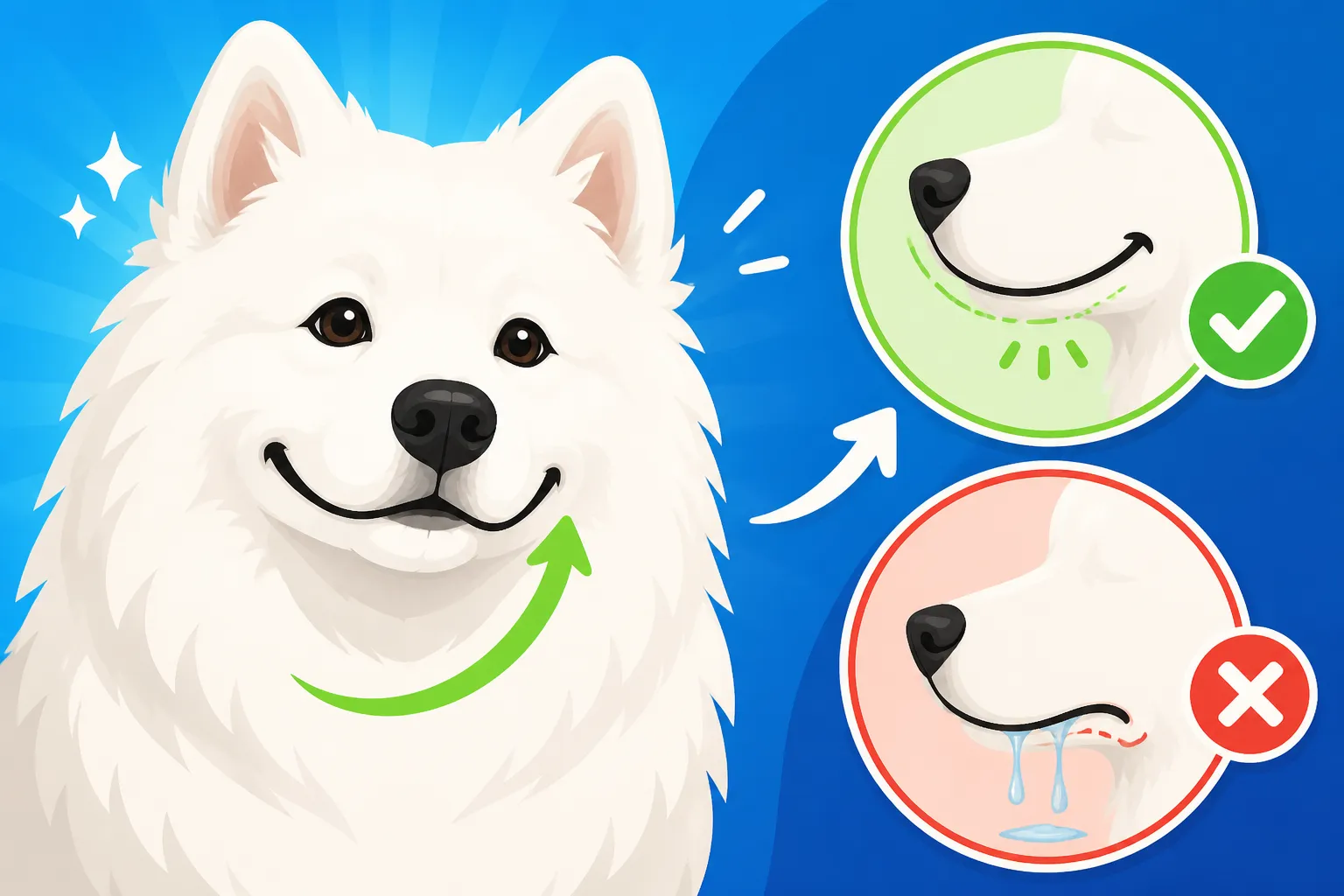
Samoyeds are known for lips that curve upward at the corners, creating the expression people often call the Samoyed smile. The lips generally sit relatively close to the teeth rather than hanging down in loose folds. That shape can help contain saliva inside the mouth, so less may escape when a dog is resting or walking around.
That is a tendency, not a sealed system. Saliva still needs to move around the tongue and teeth, and it can collect at the lips when a Samoyed pants, drinks, chews, feels excited, or anticipates a meal. A little dampness after a long drink is ordinary. A string of saliva during a particularly tempting dinner may happen, too.
The difference becomes clearer when you compare breeds. A dog with deep, pendulous lips may naturally collect more saliva in loose skin before it drips. A Samoyed’s tighter lip line may leave less room for that pooling. That can make everyday drooling less noticeable, but it does not mean the dog produces less saliva or can never drool.
For more on how the expression forms, see Why a Samoyed's Mouth Curls Upward. The shape contributes to the familiar appearance, but a smile is not a medical assessment of how a dog feels.
The cold-weather explanation needs a little caution
A common explanation says the Samoyed’s upturned mouth helps prevent drool from freezing into icicles in cold weather. It is an appealing story for a breed associated with Arctic conditions, and a mouth that keeps the lips close may plausibly reduce exposed saliva around the edges of the mouth.
Still, it is best not to treat the icicle explanation as a proven, complete account of why the feature developed. Breed characteristics can have more than one influence, and a distinctive facial expression may be preserved because it is part of the breed’s recognizable appearance as well as because it has practical effects.
The careful takeaway is simpler: close-fitting lips can help limit visible saliva, and less exposed moisture may be useful in cold conditions. That does not mean the smile prevents all drool, or that every Samoyed’s mouth works identically. How the Samoyed Smile Prevents Icicles explores that cold-weather idea, while Whether the Samoyed Smile Is Functional considers the broader question of what the feature does.
What normal Samoyed drooling looks like
Situations that can leave the mouth temporarily wet
A Samoyed may drool more than usual in predictable situations. The most common is drinking: water can cling to the lips and fur, especially after a fast, enthusiastic drink. Some dogs also leave a wet patch after panting during exercise or warm weather, when saliva and moisture around the mouth become more noticeable.
Food anticipation can have the same effect. If your dog starts salivating when you reach for the food container, prepare a treat, or sit down to eat, that response may be part of normal anticipation. Chewing toys and treats can also leave the muzzle wet. In these situations, the dampness usually has an identifiable trigger and settles after the activity ends.
| Situation | What you may notice | What to do |
|---|---|---|
| After drinking | Damp lips, chin, or chest fur | Offer fresh water and gently dry the fur if needed |
| During a meal or treat | Brief extra saliva or a wet muzzle | Watch for normal eating and swallowing |
| After exercise or panting | Moist lips while the dog cools down | Help your dog rest in a comfortable, cool place |
| Persistent or sudden drooling | Saliva continues without an obvious trigger | Contact your veterinarian, especially if other symptoms appear |
If the wetness is brief and your Samoyed otherwise acts normally, it is usually more useful to notice the pattern than to worry about one damp chin. You can keep a small towel near the water bowl if your dog tends to leave drips around the house. Chewy is one place owners may look for washable pet towels, but an ordinary clean towel works just as well.
The coat can make a small amount look like a lot
A Samoyed’s thick white coat can turn a little saliva into a conspicuous wet patch. Moisture may cling to the fur beneath the mouth, along the chest, or around the beard. The visible mark can look dramatic even when the actual amount of saliva is modest.
If the fur stays damp, gently blot it dry rather than rubbing hard at the skin. Check underneath for irritation, redness, or a persistent odor. A wet patch that repeatedly forms in the same place deserves attention, particularly if the skin looks sore or your dog resists being touched.
You may also notice staining around the mouth. Saliva, food residue, water, and normal coat changes can all affect the appearance of pale fur. Avoid putting whitening products, household cleaners, or human skincare products near your dog’s mouth. If the skin is inflamed or the discoloration appears suddenly, ask your veterinarian what is safe to use.
When drooling may signal a problem
Sudden or excessive saliva is different from a damp chin
A sudden change matters more than a Samoyed’s usual amount of drool. If your dog starts producing much more saliva than normal, or drooling continues without an obvious reason, check for other changes: pawing at the mouth, trouble chewing, repeated swallowing, reluctance to eat, bad breath, facial swelling, or unusual behavior.
Possible causes range from something irritating the mouth to a dental problem, nausea, or an injury. A Samoyed may not be able to show you exactly what hurts, and a cheerful-looking face does not rule out discomfort. The article Whether a Samoyed Complains When It Hurts discusses why owners should pay attention to changes in behavior rather than relying on expressions alone.
Seek veterinary advice promptly if the drooling comes with difficulty breathing or swallowing, repeated vomiting, weakness, collapse, severe pain, or a suspected toxin exposure. Those signs call for urgent help rather than a wait-and-see approach. If you think your dog has eaten something harmful, do not try a home treatment unless a veterinary professional directs you to do so.
A brief, mild increase after a clear trigger may be reasonable to monitor. But if you cannot explain the change, it is safer to call your clinic and describe what you are seeing, when it began, and whether your dog is eating, drinking, and behaving normally.
Mouth and dental care can help you spot trouble early
Regularly looking at your Samoyed’s mouth can help you notice changes before they become harder to manage. When your dog is comfortable, check for food caught around the lips, visible redness, broken teeth, unusual swelling, or a sudden change in breath. Do not force the mouth open if your dog is painful or frightened.
Tooth brushing is a useful part of routine care when introduced gradually and done with products made for dogs. Start with a brief, calm session and build up as your dog gets used to having its lips and teeth handled. A dog toothbrush and dog toothpaste are different from human products; do not use human toothpaste unless your veterinarian specifically says it is suitable. See Whether a Samoyed Needs Its Teeth Brushed for more on building this habit.
If you shop through Chewy for a dog toothbrush or toothpaste, check that the product is intended for dogs and ask your veterinarian whether it suits your pet. Chewy may also be convenient for replacing a familiar dental-care item, but brushing technique and consistency matter more than where you buy supplies.
For dogs that strongly resist brushing, ask your veterinarian about alternatives and what each can realistically do. Dental chews are not a substitute for an examination, and not every chew is appropriate for every dog. A veterinarian can also check for dental disease that is not obvious from a quick look at home.
Practical ways to keep your Samoyed comfortable
Track what is normal for your individual dog
There is no single amount of saliva that defines normal for every Samoyed. One dog may leave a small wet mark after drinking; another may stay nearly dry. Pay attention to your own dog’s baseline: when the mouth gets wet, how long it lasts, and whether it tends to happen after particular activities.
A simple note on your phone can help if you need to discuss a change with the veterinarian. Record when the drooling started, what your dog was doing, whether it happened once or repeatedly, and any accompanying signs such as appetite changes or pawing at the mouth. A short video can be useful if the behavior is intermittent, provided it does not delay urgent care.
You can keep water available and clean, and offer a calm place to rest after exercise. If your Samoyed’s beard gets wet often, gently drying it can reduce damp fur and make it easier to notice skin changes. Avoid restricting water just to prevent drips; hydration is essential.
Keep the response simple and avoid risky fixes
For ordinary moisture, a soft, clean cloth is usually enough. Avoid using scented wipes, alcohol-based products, or cleaning solutions around the mouth unless your veterinarian recommends them. If you use pet wipes, check the label for the intended area and stop if your dog develops redness or irritation.
If a wet chin is becoming a household nuisance, a washable towel under the water bowl can help. Chewy is another potential place to browse for pet-safe grooming or cleanup supplies; choose products based on their intended use, and follow the label rather than assuming that anything marketed for pets belongs near the mouth.
Most importantly, do not assume the Samoyed smile means everything is fine. The upturned corners can make a dog look happy even when it is uncomfortable. If the drooling is new, persistent, or paired with pain, trouble eating, swelling, vomiting, or breathing difficulty, contact a veterinarian and explain the full pattern.
Disclaimer
This article is for general informational purposes only and does not constitute professional advice. Laws, prices and regulations vary by location and change over time. Consult a qualified professional for guidance on your specific situation.