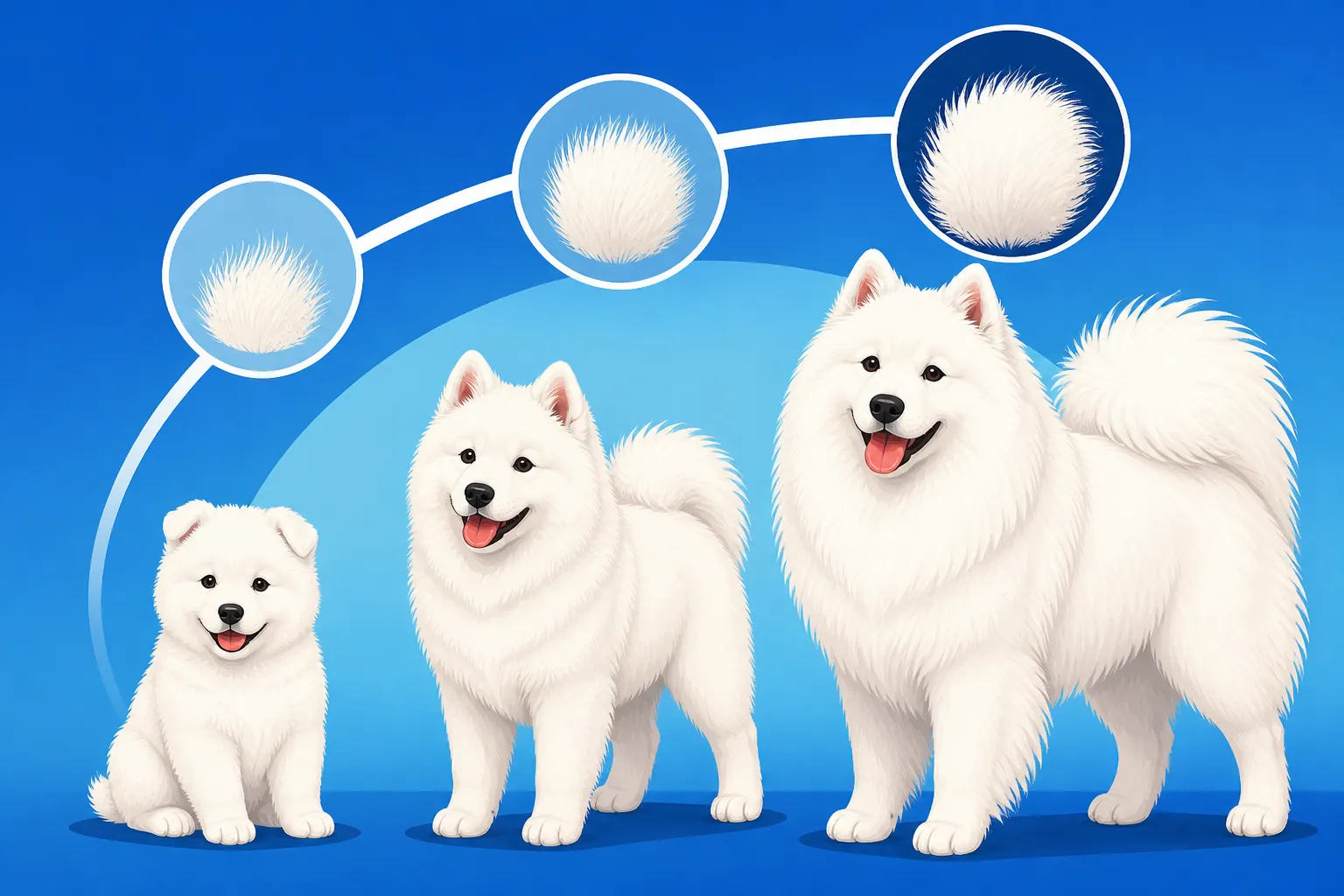
How a Samoyed’s Coat Changes With Age
A Samoyed puppy’s soft, fluffy coat does not stay puppy-soft forever, and the change can look dramatic: tufts come loose, the color shifts, and the adult coat may seem less plush before it fills in. This guide explains what usually happens from puppyhood through old age, how to care for each stage, and which coat changes deserve a closer look.
How a Samoyed’s Coat Changes From Puppyhood to Adulthood
The puppy coat is softer and often looks extra fluffy
A young Samoyed usually has a soft, dense coat that gives the puppy a rounded, plush appearance. The fur can feel finer than an adult dog’s coat, and the puppy may look especially fluffy around the neck, shoulders, and hindquarters. That early softness is normal; it is not a reliable preview of the final adult coat’s texture, length, or volume.
Puppy color can also surprise people. A white Samoyed puppy may show cream or biscuit shading, particularly on the ears or body. Those shades can change as the coat develops, but the amount and pattern of color vary from dog to dog. For a closer look at accepted shades, see The Colors a Samoyed Comes In and What Biscuit Means on a Samoyed.
The Samoyed’s coat is a double coat, with a soft undercoat beneath longer, coarser guard hairs. As the adult coat develops, those layers become more noticeable. The coat may feel less like uniform puppy fluff and more like a combination of different textures. Understanding the layers helps explain why routine brushing matters; What a Samoyed's Double Coat Is Made Of describes how the coat works.
The puppy coat gives way to adult hair gradually
The transition from puppy coat to adult coat is not a single overnight event. It often becomes noticeable during puppyhood, but the timing and intensity vary. Loose fur, uneven-looking patches of length, and a coat that seems to change texture can all occur during this period. A Samoyed may look temporarily less full while the adult coat develops, especially if shedding and new growth overlap.
That in-between look can be unsettling. Owners sometimes wonder whether the coat is damaged because it seems thinner or less even than it did a few weeks earlier. If your puppy is otherwise comfortable and the skin looks healthy, gradual changes are often part of normal development. Take occasional photos in similar lighting to compare progress; day-to-day inspection can make ordinary shifts seem more dramatic than they are.
Avoid trying to “fix” a changing coat by cutting it short. Trimming may be appropriate for hygiene or tidying certain areas, but shaving a Samoyed removes protective coat layers and is not a routine solution for shedding or patchy-looking growth. Read Why a Samoyed Must Never Be Shaved before making a major coat change.
Adult coat texture and fullness take time to settle
As a Samoyed matures, the coat generally becomes more substantial, with longer guard hairs and a fuller undercoat than the puppy coat. How plush it appears depends on the individual dog, its age, sex, season, health, and grooming routine. Some adults carry an abundant ruff and feathering, while others have a more moderate coat. A less dramatic coat is not automatically a sign that something is wrong.
Coat development can continue beyond the first puppy-to-adult transition. A young adult may not yet have the same fullness or outline as a mature dog, and seasonal shedding can make the coat look quite different from one part of the year to another. It is more useful to watch the overall pattern over time than to judge maturity by a single grooming session or photograph.
Why a Samoyed’s Coat Changes With the Seasons
Seasonal shedding can make the coat look thinner
Samoyeds shed throughout the year, with heavier shedding periods when they release undercoat. Owners often call this “blowing coat.” During a coat blow, loose undercoat can come out in surprising quantities, collecting in brushes, corners, and the car. The dog may look less dense for a while, even though the outer guard hairs remain.
The amount of shedding and its timing vary with the dog and its living conditions. Indoor heating, local daylight patterns, and individual coat cycles can affect when shedding is most noticeable. One Samoyed may shed in a pronounced seasonal wave, while another seems to release coat more gradually. See When a Samoyed Blows Its Coat for more about this process.
Regular brushing helps remove loose undercoat before it spreads around the house or tangles with the coat that remains. During a heavy shed, brush gently and in manageable sections rather than scraping repeatedly at one spot. If you are choosing tools, a slicker or pin brush and an appropriate undercoat rake are common options; Chewy carries grooming supplies that owners can compare by tool type, size, and suitability for a double coat. Whatever you use, stop if the skin becomes irritated.
Weather can change the coat’s appearance and feel
A Samoyed’s coat is adapted to provide insulation, and it does not simply become a thin summer coat in warm weather. The undercoat may be shed seasonally, but guard hairs remain part of the coat’s protective structure. A Samoyed can still overheat, so coat maintenance does not replace shade, water, air conditioning when needed, and sensible exercise timing. For more on the coat’s insulating role, see How a Samoyed's Coat Insulates Against Heat as Well as Cold.
Dirt and moisture can also affect how the coat looks. A damp coat may lie differently, while dried mud often loosens and brushes away more easily than owners expect. Thorough drying after a bath or a soaking is important because a dense coat can hold moisture close to the skin. If bathing is needed, use a dog-appropriate shampoo and rinse thoroughly; Chewy’s grooming section can be a place to compare basic coat-care products, but a product should be chosen for the dog’s needs rather than its whitening claims.
Color may appear different across seasons as well. Sun exposure, dirt, moisture, and the contrast between fresh growth and older hair can make white or cream areas look warmer or duller. A slight shift in appearance is not necessarily a health problem. Persistent yellowing, staining, or a sudden change alongside skin irritation is worth discussing with a veterinarian. You can also read Whether a Samoyed's Coat Yellows in the Sun and Whether a Samoyed's Coat Yellows With Age.
What Coat Changes Are Normal at Different Ages
Puppy and adolescent coat changes
In puppyhood, expect changes in softness, length, and fullness as the adult coat begins to come in. The coat may look uneven while it develops, and loose tufts may appear during shedding. The skin should generally remain comfortable and intact. A puppy who is scratching intensely, developing bald spots, or showing sores needs more than a routine grooming adjustment.
During this stage, gentle handling is as important as removing loose hair. Keep brushing sessions short, reward calm behavior, and introduce tools slowly. A puppy who learns that grooming means a few comfortable minutes with praise is easier to care for later, especially during a heavy coat blow. Avoid pulling at tangles or forcing a rake through resistant fur; separate a small tangle with your fingers or ask a groomer for help.
Adult coat changes
An adult Samoyed’s coat can shift in density, length, and appearance with seasonal shedding, grooming, and normal maturation. A dog that looks impressively full in winter may appear less voluminous after shedding undercoat. That does not mean the coat has permanently failed to grow back; the cycle takes time, and the visual effect can be uneven while new hair comes through.
Use a consistent routine to make changes easier to interpret. Brush often enough to prevent mats, especially behind the ears, in the trousers, under the legs, and where a collar or harness rubs. The right frequency depends on the dog’s coat and current shedding, but many owners find that regular short sessions are easier than waiting until loose fur and tangles build up. How Often a Samoyed Needs Brushing offers more guidance on maintaining the coat.
Senior coat changes
Older Samoyeds may have changes in coat texture, color, or fullness. The coat can become less dense or feel different, and white fur may develop a warmer tone. These changes can be gradual, but age alone should not be used to explain sudden hair loss, bald patches, persistent itching, or skin that looks inflamed.
A senior dog may also have a harder time standing for long grooming sessions or reaching the positions needed for brushing. Make grooming easier by working on a nonslip surface, taking breaks, and focusing on areas most prone to mats. If your dog resists because a joint or body area may be sore, do not assume it is simply being difficult. A veterinarian can help distinguish ordinary aging from discomfort or a health issue.
| What you notice | Often consistent with normal coat change | Worth checking more closely |
|---|---|---|
| Loose undercoat coming out in tufts | Seasonal shedding or a coat blow | Skin irritation, sores, or intense scratching |
| Coat looks less full after shedding | Temporary reduction in undercoat | Persistent thinning or bald patches |
| Puppy fur feels softer than adult fur | Normal coat development | Broken hair or a visibly unhealthy skin surface |
| White coat looks creamier or warmer | Lighting, dirt, sun exposure, or natural color variation | Sudden staining with odor, redness, or discomfort |
| Older dog’s fur feels different | Gradual age-related change | Abrupt change, heavy loss, or other signs of illness |
How to Care for a Samoyed’s Coat as It Changes
Brush according to the coat, not just the calendar
A calendar can help you remember grooming, but your hands and eyes tell you what the coat needs that day. During a heavy shed, you may need more frequent brushing. When the coat is stable, shorter and less intensive sessions may be enough. Work through small sections to the skin without scraping, and check the areas where mats form most easily.
Do not confuse brushing with removing every loose hair in one session. Repeatedly working the same area can irritate the skin and break hair. If the coat is severely tangled or packed with undercoat, a professional groomer can help remove it safely. Chewy may be useful for comparing basic brushes and combs, but the tool should suit your dog’s coat and your technique; a tool that feels too harsh is the wrong choice, even if it is marketed for shedding.
Keep bathing and coat products practical
A Samoyed does not need frequent baths simply to preserve a bright white appearance. Bathing too often or using unsuitable products can dry or irritate the skin, while a bath that is not rinsed and dried properly can leave discomfort beneath the dense coat. Brush out loose coat before bathing, rinse thoroughly, and make sure the dog is dry down to the skin.
Avoid relying on whitening products to solve every color change. Before treating yellowing as a cosmetic issue, consider whether the coat is dirty, stained from licking, or changing naturally. If the skin is red, scaly, smelly, or itchy, ask a veterinarian before adding new shampoos or sprays. A groomer can also advise whether the coat needs routine cleaning or whether a skin concern should be assessed first.
Know when a coat change needs veterinary attention
A gradual change in coat fullness or shade is different from sudden hair loss. Arrange a veterinary check if you notice distinct bald areas, persistent scratching, sores, scabs, unusual odor, skin redness, or a rapid change in coat quality. Other symptoms such as low energy or changes in appetite make it especially important not to treat the issue as grooming alone.
It can help to note when the change began, where it is happening, whether it is symmetrical, and whether anything changed in the dog’s routine. Photos taken over several weeks can give your veterinarian a clearer picture than memory alone. Avoid starting supplements or medicated products without advice, since the right response depends on the cause, not simply on how the coat looks.
Disclaimer
This article is for general informational purposes only and does not constitute professional advice. Laws, prices and regulations vary by location and change over time. Consult a qualified professional for guidance on your specific situation.