The Color Samoyed Puppies Are Born
Samoyed puppies are often born with a pale coat, but “white” is not the only color you may notice in the first weeks. Cream and biscuit shading can show up early, fade, or become more visible as the puppy grows. This guide explains what newborn colors can look like, what changes are normal, and when a coat color deserves a closer look.
What color are Samoyed puppies when they are born
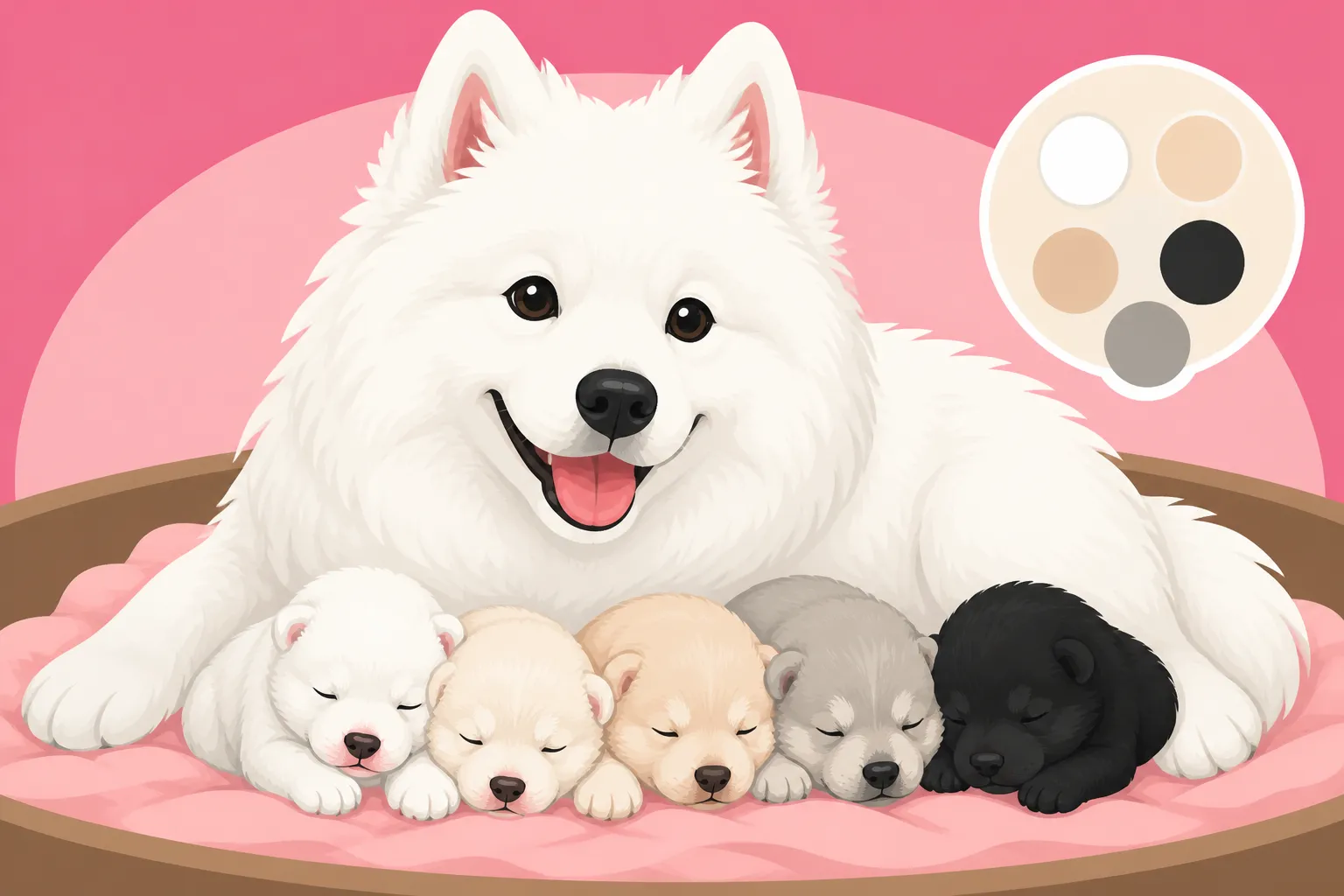
Most newborn Samoyeds look white or nearly white
Many Samoyed puppies arrive with a light coat that looks white, ivory, or softly creamy. Their fur is short and fine compared with the plush adult coat, so the color can appear different from the bright, full coat people imagine when they picture a grown Samoyed. A puppy may also look a little darker where the fur is damp or flattened, then seem lighter once dry and fluffy.
A litter can include puppies with subtly different shades even when both parents are white. One pup may look clear white, while a sibling has a warm cream cast or faint beige shading around the ears or back. Those early differences do not necessarily mean the puppies will have dramatically different adult coats.
A newborn coat is not always a reliable preview of the finished color. Samoyeds grow a dense double coat over time, and the developing coat can change how light reflects off the fur. If you are comparing a very young puppy with an adult dog, remember that the puppy’s soft first coat and the adult’s guard hairs create different impressions.
Cream and biscuit shading can be present early
Some Samoyed puppies have a warm tint that people describe as cream or biscuit. It may be easiest to see on the ears, along the spine, or in areas where the fur lies close to the skin. In other puppies, the shading is so faint that it is hard to notice until the coat dries or grows longer.
“Biscuit” describes a pale golden or beige tone, not a dark brown or red coat. It can appear as light shading rather than a solid, sharply defined patch. For a closer look at the term and how it is used, see What Biscuit Means on a Samoyed. The breed’s accepted coat colors include white, cream, biscuit, and combinations of white and biscuit, though individual dogs can vary in how much color they show.
Color labels can be confusing when a puppy is only a few days old. Lighting, damp fur, bedding, and even a camera’s white balance can make a pale coat look warmer or cooler. If you are looking at puppy photos from a breeder, ask whether the pictures were taken in natural light and whether the puppy’s coat was dry.
Newborn color does not predict every detail of the adult coat
A puppy with a faint biscuit tint may grow into an adult whose coat looks mostly white, or the tint may remain noticeable in certain areas. A puppy that appears plain white can also develop warmer shading as its coat matures. These are normal variations, not a guarantee that the puppy will end up with one exact shade.
It helps to think of color as one part of a changing coat rather than a fixed newborn marker. The amount and placement of shading can shift as the puppy loses its first coat and grows a more developed one. Breed color descriptions are useful, but they cannot tell you precisely how every individual puppy will look later.
For a broader overview of recognized coat shades, read The Colors a Samoyed Comes In. If you are choosing a puppy, focus on the breeder’s health practices, temperament, and care of the litter alongside color. A subtle difference in cream or biscuit shading is not, by itself, a sign of better health or quality.
How a Samoyed puppy’s coat color changes with age
The first coat can look different from the coat that follows
A Samoyed puppy’s coat changes as the dog grows. The first fur is soft and relatively short; later, the coat becomes fuller, with the dense undercoat and longer guard hairs that give the adult Samoyed its familiar appearance. As the texture and length change, the same shade can look lighter, warmer, or more noticeable.
This can surprise owners who bring home a puppy that seems almost pure white, then notice a cream cast in certain light a few months later. It can also happen in reverse: biscuit shading that stands out in a puppy may look less prominent once the coat grows in and spreads the color across a larger area. Fur around the ears and back may not match the chest or legs exactly.
Changes in coat color should be considered alongside the dog’s overall condition. Normal maturation tends to happen gradually and without irritation, bald areas, or discomfort. If you notice sudden coat loss, skin redness, persistent itching, or a marked change in skin color, contact your veterinarian rather than assuming it is just a puppy coat transition.
Biscuit markings may fade, remain, or become easier to see
Biscuit markings do not follow one schedule in every Samoyed. Some pale markings become less obvious as the dog’s coat grows; others remain as a warm tint, especially around the ears or along the body. Changes in coat length, seasonal shedding, and lighting can all affect how noticeable the shading looks from one month to the next.
It is common for owners to take photos and wonder whether their puppy’s coat is changing or whether the light is simply different. A quick comparison in the same spot, with the fur dry and natural daylight, can help. Avoid using a phone’s strong color filters when judging coat shade, since those can make white fur look cream or make cream look almost white.
For a more focused discussion of this transition, see Whether a Samoyed Puppy's Biscuit Markings Fade. The important point is that a pale biscuit cast is a recognized variation. It does not need to be scrubbed away, covered with whitening products, or treated as a flaw.
Seasonal shedding can make the coat appear uneven
As a Samoyed sheds or grows its coat, color can seem uneven. A thick winter coat may soften the appearance of warm shading, while a thinner coat or newly grown fur can make it easier to notice. Loose undercoat can also hold dust or outdoor debris, temporarily making a white dog look duller than usual.
Regular grooming helps you see the coat as it is, but it will not change the dog’s natural pigment. Use a suitable brush gently, especially when the coat is changing, and check for tangles behind the ears, under the legs, and around the collar. If you are shopping for basic grooming supplies, Chewy is one place to compare brush types and read product details; choose tools that suit a double coat rather than relying on a whitening product to alter its color.
For the larger picture of coat development, see How a Samoyed's Coat Changes With Age. Grooming can help keep the coat clean and comfortable, but it cannot reliably predict the final shade from one brushing session or one seasonal coat change.
| What you notice | What it may mean | What to do |
|---|---|---|
| Pale ivory or white fur at birth | A common newborn appearance | Let the coat develop naturally |
| Warm cream cast | A normal light coat variation | Check the shade in natural light |
| Beige shading near ears or back | Possible biscuit coloring | Observe it as the coat matures |
| Color looks different in photos | Lighting or camera settings may affect appearance | Compare dry fur in consistent daylight |
| Sudden coat loss, redness, or itching | May involve a skin or health issue rather than ordinary color change | Ask a veterinarian |
How to tell normal coat color from a concern
Look at the pattern and the puppy’s overall comfort
A soft, even cream or biscuit tint is different from a sudden patch of discolored skin or a coat that is breaking, thinning, or coming away. Natural coat color is usually part of the fur itself. Skin irritation, infection, parasites, or other health issues may affect the skin beneath the coat and can come with itching, redness, odor, or sensitivity.
When you check a puppy, gently part the fur in a few places instead of judging only the surface. Look at the skin around the ears, belly, paws, and under the collar. A puppy’s fur can hide small changes, and a white coat makes dirt and staining more visible than it might be on a darker dog.
If the puppy seems comfortable and the coat is growing normally, a small shift in shade is usually something to observe rather than fix. If the color change comes with discomfort, sores, hair loss, or unusual behavior, take clear photos and share them with a veterinarian. A vet can assess the skin and coat in context instead of relying on a color label.
Distinguish coat shade from staining
Not every tan or yellow area is natural biscuit coloring. Food residue around the mouth, tear staining near the eyes, dampness around the paws, and dirt caught in the coat can all alter how white fur looks. These marks tend to be concentrated in areas that get wet, rubbed, or exposed to food and outdoor mess.
Start with gentle cleaning and thorough drying rather than strong bleaching products. A puppy’s skin can be sensitive, and whitening products may not be appropriate for young dogs. If the stain keeps returning, smells unusual, or appears alongside redness or irritation, ask your veterinarian whether there may be an underlying cause.
For routine care, Chewy may help you compare puppy-safe grooming products, but check the label and ask your veterinarian if you are unsure whether an item is suitable for your puppy’s age or skin. The goal is clean, comfortable fur—not changing the dog’s natural color. In a young Samoyed, patience and gentle grooming are usually better choices than trying to make every cream-colored area look bright white.
Ask the breeder specific questions about the litter
If you are considering a puppy, ask the breeder how they describe each puppy’s color and whether the shade has changed since birth. A responsible breeder should be able to explain what they are seeing without promising an exact adult appearance. Ask for current photos in natural light, and if possible, meet the litter so you can see how the coat looks in person.
You can also ask about the parents’ coats and whether either parent has biscuit shading. That may provide context, but it still cannot guarantee exactly how a puppy’s coat will develop. A breeder who is transparent about normal variation is more helpful than someone who markets a specific shade as proof of superior quality.
Color should not distract from more consequential questions about health testing, veterinary care, socialization, and the puppy’s environment. A carefully raised puppy with a cream tint is still a Samoyed, just as a bright-white puppy is not automatically the right match for every home. If you want to understand how coat color is discussed in the show ring, Whether a Biscuit Samoyed Can Be Shown and Whether Judges Prefer a Pure White Samoyed offer useful context.
Choosing and caring for a puppy with a light coat
Keep coat care gentle and consistent
A Samoyed puppy does not need aggressive grooming to preserve a particular shade. Start with calm, brief handling so the puppy learns that brushing, paw checks, and gentle inspection are ordinary parts of life. Use a suitable brush and work carefully through the coat; forcing a brush through a tangle can pull the skin and make future grooming harder.
Bathing should be based on actual need, not on the idea that a white dog must be washed constantly. Too-frequent bathing can dry or irritate skin, and a bath does not change the underlying pigment. Rinse thoroughly and dry the coat well, especially in dense areas where moisture can linger.
When comparing grooming supplies, Chewy can be a convenient place to read descriptions and check whether a product is intended for puppies or double-coated dogs. Still, the label matters more than the retailer. If your puppy has sensitive skin, recurring stains, or an unusual odor, get veterinary guidance before changing shampoos or adding coat treatments.
Focus on the puppy, not only the shade
It is easy to spend a lot of time studying a Samoyed puppy’s coat, especially when every family member has a different opinion about whether the fur looks white, cream, or biscuit. Try to keep the decision grounded in the puppy’s health and temperament. Observe how the puppy interacts with people, recovers from new sounds, and behaves with littermates, while also asking about veterinary checks and the breeder’s care practices.
A color description can help you understand what you are seeing, but it should not become a promise about how the puppy will look in adulthood. As the coat develops, the shade may become clearer or less obvious. That natural variation is part of owning a living dog, not a defect that needs correcting.
If you are already bringing home a puppy, take occasional photos in similar lighting and note any major changes in coat or skin. That gives you a more useful record than comparing heavily edited images online. Chewy can be one option for finding everyday grooming basics, but good coat care is mainly about gentle handling, appropriate products, and regular attention to your puppy’s comfort.
What to remember about Samoyed puppy color
Samoyed puppies are commonly born with pale coats, and cream or biscuit shading can be present from the start or become easier to see as the coat changes. The shade may fade, remain, or look different under new lighting and seasonal coat growth. None of those possibilities, on its own, tells you whether the puppy is healthy or well suited to your home.
If you are choosing a puppy, ask clear questions and look at the whole dog, not just the coat. If you are caring for one, keep grooming gentle and seek veterinary advice when a color change comes with skin symptoms or discomfort. For more on the breed’s accepted color range, see Whether a Samoyed Can Be Any Color but White and Whether a Cream Samoyed Is Purebred.
Disclaimer
This article is for general informational purposes only and does not constitute professional advice. Laws, prices and regulations vary by location and change over time. Consult a qualified professional for guidance on your specific situation.