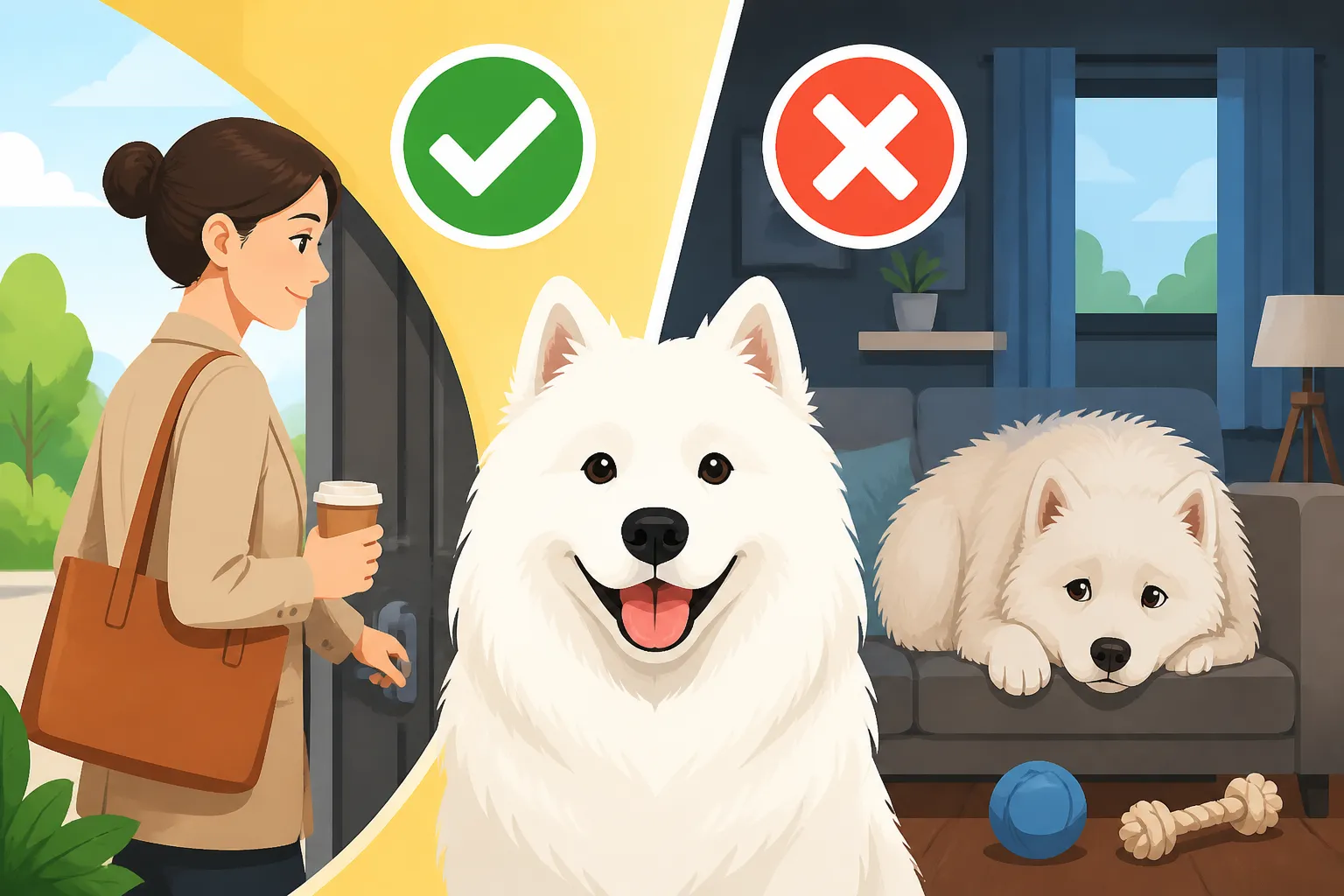
Whether a Samoyed Suits Someone Who Works Full Time
A full workday can leave a Samoyed alone through the hours when it most wants company, activity, and a chance to go outside. If you are weighing the breed against a commute, meetings, or an unpredictable schedule, the key question is not simply whether a Samoyed can be left home. It is whether you can reliably meet its needs before, during, and after work.
The short answer for full-time workers
A Samoyed can live with someone who works full time, but a standard workday with no midday break is a tough setup for many dogs of this social, energetic breed. The arrangement is more realistic when you can arrange a walker, daycare, a trusted person’s visit, or another dependable way to break up the day—and when you have time for meaningful exercise and companionship outside work hours.
The breed’s individual temperament matters, too. Some adult Samoyeds settle more easily than others, while puppies, newly adopted dogs, and dogs struggling with separation-related distress may need much more support. Don’t assume that a second dog, a large yard, or a basket of toys will solve the problem on its own.
What a normal workday can feel like to a Samoyed
Imagine leaving home early, commuting across Seattle, and getting back after the evening rush. Your Samoyed may have spent much of that time without company or stimulation. Even if it has a safe place to rest, a long stretch alone can be difficult for a dog that is closely bonded with its household and enjoys being involved in daily life.
That does not mean every Samoyed will panic or become destructive. It does mean you should plan for more than putting down food and water before you leave. Bathroom needs, exercise, enrichment, and social contact all matter. A dog that is physically comfortable but bored or lonely may still bark, chew, dig, or look for ways to get your attention.
For a fuller look at what being by itself may involve, read Whether a Samoyed Can Be Left Alone and How Many Hours a Samoyed Can Be Left. Neither a fixed number of hours nor a single “alone-time” rule can account for every dog. Age, prior experience, health, training, and the length of the total day—including your commute—make a difference.
The difference between doable and fair
A full-time job is not automatically a reason to rule out a Samoyed. The more useful question is whether the dog’s routine can be built around your work rather than left to chance. If a friend can let the dog out most days, or you can arrange a dependable dog walker, your schedule may be workable. If the dog would regularly be alone from early morning until late evening, with little time for exercise or interaction, the fit is much less promising.
Be honest about the whole week, not just an ideal Tuesday. Some people can work from home occasionally but still have long office days, travel, or last-minute meetings. Others have a consistent schedule and reliable help. A dog experiences those repeated patterns; a plan that works only when nothing goes wrong may not be enough.
A Samoyed’s needs also continue after you close your laptop. You may need to walk, train, play, groom, and spend relaxed time together even when you are tired. Before bringing one home, consider whether that evening commitment feels manageable in January, during busy work periods, and after a difficult day—not only on weekends.
What makes the arrangement challenging
Samoyeds are known for being social and vocal, and they tend to do best when they receive regular interaction and activity. Those traits can make long, quiet stretches at home harder for some individuals. The goal is not to expect a dog to entertain itself for an entire workday, but to build a routine that offers appropriate breaks and reduces the reasons it might become distressed or restless.
Loneliness, boredom, and separation-related distress
These problems can look similar from the outside, but they are not interchangeable. A bored dog may find its own activity—chewing a cushion, raiding a bin, or excavating a favorite corner of the yard. A dog with separation-related distress may become intensely upset when left, perhaps pacing, vocalizing, drooling, scratching at doors, or being unable to settle. Some dogs show little visible trouble, so a calm greeting when you return does not prove the day was easy.
The pattern matters. If damage or noise happens shortly after you leave, or the dog seems distressed around departure cues such as picking up keys, take it seriously. A camera can help you see what happens after the door closes, though it is not a substitute for professional guidance if the dog is panicking or at risk of injury. A veterinarian can help rule out medical factors and discuss whether a qualified behavior professional should be involved.
For a deeper discussion of these concerns, see Separation Anxiety in a Samoyed and What a Bored Samoyed Does to a House. It is tempting to treat every problem as a training issue, but a dog that cannot cope when alone may need a gradual behavior plan and more support than a quick obedience exercise can provide.
Voice, exercise, and the limits of a yard
A Samoyed that is lonely or under-stimulated may make itself heard. In a detached home, that can bother neighbors; in an apartment building, the sound can travel through shared walls and hallways. Before committing, think about your actual building, the people nearby, and how you would respond if the dog began vocalizing while you were away. The Noise a Samoyed Makes When Left Alone offers more context on this particular concern.
Exercise helps, but it is not a guaranteed cure for barking or distress. A brisk outing and a short training session can give the dog useful activity, while sniffing and problem-solving provide mental engagement. Still, exhausting a dog each morning so it will sleep all day is not a dependable or humane substitute for a balanced routine, and some dogs become more energetic as they build fitness.
A fenced yard is useful for safe outdoor access, but it does not provide companionship or automatically meet a Samoyed’s exercise needs. Many dogs need their person to join them, offer structured play, or take them out for walks. For practical exercise expectations, see How Much Exercise a Samoyed Needs.
Build a workday routine that can hold up
A good plan accounts for ordinary disruptions: a delayed train, an unexpected appointment, bad weather, or a dog walker who is unavailable. The best routine is not necessarily elaborate. It is consistent, safe, and realistic enough that you can keep using it.
Cover the day with reliable breaks
For many full-time households, the central question is how the dog gets a bathroom and social break while everyone is away. A dog walker can provide a walk or a brief visit; daycare may suit some dogs, while others do better with a quiet home visit. A trusted neighbor, family member, or friend can also be part of the plan if they are genuinely available and comfortable handling the dog.
Try to arrange the support before the dog arrives, rather than waiting until problems appear. Ask prospective walkers or daycare providers about their experience with large, energetic dogs, their safety procedures, and how they handle a dog that is vocal or initially unsettled. Introduce the caregiver gradually and watch how your dog responds. If you use Chewy or another pet retailer to organize supplies, practical items such as a secure harness, familiar bedding, or food storage can help keep routines consistent, but equipment cannot replace a human check-in.
A second dog is sometimes suggested as a fix for loneliness, but it is not a guaranteed solution. Dogs may not entertain each other, and adding another dog brings more training, expense, and care. Some Samoyeds enjoy canine company; others need careful introductions and individual attention. Read Whether a Samoyed Needs a Second Dog for Company before treating a second pet as your main childcare plan.
Use food and enrichment thoughtfully
A safe, familiar food puzzle or chew may make part of the day more engaging for a dog that enjoys them. Start by offering new items while you are home, so you can see whether your dog uses them safely. Avoid leaving anything that could be swallowed, broken apart, or become a choking hazard when unsupervised. Rotate a few suitable options instead of expecting one toy to hold a dog’s interest for hours.
A feeder or enrichment item should fit into the dog’s normal diet. Account for treats and food used in puzzles so they do not quietly add too many calories. If your dog has a medical condition, dietary restrictions, or a habit of gulping or destroying toys, ask your veterinarian what is appropriate. When shopping through Chewy, read product guidance carefully and choose items that match your dog’s size, chewing style, and supervision needs.
A predictable departure routine can help, too. Give the dog a bathroom opportunity and an appropriate walk before you leave, then keep departures calm rather than turning them into a long, emotional event. Some dogs settle best in a safe room or gated area; others are more comfortable with access to a larger dog-proofed space. Test the setup in short, supervised periods before relying on it for a full workday.
| Workday challenge | Helpful support | What to watch for |
|---|---|---|
| Long stretch without a bathroom break | Walker, home visit, or trusted caregiver | Accidents, urgency, or discomfort |
| Restlessness or boredom | Walks, training, sniffing activities, and safe enrichment | Chewing, digging, or repeated nuisance behavior |
| Vocalizing when left | Gradual alone-time practice and observation | Persistent distress or neighbor complaints |
| Unpredictable work schedule | Backup caregiver and flexible care plan | Frequent gaps in the routine |
| Puppy or newly adopted dog | More frequent supervision and gradual adjustment | Difficulty settling or being left safely |
Decide whether your household is a good fit
The right answer depends less on your job title than on the arrangement around it. A person who works full time but has reliable help and a stable routine may be better prepared than someone who works from home but cannot provide attention, activity, or predictable care. Think through the details before making a decision.
Questions to answer before bringing a Samoyed home
Write down a typical weekday from the dog’s perspective. When will it get up, go outside, eat, exercise, rest, and see another person? Include travel time, not just the hours listed on your work calendar. If you live in an apartment in Chicago or share walls with close neighbors, also consider where the dog will spend the day and how you will respond to noise complaints.
Then make a backup plan. Who can help if you are stuck at work? What happens if your usual walker is sick, daycare is full, or your dog is not comfortable in group care? Can you afford the ongoing care arrangement in both time and money? The specific services and costs vary, so compare options in your area and check providers directly before building them into your plan.
Consider the dog’s life stage and history. A puppy cannot be expected to manage an adult dog’s routine. An adult rescue may have an unknown comfort level with being alone, and a newly rehomed dog may need time to settle before you know what it can handle. An established, calm adult with a known history could be a more realistic match for some full-time workers than a young puppy, but temperament and individual needs still come first.
Signs your plan needs to change
If your dog is persistently distressed, injures itself trying to escape, or shows a sudden change in behavior, contact your veterinarian rather than waiting for the issue to become a habit. Likewise, repeated barking, destruction, or house-soiling may signal that the routine is not meeting the dog’s needs. Punishing the dog after you return is unlikely to explain what went wrong and may make the situation more stressful.
Review the schedule, not only the dog’s behavior. Perhaps the midday visit needs to be longer, the morning outing needs to include more sniffing and movement, or the dog needs a different care setting. Daycare is not right for every Samoyed, and a walker is not a complete answer if the dog is distressed for the rest of the day. A qualified trainer or veterinary behavior professional can help you work out whether the problem is boredom, fear, frustration, or something else.
In short, a Samoyed may suit someone who works full time when the household can provide dependable breaks, daily engagement, and a plan for the hours when no one is home. If the dog would routinely spend most of the day alone without support, it is worth reconsidering the timing or looking for a dog whose needs better match your life. That is not a judgment about how much you care; it is a practical way to protect both your household and the dog’s well-being.
Disclaimer
This article is for general informational purposes only and does not constitute professional advice. Laws, prices and regulations vary by location and change over time. Consult a qualified professional for guidance on your specific situation.