Whether a Samoyed Goes Fully Blind From PRA
One of the most heartbreaking concerns for any Samoyed owner is the thought of their happy, smiling companion slowly losing their ability to see the world around them. It’s a fear that can weigh heavily, especially when you learn about genetic conditions like Progressive Retinal Atrophy (PRA). This guide is here to shed light on whether a Samoyed truly goes fully blind from PRA, how this condition progresses, and most importantly, how we can support our beloved furry family members through this challenging journey.
Understanding Progressive Retinal Atrophy in Samoyeds
When you hear the term Progressive Retinal Atrophy, it can sound quite clinical and abstract. But for Samoyed owners, it represents a very real and often devastating genetic eye disease that slowly, inexorably, diminishes a dog's vision. It's not a sudden event but rather a gradual decline, and understanding its nature is the first step in preparing for and managing its impact.
What Progressive Retinal Atrophy Is
At its core, Progressive Retinal Atrophy (PRA) isn't a single disease, but a group of inherited degenerative diseases that affect the retina, the light-sensitive tissue at the back of the eye. Think of the retina as the film in an old camera – it's responsible for capturing images and sending them to the brain. In Samoyeds affected by PRA, the photoreceptor cells within the retina, specifically the rods and cones, gradually deteriorate. Rods are responsible for vision in low light (night vision) and detecting motion, while cones handle bright light and color perception. Depending on the specific genetic mutation, either the rods degenerate first, or both rods and cones are affected simultaneously. This deterioration means that the retina can no longer properly process light, leading to progressive vision loss. This particular form of eye disease can be quite disheartening for owners who cherish their Samoyed's bright, intelligent gaze. You can learn more about specific types in depth by reading about Progressive Retinal Atrophy in a Samoyed.
The Gradual Onset of Vision Impairment
The progression of PRA in Samoyeds is typically insidious, meaning it happens slowly over time, often making it difficult for owners to notice in the very early stages. The first sign many owners observe is night blindness. Your Samoyed might become hesitant to go outside in dimly lit conditions, bump into furniture in the evening, or be generally more clumsy after dusk. This is because the rod cells, responsible for low-light vision, are usually the first to be affected. As the disease advances, daytime vision also starts to decline as the cone cells begin to degenerate. What begins as a slight impairment in dark environments slowly progresses to more noticeable difficulties even in bright light, impacting their ability to navigate familiar spaces. The timeframe for this progression varies from dog to dog, and even between different genetic forms of PRA, but it's rarely an overnight change. This gradual process gives both the Samoyed and their human family time to adjust, though it doesn't make the journey any less emotionally taxing. Some might wonder at The Age a Samoyed's Retinal Atrophy Shows, as early signs can be subtle.
Diagnosing PRA in Samoyed Puppies and Adults
Diagnosing PRA involves a thorough eye examination by a veterinary ophthalmologist. They will perform a dilated fundic exam, looking at the structures at the back of the eye, including the retina. In early stages, the changes might be subtle, but as the disease progresses, visible changes like thinning of the retinal layers and hyper-reflectivity of the tapetum (the reflective layer behind the retina) become apparent. An electroretinogram (ERG) is the most definitive diagnostic test. This test measures the electrical activity of the retinal cells in response to light, much like an EKG measures heart activity. A diminished or absent ERG response confirms retinal degeneration. Crucially, genetic testing is available for specific forms of PRA known to affect Samoyeds. This DNA test can identify if a Samoyed carries the gene responsible for PRA, even before any clinical signs appear. This is invaluable for breeders looking to make informed decisions and prevent passing the gene to future generations, and for owners who want to understand their puppy's predispositions. It's why a responsible breeder will always recommend getting Why a Samoyed Litter Needs an Eye Exam and also for individual dogs.
The Inevitable Journey to Blindness
It's a tough question to ask, and even harder to hear the answer, but the reality for Samoyeds diagnosed with Progressive Retinal Atrophy is that, yes, it is a progressive disease that typically leads to complete blindness. It's not a condition where vision loss might plateau or reverse; the degeneration continues until the photoreceptor cells are no longer functional.
The Reality of Complete Vision Loss
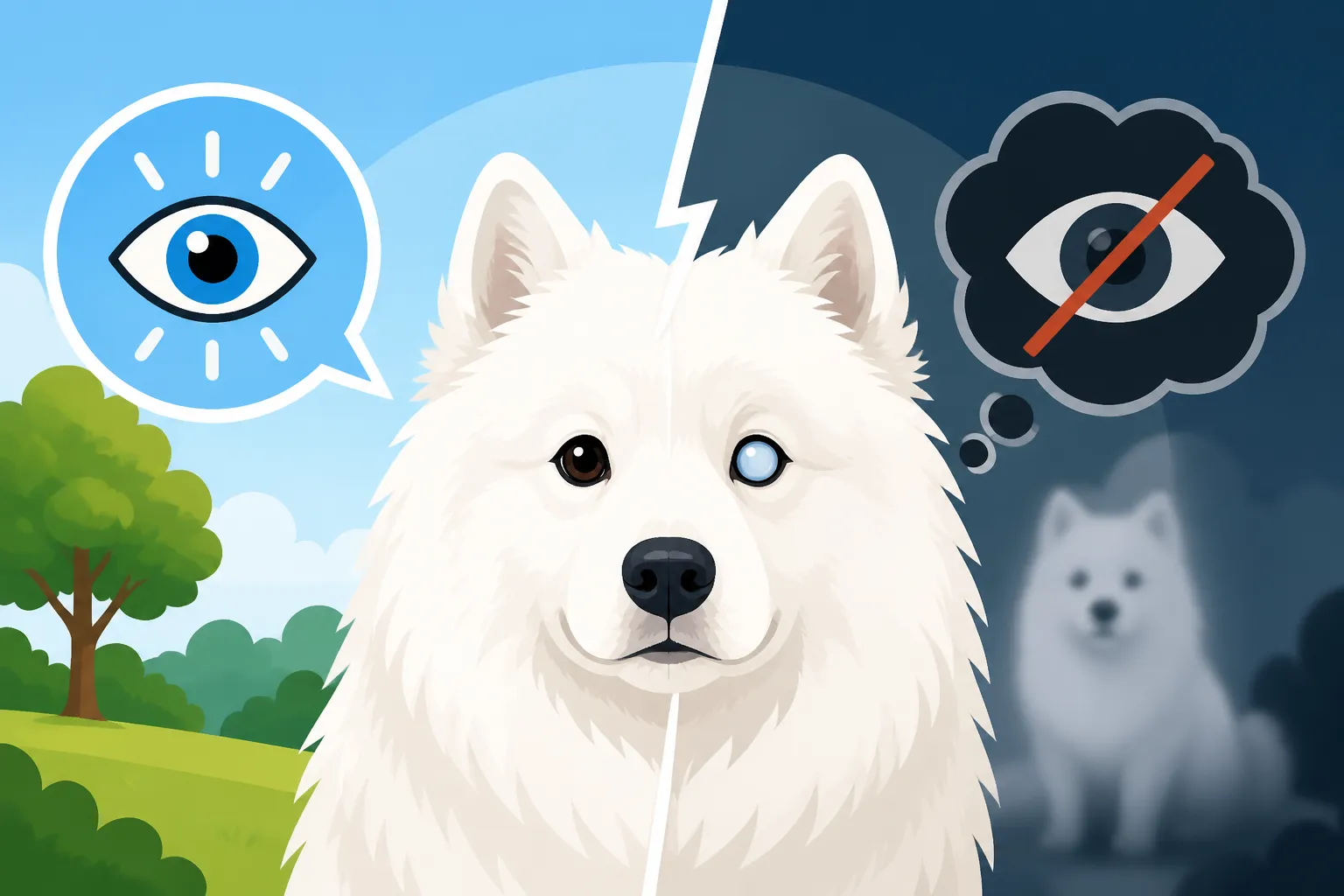
For a Samoyed with PRA, the journey almost always culminates in full blindness. While the rate of progression can differ, ranging from a few months to several years, the outcome remains the same. Initially, it might just be the challenges of navigating a dark room, but eventually, even familiar environments in broad daylight become a maze. It’s important for owners to understand this inevitability not to despair, but to be fully prepared and proactive in supporting their dog. This means accepting that your Samoyed will one day rely entirely on their other senses, which are remarkably acute. The good news is that while their eyes may fail them, their spirit often remains bright, and their capacity for joy and connection is undiminished. They might not see you, but they can still hear your voice, feel your touch, and smell your presence, and these connections become even more vital. Regular check-ups for Eye Disease and the Samoyed's Retina can help track progression.
How Samoyeds Remarkably Adapt to Blindness
Despite the profound loss of sight, Samoyeds are incredibly resilient and adaptable. Their other senses – hearing, smell, and touch – become highly refined, allowing them to navigate their world with surprising grace. A blind Samoyed will learn to map their environment using sound cues, scent trails, and tactile feedback. They might rely more heavily on the sound of your voice or the familiar smell of their bed. You’ll notice them walking with their nose to the ground more often, gathering information. They remember the layout of your home and yard, as long as it remains consistent. They become exquisitely attuned to changes in air currents, the vibrations of footsteps, and even subtle shifts in temperature. This ability to compensate is truly inspiring and often alleviates some of the owner's initial fears. While it requires patience and specific adjustments from their human family, a blind Samoyed can continue to lead a fulfilling and happy life. This remarkable adaptation is a testament to the strength and spirit of these wonderful dogs, and illustrates Whether a Blind Samoyed Copes at Home very well.
| Stage of PRA | Primary Symptoms | Impact on Life | Owner Observation |
|---|---|---|---|
| Early Stage | Night blindness, reluctance to move in dim light, dilated pupils in low light. | Minor, often goes unnoticed initially. | Bumping into objects in the evening, hesitancy after dark. |
| Mid Stage | Decreased daytime vision, pupils remain dilated, signs of anxiety in new environments. | Increased difficulty navigating, some impact on play and exploration. | More frequent bumping, reluctance to go to new places, pupils appearing larger. |
| Late Stage | Complete blindness, cloudy lens (cataracts may form secondary to PRA), increased reliance on other senses. | Significant adjustments needed, but capable of high quality of life with support. | Total loss of navigation, intense focus on sounds and smells, no visual response. |
The Emotional Impact on Owners and Their Samoyeds
Coming to terms with your Samoyed's impending or complete blindness is an emotional roller coaster. It's completely normal to feel sadness, grief, frustration, and even guilt. You might worry about their quality of life, their safety, and whether you're doing enough. It’s a profound change in the dynamic of your relationship, as you become their eyes in many ways. Your Samoyed, too, may experience a period of confusion or anxiety, especially during the transition. They might cling to you more, seem disoriented, or even act a little depressed at first. However, their resilient nature, combined with consistent reassurance and a stable environment, helps them move past this. Owners often find themselves developing an even deeper bond with their blind Samoyed, communicating through touch, voice, and subtle cues in ways they never imagined. It’s a journey that requires immense patience and love, but one that ultimately strengthens the connection you share. This is especially true for a breed known for How a Samoyed Hides Illness Behind a Smile, as they often try to mask their discomfort.
Proactive Care and Supporting a Blind Samoyed
Supporting a Samoyed through vision loss and blindness is all about consistency, predictability, and creating an environment where they feel safe and confident. It’s a team effort between you, your Samoyed, and your veterinary care team.
Creating a Safe and Predictable Home Environment
Once your Samoyed's vision begins to decline, establishing a consistent home environment becomes paramount. Avoid rearranging furniture or leaving clutter on the floor, as this creates new obstacles they can't see. Keep food and water bowls in the same spot, and their bed in a familiar area. Consider using tactile markers, like different textured rugs or runners, to help them differentiate areas or signal a change in direction. Baby gates can be invaluable for blocking off stairs or dangerous areas, preventing falls. For the outdoors, ensure your yard is securely fenced and clear of hazards like sharp objects or uneven ground. Some owners even use scent markers – a specific air freshener near a doorway or a scented plant in a particular corner – to help their Samoyed orient themselves. The goal is to make their world as predictable and safe as possible, allowing them to confidently navigate their surroundings using their highly developed memory and other senses.
Maintaining Routine and Mental Stimulation
A consistent daily routine provides comfort and security for a blind Samoyed. Regular feeding times, potty breaks, and walks help them feel grounded and reduce anxiety. While their physical activity might need some adjustments to account for their lack of sight, it’s crucial not to reduce it too much. Physical exercise is still vital for their overall health and mental well-being. Leashed walks in familiar, safe areas are perfect. You might explore quiet parks or trails where they can safely sniff and explore without encountering unexpected obstacles.
Mental stimulation is equally important. Engage their powerful sense of smell with scent games, like "find the treat," hiding high-value treats around the house for them to sniff out. Interactive puzzle toys that dispense food or require problem-solving are also excellent. Continue to use verbal cues and praise extensively, becoming their constant, reassuring voice. While their eyes may no longer see, their brain is still eager for engagement and their heart still longs for connection and purpose. This is especially important as they age, to keep their mind sharp. Caring for a Samoyed past nine often means making such adaptations.
Nutritional and Veterinary Support
While there isn't a specific diet that can cure or prevent PRA, good nutrition plays a vital role in supporting your Samoyed's overall health, which in turn helps them cope better with any challenges, including vision loss. A high-quality diet rich in antioxidants, vitamins, and Omega-3 fatty acids can contribute to general eye health and well-being, though it won't stop the genetic progression of PRA. Consult with your veterinarian to ensure their diet is appropriate for their age, activity level, and any other health conditions.
Regular veterinary check-ups are more important than ever. Your vet can monitor their eye health, check for secondary conditions like cataracts or glaucoma (which can sometimes develop in conjunction with PRA), and ensure they are otherwise healthy. They can also offer advice on pain management if they develop arthritis or other age-related issues, which can be particularly challenging for a blind dog to manage. It's also a good idea to discuss whether Whether a Samoyed Needs a Yearly Eye Exam is appropriate to monitor for any secondary issues, even if the primary PRA diagnosis is established.
Financial Considerations and Long-Term Planning
Caring for a Samoyed with a progressive condition like PRA inevitably brings financial considerations. It’s important to be prepared for potential costs associated with diagnosis, ongoing veterinary care, and adaptations to your home.
The Costs Associated with Managing PRA
The initial diagnosis of PRA can involve several visits to a veterinary ophthalmologist and specialized tests like an ERG, which can be costly. While there's no "cure" for PRA, ongoing veterinary care will be necessary to monitor for secondary conditions, manage any discomfort, and provide general health checks. You might also find yourself investing in home modifications such as non-slip mats, protective gear like "halo" vests for bumping into objects, or even specialized toys designed for blind dogs. These costs can add up over time, especially considering the long lifespan of a Samoyed. It’s not just about the vet bills; it's about making their environment optimal for their changed abilities, which sometimes means buying specific items to help them navigate safely. Understanding these potential expenses helps you plan effectively and ensures your Samoyed receives the best possible care throughout their life.
The Value of Comprehensive Pet Insurance
This is where a good pet insurance policy can truly make a difference. If you have pet insurance, especially a comprehensive plan enrolled before any signs of PRA appeared, it can significantly offset the financial burden of diagnostic tests, specialist consultations, and ongoing care. Many policies, like those offered by Healthy Paws, cover genetic and hereditary conditions, which is crucial for PRA. However, it's vital to check the policy details carefully regarding pre-existing conditions. If your Samoyed is diagnosed with PRA before you enroll them, it's likely that future treatments related to this condition would not be covered. This highlights the importance of getting pet insurance early in your Samoyed’s life, ideally when they are a puppy and have a clean bill of health. While you might be focused on immediate concerns like preventing kidney disease or hip dysplasia, considering a wide range of potential health issues is key to comprehensive long-term care. You might want to consider What Insuring a Samoyed With Two Known Diseases Costs, and research options like Healthy Paws to provide peace of mind. Just as you'd research Whether Pet Insurance Covers Samoyed Insulin for diabetes, ensure you understand eye condition coverage.
Building a Support System for Your Samoyed and Yourself
Navigating the challenges of a blind Samoyed doesn't have to be a solitary journey. Building a strong support system is beneficial for both you and your furry companion. Connect with other owners of blind dogs, either online or through local groups. Sharing experiences, tips, and emotional support can be incredibly empowering. Your veterinarian and their staff are also invaluable resources; don’t hesitate to ask questions or express your concerns.
Consider working with a professional trainer or behaviorist who has experience with blind dogs. They can offer specific strategies for training cues, safe navigation techniques, and addressing any anxiety your Samoyed might experience. Organizations dedicated to assisting blind pets can also provide resources, equipment, and guidance. Remember, you are your Samoyed’s advocate and their guide. By surrounding yourself with knowledge and support, you can ensure your beloved Samoyed continues to thrive, even without their sight, and enjoy the full The Twelve to Fourteen Years a Samoyed Lives that they deserve.
Disclaimer
The information provided in this article is for general informational purposes only and does not constitute veterinary advice. Always consult with a qualified veterinarian for any health concerns or before making any decisions related to your pet's health and treatment.