The Age a Samoyed’s Retinal Atrophy Shows
Watching your beloved Samoyed navigate their world, bright-eyed and bushy-tailed, is one of the greatest joys of Samoyed ownership. But the thought of them losing their precious sight can be incredibly distressing and leave you feeling utterly helpless. This comprehensive guide will delve deep into Progressive Retinal Atrophy (PRA) in Samoyeds, specifically addressing the critical question of when this challenging eye condition typically begins to show its signs, helping you understand what to watch for and how to prepare.
Understanding Progressive Retinal Atrophy in Samoyeds
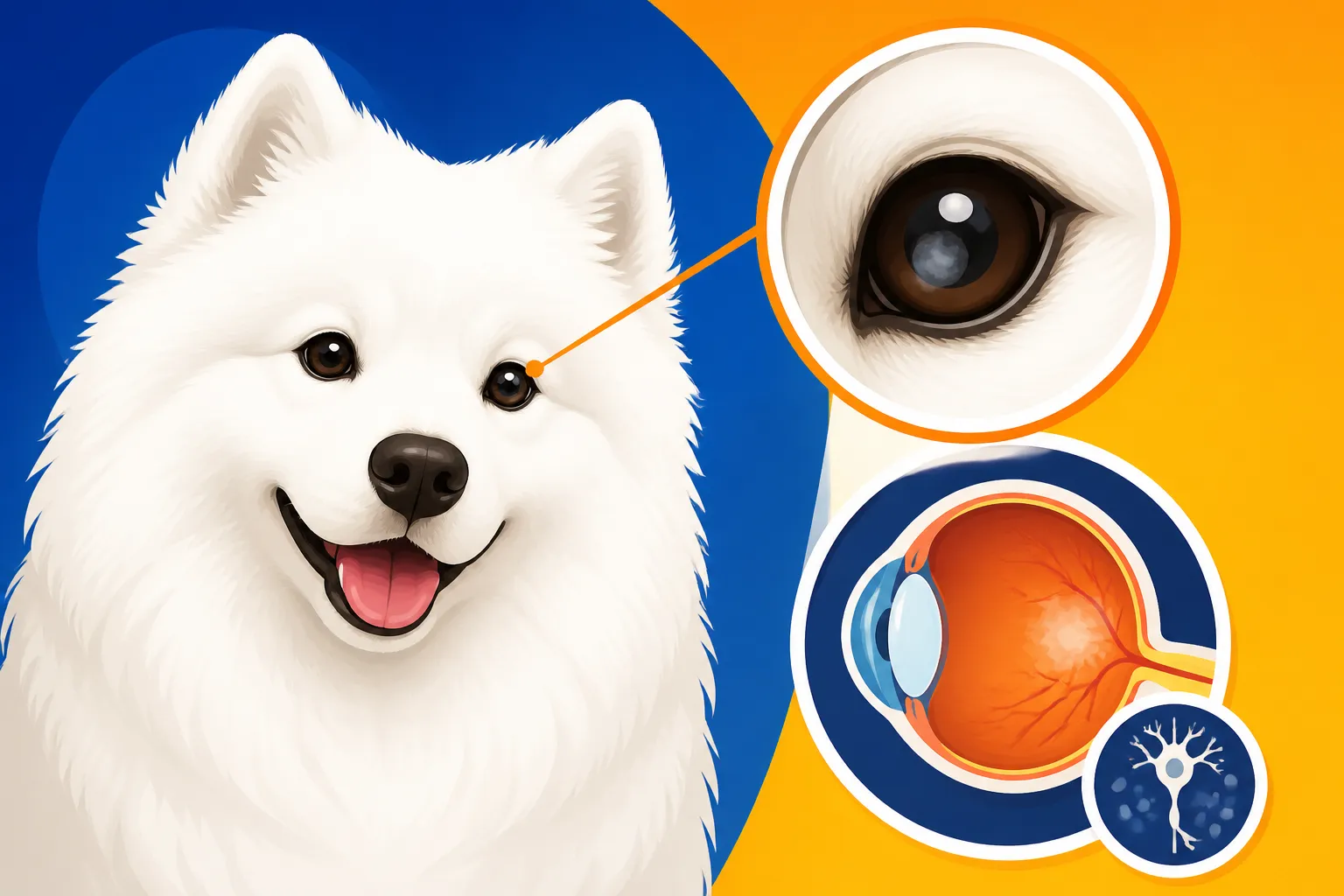
Progressive Retinal Atrophy, often simply called PRA, isn't just one single disease but rather a blanket term for a group of genetic disorders that affect the retina of the eye. In simpler terms, it’s a condition where the photoreceptor cells in the back of your Samoyed’s eye – the rods and cones responsible for detecting light and color – gradually degenerate and die off. Imagine a camera's film slowly but surely losing its ability to capture images; that's essentially what's happening. These cells are crucial for vision, and their deterioration leads to progressive, irreversible blindness.
For us Samoyed enthusiasts, the term "progressive" is key, as it means the vision loss doesn't happen overnight. It's a slow, insidious process that can sometimes be hard to spot in its earliest stages, especially with a dog as adaptable and eager to please as a Samoyed. They're often masters at compensating for their diminishing sight, relying more heavily on their other senses like smell and hearing, which can make it a challenge for even the most attentive owner to notice something is wrong right away. This ability to adapt is a testament to their spirit, but it also means we, as their guardians, need to be extra vigilant. It's important to remember that PRA is almost always inherited, meaning it's passed down through generations, highlighting the importance of responsible breeding practices and understanding your dog's lineage.
There are different forms of PRA, and while they all ultimately lead to blindness, they can vary in their genetic mutations and, crucially, in their age of onset and progression rate. Some forms affect the rods first, leading to night blindness, while others might affect both rods and cones simultaneously. It's not uncommon for owners to first notice changes in their dog's ability to see in dim light before any daytime vision issues become apparent. This is a subtle yet significant detail that can often be overlooked or attributed to a dog just being a bit clumsy in the dark.
The Typical Onset of PRA in Samoyeds
When we talk about the age a Samoyed's retinal atrophy shows, it's not a single, fixed number. Due to the various forms of PRA, the onset can span a wide range, from early puppyhood to later in life, sometimes making it difficult for owners to pinpoint exactly when the condition began to affect their beloved companion. It’s a stark reminder that even seemingly healthy young dogs can carry genes that will manifest later.
Historically, one of the more common forms of PRA seen in Samoyeds, known as progressive rod-cone degeneration (prcd-PRA), often begins to show its subtle signs in young adulthood. We're generally talking about dogs between 3 to 5 years of age, though it can sometimes be observed as early as 18 months or as late as 6 or 7 years. In these cases, the initial signs are often so mild that they might go unnoticed, or are dismissed as minor behavioral quirks. For instance, a Samoyed might become a little more hesitant when going out for a walk after dusk, or they might bump into furniture they usually navigate perfectly once the lights are low. This isn't just about clumsiness; it's about a gradual erosion of their night vision.
| PRA Type (General) | Typical Onset Age | Initial Signs Often Noticed |
|---|---|---|
| Early-Onset PRA | Puppyhood (6-18 months) | Night blindness, clumsiness in low light |
| Later-Onset PRA | Young Adulthood (3-5 years) | Night blindness progressing to daytime vision loss |
| Very Late-Onset PRA | Senior Years (6+ years) | Gradual vision impairment, often mistaken for normal aging |
It's crucial to understand that while early-onset forms are less common in Samoyeds compared to some other breeds, they do exist and can show up in puppies as young as six months. This is why a thorough eye examination by a board-certified veterinary ophthalmologist is so vital, particularly if you have any concerns about a young pup's vision, or if you're exploring the background of a potential new Samoyed puppy. Breeders committed to the health of the breed will often have their litters examined by an ophthalmologist before they go to new homes. Knowing the health history of the parents and grand-parents, including results from genetic testing, can offer crucial insights. You might want to ask about specific screenings, like those covered in the article, "The COL4A5 Test Every Samoyed Buyer Should Ask About," for other genetic conditions, and certainly for PRA.
The insidious nature of later-onset PRA means that some Samoyeds might not display clear symptoms until they are already considered middle-aged or senior. This can be particularly heart-wrenching because owners might attribute the changes to normal aging. "Oh, Fido is just getting old, he's a bit slower at night," is a common sentiment. However, true PRA will inevitably lead to complete blindness, whereas age-related vision changes might stabilize or progress much more slowly. Understanding the typical age a Samoyed counts as a senior can help differentiate between natural aging and specific conditions. This is where regular veterinary check-ups, including discussions about any subtle changes in behavior or vision, become paramount. Early diagnosis, even if it's not "early" in terms of the dog's life, allows for better planning and adaptation for both you and your Samoyed.
Recognizing the Subtle Signs of Vision Loss
Because Samoyeds are so incredibly resilient and adaptable, they can be remarkably good at hiding their diminishing vision, especially in familiar environments. This makes it challenging for owners to pick up on the early signs of Progressive Retinal Atrophy. It’s not about them suddenly going blind; it's a slow fade, and your Samoyed will use every other sense they possess to compensate, often leaving you scratching your head, wondering if you're just imagining things. This uncanny ability to adapt is why the article "How a Samoyed Hides Illness Behind a Smile" rings so true for so many owners.
The very first symptom you might notice is often related to night vision. Your Samoyed, who once bounded confidently through the backyard after sundown, might start to hesitate, seem more cautious, or even bump into objects that they usually navigate effortlessly. You might see them preferring to stick close to you, or refusing to go into dimly lit rooms. Their pupils might appear more dilated than usual, especially in normal indoor lighting, as their eyes try to gather more light to compensate for the failing photoreceptors. Sometimes, in photographs taken with a flash, you might notice an unusually bright "eye shine" or tapetal reflection, which can be an early indicator of retinal changes.
As the disease progresses, even daytime vision starts to decline. You might notice your Samoyed becoming more tentative in unfamiliar surroundings, bumping into new furniture, or struggling with changes in floor levels or steps. Their confidence outdoors might wane, and they might seem startled by sudden movements or objects appearing in their peripheral vision. They might start relying more on familiar scents on walks, sticking to established routes. You might also observe that their eyes have a somewhat cloudy or glassy appearance, which can sometimes be mistaken for cataracts, though cataracts are a separate condition. If you notice any of these signs, it's vital to get your Samoyed checked out. A veterinarian, and ideally a veterinary ophthalmologist, can conduct a thorough examination to determine the cause of the vision changes. This might include specific tests beyond a regular eye exam, such as an electroretinogram (ERG), which measures the electrical responses of the cells in the retina.
Navigating a PRA Diagnosis and Management
Receiving a diagnosis of Progressive Retinal Atrophy can be devastating. It’s natural to feel a rush of emotions – sadness, frustration, maybe even guilt. But it’s crucial to remember that a PRA diagnosis isn't a death sentence, and with careful management and adaptation, your Samoyed can still lead a full and happy life. The key is to be proactive and create an environment that supports their changing needs. This journey will require patience, understanding, and a willingness to adapt your daily routines.
The first step after diagnosis is to connect with a board-certified veterinary ophthalmologist if you haven't already. They are the experts in eye disease and can provide the most accurate prognosis, help you understand the specific type of PRA affecting your Samoyed, and offer advice on managing the progression. While there is currently no cure for PRA, and unfortunately, vision loss is irreversible, the ophthalmologist can rule out other conditions and offer guidance on making your Samoyed as comfortable as possible. This might involve discussing the differences between Progressive Retinal Atrophy in a Samoyed and other conditions like Retinal Dysplasia in a Samoyed, ensuring a clear understanding of the specific challenge you're facing. Navigating specialist visits and potential diagnostic tests can be overwhelming, and this is where having a robust pet insurance plan, perhaps from a provider like Healthy Paws, can make a real difference in alleviating financial stress.
Living with a blind or visually impaired Samoyed requires thoughtful adjustments to their living environment. Maintain consistency in your home layout; avoid moving furniture unnecessarily. If you must move something, guide your Samoyed around the new obstacle repeatedly. Use consistent verbal cues for commands, stairs, or approaching obstacles. Child gates can be invaluable for blocking off unsafe areas, like open stairwells. Scent markers, like essential oils or textured mats, can help them navigate specific spots, such as food bowls or doorways. Ensure their food and water bowls are always in the same place. For walks, keeping them on a leash is paramount, and choosing familiar, safe routes will build their confidence. When considering if a Samoyed can cope at home with vision loss, the answer is a resounding "yes" with the right support. Many visually impaired dogs thrive, demonstrating incredible resilience and joy in their adapted lives.
Beyond environmental modifications, regular veterinary check-ups are still important. Your vet will want to monitor their overall health, as well as ensure there are no secondary issues arising from the PRA, such as cataracts, which can sometimes develop in conjunction with or as a result of retinal degeneration. Having an ongoing relationship with your vet and potentially a good pet insurance policy, like those offered by Healthy Paws, can provide peace of mind for these continuous health needs. Remember, your Samoyed still has a keen sense of smell and hearing, and they will rely on these senses even more. Engage them with scent games, squeaky toys, and lots of verbal praise and physical affection. They will still want to be a part of the family, and with your help, they can continue to live a wonderful, fulfilling life. Early diagnosis through comprehensive eye exams, potentially covered by your pet insurance like Healthy Paws, is key to understanding the progression and planning for your Samoyed's future.
Disclaimer
This article is intended for informational purposes only and does not constitute veterinary advice. Always consult with a qualified veterinarian or a board-certified veterinary ophthalmologist for any health concerns or before making any decisions about your Samoyed's care.