How Many Repetitions a Samoyed Needs
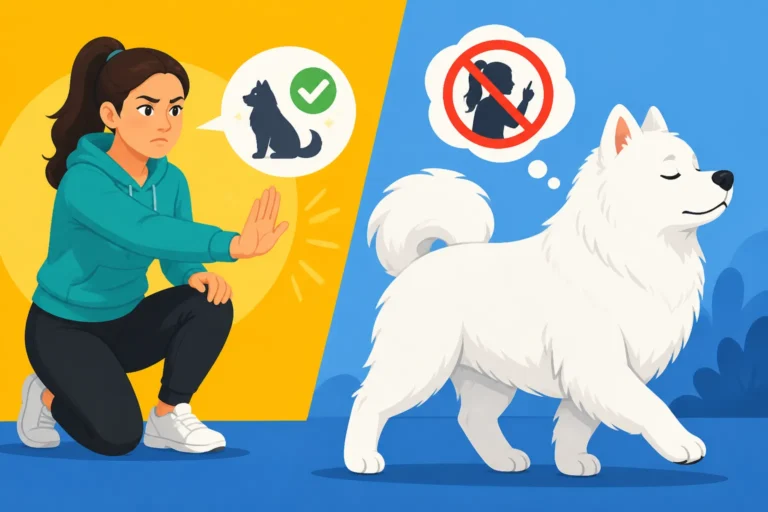
One of the most common frustrations Samoyed owners express is feeling like their intelligent, fluffy companion knows a command perfectly in the living room, only to completely ignore it the moment a squirrel streaks across the park. It’s enough to make you tear your hair out! This guide dives deep into the unique Samoyed learning style, exploring not just how many repetitions they need, but more importantly, how to make those repetitions truly effective so your Samoyed actually listens when it counts.
The Samoyed Learning Style: Why "Just Do It" Doesn't Work
Samoyeds are incredibly smart dogs, don't let their fluffy, smiling faces fool you into thinking otherwise. But their intelligence often comes hand-in-hand with a fiercely independent streak and a mind of their own. They weren't bred to be blindly obedient; they were bred to think for themselves while herding reindeer and working alongside people in harsh environments. This means that a simple "drill and repeat" approach to training often falls flat with a Samoyed. They're not robots, and they'll quickly tune you out if they perceive the exercise as pointless or, worse yet, boring.
The traditional idea of needing hundreds, or even thousands, of repetitions for a dog to learn a cue might work for some breeds, but with a Samoyed, it’s a recipe for frustration on both ends of the leash. They pick up on things surprisingly quickly, often understanding the meaning of a cue within just a handful of repetitions. The challenge isn't usually comprehension; it's compliance and consistency, especially when distractions are present. It's less about the sheer number of times you say "sit" and more about the context, motivation, and fun associated with that "sit."
Think of it this way: your Samoyed learns what "come" means pretty fast. But if "come" means leaving a fascinating smell or a potential rabbit chase for a dry piece of kibble, suddenly that known cue becomes optional. The repetitions need to build value, not just understanding.
Boredom is the Enemy: Why Endless Drilling Fails
Samoyeds thrive on novelty and engagement. Repeating the same command, in the same spot, with the same reward, over and over again, is the fastest way to lose your Samoyed's attention. They'll give you a polite "Samoyed smile" and then mentally check out, probably wondering when the real fun starts. This isn't stubbornness in the malicious sense; it's simply a high-intelligence dog getting utterly bored.
Imagine yourself being asked to do the same simple task, like counting paper clips, for an hour straight. You'd likely get distracted, start looking out the window, or just perform the task mechanically without much thought. Your Samoyed feels the same way. Their minds are constantly seeking stimulation, and if you're not providing it, they'll find their own entertainment, which often doesn't align with your training goals. This is why you'll often hear Samoyed owners lamenting that their dog "knows it, just won't do it." The truth is, the dog probably knows it, but has learned that ignoring you is more rewarding or less boring than complying.
Instead of drilling, focus on short, sharp training bursts. Five to ten minutes, a few times a day, is far more effective than one long, tedious session. End on a high note, even if it means finishing after just one successful "sit," keeping your Samoyed eager for the next session. This approach makes every repetition count because the dog is mentally present and engaged.
The "What's In It For Me?" Mentality
Every Samoyed, deep down, operates on a "what's in it for me?" principle. They are highly motivated by things they value. If your reward for a perfect recall is a barely-there "good boy" and a pat on the head, while the reward for ignoring you is chasing a fascinating scent trail, the scent trail wins every time. It's human nature, really!
This means that the value of the reward needs to be calibrated to the difficulty of the task and the level of distraction. For early learning, in a quiet environment, a tasty kibble might be enough. But when you're asking your Samoyed to stay perfectly still while a parade of squirrels marches by, you need to pull out the big guns – cheese, cooked chicken, squeaky toys, or a vigorous game of tug. Many owners find great success with high-value, easy-to-carry treats that can be found on Amazon, making every training moment a delicious opportunity.
Understanding this motivation is crucial for effective repetitions. It's not about bribery; it's about making the desired behavior the most rewarding option available in that moment. As your Samoyed matures and the behavior becomes more ingrained, you can gradually reduce the frequency of high-value treats, but never eliminate rewards entirely. Life with a Samoyed should always be a partnership, where their efforts are acknowledged and celebrated.
Making Repetitions Count: Quality Over Quantity
Since sheer numbers of repetitions aren't the answer, how do you make the ones you do effective? It comes down to smart training strategies that cater to the Samoyed's unique brain and personality. Think about it like building a sturdy house – you don't just throw bricks at it repeatedly; you place each one carefully and with intention.
The goal isn't to get your Samoyed to do something perfectly once, but to get them to do it reliably, under various circumstances, because they want to. This requires a nuanced approach that goes beyond rote memorization. It's about building a strong foundation of positive association, understanding, and trust between you and your dog. Remember, a Samoyed who enjoys training is a Samoyed who learns and performs.
Short, Varied Sessions are Key
As mentioned, short sessions prevent boredom and keep your Samoyed engaged. Aim for 5-10 minutes, 2-3 times a day, focusing on one or two specific behaviors. But don't just repeat "sit" twenty times in a row. Vary the commands, the location, and the rewards.
Here's how to introduce variety into your repetitions:
- Change of Scenery: Practice "sit" in the living room, then in the backyard, then on a quiet street corner. This helps generalize the behavior. A cue isn't truly learned until a dog can perform it in multiple environments with various distractions.
- Different Distractions: Start with no distractions, then add mild ones (a toy rolling by), then moderate ones (a person walking past), and finally high distractions (another dog or a squirrel). This is called "proofing" the behavior.
- Varying Rewards: Don't always use the same treat. Sometimes it's a piece of chicken, sometimes a favorite squeaky toy, sometimes just enthusiastic praise and a quick game of tug. Keeping them guessing keeps them interested.
- Mix it Up: Don't always go "sit-stay-come." Try "down-stay-sit," or incorporate play between commands. For example, "sit, okay, fetch the ball, come, sit." This keeps the dog thinking and prevents them from anticipating a predictable sequence.
A structured online program, like the kind offered by BAXTER & Bella, often excels at providing varied and engaging lesson plans that are well-suited to the Samoyed's intelligent but easily bored nature. They emphasize practical application in real-world scenarios, which is precisely what a Samoyed needs to truly solidify a behavior. Whether Short Sessions Suit a Samoyed is a critical question for this breed, and the answer is a resounding yes!
High-Value Rewards and Proofing
We've touched on high-value rewards, but it's worth emphasizing their role in effective repetitions. For a Samoyed, a reward isn't just a treat; it's confirmation that they did something right and that listening to you leads to good things. When you're first teaching a new behavior or proofing it in a distracting environment, the reward needs to be incredibly compelling.
Consider this table for choosing rewards:
| Training Stage | Environment | Reward Value Required | Examples |
|---|---|---|---|
| Initial Learning | Quiet, low distraction | Medium | Kibble, cheerios, mild praise |
| Generalization | Moderate distraction | High | Cheese, cooked chicken, favorite toy, vigorous praise |
| Proofing/Reliability | High distraction | Very High | Hot dogs, liverwurst, extended tug, rapid succession of treats |
| Maintenance | Any | Mixed | Random high/medium treats, life rewards (door opening) |
Proofing is the process of practicing a behavior in increasingly challenging environments. A Samoyed might know "stay" perfectly in your kitchen. But does he know it when a delivery driver walks by? Or when a child drops a cookie? These are the moments where repetitions with high-value rewards truly solidify the behavior. Each successful repetition in a new, distracting environment reinforces that listening to you is always the best choice, no matter what's going on around them. This is how you address the classic Samoyed challenge of Why a Samoyed Ignores a Cue It Knows.
Consistency Across the Board: Everyone on the Same Page
The "how many repetitions" question isn't just about the dog; it's about the people involved in their training. Samoyeds thrive on predictability and clear communication. If one person in the household uses one cue for "sit" and another uses a different one, or if rules are inconsistently enforced, your Samoyed will quickly learn to become opportunistic or simply confused. This is why Training a Samoyed That Finds Obedience Negotiable can become a real problem if the entire family isn't on board.
This breed is smart enough to figure out who to listen to and under what circumstances. If Aunt Sally lets them jump on the couch but you don't, your Samoyed will learn that jumping on the couch is sometimes okay, and will likely try it with you whenever they think they can get away with it. This inconsistency undoes countless repetitions you've put in.
The Importance of Family Alignment
For repetitions to truly stick, every member of the household needs to be consistent with:
- Cues: Use the same verbal commands and hand signals. "Sit" should always mean "sit," not "down" or "stay."
- Rules: What's allowed and what's not? Is jumping on guests okay? Are they allowed on furniture? All family members need to enforce these rules uniformly.
- Rewards: While reward types can vary, the act of rewarding desired behavior should be consistent. Everyone should praise and reward good choices.
- Expectations: Understand that a Samoyed puppy will need more patience and guidance than an adult. Discuss the puppy's training goals and how everyone can contribute positively. The First Year With a Samoyed Puppy is crucial for setting these foundational habits.
Holding family meetings about training can be incredibly helpful. Ensure everyone understands the chosen cues, what behaviors are being worked on, and how to reward them. This unified front ensures that every single interaction, every "repetition" of a rule or a cue, reinforces the desired behavior, making the learning process much faster and less frustrating for your Samoyed.
When to Seek Professional Help
Sometimes, despite your best efforts at consistent, engaging repetitions, you might still feel stuck. This is perfectly normal! Samoyeds present unique training challenges, and there's absolutely no shame in seeking professional guidance. A certified professional dog trainer, especially one experienced with northern breeds, can provide invaluable insights and strategies tailored to your Samoyed's specific personality and challenges.
A trainer can help you:
- Identify Motivation: Sometimes, we think we know What Actually Motivates a Samoyed, but a trainer can help uncover even higher-value rewards or new ways to engage your dog.
- Troubleshoot Issues: If your Samoyed is consistently struggling with a particular behavior, a trainer can observe your interactions and pinpoint where communication might be breaking down.
- Structured Progression: They can help you create a clear, step-by-step training plan that builds on success, ensuring each "repetition" moves you closer to your goals.
- Proofing in Real-World Scenarios: Many trainers offer group classes or real-world outings that provide controlled environments for proofing behaviors with real distractions, which is essential for Samoyeds.
Remember, seeking professional help isn't a sign of failure; it's a commitment to your Samoyed's well-being and a desire for a stronger, more harmonious relationship. The goal isn't just endless repetitions; it's effective repetitions that lead to a happy, well-behaved Samoyed who understands and respects your requests, even when that pesky squirrel makes an appearance!
Disclaimer
This article is for general informational purposes only and does not constitute professional advice. Laws, prices and regulations vary by location and change over time. Consult a qualified professional for guidance on your specific situation.