Whether Positive Training Alone Works on a Samoyed
It's a common and completely understandable hope for Samoyed owners: that the boundless charm and intelligence of their fluffy companions mean that positive reinforcement alone will be enough to shape them into perfectly behaved members of the family. However, the unique Samoyed personality, rooted in centuries of independent work, often presents a delightful yet challenging twist to this training philosophy, and this guide will explore how pure positive methods fare with our smiling snow dogs.
Understanding the Samoyed's Independent Spirit
When we talk about Samoyed training, it’s crucial to first understand who we're dealing with. These aren't your typical "please the master at all costs" breeds. Samoyeds were bred for a partnership with their human counterparts, not strict obedience. Their historical role alongside the Nenets people in Siberia required them to make independent decisions, whether it was herding reindeer or pulling sleds across vast, unforgiving landscapes. This history is etched into their very being, manifesting as a delightful but often frustrating independence.
A Legacy of Self-Reliance, Not Blind Obedience
Imagine a Samoyed ancestors out on the tundra, working with their tribe. They weren't waiting for a precise cue to save a stray reindeer from a predator or to find the safest path through a blizzard. They were expected to think, to assess, and to act on their own initiative. This isn't stubbornness in a negative sense; it's a deeply ingrained trait of self-reliance. This means that a Samoyed, when faced with a command, often runs a quick mental cost-benefit analysis: "What's in it for me right now?" If the reward isn't compelling enough, or if something else in the environment is more interesting, they might just politely decline your request. They’re not being disobedient to spite you; they're simply following their instincts. This independent streak is why many owners find that Why a Samoyed Ignores a Cue It Knows resonates so deeply.
Their Intelligence and the "Samoyed Negotiation"
Samoyeds are incredibly smart, which can be both a blessing and a curse in training. They learn quickly, but they also learn you quickly. They'll figure out what works to get your attention, what gets them a treat, and what they can get away with. This leads to what many Samoyed owners affectionately call "the negotiation." You ask them to sit, they look at you, then look at the treat in your hand, then maybe glance at the squirrel outside. It's a calculation, not a lack of understanding. They know what "sit" means; they're just deciding if it's worth their while at that exact moment. Pure positive methods rely heavily on motivation, and while Samoyeds are highly food-motivated, their intelligence means they can easily become bored with repetitive drilling. They thrive on variety and challenges that engage their clever minds, but that intrinsic desire to "think for themselves" never truly fades.
The Power (and Limits) of Positive Reinforcement with a Samoyed
Positive reinforcement is, without a doubt, the foundation of effective and humane dog training, and it absolutely has a place in a Samoyed's life. It builds trust, strengthens your bond, and teaches them what to do. However, expecting it to be the sole solution for every Samoyed behavior can lead to frustration for both you and your smiling companion.
Where Positive Reinforcement Shines Brightly
For teaching basic obedience cues like "sit," "down," "stay," or "come" in a low-distraction environment, positive reinforcement is incredibly effective. Samoyeds are typically eager to please when they understand the game and the reward is enticing. High-value treats, enthusiastic praise, and even a favorite toy can be powerful motivators. This method is also fantastic for shaping new behaviors, like teaching your Samoyed to ring a bell to go outside or to settle calmly on their mat when guests arrive. It focuses on rewarding the actions you want to see, making it a very clear and positive learning experience. Many online programs, such as those offered by BAXTER & Bella, are built around these positive principles and can provide a fantastic framework for new puppy owners. They help establish that crucial initial bond and understanding.
Think about teaching your Samoyed puppy to sit before getting their dinner. You hold the bowl, they sit, you instantly reward with the bowl. This clear consequence helps them connect the action to the desired outcome. Similarly, when house training, rewarding them immediately for eliminating outside reinforces that this is the right place to go. It's all about making the desired behavior the most rewarding option available.
Navigating Instincts: Where Positive-Only Can Struggle
The challenge with Samoyeds often arises when you're trying to stop an undesirable behavior that is deeply rooted in their breed instincts, or when the external environment offers a more compelling "reward" than anything you have in your treat pouch. For instance, that strong prey drive to chase a squirrel is incredibly self-rewarding. A delicious piece of chicken in your hand might pale in comparison to the thrill of the chase. This is where positive-only methods can feel like they hit a wall.
Consider recall, one of the biggest challenges for Samoyed owners. You can reward a successful recall a hundred times in your backyard, but the moment a rabbit darts across a field, the call of the wild can easily outweigh any treat. Why a Samoyed's Recall Cannot Be Trusted is a reality many of us face. Similarly, digging holes to stay cool in summer or to unearth interesting smells, or vocalizing with their signature "Samoyed scream" at every passing dog, are behaviors that are hardwired. While you can redirect digging to a designated digging pit or teach a "quiet" cue for barking, simply rewarding the absence of these behaviors is much harder than rewarding an action. You can't just reward "not chasing the squirrel" if the squirrel is already gone. This is where managing the environment and sometimes needing to interrupt behaviors comes into play. For instance, finding durable chew toys on Amazon can help redirect destructive chewing instincts when they're left alone.
When Positive Training Alone Falls Short: Addressing Common Samoyed Challenges
While the intention behind purely positive training is admirable, there are certain Samoyed characteristics that often require a more comprehensive approach. It’s not about being harsh; it’s about being realistic and providing clear, consistent communication that a dog bred for independent thought truly understands.
The Elusive Recall and Boundary Pushers
As mentioned, a reliable recall is the holy grail for Samoyed owners, and for many, it remains frustratingly out of reach with purely positive methods. Their sheer joy in exploring and their often-formidable prey drive mean that the world is often more enticing than anything you offer. Imagine your Samoyed has bolted through an open gate. While you can offer the most delicious treat upon their return, that initial act of bolting was its own reward – the freedom, the chase, the adventure! Simply rewarding the return doesn't necessarily prevent the next escape attempt. This often necessitates strict management, like having a GPS Collar for a Samoyed Costs to track them, or even a long line in open areas to ensure safety. You can work on Proofing a Samoyed's Recall, but it takes an incredible amount of consistent, high-level motivation in increasingly distracting environments.
Then there's the art of escape. Samoyeds are notorious for their Houdini-like abilities. They can scale fences, dig under them, and even figure out latches. How a Samoyed Gets Out of Anything You Build is not an exaggeration. While you can positively reinforce staying within boundaries, if the motivation to explore or chase is stronger, they'll find a way. For these deeply ingrained behaviors, sometimes a direct, gentle interruption or a clear boundary enforcement, rather than just waiting for a desired behavior to reinforce, becomes necessary for their safety and your sanity.
The Vocalization Conundrum
Ah, the Samoyed scream! It's legendary for a reason. Samoyeds are incredibly vocal, but often in a way that isn't traditional barking. They can howl, grumble, "talk back," and yes, scream. The Samoyed Scream and Why It Is Not Barking is a phenomenon many owners quickly become familiar with. You can try to positively reinforce silence, but if your Samoyed is screaming due to excitement, frustration, or just because they feel like it, simply waiting for a moment of quiet to reward can be a never-ending task. For many, addressing excessive vocalization requires a combination of management (removing triggers), enrichment (to reduce boredom), and sometimes, a clear, calm interruption of the behavior itself, followed by redirection to a desired, quiet activity. It’s about teaching them an alternative, not just hoping they choose silence.
Dealing with Destructive Digging
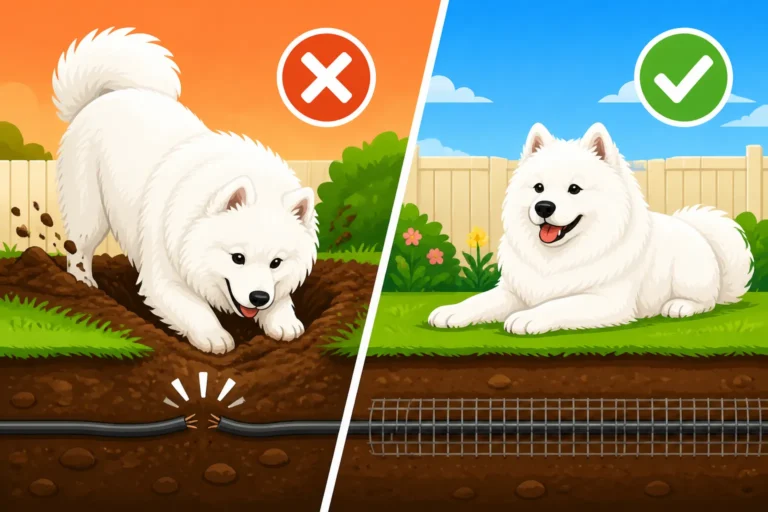
Samoyeds dig. They dig for fun, they dig to cool down when it's hot, and they dig to find interesting smells. The Digging a Samoyed Does Because It Is Hot is a particularly common behavior. While you can create a designated digging pit and generously reward them for digging there, this doesn't always stop them from digging up your prized rose bushes or under your fence if the motivation is high enough. Purely positive methods would suggest redirecting to the pit, but sometimes, a clear interruption ("no digging here") followed by redirection to the appropriate spot or an acceptable chew toy, is more effective in preventing unwanted destruction. It's about communicating clear rules.
Blending Approaches: A Realistic View for Samoyed Owners
So, if pure positive training alone isn't always the full answer for a Samoyed, what is? The most effective approach for these wonderful, intelligent, and independent dogs often lies in a balanced strategy that prioritizes positive reinforcement while also incorporating clear boundaries, consistent expectations, and appropriate management. This isn't about harsh corrections or punishment; it's about clear communication.
The Foundation: Positive Reinforcement and Relationship Building
At its heart, Samoyed training should always be built on a foundation of positive reinforcement. This means continuing to use high-value treats, praise, and play to reward desired behaviors. It's how you build trust and ensure your Samoyed sees you as a benevolent leader, someone worth paying attention to. Keep training sessions short, fun, and varied to keep their intelligent minds engaged. What a Samoyed Will Work For will often be food, but don't underestimate the power of a good play session or a happy voice. You want to make learning a joyful experience for them. Always remember to make good choices easy and rewarding.
Introducing Structure and Clear Boundaries
For those challenging Samoyed traits, integrating structure and clear boundaries is essential. This means:
- Verbal Markers Beyond "Yes!": While "yes!" or a clicker marks desired behavior, sometimes a "no" or "leave it" (followed by redirection) is necessary to interrupt an unsafe or truly unwanted action. The key is that these interruptions should be calm, clear, and immediately followed by showing them what to do instead, and then rewarding that desired alternative. For instance, if your Samoyed is about to chew on a chair leg, a firm "leave it" followed by offering them an appropriate chew toy and rewarding them for taking it.
- Management is Key: Don't set your Samoyed up for failure. If your dog is a known escape artist, a securely fenced yard is non-negotiable, and they should be on a leash or long line in unfenced areas. If they are an incessant counter-surfer, remove temptations from counters. Management prevents the rehearsal of unwanted behaviors, which is crucial for Samoyeds who learn from every experience.
- Consistent Expectations: Everyone in the household needs to be on the same page regarding rules and commands. A Samoyed will quickly learn who allows what and exploit inconsistencies. Whether it's "no jumping on guests" or "wait at the door," make sure the rules are applied consistently by every human.
- "What a Samoyed Needs Every Day": This includes physical exercise and mental stimulation. A tired Samoyed is generally a better-behaved Samoyed. Incorporate training games, puzzle toys (which you can find a huge variety of on Amazon), and adventurous walks to meet their needs.
A balanced approach recognizes that Samoyeds are not robots and that sometimes, their strong instincts need gentle guidance and clear rules, alongside all the love and treats in the world. It’s about equipping them with the understanding and tools to thrive in our human world, safely and happily. The goal is a well-adjusted, confident Samoyed who chooses to listen because they understand and trust you, not just because a treat is always present.
| Training Approach | Focus | Samoyed Strengths It Leverages | Common Samoyed Challenges | Potential Drawbacks |
|---|---|---|---|---|
| Pure Positive | Rewarding desired behaviors; avoiding punishment | Motivation (food, play); bond building | High prey drive; independent decision-making; vocalization; digging; escape artistry | Can struggle with deeply ingrained instincts or self-rewarding behaviors; might not deter unsafe actions quickly enough |
| Balanced | Positive reinforcement + clear boundaries + management | Motivation; relationship; intelligence | Provides clear communication for safety and consistency; addresses impulse control and strong instincts | Requires careful implementation to avoid harshness; needs consistency from all family members |
Ultimately, a Samoyed thrives when they have clear expectations, plenty of positive interaction, and the understanding that while their independence is cherished, certain boundaries are non-negotiable for their well-being. It's a partnership, built on mutual respect and a realistic understanding of this magnificent breed.
Disclaimer
This article is for general informational purposes only and does not constitute professional advice. Laws, prices and regulations vary by location and change over time. Consult a qualified professional for guidance on your specific situation.