Why a Samoyed Ignores a Cue It Knows
It's incredibly frustrating, isn't it? You know your fluffy Samoyed knows "sit" or "come," because they've done it a hundred times in the living room, but the moment you're out at the park or a squirrel darts by, suddenly they're performing a masterclass in selective hearing. This guide is here to unravel that mystery, diving deep into the Samoyed psyche to understand why they sometimes ignore cues they clearly know, and more importantly, how you can bridge that gap and build a more reliable response.
Understanding the Samoyed Mindset: It's Not Always Stubbornness
If you live with a Samoyed, you've likely encountered moments that feel like sheer stubbornness. But truly, it’s often a misunderstanding of their inherent intelligence and the way their breed was developed. Samoyeds are ancient dogs, bred for thousands of years to work semi-independently with the Nenets people, herding reindeer and pulling sleds. This means they're intelligent problem-solvers who were expected to make decisions, not just blindly follow orders. They think for themselves, which is a wonderful trait, but it can certainly test your patience when you're trying to get them to do something they don't immediately see the value in.
The Independent Thinker, Not the Robot
Imagine you're trying to get your Samoyed, let's call him "Blizzard," to "stay" while you open the front door. In your quiet home, with no distractions, Blizzard holds his stay perfectly. He gets his treat, everyone's happy. But then you try it with the mail carrier walking by, and suddenly Blizzard decides the world outside is far more interesting than your request. This isn't necessarily defiance; it's a Samoyed weighing the immediate rewards. For a breed that historically had to make independent decisions in vast, open landscapes, every situation presents a new calculation: "What's the most rewarding thing I can do right now?" Sometimes, that reward isn't the kibble in your hand, but the exciting new scent or the passing jogger.
They are incredibly smart, often ranking highly in terms of intelligence, but it's a different kind of intelligence than, say, a Border Collie, which thrives on constant direction and precision. A Samoyed uses its brain for negotiation, for figuring out angles, and for deciding if your idea is better than their idea. Where the Samoyed Ranks for Obedience Intelligence might surprise some owners, but it doesn't mean they're not smart; it means their intelligence is applied differently.
Motivation is Key: What's In It for Them?
This breed operates on a powerful motivation system. If the reward for listening isn't high enough, or if a competing environmental stimulus offers a greater perceived reward, your Samoyed will often choose the latter. They're not being vindictive; they're simply being logical from their perspective. This is why many owners struggle to consistently get a Samoyed to perform a cue they know perfectly well at home, in a high-distraction environment. The stakes are different for the dog.
For example, asking your Samoyed to "come" when they're happily sniffing a particularly fascinating patch of grass might elicit a slow, ambling response, or no response at all. But if you're holding a piece of grilled chicken, suddenly "come" becomes the most urgent and important command in their vocabulary. What Actually Motivates a Samoyed is a topic every Samoyed owner needs to deeply understand, because it holds the key to unlocking consistent responses.
Why a Samoyed Might Play Hard to Get: Common Scenarios
There are several common reasons why your Samoyed might seem to "forget" a cue they once knew or only perform it selectively. It rarely boils down to them being intentionally "bad"; it's usually a combination of factors related to their environment, your training methods, and their natural instincts.
The Generalization Gap: One Cue, Many Contexts
One of the biggest culprits behind selective listening is a lack of generalization. Dogs don't automatically understand that a cue learned in your quiet kitchen applies universally. They learn associations: "sit" means butt on the floor when mom is holding a treat in the kitchen. When you take them to a busy park, everything changes. The smells, the sounds, the sights—it's an entirely new lesson for them.
Consider a cue like "down." Your Samoyed, Fluffy, can drop like a stone in the living room. Now, take Fluffy to a dog-friendly patio with squirrels scampering nearby and other dogs walking past. You ask for "down," and Fluffy stares at you, perhaps wags her tail, but remains standing, hyper-aware of her surroundings. She's not being difficult; she simply hasn't generalized the "down" cue to this highly distracting environment. It's almost like learning a word in one language and expecting to understand it in another without any additional context or teaching. This is where proofing comes in, which we'll discuss later.
Inconsistent Training and Reinforcement
Dogs are brilliant at picking up patterns, and Samoyeds are no exception. If a cue is sometimes reinforced, sometimes ignored, or sometimes given with different words, it quickly loses its meaning and reliability. For instance, if you sometimes say "come," sometimes "get over here," and sometimes just grab their collar, your Samoyed won't have a clear, consistent signal to respond to. Similarly, if they sometimes get a treat for coming, and other times nothing, they'll learn that the reward isn't guaranteed, making them less likely to respond when something more interesting presents itself.
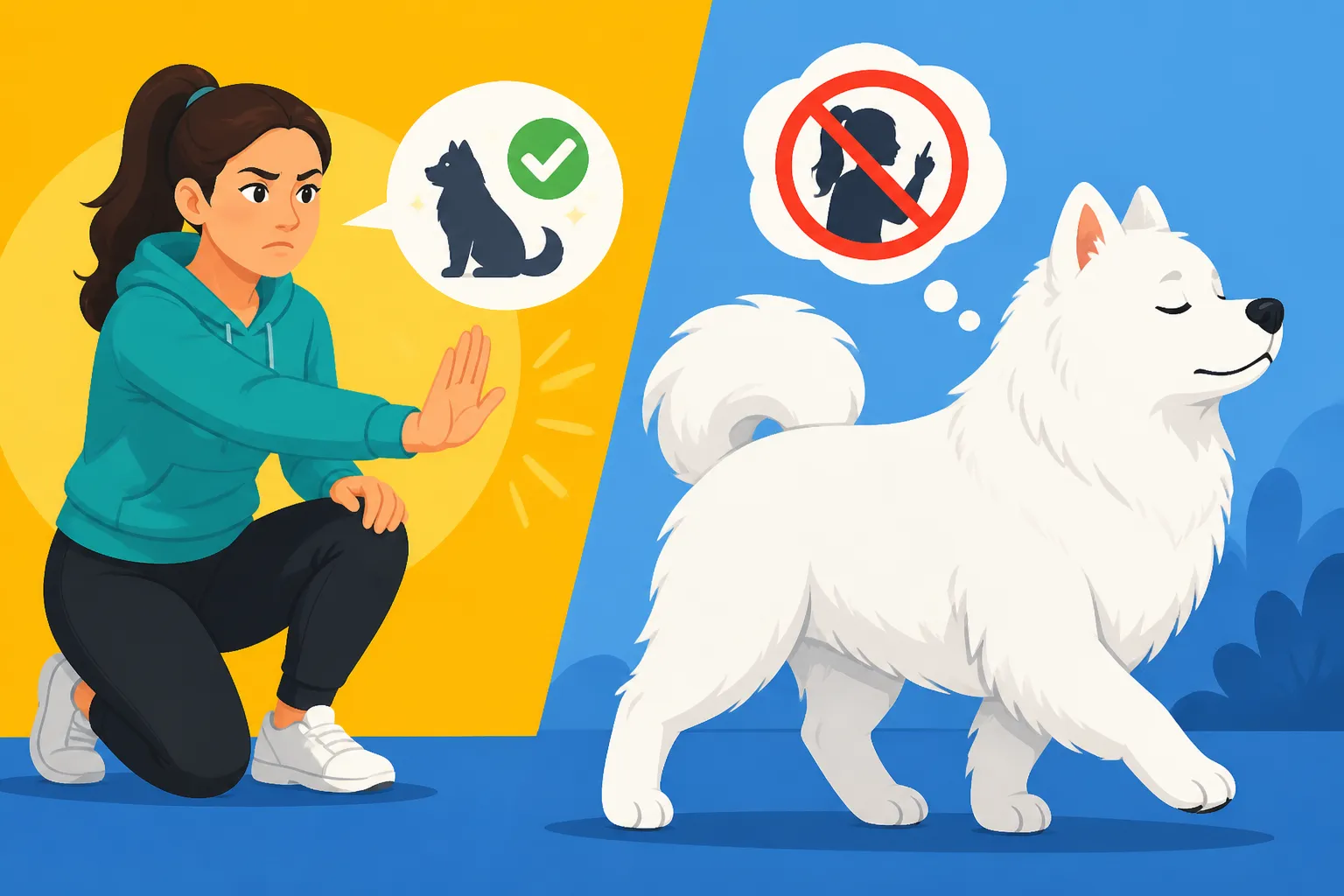
Every time your Samoyed ignores a cue and you don't follow through with the expectation, you inadvertently reinforce the idea that the cue is optional. This doesn't mean you have to be harsh, but it does mean being consistent and ensuring that complying with the cue is always more rewarding than ignoring it, especially in the early stages of generalization. Why Raising Your Voice Fails on a Samoyed highlights that negative reinforcement is rarely effective with this sensitive breed, making positive, consistent reinforcement even more crucial.
High Distraction Environments
This goes hand-in-hand with generalization, but it's worth highlighting as a primary challenge. Samoyeds have keen senses; their ears are always swiveling, their noses are always working. A rustling leaf, a distant bark, the smell of a forgotten picnic—all these are intensely interesting to your dog. When these distractions are present, your verbal cue becomes just one more sound in a symphony of fascinating stimuli. Your Samoyed might literally not even register your voice as important above the siren call of a squirrel.
It's not that they don't love you or want to please you; it's that their instincts and senses are highly engaged by their environment. Asking for a reliable "heel" command on a quiet street is one thing; asking for it when a group of children are yelling and running past is entirely another. The value of your voice and the reward you offer needs to significantly outweigh the value of the distraction. This often means needing higher-value treats or engaging games to capture their attention.
Age and Attention Spans
Just like human toddlers, puppies have incredibly short attention spans. A Samoyed puppy, full of boundless energy and curiosity, might know "sit" but quickly forget it the moment a butterfly flutters by. As they mature, their attention span grows, but they still have periods where they "test the waters" or regress slightly in their training, especially during adolescence. The Age a Samoyed Finally Matures is an important read, as you'll realize they remain quite puppy-like in some ways for longer than many other breeds.
Even senior Samoyeds can experience changes. While often more settled, they might have reduced hearing or cognitive decline that makes them genuinely miss a cue. If your once-reliable older Samoyed starts ignoring commands, a vet check-up to rule out physical causes like hearing loss is always a good idea.
| Reason for Ignoring Cue | Description | Samoyed Perspective |
|---|---|---|
| Lack of Generalization | Cue learned in one setting, not understood in another. | "This isn't the kitchen, so 'sit' might mean something different here, or maybe nothing at all." |
| Inconsistent Reinforcement | Cue sometimes rewarded, sometimes not. | "Why should I bother? The payoff isn't guaranteed, and that smell over there is amazing." |
| High Distraction | Competing environmental stimuli are more interesting/rewarding. | "Your voice is one of many sounds; this squirrel is right here and super exciting!" |
| Low Motivation | Reward for compliance isn't high enough compared to other options. | "A piece of kibble vs. exploring this new sniff-spot? Easy choice." |
| Cue Poisoning | Cue associated with something unpleasant (e.g., end of fun, scolding). | "Oh no, 'come' means the fun is over. I'll just keep playing." |
| Physical Discomfort | Dog is in pain or uncomfortable doing the requested action. | "My hip aches when I sit quickly like that, so I'll just stand." |
| Hearing Loss | Dog genuinely cannot hear the cue. | "Did you say something? I didn't hear you over the birds." |
Rebuilding the Connection: Strategies for Reliable Recall and Cues
Okay, so we understand why your Samoyed might be pulling a disappearing act when it comes to listening. Now, let's talk about how to turn things around. The good news is that with consistency, high-value motivation, and a bit of patience, you absolutely can improve your Samoyed's reliability.
Start Fresh, Go Back to Basics
Sometimes, the best thing to do is to "reboot" a problematic cue, especially if it's become "poisoned" (meaning the dog associates it with something unpleasant, like the end of playtime). Go back to a quiet, low-distraction environment. Use a brand new word or sound for the cue if the old one has too much baggage. For instance, if "come" is unreliable, try "here" or a whistle. Practice in short, positive bursts. How Many Repetitions a Samoyed Needs is important here – they're smart, but repetition in varied contexts is key.
Use incredibly high-value rewards – not just kibble, but cooked chicken, cheese, or even small pieces of hot dogs. Make responding to you the absolute best thing that could possibly happen. This sets the foundation for proofing in more challenging environments. Online training resources, like those offered by BAXTER & Bella, often provide structured approaches for re-teaching cues from the ground up, emphasizing positive reinforcement and gradual distraction introduction.
Mastering Proofing and Generalization
This is where the magic happens for an independent breed like the Samoyed. Proofing means practicing known cues in increasingly distracting environments.
- Introduce Distractions Gradually: Start with very mild distractions, like a family member walking by quietly. Reward heavily for success.
- Vary Locations: Practice in every room of your house, then the yard, then a quiet street, then a slightly busier park. Each new location is a new learning opportunity.
- Increase Duration and Distance: Once a cue is reliable, gradually increase how long you ask them to hold it (for a "stay") or how far away you are when you give the cue (for "come").
- Practice with Real-World Scenarios: If your Samoyed ignores "come" around other dogs, practice "come" at a distance from another dog, slowly reducing the distance as they get more reliable. A long line, available on platforms like Amazon, is invaluable for practicing recall in open, distracting areas while keeping your Samoyed safe.
Remember, every step up in distraction or environment requires going back to super high-value rewards. It’s not about rushing; it’s about building a solid foundation of understanding and motivation in every new scenario. Whether Short Sessions Suit a Samoyed is a definitive yes – keep it brief, positive, and fun!
Elevate Your Rewards
Seriously, those standard dry biscuits might cut it in your living room, but they won't compete with a rabbit scent. For situations where you need your Samoyed to respond reliably, you need to pull out the big guns. Think about what your Samoyed absolutely goes wild for. Is it squeaky toys? Bits of steak? A vigorous game of tug?
Rotate your rewards so your Samoyed never knows what amazing treat or game is coming next. This keeps them engaged and eager to respond. Make yourself the source of all good things! If they associate you with the absolute best treats and the most fun games, they'll be far more likely to tune out distractions and tune into you. Whether a Samoyed Gets Bored of Drilling is a real concern, so making training dynamic and rewarding is crucial.
Build Engagement and a Strong Bond
Beyond treats, a strong relationship built on trust and fun is your greatest asset. Play games with your Samoyed – fetch, tug, hide-and-seek. The more they enjoy interacting with you, the more likely they are to choose you over an environmental distraction. Practice focus exercises where you hold a treat to your nose and reward them for making eye contact, gradually increasing the duration of eye contact. This teaches them to "check in" with you, even when there's a lot going on around them.
Consistency isn't just about the cues; it's about consistently being a positive, engaging, and reliable presence in their life. Your Samoyed wants to be with you; Why a Samoyed Wants to Be in the Room With You highlights this foundational trait. Leverage that desire to make listening to you a natural extension of your bond.
When to Call in the Cavalry: Seeking Expert Guidance
Even with the best intentions and consistent effort, sometimes you hit a wall. There's no shame in seeking professional help; in fact, it's a responsible and often necessary step for complex behavioral challenges or when you just feel stuck. Samoyeds, with their unique blend of independence and intelligence, can sometimes present training puzzles that benefit from an experienced eye.
Signs You Might Need a Professional Trainer
If you're finding that despite all your efforts, your Samoyed's selective hearing is worsening, or if it's leading to safety concerns (like an unreliable recall near traffic), it's time to consider a professional. Here are some indicators:
- No Progress: You've tried various methods, increased rewards, and practiced diligently, but the cue remains unreliable in any but the lowest distraction settings.
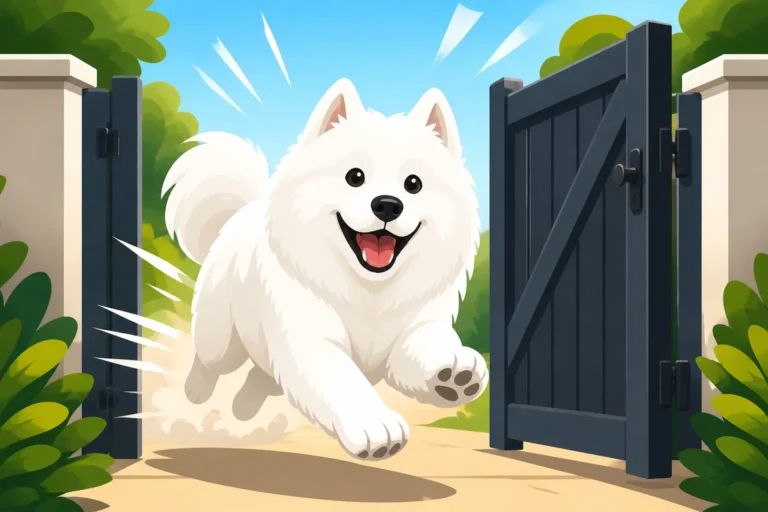
- Safety Concerns: Their refusal to listen puts them or others at risk, such as bolting out the door or refusing to come back in an unsafe area.
- Aggression or Fear: If the "ignoring" is accompanied by signs of fear, anxiety, or aggression, especially in specific situations, a qualified professional can help address the underlying emotional state.
- Frustration and Stress: If you find yourself constantly frustrated, angry, or feeling like you're damaging your bond with your Samoyed due to training struggles, a trainer can provide a fresh perspective and effective strategies.
- Complex Behavioral Issues: If it's more than just ignoring a cue, but a broader pattern of undesirable behaviors, a behaviorist might be needed.
Whether a Samoyed Owner Needs a Professional Trainer is a question many owners ponder, and often, the answer is yes, at least for a few sessions to troubleshoot specific issues.
Choosing the Right Professional
Not all trainers are created equal, and it's especially important to find someone who understands northern breeds and uses positive reinforcement methods. Avoid trainers who rely on harsh corrections, intimidation, or punishment, as these methods are generally ineffective for Samoyeds and can damage your bond. Look for trainers who are:
- Certified and Experienced: Look for certifications (e.g., CPDT-KA, KPA-CTP) and ask about their experience with Samoyeds or other independent working breeds.
- Positive Reinforcement Based: They should focus on rewarding desired behaviors and managing the environment to prevent undesired ones, rather than punishing mistakes.
- Transparent: They should be happy to discuss their methods, allow you to observe a class or session, and clearly outline their training philosophy.
- Communicative: A good trainer will teach you how to train your dog, empowering you with the skills and understanding you need.
A certified professional can help you troubleshoot specific scenarios, identify subtle body language cues you might be missing, and design a tailored training plan that respects your Samoyed's unique personality. They can also provide guidance on advanced techniques like distraction proofing and fading lures, ensuring your Samoyed develops truly reliable responses to your cues, no matter the situation.
Disclaimer
This article is for general informational purposes only and does not constitute professional advice. Laws, prices and regulations vary by location and change over time. Consult a qualified professional for guidance on your specific situation.