Signs a Samoyed Is Bloating
Symptoms of bloat in Samoyeds include restlessness, dry heaving, and excessive drooling that indicate this dangerous medical emergency.
Know what to watch for.
Breed-specific conditions, screening and DNA tests, what surgery actually costs, and the daily habits that stretch a healthy lifespan.
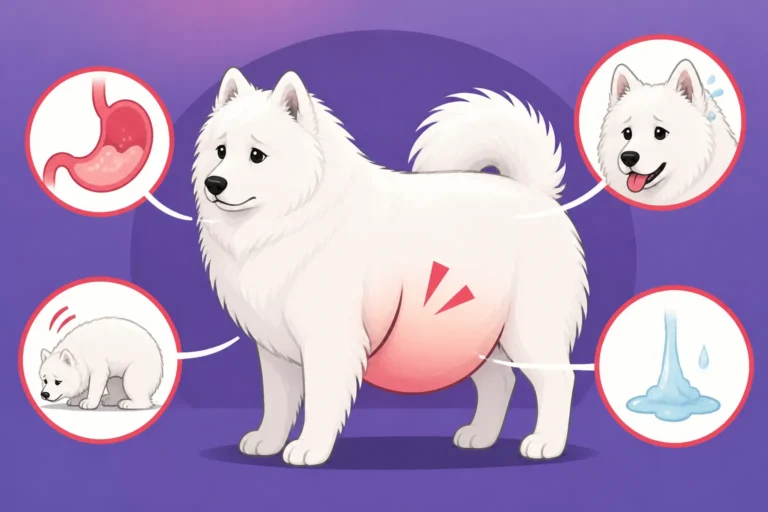
Symptoms of bloat in Samoyeds include restlessness, dry heaving, and excessive drooling that indicate this dangerous medical emergency.
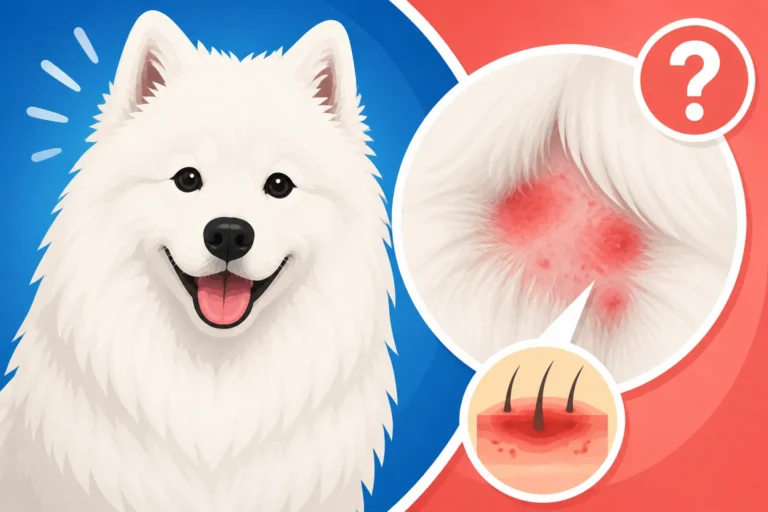
Samoyed hot spots develop under dense double coats when moisture gets trapped, causing painful skin infections and constant itching.

Zinc responsive dermatosis in Samoyeds causes skin lesions and hair thinning because their bodies struggle with zinc absorption.
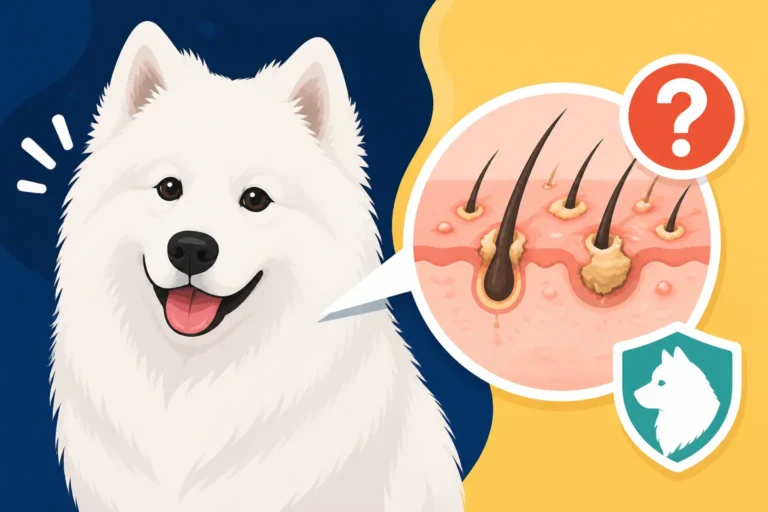
Sebaceous Adenitis in Samoyeds is an autoimmune skin disease that destroys sebaceous glands, causing dry skin and hair loss.

Autoimmune skin diseases in Samoyeds, including sebaceous adenitis, explained with symptoms and management steps.

Addison disease causes adrenal glands to fail, producing too little cortisol and aldosterone to regulate stress and electrolytes.
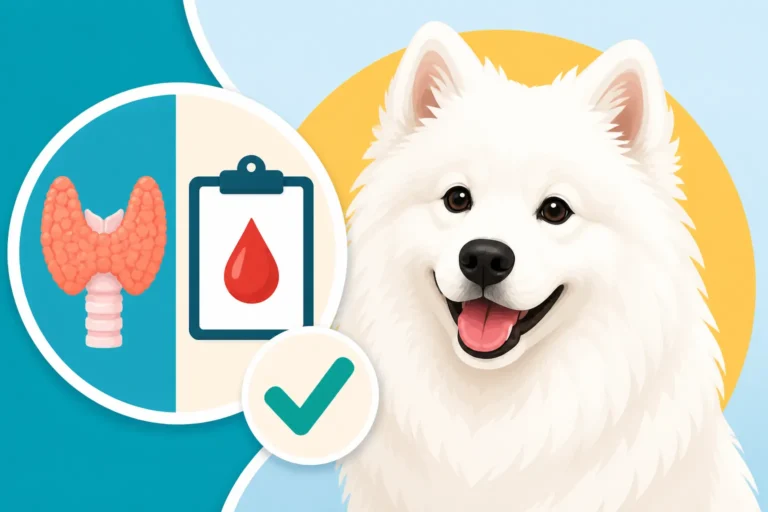
Samoyed thyroid health requires regular bloodwork because the breed is genetically predisposed to developing hypothyroidism and autoimmune thyroiditis.
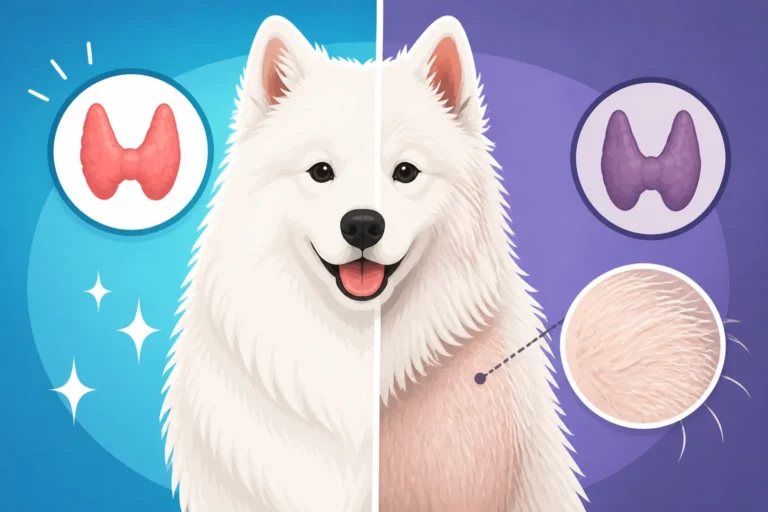
Hypothyroidism in Samoyeds slows hair growth cycles, causing a dull coat and prolonged resting phases in follicles.
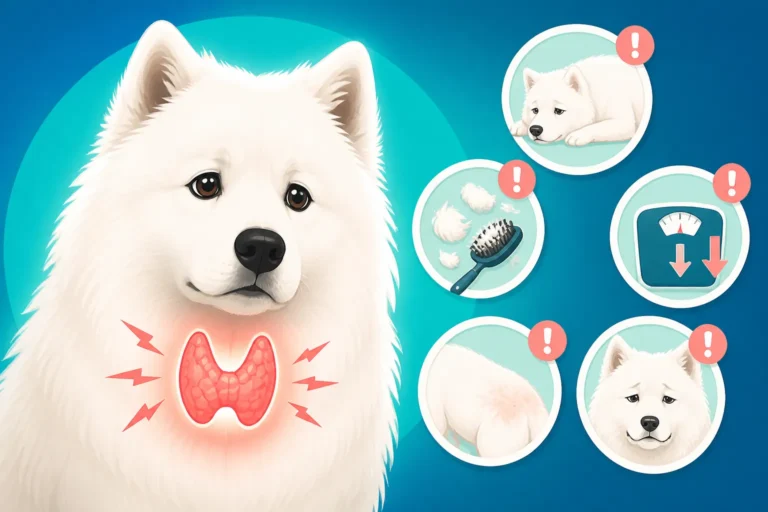
Hypothyroidism signs in Samoyeds include decreased activity, lethargy, and behavioral changes caused by failing hormone production.
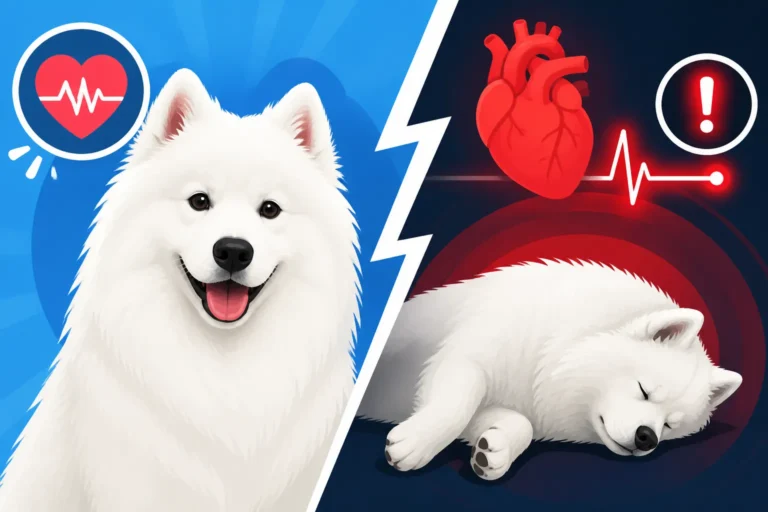
Samoyed heart disease risks, sudden death causes, subaortic stenosis, dilated cardiomyopathy, and warning signs for owners.