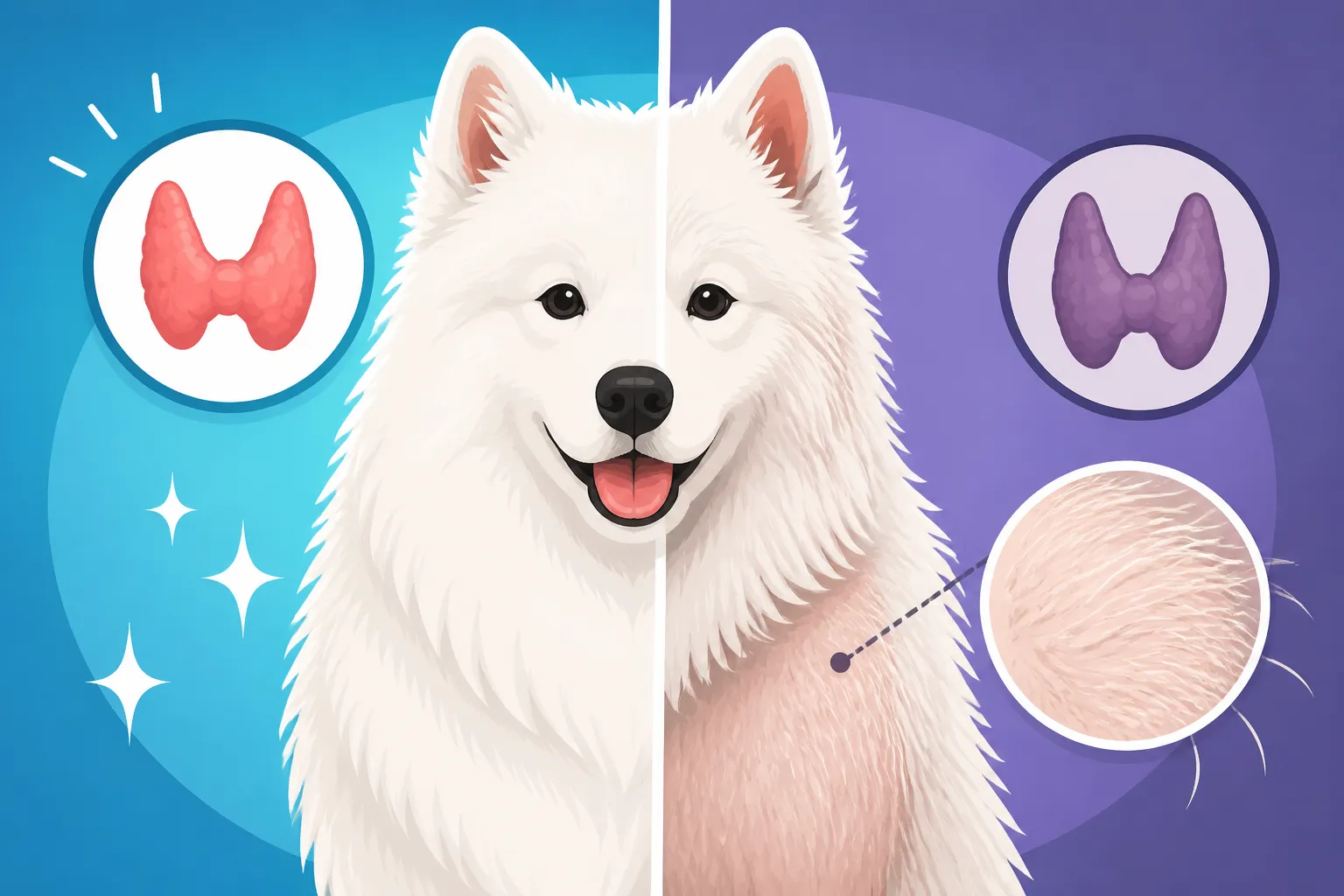
Whether a Samoyed’s Coat Thins With Thyroid Disease
It’s a truly disheartening moment for any Samoyed owner when you notice changes in that glorious, fluffy coat. What was once a pristine cloud of white fur might start looking a little dull, feeling thinner, or just generally less magnificent. We all fret over our Samoyeds' health, and when their most iconic feature—their coat—starts to falter, it’s only natural to wonder if something serious is going on. A common and very valid concern that often arises is whether a thinning coat could be linked to thyroid disease. This guide will delve into that very question, helping you understand how hypothyroidism can affect your Samoyed's unique fur and what other signs to watch for.
Understanding Hypothyroidism in Samoyeds and Its Coat Impact
Hypothyroidism is a condition where your dog's thyroid gland, a small but mighty gland nestled in their neck, doesn't produce enough thyroid hormones. These hormones are like the conductors of an orchestra, crucial for regulating nearly every metabolic process in the body, which, you guessed it, includes maintaining healthy skin and a luxurious coat. While this condition can affect any dog breed, Samoyeds, along with other larger and medium-sized breeds such as Golden Retrievers and Doberman Pinschers, are genetically predisposed, making it a condition that alert owners should always be aware of. It often creeps up slowly, with symptoms that can be so subtle they're easily brushed off as mere signs of aging or seasonal shifts.
When we talk about the thyroid's specific role in a Samoyed's coat, we're really focusing on cell turnover and the diligent work of healthy hair follicles. Thyroid hormones are directly responsible for regulating the growth cycles of hair. When these vital hormones are in short supply, these cycles slow down significantly. Hair follicles spend an abnormally long time in the resting phase (telogen), while the active growth phase (anagen) is shortened or delayed. This doesn't just mean fewer new hairs are growing; it also impacts the existing hair, making it weaker, more prone to breakage, and causing it to shed improperly. This metabolic slowdown also takes a toll on the skin itself, reducing its natural resilience and making it more susceptible to various issues that further degrade the coat's quality.
So, to directly answer the question: yes, a Samoyed's coat absolutely can thin with thyroid disease. In fact, it's often one of the most noticeable—yet sometimes tragically overlooked—early indicators. You might not wake up one morning to find your Samoyed with large bald patches. Instead, you'll likely observe a gradual, diffuse thinning that makes the coat appear less dense, less voluminous, and generally duller. For Samoyed owners, whose dogs are literally celebrated for their abundant, cloud-like white fur, this change can be particularly heartbreaking. Seeing that characteristic "stand-off" quality diminish is a significant red flag that something deeper might be amiss, and it's certainly not something to simply ignore. Any significant or prolonged changes in your dog's coat, especially thinning, warrant a professional look as they often signal an underlying health concern.
Recognizing the Subtle Signs of Coat Changes Linked to Hypothyroidism
Spotting coat changes in a Samoyed with incipient hypothyroidism isn't always about dramatic hair loss. Given their naturally dense fur, "thinning" can show up in several nuanced ways that might not immediately scream "problem" to the untrained eye. You might first notice a shift in texture. That beloved soft, cottony undercoat and slightly coarser guard hairs might start to feel drier, more brittle, or in some instances, even surprisingly greasy in patches. The iconic "Samoyed stand-off" coat, where the fur literally poofs out from the body, may begin to lie flatter, losing its buoyant fluffiness. This loss of loft can make your dog appear somewhat smaller or less robust than their usual majestic self.
Certain areas are often affected earlier or more noticeably than others. Keep a close eye on the flanks, the backs of the hind legs, and especially the tail. The tail, in particular, might lose its signature plumed appearance, becoming sparser or taking on a rather sad, "rat-tailed" look. You might also observe an increase in shedding, but this isn't the healthy, predictable shedding associated with a normal seasonal When a Samoyed Blows Its Coat. Instead, it's a persistent, unhealthy shedding where the individual hairs lack vitality. Guard hairs may break easily, and the undercoat might come out in clumps that feel less dense and springy than usual. The skin underneath can also provide clues, becoming dry, flaky, or scaly, and sometimes developing a greasy feel or even a peculiar, musty odor.
A telling, albeit subtle, sign is delayed or poor hair regrowth after a normal shed, an injury, or following a medical procedure where fur was shaved (like for an IV line). If that patch of hair seems to be taking an unusually long time to return, or if it comes back sparse and dull, it's a significant indicator. Occasionally, the coat color itself might subtly shift, with brilliant white fur appearing dingier or developing a yellowish tint that just won't wash out. Many owners lament that their dog's coat has simply lost its "sparkle," and they're intuitively right – that sparkle is often a reflection of internal health. A declining thyroid function can absolutely dim that shine. It's always wise to regularly assess your dog's coat, particularly as a Samoyed approaches the age when they are considered a senior, as the incidence of thyroid issues tends to increase with age.
| Coat Characteristic | Healthy Samoyed Coat | Hypothyroid Samoyed Coat (Early/Moderate) |
|---|---|---|
| Density | Dense, plush, "stand-off" | Thinner, flatter, less voluminous |
| Texture | Soft undercoat, slightly coarse guard hairs | Dry, brittle, sometimes greasy, dull |
| Luster | Bright, vibrant white (or biscuit/cream) | Dull, lacking shine, sometimes yellowish or dingy |
| Shedding | Seasonal "coat blow" (heavy but healthy) | Diffuse, unhealthy, persistent shedding; poor regrowth |
| Areas Affected | Evenly thick across the body | Often thins on flanks, back of thighs, tail ("rat tail") |
| Skin Quality | Supple, clear, healthy, resilient | Dry, flaky, scaly, sometimes greasy or hyperpigmented |
| Odor | Generally clean, "doggy" smell when wet | Can develop a distinct musty or "yeasty" odor |
Distinguishing Thyroid-Related Thinning from Other Causes
When you spot changes in your Samoyed’s coat, it’s incredibly easy to jump to conclusions, but it’s vital to remember that a thinning coat isn’t exclusively a symptom of thyroid disease. There’s a whole host of other potential culprits that could be impacting your Samoyed's magnificent fur. Nutritional deficiencies, various allergies (environmental or food-related), bothersome parasites like fleas or mites, fungal infections (think ringworm), hormonal conditions such as Cushing's disease, or even just the natural progression of old age can all contribute to a decline in coat quality. For example, some older Samoyeds will naturally experience a degree of coat thinning as part of How an Old Samoyed's Coat Changes or as their overall metabolism gently slows down. However, this natural aging thinning is typically less dramatic and generally doesn’t come bundled with other significant health symptoms.
The key to differentiation often lies in the pattern of hair loss and the presence of other accompanying symptoms. Thyroid-related coat thinning usually presents as symmetrical (meaning it affects both sides of the body in a similar way) and, crucially, it’s non-itchy. If your Samoyed is scratching themselves relentlessly, or if you observe obvious bald patches that are red, inflamed, or irritated, those signs are much more indicative of allergies, parasitic infestations, or skin infections. It’s worth noting, however, that a dog with hypothyroidism can also develop secondary skin infections because their skin health is compromised, so the situation isn't always cut and dry. This intricate web of possibilities highlights why a comprehensive veterinary examination is absolutely non-negotiable. Trying to self-diagnose based solely on coat appearance can lead you down the wrong path and delay proper treatment.
Your veterinarian will meticulously gather information, looking at the entire picture: your dog's age, their overall health history, current diet, environmental factors, and any other symptoms you’ve noticed. They might inquire about recent diet changes, new supplements you've introduced, or any potential exposure to allergens. It’s also important to factor in the time of year; a Samoyed in the midst of a major How Long a Samoyed's Coat Blow Lasts will naturally appear much thinner and shed profusely, which is a perfectly normal process. The critical distinction is if the thinning occurs outside these expected seasonal cycles, if hair regrowth is noticeably poor, and especially if these coat changes are accompanied by other tell-tale signs of low thyroid function.
Beyond the Coat: Other Hypothyroidism Symptoms in Samoyeds
While coat thinning is undoubtedly a very visible and often concerning symptom, hypothyroidism rarely presents with just changes in the fur. Because thyroid hormones exert their influence over virtually every system in the body, you'll almost always see a cluster of other symptoms that, when considered together, start to form a clearer picture of the underlying problem. One of the most frequently reported complaints from owners is a pervasive slowing down of their dog's activity level. Your once boundless Samoyed, famous for their endless energy, might suddenly seem lethargic, less enthusiastic about walks or playtime, and generally just "lazy" or subdued. They might spend more time sleeping, move with less vigor, and seem less interested in activities they previously adored.
Unexplained weight gain, despite no changes in their diet or exercise routine, is another classic hallmark of hypothyroidism. These dogs aren't necessarily ravenous or overeating; their basal metabolic rate has simply slowed to a crawl. They convert food to fat more readily and burn fewer calories. This particular symptom can be deceptively hard to spot in a fluffy Samoyed, where a few extra pounds can easily be hidden beneath that luxurious, thick fur. This is precisely why regularly Feeling for Ribs Under a Samoyed's Coat is so incredibly important, regardless of how large or small your dog appears. An affected Samoyed might also develop an unusual intolerance to cold temperatures, seeking out warm spots more frequently, even inside a comfortable home. This is a direct result of their reduced metabolic rate, which compromises their ability to generate and regulate body heat.
Less common, but still possible, are neurological signs, which can include generalized weakness, muscle stiffness, or even a subtle "sad" expression due around the eyes, sometimes referred to as a "tragic face," with drooping eyelids and puffiness. Reproductive problems can also be linked to hypothyroidism, although this is primarily a concern for breeding animals. Behaviorally, some owners report a noticeable shift: their usually cheerful and outgoing Samoyeds might become withdrawn, anxious, or even display uncharacteristic irritability or aggression. Given the breed’s tendency for How a Samoyed Hides Illness Behind a Smile, it is absolutely crucial to pay keen attention to any and all shifts in their demeanor, energy levels, and overall zest for life.
The Importance of a Holistic View of Your Samoyed's Health
It's natural to fixate on a single symptom, especially one as noticeable as a thinning coat, but with hypothyroidism, it truly is the collective constellation of symptoms that provides the most accurate diagnosis. Let's consider a hypothetical but very real scenario: your 7-year-old Samoyed, Sasha, was always famous for her exuberant barks and joyful jumps when you arrived home. Lately, however, she's been slow to get up, her tail wags with less enthusiasm, and she now spends most of her afternoons napping. On top of this, you’ve noticed her glorious white fur isn't quite as fluffy as it once was, particularly around her hindquarters, and she seems to pant more heavily, even when the house isn’t particularly warm. This combination of lethargy, unexplained weight gain, and coat changes forms a far more compelling picture of hypothyroidism than any single sign observed in isolation.
These symptoms can often be quite vague and might easily be mistaken for normal aging or other health conditions. For example, lethargy could point to arthritis, and weight gain might simply be attributed to overfeeding. However, when these symptoms begin to accumulate, especially the non-itchy, symmetrical coat thinning coupled with reduced energy and cold intolerance, it strongly suggests a systemic issue like hypothyroidism. Your veterinarian will meticulously consider all these observations when determining the next course of action, which will almost invariably involve specific blood tests. This comprehensive, holistic approach is precisely what enables an accurate diagnosis and, subsequently, effective treatment, ultimately helping to restore your Samoyed to their fluffy, energetic, and happy self.
This holistic perspective also underscores why regular veterinary check-ups are so critically important, particularly as your Samoyed gracefully enters their senior years. A skilled veterinarian can often detect subtle signs that you, seeing your beloved companion every single day, might inadvertently miss. They might notice a slight thickening of the skin, a change in muscle tone, or an almost imperceptible dullness in the coat that prompts further investigation. Early detection is always paramount, not just for improving your dog's quality of life but also because many of these symptoms can worsen significantly over time, leading to more complex and debilitating health issues if left untreated.
Diagnosing and Managing Thyroid Disease in Your Samoyed
If you've noticed a collection of symptoms in your Samoyed that make you suspect hypothyroidism, your very first and most important step is to schedule a visit with your veterinarian. During this appointment, your vet will conduct a thorough physical examination, attentively listen to all your observations and concerns, and almost certainly recommend specific blood tests. The primary diagnostic tool for hypothyroidism is a comprehensive thyroid panel, which measures various thyroid hormone levels in the blood, including total T4 (thyroxine), free T4, and TSH (thyroid-stimulating hormone). Interpreting these results can sometimes be a bit intricate, as other non-thyroidal illnesses or certain medications can occasionally influence thyroid hormone levels, leading to confusing or borderline readings.
A common pitfall to avoid is relying solely on a single T4 measurement. Most experienced veterinarians will recommend a full thyroid panel, often including an autoantibody test (which looks for antibodies that attack the thyroid gland), to obtain the most accurate and complete picture of your dog's thyroid function. For Samoyeds, given their known genetic predisposition to hypothyroidism, a comprehensive panel is even more strongly advisable. In some cases, if the initial results are ambiguous or borderline, a follow-up test or even a referral to an internal medicine specialist might be recommended. Don't hesitate to ask your vet questions about the specific tests they are running and the rationale behind each one. Being an informed participant in your dog's care allows you to be a much more effective advocate for their health. You might also want to discuss Whether a Samoyed Needs Yearly Thyroid Bloodwork as a proactive measure in their routine preventative care.
Once a diagnosis of hypothyroidism is confirmed, the condition is typically managed with daily oral thyroid hormone replacement medication, most commonly levothyroxine. This medication is generally administered for the remainder of your Samoyed's life. The dosage will be carefully customized to your dog's individual needs and will be adjusted based on regular follow-up blood tests, which usually occur a few weeks after treatment begins and then periodically thereafter. Fortunately, this medication is often quite affordable, especially when considering its profound, life-changing impact on your dog’s well-being. Many pet insurance providers, such as Healthy Paws, offer excellent coverage that can help mitigate the ongoing costs of these prescription medications and regular vet check-ups, which can provide immense financial relief to owners managing chronic health conditions.
Expecting Recovery and Ongoing Care
With consistent daily medication, the vast majority of Samoyeds diagnosed with hypothyroidism show truly remarkable improvement. You can often expect to see a significant boost in their energy levels within just a few weeks, with many owners exclaiming that their dogs are acting like playful puppies again! However, it's important to set realistic expectations for coat recovery. The glorious coat changes will take considerably longer to resolve. It can often be several months, and sometimes even up to a full year, for that magnificent double coat to fully regenerate and regain its former lushness and shine. This extended timeline is due to the inherently slow nature of hair growth cycles; the existing damaged hair needs to shed out, making way for healthy new growth.
Throughout this recovery period, it's crucial to maintain excellent general care, including consistent grooming practices, feeding a high-quality, nutritious diet, and ensuring your Samoyed receives appropriate, regular exercise. Your veterinarian might also recommend specific dietary adjustments, particularly if your Samoyed gained a significant amount of weight prior to diagnosis. Regular re-checks of their thyroid hormone levels are absolutely essential to ensure the medication dosage remains perfectly optimal. Too much hormone can cause its own set of problems, while too little won't adequately resolve the symptoms. It’s a delicate balance, and your vet will be your best guide through this process. This ongoing, collaborative partnership with your veterinarian is key to ensuring your Samoyed enjoys a long, happy, and healthy life with their condition effectively controlled.
Remember, the treatment of hypothyroidism extends far beyond merely aesthetic improvements. While the return of that beautiful, fluffy coat is certainly a welcome bonus, the primary goal is to restore your Samoyed's overall health, vitality, and quality of life. An untreated hypothyroid dog can face serious health complications over time, affecting various organs and systems, so proactive and consistent management is truly essential. Consider this a long-term commitment to your Samoyed's well-being, and having a reliable pet insurance plan, such as one from Healthy Paws, can genuinely help manage those inevitable long-term veterinary expenses, allowing you to prioritize their health and happiness without undue financial stress.
The Broader Implications of Thyroid Health
Beyond the immediate and noticeable concerns of coat quality and energy levels, maintaining optimal thyroid health in your Samoyed carries profound broader implications for their overall lifespan and long-term well-being. Uncontrolled or poorly managed hypothyroidism can insidiously impact other vital body systems, potentially compromising heart health, weakening immune function, and even affecting cognitive processes over time. While the average The Twelve to Fourteen Years a Samoyed Lives, an untreated chronic condition like hypothyroidism can undoubtedly shorten that precious time or, at the very least, significantly diminish their quality of life during those years.
Regular and consistent health screenings, which should absolutely include thyroid checks, become increasingly important as your Samoyed begins to approach middle age. These proactive measures are a cornerstone of responsible ownership, helping to identify and address health issues before they escalate into severe or complex problems. For those involved in breeding, understanding the full scope of The Health Tests Both Samoyed Parents Should Have is critical, and while the exact genetic markers for canine hypothyroidism are often complex and not always straightforward, knowing the history of the disease in a dog’s lines is invaluable. For pet owners, it simply means cultivating a habit of keen observation and proactive engagement with their vet. If you ever have any concerns—even seemingly minor ones—about your Samoyed’s coat, energy, behavior, or general health, never hesitate to bring them to your veterinarian’s attention. A relatively simple blood test could be the crucial first step to getting your magnificent Samoyed back to feeling and looking their absolute best, complete with their joyful "Sammy smile" and glorious, healthy coat.
Disclaimer
This article provides general information and is not a substitute for professional veterinary advice. Always consult with a qualified veterinarian for any health concerns or before making any decisions about your pet's care.