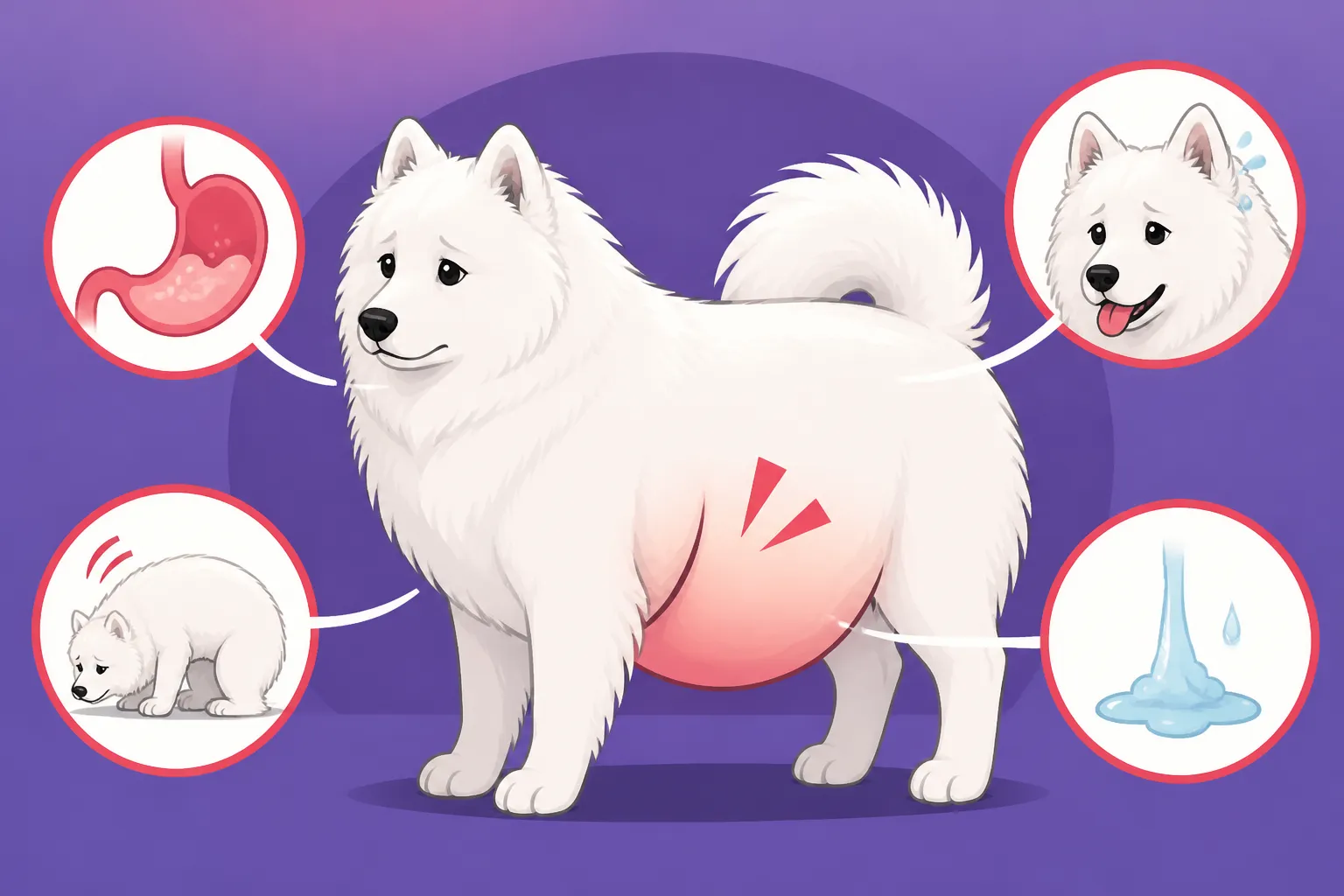
Signs a Samoyed Is Bloating
The sudden, alarming onset of bloat, or Gastric Dilatation-Volvulus (GDV), is every Samoyed owner's worst nightmare. It's a terrifying condition where your beloved furry cloud can go from perfectly fine to critically ill in a blink, often with symptoms that are easily missed or misunderstood until it's too late. This comprehensive guide is here to walk you through the subtle and unmistakable signs of bloat in Samoyeds, helping you recognize this life-threatening emergency and act swiftly.
Understanding Bloat and Why Samoyeds Are at High Risk
Bloat isn't just a tummy ache after eating too much; it's a rapidly progressing, life-threatening condition known medically as Gastric Dilatation-Volvulus, or GDV. In GDV, a dog's stomach fills with gas, food, or fluid, causing it to expand (dilatation). This expansion then puts pressure on other organs and blood vessels. The terrifying part is that the stomach can then twist on its axis (volvulus), cutting off blood flow to the stomach itself and potentially blocking the entrance and exit of the stomach. This twist is what makes it so incredibly dangerous and often fatal without immediate intervention.
Samoyeds, with their deep chests and large stature, are unfortunately among the breeds considered to be at a higher risk for developing GDV. The exact cause isn't always clear, but factors like eating one large meal a day, eating rapidly, genetics, and stress can play a role. When a Samoyed's stomach dilates and twists, it’s not just uncomfortable; it’s a medical emergency that can lead to shock, organ damage, and death within hours. This is why recognizing the signs early is so critically important. Every minute counts when dealing with this condition, and delaying treatment can drastically reduce survival chances.
Identifying Early and Subtle Signs of Bloat in Your Samoyed
One of the biggest challenges with bloat, especially in our fluffy Samoyeds, is that the initial signs can be incredibly subtle and easily dismissed as general discomfort or an upset stomach. Because their luxurious double coat can effectively camouflage some of the physical changes, you really need to be tuned into their behavior. Don't underestimate your Samoyed's stoic nature; they often try to hide discomfort until it's significant, which means by the time they're showing obvious pain, things might already be very serious. Understanding How a Samoyed Hides Illness Behind a Smile is key here.
Restlessness and Pacing
A Samoyed that's normally calm might become noticeably restless. They might pace around the house, unable to settle down in any comfortable position. Think about your dog's usual evening routine. Do they usually curl up for a nap after dinner? If they're constantly shifting, standing up, lying down, then standing again, or seem agitated, this is a red flag. It’s more than just being bored; it's an internal discomfort they can't relieve. You might notice them looking at their abdomen, almost as if trying to figure out what's wrong.
Unproductive Retching or Dry Heaving
This is perhaps one of the most classic early signs of bloat and one you absolutely cannot ignore. Your Samoyed might look like they’re trying to vomit, their body heaving, but nothing comes up, or perhaps just a small amount of foamy saliva. This happens because the twisted stomach prevents anything from leaving it, even if the dog is trying to expel gas or food. It’s agonizing for them and a clear indicator of a blocked digestive tract. If you see your Samoyed repeatedly attempting to vomit without success, it's time to spring into action and call your vet immediately.
Excessive Drooling or Salivation
While not every drooling Samoyed has bloat, unusual or excessive drooling can be a symptom. If your dog is in pain or nauseous from the bloat, their salivary glands can go into overdrive. This might be accompanied by lip-licking or gulping, indicating an attempt to alleviate discomfort or nausea. Combined with restlessness or unproductive retching, excessive drooling elevates the concern level significantly. Keep an eye on how much drool is present and if it's out of character for your individual dog.
Changes in Abdominal Appearance or Sensitivity
This is where the Samoyed's coat can be a deceptive friend. A hugely distended belly is an obvious sign, but in the early stages, or for a very fluffy Samoyed, it might be hard to spot visually. Try to feel your Samoyed's abdomen gently. Is it taut or swollen to the touch? Does your dog react negatively when you try to palpate their belly, perhaps by whining, yelping, or pulling away? Any discomfort upon touching their abdomen, especially the area behind the ribs, should be taken seriously. Look for any asymmetry; sometimes one side of the abdomen might appear larger than the other, particularly the left side when viewed from behind.
Obvious and Advanced Symptoms Requiring Immediate Veterinary Care
When bloat progresses, the signs become much more apparent and frankly, terrifying. These are not symptoms to "wait and see" about; they demand immediate, emergency veterinary intervention. If you notice any of these, consider it a full-blown crisis and head to the nearest emergency clinic.
Visible Abdominal Distension
This is the hallmark sign, though as mentioned, it can be masked by a Samoyed's coat. However, as the stomach fills with more gas, the abdomen will become visibly swollen and hard, like a drum. It will often appear particularly large on the dog's left side, just behind the rib cage, but can affect the entire belly. If you gently tap on it, you might hear a hollow, drum-like sound. This distension indicates severe pressure within the abdomen and is a critical symptom.
Signs of Severe Pain and Discomfort
A Samoyed in advanced bloat will be in excruciating pain. They might groan, whine, or cry out. They might stand with their legs splayed, or hunch over, trying to find a position that offers even a modicum of relief. Their breathing might become shallow and rapid as the enlarged stomach presses on their diaphragm, making it difficult to expand their lungs. Their gums might appear pale or even blueish if oxygen flow is severely compromised. This level of discomfort is unmistakable and requires immediate action.
Weakness, Collapse, and Shock
As bloat progresses, your Samoyed's body will go into shock. This is due to the decreased blood flow back to the heart and other vital organs. You might notice your dog becoming very weak, lethargic, or even collapsing. They might be unable to stand or walk properly. Their heart rate will likely be rapid, and their pulse weak. Their body temperature can drop, and their extremities might feel cold to the touch. This is a life-threatening stage, and without immediate medical attention, the outcome is often fatal. This stage reflects the extreme severity of the condition and indicates that precious time has been lost.
Respiratory Distress and Rapid Shallow Breathing
The enlarged stomach presses significantly on the diaphragm, which is the primary muscle involved in breathing. This makes it incredibly difficult for your Samoyed to take deep breaths. You'll observe rapid, shallow breathing, often with an increased effort. Their gums might turn pale, grey, or even bluish (cyanotic) due to lack of oxygen. This respiratory distress is a dire sign, indicating that the condition is compromising vital bodily functions.
What to Do if You Suspect Your Samoyed Has Bloat
If you even suspect your Samoyed has bloat, this is not the time for home remedies, waiting, or observing for a few hours. This is an immediate emergency.
Contact Your Veterinarian or Emergency Clinic Immediately
The very first thing you need to do is call your veterinarian or the nearest 24-hour emergency veterinary hospital. Do not waste a single second. Explain your concerns clearly: "My Samoyed is showing signs of bloat, specifically [mention 2-3 key symptoms like unproductive retching, restlessness, or distended belly]." They will guide you on the fastest way to bring your dog in and prepare their team for your arrival. Early communication can literally save minutes, and minutes save lives with GDV. Knowing What a Samoyed's Vet Bills Look Like for such an emergency can be daunting, but immediate care is non-negotiable.
Transport Your Samoyed Safely and Swiftly
Once you've made contact, get your Samoyed into your vehicle and drive carefully but quickly to the clinic. If your dog is large and struggling, you might need assistance carrying them. Try to keep them as comfortable as possible, but prioritize speed. Avoid any actions that might cause further distress or twisting, such as allowing them to jump or run. If possible, have someone call ahead again while you are en route to confirm your estimated arrival time. This ensures the veterinary team is fully prepared the moment you pull up.
Understand the Emergency Treatment Protocol
At the veterinary clinic, your Samoyed will undergo rapid assessment. This will likely include X-rays to confirm GDV, intravenous fluids to combat shock, and pain medication. The primary goal will be to decompress the stomach, often by inserting a tube down the esophagus or using a large-bore needle to release gas. Once stabilized, emergency surgery, called a gastropexy, is almost always recommended. During a gastropexy, the stomach is untwisted and then surgically tacked to the abdominal wall to prevent future episodes of volvulus. This procedure significantly reduces the risk of recurrence, though it doesn't prevent dilatation. The costs associated with such an emergency can be significant, often running into thousands of dollars. Having pet insurance, like a policy from Healthy Paws, can be an absolute lifesaver in these situations, helping you focus on your dog's recovery without the added stress of crushing vet bills. It’s worth looking into What Insuring a Samoyed Costs Monthly to be prepared for such unexpected events.
Post-Operative Care and Prevention
Even after successful surgery, your Samoyed will require intensive post-operative care, usually involving a few days of hospitalization. They'll be on pain management, antibiotics, and IV fluids. At home, you'll need to restrict their activity, monitor their incision, and follow a specific feeding protocol, typically smaller, more frequent meals. Your vet will provide detailed instructions. To minimize future risks, discuss dietary changes, slowing down eating (e.g., with a slow feeder bowl), and limiting exercise around meal times. While a gastropexy is effective at preventing the stomach from twisting again, it doesn't prevent the stomach from dilating (bloating with gas), so remaining vigilant for signs of discomfort is still important. Regular vet check-ups and understanding the nuances of Caring for a Samoyed Past Nine can also help catch other health issues early. Investing in a good pet insurance plan from a provider like Healthy Paws when your Samoyed is young can provide peace of mind for their entire life, covering a significant portion of unexpected veterinary costs for conditions like bloat.
Quick Reference: Bloat Symptoms in Samoyeds
This table offers a snapshot of the progression of bloat symptoms to help you quickly assess the situation.
| Symptom Category | Early/Subtle Signs | Advanced/Critical Signs |
|---|---|---|
| Behavior | Restlessness, pacing, difficulty settling | Severe agitation, collapse, inability to stand, groaning |
| Digestive | Unproductive retching/dry heaving, excessive drooling | Foamy saliva, attempts to vomit with no success, constipation |
| Abdomen | Mild abdominal discomfort, sensitivity to touch | Visibly distended, hard, drum-like abdomen, extreme pain on palpation |
| Respiration | Normal or slightly increased breathing rate | Rapid, shallow breathing, labored breaths, panting |
| Overall Health | Mild lethargy, discomfort | Weakness, pale/blue gums, rapid/weak pulse, signs of shock |
Remember, any combination of these symptoms, especially the early ones, warrants immediate veterinary consultation. Your Samoyed's life could depend on your quick observation and action.
Long-Term Management and Prevention Strategies
While bloat can feel like an unpredictable nightmare, there are practical steps you can take to reduce the risk for your Samoyed and manage their health proactively. The reality is that preventing GDV entirely is difficult given the genetic predisposition in breeds like Samoyeds, but managing risk factors is crucial.
Dietary Adjustments and Feeding Habits
One of the most impactful areas you can control is your Samoyed's diet and how they eat. Instead of feeding one large meal a day, break their daily food allowance into two or three smaller meals. This reduces the amount of food and gas in the stomach at any one time. Consider using a slow feeder bowl, like the Outward Hound Fun Feeder, or placing a large, clean rock (that your dog cannot swallow) in their bowl to prevent them from gulping down their food too quickly. Rapid eating often leads to ingesting excess air, which contributes to gas buildup. Some studies suggest that moistening kibble may reduce risk, but ensure it's not soaked to the point of fermentation. Also, avoid feeding from raised bowls unless specifically recommended by your vet for an individual health condition, as some research indicates this might actually increase the risk of bloat in deep-chested breeds.
Managing Exercise Around Meal Times
It's vital to avoid vigorous exercise, playing, or excited activities immediately before or after meals. A good rule of thumb is to wait at least an hour before and two hours after eating before engaging in any strenuous activity. This gives the stomach time to digest food calmly and reduces the chance of physical movements causing the stomach to twist or excessively fill with gas. A leisurely potty break is fine, but intense play or a long walk should be separated from mealtimes. This is part of a broader strategy for overall health, including preventing issues like Hip Dysplasia in a Samoyed.
Stress Reduction and Calm Environment
Stress can be a surprising trigger for bloat in some dogs. While it's hard to quantify, emotional distress or changes in routine can affect a dog's digestive system. Try to maintain a consistent routine for your Samoyed, especially around feeding times. Provide a calm, quiet environment for them to eat their meals. If your Samoyed experiences anxiety, discuss strategies with your vet or a certified professional dog trainer to help reduce their stress levels. This might involve environmental enrichment, training, or in some cases, veterinary-prescribed interventions. Remember, a happy Samoyed is generally a healthier Samoyed.
Prophylactic Gastropexy Consideration
For Samoyeds at extremely high risk, or those undergoing another abdominal surgery (like spaying or neutering), a prophylactic gastropexy can be considered. This is a preventative surgery where the stomach is tacked to the abdominal wall to prevent the volvulus (twisting) component of GDV. While it doesn't prevent the stomach from dilating (bloating), it prevents the more life-threatening twist. Discuss this option thoroughly with your veterinarian, weighing the risks and benefits of the surgery. If you're concerned about the costs of preventative measures or potential emergency surgeries, remember that pet insurance can provide substantial financial relief. Companies like Healthy Paws offer coverage that can help offset the expense of these procedures, making proactive health management more accessible. For other health concerns, knowing The COL4A5 Test Every Samoyed Buyer Should Ask About can also be critical.
Regular Health Monitoring
Keeping a close eye on your Samoyed's overall health and behavior is your best defense. Pay attention to changes in appetite, water intake (especially if you're watching for Signs a Samoyed Has Become Diabetic), energy levels, and bathroom habits. Regular veterinary check-ups are important for overall wellness and to catch any underlying conditions early. An alert owner who knows their dog's normal behavior is often the first line of defense against emergencies like bloat. By being proactive and informed, you give your Samoyed the best chance at a long, happy, and healthy life.
Disclaimer
This article is intended for informational purposes only and does not constitute veterinary advice. If you suspect your Samoyed is experiencing bloat or any other medical emergency, please contact your veterinarian or a local emergency veterinary clinic immediately. Do not attempt to diagnose or treat your pet yourself.