When a Samoyed Moves to Adult Food
Samoyed puppy food transition timing impacts bone development, joint health, and long term well-being during adolescence.
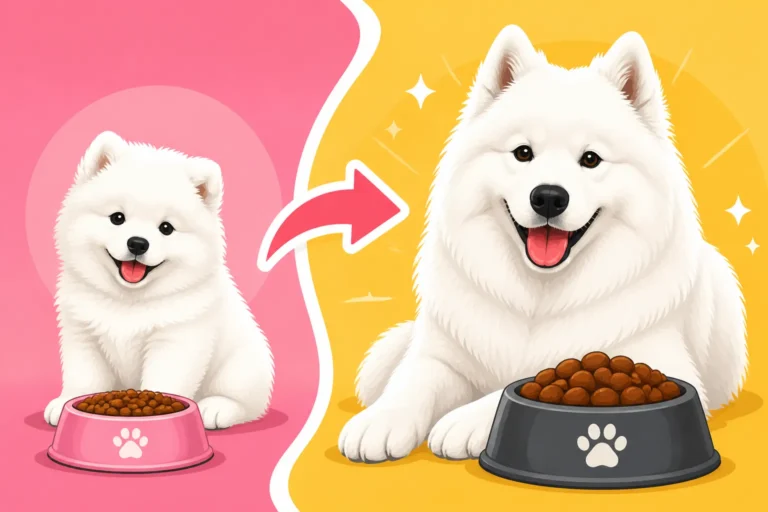
Samoyed puppy food transition timing impacts bone development, joint health, and long term well-being during adolescence.

Samoyed puppy growth management ensures proper bone development and protects skeletal maturity up to twenty four months.

Free feeding a Samoyed leads to sneaky weight gain and hides illness, making scheduled meals the better choice for health.

Samoyed feeding schedules and meal timing details help owners establish proper daily routines from puppyhood through old age.

Samoyed low fat diets explained through healthy fat benefits, vitamin absorption, and medical conditions like pancreatitis.

Samoyed weight monitoring prevents joint problems and arthritis because their thick double coats easily hide extra pounds.

Samoyed dietary needs, metabolism, and activity levels determine daily food portions for optimal health and weight control.
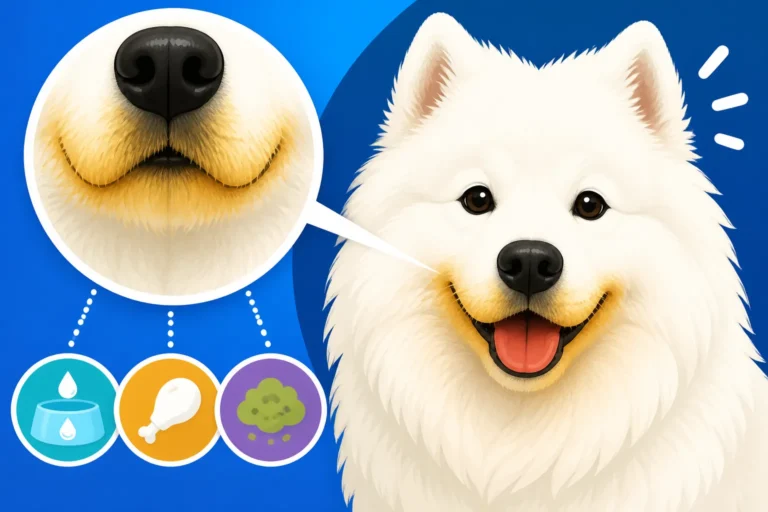
Saliva proteins, food ingredients, and tap water minerals oxidize on thick double coats to create yellow stains around a Samoyed mouth.
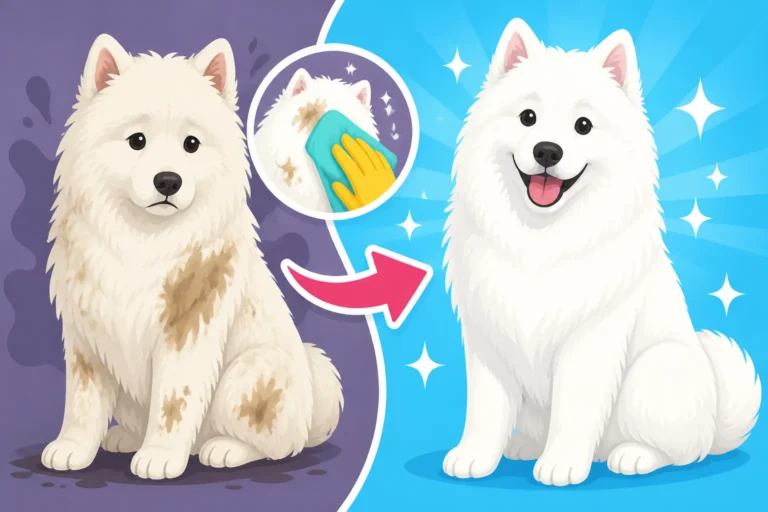
Removing stains from a Samoyed white double coat involves understanding fur layers and treating common urine and lick marks.

Samoyed coarse guard hairs and dense woolly undercoats repel dirt and moisture naturally using a unique two-layer structure.