How Much a Samoyed Should Eat
Figuring out exactly how much to feed your magnificent Samoyed can feel like a constant puzzle, leaving many owners second-guessing if they're giving too much or too little. It’s a common frustration, especially with their deceptive fluff and seemingly low activity compared to their size. This comprehensive guide aims to clear up the confusion, helping you understand your Samoyed’s unique dietary needs to ensure they thrive with optimal health and that signature happy smile.
Understanding Your Samoyed's Unique Metabolism and Energy Needs
Samoyeds are truly unique dogs, not just in their stunning appearance but also in their underlying physiology. They hail from the arctic regions, a history that has profoundly shaped their metabolic processes. This isn't just about surviving the cold; it's about optimizing every calorie for maximum efficiency. Many owners, used to other breeds, often misinterpret their Samoyed’s energy requirements, leading to common feeding mistakes. It's crucial to look beyond generic guidelines and delve into what makes a Samoyed tick, nutritionally speaking.
The "Efficient Eater" Myth vs. Reality
There's a persistent idea that Samoyeds are incredibly efficient eaters, needing far less food than their size suggests. While it's true they can be remarkably efficient at converting calories, particularly fats, into energy, this isn't a "myth" so much as a misunderstanding of what that efficiency means for a modern-day pet. In their ancestral environment, survival meant making the most of scarce resources. This physiological adaptation allowed them to perform strenuous tasks like sledding or herding reindeer on what might seem like a meager ration to another breed. However, this doesn't mean you can drastically underfeed your Samoyed. It means you need to be precise.
The reality is that their metabolism is tuned to conserve energy and store it efficiently, especially in the form of fat, which was a lifesaver in the frozen tundras. For a house pet, this efficiency can quickly turn into a propensity for weight gain if their caloric intake isn't carefully matched to their actual activity level. Overfeeding, even slightly, can easily lead to excess weight, which then puts a strain on their joints and overall health. It's a delicate balance: providing enough fuel for their joyful, sometimes mischievous, energy without tipping them into the overweight category. Owners often tell me how they expected their Samoyed to eat a huge amount, only to find their dog maintains weight on what seems like a surprisingly modest portion. This is the "efficient eater" at play.
Activity Levels and Caloric Expenditure
A Samoyed's daily caloric needs are heavily dictated by their activity level, perhaps more so than many other breeds. A Samoyed that spends its days largely lounging around the house, enjoying short walks around the block, will have vastly different energy requirements than one actively involved in dog sports, like agility, canicross, or even recreational sledding. This is where generic feeding charts often fall short, as they can't possibly account for the vast spectrum of Samoyed lifestyles.
Consider a Samoyed living in a bustling city apartment, getting a couple of leash walks a day and some indoor playtime. Their Resting Energy Requirement (RER) will form the bulk of their needs, with only a small increment for light activity. Compare this to a Samoyed that regularly goes on multi-mile hikes, participates in weekly pulling sports, or even has a "job" like visiting nursing homes. These working Samoyeds burn significantly more calories and will need a diet that supports sustained energy without packing on extra weight. An active Samoyed might be burning through hundreds of extra calories a day, requiring a larger portion of high-quality, energy-dense food. It’s important to honestly assess your own dog's routine and adjust accordingly, recognizing that even a "lazy" Samoyed might have bursts of high energy. This is a primary factor when considering How Much Food a Samoyed Eats Monthly.
Age and Life Stage Considerations
Just like humans, a Samoyed's nutritional needs shift dramatically throughout their life stages. A rapidly growing Samoyed puppy has different demands than a mature adult, and a senior Samoyed needs a different approach entirely. Getting it right at each stage is vital for their long-term health and vitality.
Samoyed puppies are like little energy sponges, but their growth plates are sensitive. Overfeeding a puppy, especially with high-calorie food, can lead to excessively rapid growth, which is a major risk factor for orthopedic issues like hip and elbow dysplasia later in life. Their diet should support steady, healthy growth, not a sprint. As they transition into adulthood, usually around 12-18 months, their metabolism often slows a bit, and their energy needs stabilize. This is a critical time to monitor their weight closely and adjust their food intake downwards if needed, preventing the onset of adult obesity. Many owners find their Samoyed's puppy energy seems endless, but it's important to differentiate between bursts of play and sustained caloric burn.
Then there are our cherished senior Samoyeds. As they enter their golden years, typically around The Age a Samoyed Counts as a Senior, their metabolism slows further, and their activity levels naturally decrease. They might also develop age-related health issues, such as arthritis or even early kidney changes, which can influence their dietary needs. A senior diet often means fewer calories, adjusted protein levels, and sometimes added joint support. Some senior Samoyeds also have dental issues that make chewing harder, prompting a shift to softer foods or kibble soaked in water. Regular vet check-ups become even more important to fine-tune their diet for comfortable, healthy aging.
Deciphering Dog Food Labels: Beyond the "Cups Per Day" Chart
One of the biggest headaches for any dog owner is standing in the pet store aisle, staring at bags of kibble and trying to make sense of the feeding guidelines. The "cups per day" chart printed on the back of every bag is, at best, a starting point. It's a broad generalization that doesn't account for your individual Samoyed's unique factors. To truly understand how much your Samoyed should eat, you need to become a detective of dog food labels, looking beyond the surface recommendations to the nutritional core of what you're offering them.
Calorie Density and Nutritional Value
Not all dog foods are created equal, and this is especially true when it comes to calorie density and overall nutritional value. A cheaper kibble might be packed with fillers and less digestible ingredients, meaning your Samoyed needs to eat a larger volume to get the same amount of actual nutrition. This can lead to a dog constantly feeling hungry, or worse, consuming too many empty calories. Conversely, a high-quality, nutrient-dense food, often found on reputable sites like Chewy, might mean you feed a smaller amount but provide more complete and digestible nutrients.
Consider the guaranteed analysis: look at the protein, fat, and fiber content. A higher fat content often means more calories per serving, which is great for a highly active Samoyed but potentially problematic for a couch potato. Understanding the "kcal/kg" or "kcal/cup" value on the label is far more helpful than just the recommended serving size. For instance, one brand's "cup" might have 350 calories, while another's is 450 calories. That difference can significantly impact your Samoyed's weight over time. This is where the concept of Whether a Samoyed Needs Fewer Calories Than Expected truly comes into play; it’s not about feeding less, but feeding smarter.
Calculating Your Samoyed's Ideal Daily Caloric Intake (RER vs. MER)
To get a more scientific handle on your Samoyed’s caloric needs, it helps to understand the concepts of Resting Energy Requirement (RER) and Maintenance Energy Requirement (MER). Don't worry, it's not as intimidating as it sounds! RER is the energy required for basic bodily functions at rest – essentially, what your dog needs to simply exist, breathing and maintaining body temperature. MER takes RER and factors in daily activity, age, and reproductive status.
Veterinarians use formulas to calculate these, often as a starting point. A common rough guide for RER is (Weight in kg)^0.75 * 70. Then, MER is RER multiplied by a factor (e.g., 1.6 for a typical adult neutered dog, higher for active dogs, lower for weight loss). For example, a 25kg (approx 55lb) Samoyed's RER might be around 840 calories. If they're moderately active, their MER could be around 1350 calories. This isn't a substitute for vet advice, but it illustrates that a proper calculation considers your dog's weight first and foremost, rather than a generic "breed" average. You can then use the calorie density (kcal/cup) from your dog food label to figure out the actual number of cups. It sounds complex, but once you do it, it gives you a much better baseline than the bag's recommendations.
Wet, Dry, Raw, or Fresh: How Food Type Influences Volume
The type of food you choose for your Samoyed also plays a huge role in how much you'll feed by volume. Dry kibble is the most common and calorie-dense by volume because it has very low moisture content. Wet food, on the other hand, is mostly water, meaning you'll need to feed a much larger volume to deliver the same caloric punch.
Many Samoyed owners lean towards high-quality kibble due to its convenience and dental benefits. For example, if you're feeding a premium kibble you bought from Chewy, you'll find the recommended serving size is often smaller than with a lower-quality brand. Fresh food diets, like those offered by Ollie, are gaining popularity, and they too have a higher moisture content than kibble. While excellent for palatability and often digestibility, you'll notice you feed a visually larger portion size compared to kibble to meet the same caloric needs. Raw diets also have varying moisture and density depending on the ingredients, so careful calculation is essential to ensure a balanced intake. Whatever you choose, the key is to understand its caloric density per unit (cup, ounce, gram) and adjust the volume accordingly, rather than just scooping blindly.
Practical Feeding Strategies for Samoyed Owners
Beyond understanding the theoretical caloric needs, putting it into practice for your Samoyed requires some consistent strategies. These involve setting up routines, vigilant monitoring, and being prepared to adjust as your dog's life unfolds. It’s a dynamic process, not a one-and-done decision.
The Importance of Fixed Meal Times vs. Free Feeding
When it comes to feeding Samoyeds, I'm a firm believer in fixed meal times over free-feeding (leaving food out all day). There are several compelling reasons for this, especially given the Samoyed's unique metabolism and potential health considerations. Free-feeding makes it incredibly difficult to monitor how much your Samoyed is actually eating, which is crucial for tracking their appetite and preventing overconsumption. A sudden drop in interest in food, for instance, can be an early indicator of illness, and you'd miss that if food is always available.
Fixed meal times, typically twice a day for adult Samoyeds, help establish a routine that many dogs thrive on. It aids in digestion, allows you to manage portion control precisely, and makes potty training and scheduling much easier. More importantly, consistent feeding schedules can play a role in managing weight and, for those prone to it, helping to prevent or manage conditions like diabetes. Whether a Samoyed Needs a Consistent Feeding Schedule is a question with a clear answer in my book: yes, absolutely. This structured approach helps prevent your Samoyed from grazing throughout the day, which can disrupt their metabolic rhythm and encourage unnecessary weight gain. It also allows you to quickly gauge their hunger levels and adjust portions if needed.
Monitoring Weight and Body Condition Score
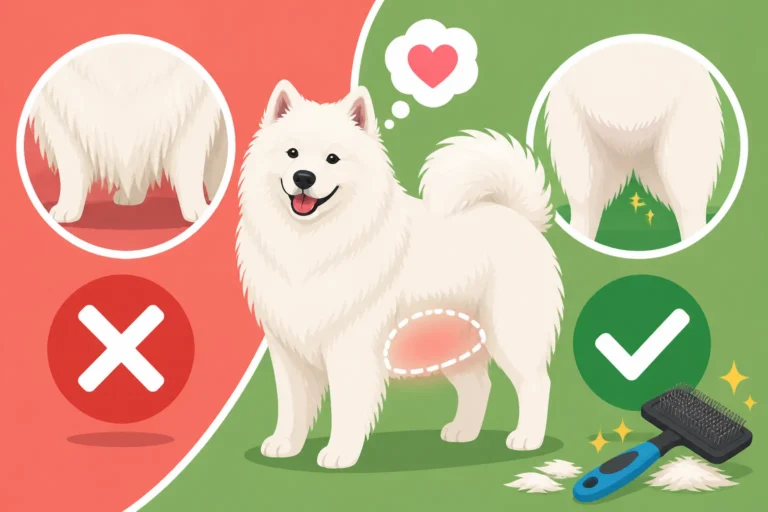
Because a Samoyed’s gorgeous, dense double coat can be a master of disguise, it’s incredibly easy for them to pack on a few extra pounds without you noticing right away. This is why How a Samoyed's Ruff Hides Weight Gain is a very real challenge. Feeling for their ribs and regularly assessing their Body Condition Score (BCS) is absolutely essential. You can't just rely on looking at them.
Here's how to check:
- Run your hands along their sides: You should be able to easily feel their ribs, almost like feeling the knuckles on your hand, but without pressing hard. If you have to dig to find them, your Samoyed is likely overweight. If you can see their ribs easily, they might be too thin (unless they're a very lean, athletic working Samoyed).
- Check their waistline: Stand over your Samoyed and look down. You should see a discernible waist tucked in behind their ribs. From the side, their belly should tuck up slightly rather than hanging low.
- Use a scale: If possible, weigh your Samoyed regularly, perhaps once a month, and track the numbers. Sudden increases or decreases can indicate a problem.
A Body Condition Score is a scale, usually from 1 to 9, where 5 is ideal. A score of 7 or higher indicates obesity. Being proactive about Why a Samoyed Owner Must Watch Its Weight Closely can prevent a host of health problems down the line, from joint issues to a higher risk of diseases. Don't be fooled by the fluff; get hands-on with their physique.
Adjusting Portions Based on Season, Activity, and Health
Your Samoyed's feeding plan isn't static; it needs to be dynamic, adapting to the ebb and flow of their life. What works in the mild spring might not cut it in the dead of winter or during a heatwave. This constant adjustment is key to maintaining their ideal body condition.
Think about the seasons: A Samoyed living in a truly cold climate might require slightly more calories in winter to maintain body heat, especially if they spend more time outdoors. Conversely, in the sweltering summer, when they naturally become less active to avoid overheating, their caloric needs will likely drop. If you live in a hot region, your Samoyed might be less inclined to go for long walks during the day, meaning you'll need to dial back their food to prevent weight gain. Signs a Samoyed Is Overweight become much clearer when you track these changes.
Activity levels are the other major factor. If you suddenly embark on a new, more rigorous exercise routine with your Samoyed – perhaps starting canicross or increasing hike durations – you'll need to incrementally increase their food. Likewise, if your Samoyed has a period of enforced rest due to injury or surgery, their caloric intake should be temporarily reduced. Finally, health conditions like Managing a Diabetic Samoyed will necessitate very precise dietary changes, often involving prescription diets and strict portion control as directed by your veterinarian. Always discuss significant changes with your vet, especially if your Samoyed has underlying health issues.
Avoiding Common Feeding Pitfalls and Maximizing Health
Even with the best intentions, it's easy to fall into common feeding traps that can undermine your Samoyed's health. Understanding these pitfalls and proactive steps to avoid them can make a huge difference in your dog's longevity and quality of life.
The Danger of Overfeeding and Obesity
Overfeeding is, sadly, one of the most common mistakes Samoyed owners make, often out of love and a desire to see their dog happy. However, those extra pounds carry significant health risks. An overweight Samoyed is far more susceptible to joint problems, exacerbating conditions like hip or elbow dysplasia. The additional strain on their skeletal system can lead to pain, reduced mobility, and a lower quality of life.
Beyond orthopedic issues, obesity in Samoyeds significantly increases their risk for other serious health problems. These include heart disease, respiratory difficulties (especially in a thick-coated breed that already needs to manage heat), and certain types of cancer. Most notably, Whether an Overweight Samoyed Is More Likely to Get Diabetes is a resounding yes. Excess body fat can interfere with insulin sensitivity, making them more prone to developing diabetes mellitus. It's a cruel irony that trying to show love through food can inadvertently shorten your Samoyed's life and diminish their health. A lean Samoyed is a healthier Samoyed, plain and simple.
Navigating Treats and Supplements
Treats are an undeniable part of the human-dog bond, used for training, rewards, or just a spontaneous moment of affection. However, treats are often where hidden calories sneak into a Samoyed's diet. It's easy to forget that every little biscuit, dental chew, or piece of cheese adds up. If you're giving a lot of treats, you need to factor those calories into their daily total and adjust their main meal portions accordingly.
When choosing treats, opt for healthy, low-calorie options. Small pieces of plain cooked chicken, carrots, green beans, or even their own kibble can be excellent choices. Many pet stores, including online retailers like Chewy and Amazon, offer a wide variety of healthy training treats designed to be low in calories. For supplements, such as joint support or fish oil, always consult your veterinarian first. While products like omega-3 fatty acids (e.g., Whether a Samoyed Needs Fish Oil) can be beneficial for skin, coat, and overall health, your vet can advise on appropriate dosages and whether they are truly necessary for your individual Samoyed. Avoid giving human supplements without veterinary guidance, as dosages can be wildly different and some ingredients can be toxic.
Hydration and Feeding Bowls
Water is an often-overlooked but absolutely critical component of your Samoyed's nutrition. Ensuring constant access to fresh, clean water is paramount for their overall health, digestion, and kidney function. Samoyeds, particularly those with their thick coats, can be prone to overheating, and adequate hydration helps them regulate their body temperature. Always have multiple water bowls available in different locations in your home, and ensure they are cleaned daily.
When it comes to feeding bowls, there are a few considerations. If your Samoyed is a fast eater, a slow feeder bowl can be incredibly helpful. These bowls have various ridges and obstacles that force your dog to eat around them, slowing down their intake. This can reduce the risk of bloat (gastric dilatation-volvulus), although the primary cause of bloat is complex and not fully understood. You can find excellent slow feeder options on Amazon. The debate around raised feeding bowls for bloat prevention is ongoing, with some studies suggesting they might actually increase the risk in certain large breeds. Generally, feeding your Samoyed from a bowl on the floor is perfectly fine, unless your vet specifically recommends a raised bowl for conditions like megaesophagus or severe arthritis where bending down is painful. If you are concerned about Whether a Samoyed Should Eat From a Raised Bowl, it's best to discuss it with your vet.
Disclaimer
This article is for general informational purposes only and does not constitute professional advice. Laws, prices and regulations vary by location and change over time. Consult a qualified professional for guidance on your specific situation.