Why a Samoyed Turns Yellow Around the Mouth
That pristine, dazzling white coat is one of the most iconic features of our beloved Samoyeds, isn't it? So, it can be truly disheartening, and frankly, a bit perplexing, when you start noticing a persistent yellowing around their beautiful, smiling mouth. It’s a common frustration for many Samoyed parents, leaving us wondering if it’s something we’re doing wrong or a sign of a deeper issue. This comprehensive guide is here to unravel the mystery behind those yellow stains and equip you with practical, empathetic solutions to help keep your Samoyed's grin as bright as their spirit.
The Culprits Behind the Yellow Stain
It’s easy to feel like you're constantly scrubbing, only for that yellowish hue to return around your Samoyed's muzzle. You clean, you wipe, and yet, there it is again. Understanding why it happens is the first step toward effectively tackling the issue. It's often not a single cause, but a combination of daily factors that accumulate, slowly dulling that snowy white fur.
Drool and Saliva Accumulation
Let's face it, Samoyeds are not known for being excessive droolers like some other breeds, but they do produce saliva – and that saliva can be a major contributor to yellowing. Imagine if you never wiped your own mouth after eating or drinking; you'd probably notice some discoloration too.
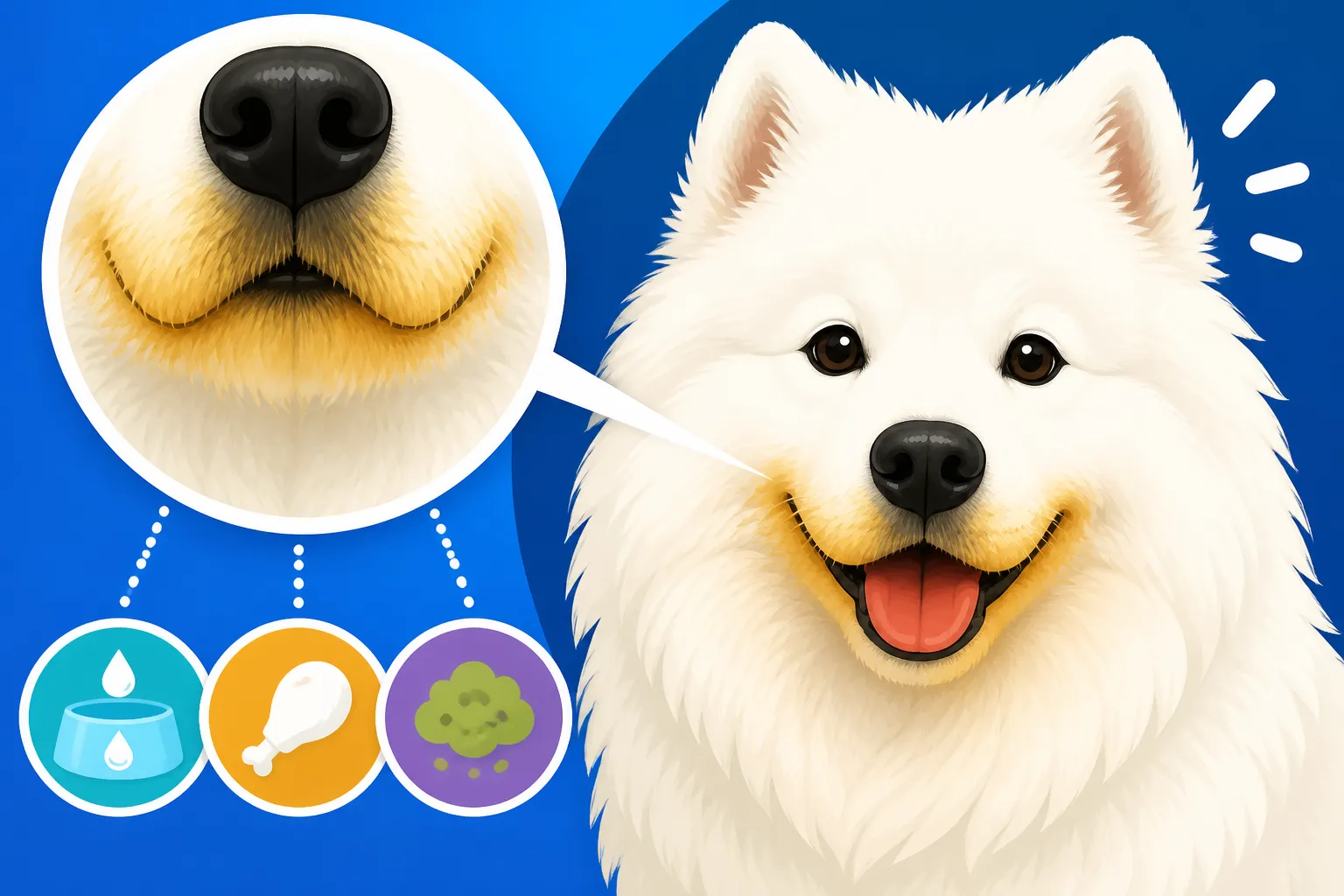
Our Samoyeds, with their thick, luxurious fur, have a perfect canvas for staining right around their mouths. Each time they lap up water, chew on a toy, or anticipate a treat, saliva naturally gets deposited on the fur. Over time, the proteins and minerals in that saliva, especially when exposed to air, can oxidize and create a yellowish tint. It's similar to how an apple turns brown when you cut it and leave it out. For a Samoyed, this isn't just a surface issue; their double coat means that saliva can soak down into the dense undercoat, making the stain harder to remove with just a quick wipe. Regular, diligent cleaning is key here, but understanding that it's a natural process helps to reframe the battle from an impossible task to a consistent grooming routine.
Food and Water Stains
This one might seem obvious, but the way food and water contribute to staining can be more complex than just a splash. Think about it: every meal, every drink, involves direct contact with your Samoyed's mouth fur.
Dry kibble, even if it doesn't look like it, can leave behind fine particles and oils. If your Samoyed is eating a kibble that contains dyes or even just certain ingredients like beet pulp, those can directly stain the fur over time. The same goes for wet food or any "people food" treats they might get. Even their water can be a factor. If your tap water has a high mineral content, like iron, those minerals can deposit on the fur and lead to discoloration. It's a slow, insidious process, often unnoticed until the yellowing becomes quite pronounced. It's not just the immediate mess from a sloppy eater; it's the cumulative effect of constant exposure to whatever goes into their mouth. We've all seen how a small spill on a white carpet can become a permanent mark if not addressed, and your Samoyed's fur is no different. Consider What Feeding a Samoyed Costs Each Month and how different food choices might impact not just their health, but also their coat aesthetics.
Environmental Factors
It's not all about what goes into their mouths; what they encounter outside can also play a significant role in their coat's discoloration. Our Samoyeds love to explore, to sniff, and sometimes, to dig, and their faces are often the first point of contact with the world.
Think about a Samoyed who loves to dig in the garden, burrowing their nose into the rich earth. Soil and mud, especially if left to dry and not thoroughly cleaned, can leave a persistent stain. The same goes for certain plants or even pollen in the air during allergy season. If your Samoyed is prone to licking their paws or grooming themselves frequently, and they've just walked through something outdoors, those external elements can be transferred to their mouth fur. Even indoor environments can be culprits. A Samoyed who spends a lot of time napping with their face pressed against a dirty carpet, a chew toy that's seen better days, or even a brightly colored dog bed can pick up subtle tints over time. These aren't always direct, dramatic stains, but rather a gradual accumulation of environmental particles that bond with the fur, making it appear less brilliant white.
Understanding Your Samoyed's Unique Anatomy and Physiology
Our Samoyeds are special, and their physical characteristics play a direct role in why they might be more prone to certain issues, like yellowing around the mouth. It's not just about their activities, but how their very design interacts with their daily life. This understanding helps us tailor our care to their specific needs.
The Samoyed Smile and Its Implications
Ah, the famous "Samoyed Smile"! It's one of their most endearing features, a charming upturn of the lips that makes them look perpetually happy. But this very smile, a delightful characteristic, also creates an anatomical predisposition to muzzle staining.
The structure of their mouth, with those upward-curving lips, means that the fur around the corners of their mouth and along the lower jaw is often in direct contact with saliva. As we discussed, saliva contains proteins and minerals that can oxidize and cause discoloration. Furthermore, the smile can sometimes create little pockets or folds in the fur where moisture and food particles can get trapped. This moist environment is not only perfect for staining, but it can also be an ideal breeding ground for yeast or bacteria if left unchecked, potentially exacerbating discoloration or even leading to skin irritation. It's a double-edged sword: we adore the smile, but it requires a bit more vigilance in terms of cleanliness. When you're admiring Why the Samoyed Smiles, remember the practical implications for their grooming routine. It’s a constant consideration for any Samoyed owner.
Coat Texture and Absorbency
The Samoyed's magnificent double coat is a marvel of nature, designed to protect them from the harsh Siberian elements. However, this very coat, so admired for its beauty and practicality, is also highly absorbent, making it susceptible to staining.
The outer guard hairs are coarse and straight, designed to shed snow and ice. But beneath that lies a dense, soft, woolly undercoat that acts as insulation. This undercoat is incredibly efficient at trapping air, which is great for warmth, but it's also excellent at trapping moisture and any foreign particles it comes into contact with. When saliva or food residue gets on the mouth fur, it quickly wicks down into this absorbent undercoat, often before you even notice it. Once absorbed, it’s much harder to simply brush or wipe away. The stain essentially becomes ingrained deeper into the hair shaft, requiring more thorough cleaning to lift. This unique texture means that superficial cleaning often isn't enough to combat persistent yellowing; you need to address the undercoat as well. A Samoyed's Coat Is Insulation, Not Decoration is a perfect example of how their natural design influences their care.
Dietary Considerations and Their Impact
What goes into your Samoyed's bowl doesn't just affect their internal health; it can profoundly influence the external appearance of their beautiful white coat, especially around the mouth. Many owners overlook the direct link between diet and staining, but it's a connection worth exploring.
Specific Ingredients and Dyes in Food
Not all dog foods are created equal, and some ingredients, particularly artificial ones, can be major contributors to coat staining. This is a common realization for many pet parents when they start to investigate the yellowing.
Many commercially available dog foods, especially kibbles, contain artificial colors and dyes to make them more appealing to human eyes (let's be honest, our dogs don't care what color their food is!). These dyes, typically red, orange, or brown, can easily transfer to your Samoyed's fur around the mouth during mealtime. Even natural ingredients like beet pulp, often used as a fiber source, can impart a reddish-brown stain. If your Samoyed is a messy eater, or simply has a very wet mouth when they chew, these colors can leach onto the fur and become a stubborn stain over time. Switching to a limited ingredient diet or a raw/fresh food diet, like those offered by Ollie, might alleviate this issue, as these options often avoid artificial colors and processed ingredients. Paying close attention to the ingredient list on your dog's food, checking for things like "FD&C Red No. 40" or "caramel color," can make a real difference.
The Role of Hydration and Water Quality
Beyond the food itself, the water your Samoyed drinks, and even how they drink it, can contribute to mouth staining. It’s an often-overlooked factor, but minerals in water can absolutely tint white fur.
If you live in an area with hard water, it means your tap water contains higher levels of minerals like iron, manganese, and copper. When your Samoyed drinks, these minerals can transfer to the fur around their mouth. Over time, as the water evaporates, these mineral deposits can accumulate and leave a reddish or yellowish stain. Think about how a white sink can get mineral stains if not regularly cleaned; the same principle applies to your dog's fur. Using filtered water or bottled water can be a simple, yet effective, solution for some Samoyed owners. Furthermore, how your Samoyed drinks matters. Dogs that slurp vigorously or bury their entire muzzle in the water bowl are more likely to get their fur thoroughly soaked, increasing the chances of staining. A narrower water bowl, or one designed to minimize splash, might help. How Much Water a Samoyed Needs in Summer is crucial, but also consider the quality of that water.
Effective Grooming and Cleaning Strategies
Once you understand why the yellowing occurs, the next step is to implement a robust grooming routine. It's not about being obsessive, but consistent, targeted effort can make a world of difference in keeping that Samoyed smile bright.
Daily Wiping and Spot Cleaning
Prevention is always better than cure, and for muzzle staining, daily wiping and spot cleaning are your first line of defense. This isn't a suggestion; it's practically a necessity for a white-coated breed like a Samoyed.
After every meal and every drink, take a moment to gently wipe your Samoyed's mouth area. A soft, damp cloth or a pet-safe grooming wipe can do wonders. The key is to remove food particles and excess saliva before they have a chance to dry and set into the fur. For more stubborn fresh stains, a little bit of warm water with a tiny drop of dog-specific shampoo can be used, ensuring you rinse thoroughly afterwards. Pay particular attention to the corners of the mouth and under the chin, where moisture tends to accumulate. Consistency is crucial here; skipping a day or two allows the staining process to restart, making your job harder in the long run. Think of it like brushing your teeth – a little effort daily prevents bigger problems later. You might find grooming wipes readily available on Chewy or Amazon, making this daily task a breeze.
Specialized Cleaning Products and Techniques
Sometimes, daily wiping isn't quite enough, and you'll need to bring out the big guns: specialized cleaning products designed to tackle set-in stains. The market is flooded with options, so choosing wisely is important.
Look for products specifically formulated as "tear stain removers" or "whitening treatments" for dogs, as these often contain gentle bleaching agents (like boric acid or mild peroxides, in very diluted forms) or optical brighteners that can help lift or neutralize yellow tones. Always read the labels carefully and ensure they are safe for use around the eyes and mouth. Apply these products as directed, often by gently wiping onto the stained area, letting it sit for a few minutes, and then rinsing. For deep-seated stains, you might need a gentle scrubbing action with a soft brush, like a toothbrush, to work the product into the undercoat. Some owners find success with natural remedies like a paste of baking soda and water, or a very diluted apple cider vinegar solution, but always test on a small, inconspicuous area first to ensure no irritation or further discoloration occurs. Remember, patience is a virtue; significant staining won't disappear overnight.
Here's a quick look at common approaches for tackling stains:
| Method | Description | Pros | Cons |
|---|---|---|---|
| Daily Wiping | Using a damp cloth or pet wipe after meals/drinks. | Prevents fresh stains, simple, non-irritating. | Requires consistency, not effective on set-in stains. |
| Pet-Safe Whitening Shampoos | Shampoos with optical brighteners or gentle bleaching agents. | Effective for overall brightening, can remove mild stains. | Requires full bath, may not target deep, localized stains effectively. |
| Tear/Muzzle Stain Removers | Topical liquids or pastes formulated to break down stain compounds. | Targeted treatment, often very effective on specific stains. | Can be harsh if misused, may require careful application away from eyes. |
| Baking Soda Paste | Gentle abrasive paste (baking soda + water). | Natural, cheap, mild abrasive action. | Can be messy, needs thorough rinsing, might not work on severe stains. |
| Filtered Water | Providing filtered or distilled water for drinking. | Prevents mineral deposits, good for overall health. | Requires investment in filter, doesn't address existing stains. |
Professional Grooming vs. At-Home Care
Deciding whether to tackle the staining yourself or enlist the help of a professional groomer is a common dilemma. Both approaches have their merits, and often, a combination works best.
For routine maintenance and mild staining, at-home care is perfectly adequate and encourages bonding with your Samoyed. You're there daily, so you can spot clean immediately and perform regular brushing and light bathing as needed. Many Samoyed owners become quite adept at managing their dog's coat, understanding How Often a Samoyed Needs Brushing and how to keep it clean. However, if the yellowing is severe, deeply set, or you're struggling to keep up, a professional groomer can be an invaluable resource. They have access to specialized tools, shampoos, and conditioners that can more effectively penetrate the dense Samoyed coat and lift stubborn stains. They're also skilled in techniques to thoroughly dry the coat, which is crucial for preventing matting and skin issues. A professional groomer might be able to get your Samoyed's muzzle back to its sparkling white, making your at-home maintenance much easier. Don't underestimate the expertise of a professional, especially for the initial "reset" of a heavily stained coat.
When to Consult Your Veterinarian
While most muzzle yellowing is a cosmetic issue related to grooming and diet, there are times when it can signal an underlying health problem. It's important to know when to shift from a grooming solution to a veterinary consultation.
Dental Issues and Oral Health
One of the most common, and often overlooked, medical causes of persistent muzzle staining is poor dental health. It’s not just about bad breath; it’s about what’s happening inside your Samoyed's mouth.
If your Samoyed has significant plaque and tartar buildup, gingivitis, or even a dental abscess, the increased bacteria and inflammation in their mouth can lead to an increase in saliva production, as well as changes in its composition. This altered saliva, often tinged with blood or pus from gum disease, can be far more staining than normal, healthy saliva. A painful tooth or inflamed gums might also cause your Samoyed to drool more excessively or differently than usual. So, if you've been diligent with cleaning and dietary changes, but the yellowing persists or is accompanied by bad breath, reluctance to chew, or visible gum issues, it's time for a vet check-up. They can perform a thorough oral examination and recommend appropriate dental care, which might involve a professional cleaning under anesthesia. Regular dental care is not just for preventing stains, but for your Samoyed's overall well-being. Whether a Samoyed Needs Its Teeth Brushed is an important question to consider.
Skin Irritations or Allergies
Sometimes, the discoloration isn't just from external staining but is linked to an underlying skin issue or allergic reaction that causes excess moisture or discharge around the mouth. This can be more complex to diagnose than simple drool.
If you notice that the yellowing is accompanied by redness, itchiness, a foul odor, or even hair loss around the muzzle, it could be a sign of a skin irritation, a yeast infection, or allergies. Dogs can develop allergies to certain food ingredients, environmental allergens (like pollen or dust mites), or even materials in their food bowls (some dogs react to plastic). These allergies can manifest as skin inflammation, leading to increased licking, rubbing, and moisture around the mouth area, which in turn can exacerbate staining. A veterinarian can help identify the root cause through allergy testing, dietary elimination trials, or skin scrapings. Addressing the underlying skin condition will not only resolve the discomfort for your Samoyed but also eliminate the source of the excess moisture and staining. Pay attention to other signs, like if your Samoyed is scratching their face or rubbing it on furniture more than usual; these could be subtle indicators of discomfort.
Preventative Measures for a Pearly White Smile
After all this discussion, you're probably eager for actionable steps you can take before the yellowing even starts. Prevention really is the best approach when it comes to maintaining that signature Samoyed brilliance. It's about making small, consistent changes to their daily routine and environment.
Adjusting Feeding Habits
How and what your Samoyed eats can significantly impact the cleanliness of their muzzle. Simple adjustments to their mealtime routine can go a long way in preventing those dreaded yellow stains.
Firstly, consider the food itself. As mentioned, artificial dyes in kibble are a common culprit. Opting for natural, dye-free foods can make a big difference. Many premium brands prioritize natural ingredients and eschew artificial colors, so check the labels carefully. Brands like Ollie focus on fresh, human-grade ingredients without artificial additives, which could be a great choice for reducing staining. If you feed wet food, try to choose varieties that are lighter in color. Secondly, modify their eating technique. Some Samoyeds are incredibly enthusiastic eaters, plunging their whole face into the bowl. You might try a narrow-mouthed bowl or a slow-feeder bowl that forces them to take smaller, more deliberate bites, reducing splashing and direct contact with the fur. Raising their food bowl to a comfortable height can also help some dogs eat more neatly, keeping their mouth higher off the ground. Lastly, ensure consistency in feeding times, as this can help manage their anticipation and potentially reduce excessive drooling before meals.
Environmental Management
Your Samoyed's immediate environment plays a huge role in keeping their coat clean. By making a few thoughtful changes around the house, you can reduce their exposure to common staining agents.
Start with their water bowl. If you suspect hard water is contributing to stains, switch to filtered or bottled water. Also, consider the type of bowl. Stainless steel or ceramic bowls are generally easier to keep clean and less likely to harbor bacteria than plastic bowls, which can sometimes develop microscopic scratches where bacteria can hide, leading to odor and potential staining. Regularly cleaning water and food bowls is a must. Beyond bowls, think about where your Samoyed spends their time. If they have a favorite napping spot on a colorful rug or an old, stained dog bed, these could be transferring color. Regular washing of bedding and ensuring clean surfaces where they rest their head can help. For those who love to dig, creating a designated "digging pit" in the yard (filled with sand or clean soil) can divert their attention from mud or garden soil that could stain their muzzle. Remember, a Samoyed who likes to dig in the dirt might also pick up undesirable elements in The Holes a Samoyed Digs in a Yard. Being proactive about their surroundings creates a cleaner canvas for that beautiful white coat.
Disclaimer
This article is for general informational purposes only and does not constitute professional advice. Laws, prices and regulations vary by location and change over time. Consult a qualified professional for guidance on your specific situation.