Retinal Dysplasia in a Samoyed
It’s truly disheartening to think of our cheerful Samoyeds facing vision problems. These magnificent dogs are known for their bright eyes and famous "Samoyed smile," making any threat to their eyesight a significant worry for owners. Retinal dysplasia is one such eye condition that can impact Samoyeds, potentially causing anything from very mild, barely noticeable visual quirks to profound blindness. This comprehensive guide aims to shed light on what retinal dysplasia means for your Samoyed, how to recognize its signs, and the best ways to manage and prevent it, ensuring your furry family member can live their happiest life.
Understanding Retinal Dysplasia in Samoyeds
When we talk about retinal dysplasia, we're delving into a condition that affects one of the most vital parts of your Samoyed's eye – the retina. It’s a congenital issue, meaning it’s present from birth, and understanding its nature is the first step in addressing it.
What is Retinal Dysplasia?
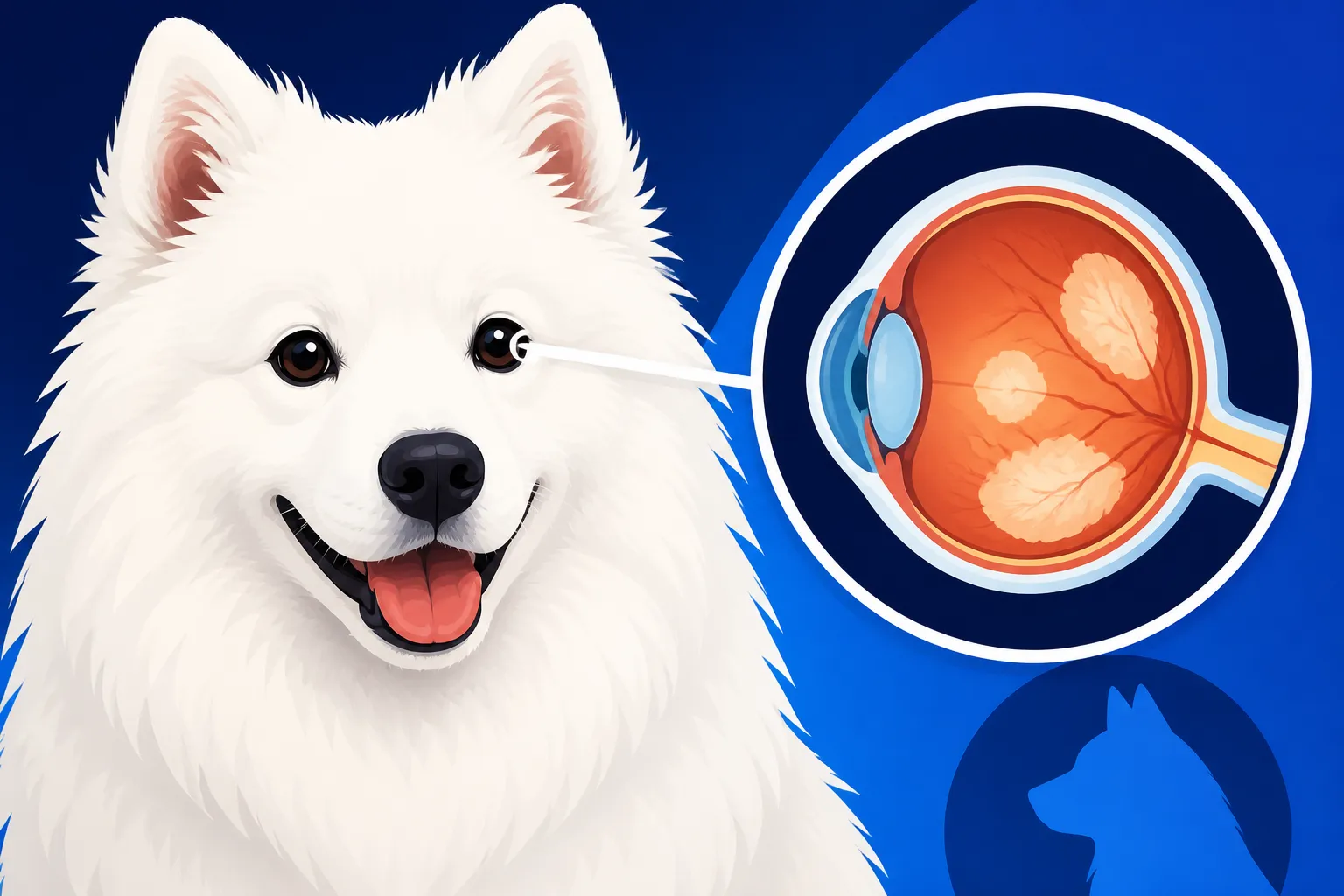
At its core, retinal dysplasia is a developmental abnormality of the retina. Unlike a sudden injury or an infection, this isn't something your Samoyed "catches" later in life. Instead, it occurs when the retina, the light-sensitive tissue at the back of the eye, doesn't form correctly during the dog's fetal development. Think of it like a printer making a mistake when forming an image – the output is distorted from the start.
The retina's primary job is remarkable: it takes the light entering the eye and converts it into electrical signals. These signals are then sent along the optic nerve to the brain, which interprets them as the images your Samoyed sees. If the retina is malformed with folds, rosettes, or even detaches, these crucial signals are disrupted. In mild cases, the disruption might be so minimal that your Samoyed never notices, or it's so subtle that it's difficult for you to pick up on. In more severe instances, however, the structural defects can prevent signals from being sent effectively, leading to significant vision impairment or even complete blindness.
Because it's a structural defect that occurs during development, retinal dysplasia is a static condition. This means the damage present at birth typically doesn't worsen over time. However, the visual impact remains, and it's essential for Samoyed owners and breeders to understand this genetic component. It underscores why careful health screening and responsible breeding practices are absolutely critical for maintaining the health and well-being of the breed.
Why Samoyeds are Susceptible
Samoyeds, like many purebred dog breeds, have certain predispositions to genetic conditions due to their carefully managed gene pools. Retinal dysplasia is one such condition that has been observed in the breed, making it a point of focus for responsible breeders and veterinary ophthalmologists alike. It's not a widespread epidemic, but it is a recognized health concern that warrants attention and proactive screening.
The genetic underpinnings of retinal dysplasia mean that it can be passed down from parent dogs to their offspring. While research is ongoing to identify specific genes responsible for all forms of retinal dysplasia in Samoyeds, the understanding that it's an inherited trait drives the recommendation for thorough eye examinations of breeding stock. This commitment to genetic health helps to reduce the incidence of the condition in future generations, safeguarding the breed's overall health and the joy of countless Samoyed families.
It’s worth noting that in some other breeds, retinal dysplasia can occur concurrently with skeletal abnormalities, such as dwarfism or other bone development issues. However, in Samoyeds, it often presents primarily as an isolated ocular condition. This distinction emphasizes the importance of specific breed-focused health screenings. For any Samoyed owner, understanding the specific health challenges and predispositions of the breed is a crucial part of responsible ownership and can empower you to make informed decisions about your dog's care.
The Different Faces of Retinal Dysplasia in Samoyeds
Retinal dysplasia isn't a one-size-fits-all condition; it manifests in various degrees of severity, each with a different impact on your Samoyed's vision. Knowing these classifications helps in understanding the prognosis and management strategies.
Focal and Multifocal Retinal Dysplasia
The mildest forms of retinal dysplasia are typically classified as focal or multifocal. Imagine the smooth surface of the retina developing a few tiny, isolated wrinkles or bumps. These small, discrete folds or rosettes are characteristic of focal retinal dysplasia. They are often found incidentally during a routine eye examination and, remarkably, usually don't cause any noticeable vision impairment for your Samoyed. Your dog might navigate the world with perfect ease, and you'd never know there was an issue without a specialist's keen eye.
Multifocal retinal dysplasia is a step up in terms of distribution, meaning there are several scattered areas of these retinal folds, rather than just one. A Samoyed with multifocal RD might experience slightly more compromised vision, especially in challenging conditions like dim lighting or when trying to navigate a new, complex environment. However, these dogs are incredibly adaptable. It's truly impressive how well they compensate, often leading full, joyful lives without their owners ever realizing the extent of their visual difference. The subtle changes are often just part of their normal, and they've learned to rely on their other powerful senses.
For both focal and multifocal types, the long-term prognosis is generally quite good. These forms of retinal dysplasia are non-progressive, meaning they don't worsen over time. Most Samoyeds diagnosed with these mild forms will maintain functional vision throughout their lives, requiring no specific treatment. While it's a finding that reputable breeders take seriously for their breeding programs, for the pet owner, it’s often more a point of awareness than a cause for significant day-to-day concern, though a board-certified veterinary ophthalmologist should always provide a definitive assessment.
Geographic Retinal Dysplasia
Stepping up in severity, geographic retinal dysplasia is a more significant manifestation of the condition. Here, the retinal malformation isn't just a few small folds; it involves larger, irregular areas where the retina has developed abnormally. These areas often appear thinned or even have small holes, resembling a topographical map, which gives this type its descriptive name. This extensive malformation directly impacts how effectively the retina can capture and process light, leading to more noticeable visual deficits.
A Samoyed affected by geographic RD will likely experience more profound vision impairment. You might observe them being more cautious or hesitant in unfamiliar surroundings, bumping into objects that seem obvious to you, or struggling with judging distances and depth perception. Their confidence might waver in new places, and they'll naturally begin to rely more heavily on their other acute senses, like their hearing and incredibly sensitive sense of smell, to navigate their world.
Similar to the milder forms, geographic retinal dysplasia is a static condition. This means the visual impairment is permanent and established during development. Unlike conditions such as Progressive Retinal Atrophy in a Samoyed, which can lead to ongoing degeneration, geographic RD does not typically worsen over time due to the dysplasia itself. While the vision loss is irreversible, understanding its non-progressive nature can help owners manage expectations and focus on supportive care rather than chasing treatments for a deteriorating condition.
Total Retinal Dysplasia and Retinal Detachment
The most severe form of retinal dysplasia is total retinal dysplasia, which often culminates in a complete or significant retinal detachment. In these challenging cases, the retina has failed to develop correctly on a much larger scale, and it can actually separate from the underlying layers of tissue that nourish it at the back of the eye. Imagine the film peeling away from the inside of a camera – once it detaches, it can no longer receive proper blood supply or transmit signals to the brain, leading to severe or complete blindness in the affected eye.
While the underlying dysplasia is present from birth, a complete retinal detachment might sometimes manifest quite suddenly. This can be incredibly alarming for an owner, as their previously sighted Samoyed might suddenly become disoriented, anxious, or start bumping into everything. This acute change warrants immediate veterinary attention. Unfortunately, in many cases stemming from total retinal dysplasia, the detachment is irreparable, and vision cannot be restored.
The impact of bilateral total retinal dysplasia, where both eyes are affected, is profound, resulting in complete blindness. This diagnosis can be heartbreaking for any Samoyed parent. However, it’s important to remember that dogs are incredibly resilient. With patience, dedication, and appropriate environmental adjustments, a Samoyed with total blindness can still lead a rich, happy, and fulfilling life. It requires a significant commitment from the owner, but the bond and joy a blind Samoyed brings are immeasurable.
Here's a quick overview of the different types:
| Type of Retinal Dysplasia | Description | Visual Impact | Prognosis (Vision) |
|---|---|---|---|
| Focal | Small, isolated folds or rosettes in the retina. | Generally none; vision usually normal. | Excellent; non-progressive. |
| Multifocal | Multiple scattered folds or rosettes across the retina. | Mild to moderate impairment, often adaptable; subtle issues in low light. | Good; non-progressive, Samoyeds adapt well. |
| Geographic | Larger, irregular areas of retinal malformation, thinning, or holes. | Significant vision impairment; poor depth perception; permanent. | Fair; permanent vision loss, but non-progressive. |
| Total/Detachment | Extensive malformation leading to full or partial retinal detachment. | Severe to complete blindness in affected eye(s); permanent. | Poor for vision restoration; adaptation to blindness. |
Recognizing the Signs and Getting a Diagnosis
It's natural to feel anxious about your Samoyed's health, and eye conditions can be particularly subtle in their early stages. Knowing what to look for and understanding the diagnostic process can make all the difference.
Subtle Clues for Samoyed Owners
Because retinal dysplasia is present from birth, and especially with its milder forms, you might not see any obvious signs in your Samoyed puppy right away. Their boundless puppy energy and natural ability to use their other senses can often mask slight visual deficits. However, a keen observer can pick up on subtle clues, particularly when your Samoyed is in unfamiliar environments or in dimly lit conditions.
Keep an eye out for any hesitation when navigating stairs, or if your Samoyed seems to bump into familiar objects when the lighting changes suddenly. They might be unusually clumsy compared to their littermates, or perhaps seem startled by movements from the side that a fully sighted dog would easily perceive. Observe their play: do they consistently struggle to track a thrown toy, or miss it more often than not? These could be small indicators that their vision isn't quite as sharp as it should be.
Even with their notoriously cheerful and adaptable personalities, a Samoyed struggling with vision might display increased clinginess or anxiety in certain situations. They might startle more easily if approached from behind without warning. It's important to remember Whether a Samoyed Complains When It Hurts is often tricky, as Samoyeds are stoic and will try to hide discomfort, including visual struggles, behind their famous smiles. This requires careful, empathetic observation from a dedicated owner who knows their dog’s baseline behavior.
The Importance of Ocular Examinations
Proactive and regular veterinary care is absolutely paramount when it comes to eye health. The most reliable way to diagnose retinal dysplasia, particularly the milder forms that might not show overt symptoms, is through a comprehensive ocular examination performed by a board-certified veterinary ophthalmologist. These specialists possess the highly specialized equipment and extensive expertise required to thoroughly examine the retina at the back of the eye, even in very young puppies. Many ethical and reputable Samoyed breeders understand this vital step and will insist on Why a Samoyed Litter Needs an Eye Exam as a standard part of their health screening protocols for an entire litter.
During a typical comprehensive eye exam, the ophthalmologist will usually administer drops to dilate your Samoyed's pupils. This dilation provides an unobstructed, wide-angle view of the retina, allowing the specialist to meticulously search for the characteristic folds, rosettes, or any signs of detachment. This examination can often be effectively performed as early as 8-10 weeks of age. For both breeders and prospective puppy owners, this early screening offers invaluable information, confirming that a puppy's vision is developing normally or identifying any issues before they become deeply ingrained. This early insight is crucial for making informed decisions about a puppy's future home and care.
For adult Samoyeds, especially those involved in breeding, annual eye examinations are a crucial component of responsible health management. While retinal dysplasia itself is congenital and non-progressive, these regular check-ups help monitor for a wide array of other potential eye conditions that can develop later in life, such as Progressive Retinal Atrophy in a Samoyed or cataracts. Consistent annual examinations ensure that any new issues are detected early, allowing for timely intervention and management. This commitment to routine care, potentially supported by pet insurance providers like Healthy Paws, provides a safety net, helping you manage the costs associated with specialized veterinary care and ensuring your Samoyed's eyes are always monitored by experts.
Diagnostic Tools and Procedures
Beyond the standard visual examination performed by an ophthalmologist, there are other sophisticated diagnostic tools and procedures that can provide a more in-depth understanding of your Samoyed’s eye health. For instance, if the ophthalmologist can’t get a clear view of the retina due to other concurrent issues (such as dense cataracts, though less commonly associated with RD itself), an ocular ultrasound might be employed. This non-invasive imaging technique allows the veterinarian to visualize the internal structures of the eye, helping to confirm a retinal detachment or other severe malformations even when direct observation is hindered.
While a single, universally available DNA test specifically for all forms of retinal dysplasia in Samoyeds doesn't yet exist, genetic research in canine ophthalmology is constantly advancing. However, a significant part of prevention involves robust health certifications. Breeders commonly participate in established programs like those offered by the Orthopedic Foundation for Animals (OFA). The OFA Eye Certification Registry (CAER) program involves examinations by board-certified veterinary ophthalmologists who check for a broad range of inherited eye diseases, including retinal dysplasia. These results are recorded in a public database, offering transparency and allowing prospective owners to verify The Health Tests Both Samoyed Parents Should Have before committing to a puppy.
In more complex or severe cases, particularly if the extent of vision loss needs to be precisely quantified or to rule out other conditions, an electroretinogram (ERG) might be performed. This specialized test measures the electrical activity of the retinal cells in response to light stimulation. It’s akin to an electrocardiogram (EKG) for the heart, but for the eye. The ERG can objectively assess how well the retina is actually functioning, even if structural damage is visible. While a more advanced and less commonly performed procedure for routine screenings, it provides critical physiological information to fully understand your Samoyed’s retinal health.
Living with a Samoyed Affected by Retinal Dysplasia
Receiving a diagnosis of retinal dysplasia can undoubtedly be a challenging moment, but it's important to remember that many Samoyeds affected by this condition, even those with significant vision impairment, can lead incredibly full, joyful, and active lives with the right support.
Adapting Your Home for a Visually Impaired Samoyed
If your Samoyed is diagnosed with significant vision impairment, creating a safe, consistent, and predictable home environment is absolutely crucial for their well-being and confidence. The first and most impactful step is to maintain furniture and object placement in consistent locations. Dogs, especially those with limited vision, rely heavily on their spatial memory, and any sudden changes can be disorienting and anxiety-inducing. Your Samoyed's incredible sense of smell and hearing will quickly help them map out their surroundings, but consistency is key to reinforcing that mental map. It's also wise to block off potentially dangerous areas, such as staircases, with secure gates, particularly if your Samoyed struggles with depth perception.
Beyond physical consistency, establishing reliable verbal cues and sounds can make a huge difference. A simple jingle bell on your shoes, or a consistent soft call of their name when you enter a room, can alert them to your presence and prevent startling them. Always approach your Samoyed calmly and speak to them before touching them. Ensure all pathways are clear of clutter, which can become trip hazards for a dog who can't see them. For outdoor excursions, a securely fenced yard is paramount. Even if your Samoyed retains some vision, their recall cannot always be trusted, and a visually impaired dog is at much higher risk of encountering hazards if loose. Always keep them on a leash in unfamiliar areas, even a securely fenced dog park.
Enrichment is vital, and you'll find that stimulating their other senses is incredibly rewarding. Opt for engaging toys that squeak, crinkle, or can be filled with treats, leveraging their powerful sense of smell. Puzzle feeders are excellent for mental stimulation, as are scent work games where they use their nose to find hidden treats or toys. Ensure their dog beds and food bowls are stable and don't slide around. With unwavering patience, consistent positive reinforcement, and a loving, adapted environment, your Samoyed will amaze you with their ability to adjust and thrive. You’ll truly see for yourself Whether a Blind Samoyed Copes at Home with proper care.
Support and Care Strategies
Ongoing veterinary care, even if there's no specific "cure" for retinal dysplasia, remains incredibly important. Regular check-ups with your primary veterinarian and periodic visits to a veterinary ophthalmologist are essential to monitor overall eye health. While retinal dysplasia itself is static, these appointments can address any secondary issues, such as potential dryness in the eyes, and help ensure there are no other developing eye conditions. Your vet can advise on general eye lubrication, if needed, and address any other health concerns that arise.
Emotional support, both for your Samoyed and for yourself, is paramount after a diagnosis. It’s perfectly natural to experience feelings of grief or sadness, but remember that your positive and confident attitude will profoundly influence your dog's ability to cope and adapt. Shower your Samoyed with affection, maintain a predictable daily routine, and celebrate every small milestone they achieve as they navigate their world. Connecting with online communities or local support groups for owners of visually impaired dogs can also be an invaluable resource; sharing experiences and practical tips with others who understand can provide immense comfort and guidance.
It's also crucial to ensure your Samoyed continues to receive adequate exercise and mental stimulation within safe and controlled boundaries. Continue with walks in familiar areas where they feel secure, and actively seek out safe, sniff-rich environments where their nose can lead the way. Interactive play remains a vital part of their day. A dog with limited vision can absolutely lead a profoundly fulfilling life, brimming with joy, exploration, and interaction. Furthermore, proactive financial planning, such as investing in pet insurance like Healthy Paws, can offer immense peace of mind. Healthy Paws can assist in covering the costs of these specialized veterinary visits, diagnostic procedures, and any ongoing supportive care, allowing you to prioritize your Samoyed’s well-being without undue financial stress.
Long-Term Outlook
The long-term outlook for a Samoyed diagnosed with retinal dysplasia largely hinges on the severity and type of the condition they have. For those lucky Samoyeds with focal or multifocal forms, the prognosis for maintaining functional vision throughout their lives is generally excellent. In many of these milder cases, owners might never even realize there's an underlying eye condition without a specialist exam.
Even for Samoyeds affected by the more severe geographic retinal dysplasia or complete retinal detachment, the prognosis for a long and happy life is surprisingly good, provided they receive attentive and adapted care. While vision loss is permanent in these cases, dogs are incredibly resilient and adaptable creatures. They compensate magnificently with their other senses, and with their human family's dedication, they can continue to enjoy life to the fullest. It's truly inspiring to witness how well a blind Samoyed learns to navigate their environment and maintain their joyful demeanor.
A key point to remember is that retinal dysplasia is a static condition; the damage that occurred during development does not progress. This means that if your Samoyed's vision is stable at the time of diagnosis, it is generally expected to remain stable concerning this particular condition throughout their life. While other age-related eye changes or unrelated eye diseases could occur (which is why a yearly eye exam (Whether a Samoyed Should Have a Yearly Eye Exam) is still important), the retinal dysplasia itself won't worsen. With love, patience, and appropriate adaptations, even a completely blind Samoyed can be a vibrant, active, and cherished member of your family, living out their full, happy The Twelve to Fourteen Years a Samoyed Lives.
Preventing Retinal Dysplasia in Future Samoyed Generations
For anyone passionate about the Samoyed breed, whether you're a dedicated breeder striving to improve genetic health or a prospective owner seeking a healthy puppy, preventing inherited conditions like retinal dysplasia is a collective and crucial responsibility.
Responsible Breeding Practices
The foundation of minimizing the incidence of inherited diseases like retinal dysplasia rests squarely on responsible breeding practices. This commitment means that breeders must rigorously screen their breeding stock, ensuring that all Samoyeds intended for breeding undergo comprehensive health certifications. This includes thorough eye examinations performed by a board-certified veterinary ophthalmologist. Dogs that are diagnosed with any form of retinal dysplasia, especially the more severe geographic or total forms, should ideally be removed from breeding programs to prevent the undesirable trait from being passed down to future generations. This strict adherence to health standards is non-negotiable for ethical breeders.
Furthermore, a deep understanding of pedigrees is absolutely critical. Responsible breeders meticulously research the lineage of their prospective breeding pairs, carefully scrutinizing family lines for any history of retinal dysplasia or other inherited eye conditions. This diligent investigation allows them to make highly informed decisions about breeding pairings, strategically selecting combinations that significantly reduce the risk of producing affected puppies. It's a proactive approach that prioritizes the health of the entire breed over individual convenience or fleeting trends.
Education is an ongoing and vital component of responsible breeding. Breeders should actively pursue continuous learning, staying abreast of the latest scientific research, veterinary recommendations, and guidelines issued by breed clubs regarding ocular health. Active participation in established health registries and the transparent sharing of all health testing results not only enhances accountability but also contributes invaluable data to the collective knowledge base. This collaborative effort helps to ensure that The Push to Breed Healthier Samoyeds remains a successful and continuous endeavor, benefiting every Samoyed puppy born.
Genetic Testing and Pedigree Review
While the scientific community continues its work to develop a universal DNA test that specifically identifies all genetic markers for every form of Samoyed retinal dysplasia, genetic research is always on the horizon, constantly advancing our understanding. For dedicated breeders, it's essential to utilize all currently available health tests for known conditions and to remain vigilant and informed about any new genetic developments that emerge. Organizations like the Orthopedic Foundation for Animals (OFA) are indispensable resources, maintaining comprehensive public databases of health testing results, including eye certifications. This transparency is incredibly valuable, empowering prospective puppy buyers to confidently verify The Health Tests Both Samoyed Parents Should Have before making a lifelong commitment to a Samoyed puppy.
When you are in the process of searching for a Samoyed puppy, it is your right and responsibility to ask the breeder for complete documentation of OFA eye certifications for both parents of the litter. Ideally, these certifications should extend back several generations in the pedigree. A "normal" or "clear" certification means that, at the time of the examination, no evidence of retinal dysplasia or any other inheritable eye disease was detected. This level of transparency from a breeder is a clear indicator of their profound dedication to the health and integrity of their breeding program and the breed as a whole.
It’s important to understand that genetic conditions can sometimes be surprisingly complex. Even when both parents appear perfectly clear and have impeccable health certifications, there's always a theoretical, albeit small, chance that a recessive genetic marker could still be present or that the condition's inheritance pattern is not yet fully understood. However, the practice of breeding only from thoroughly tested, certified-clear parents dramatically reduces the risk of producing affected puppies. This meticulous due diligence and commitment to genetic health provides the best possible foundation, ensuring that your future Samoyed puppy has the highest chance of starting life with optimal eye health, free from preventable inherited conditions.
Working with Reputable Samoyed Breeders
Choosing a reputable Samoyed breeder is arguably the most critical decision you will make when bringing a new puppy into your life, and it’s the single most effective strategy for preventing devastating issues like retinal dysplasia. A truly reputable breeder places the utmost priority on health, stable temperament, and strict adherence to the breed standard. They operate with complete transparency regarding their health testing protocols, readily share all results, and will patiently and thoroughly answer every single one of your questions, no matter how many you have. They will never shy away from openly discussing potential health concerns that exist within the breed, showing their honesty and commitment.
A truly excellent breeder will possess a deep and current understanding of Eye Disease and the Samoyed's Retina. They will ensure that every puppy in their litter receives a comprehensive veterinary check-up, including preliminary eye screenings, conducted by a qualified veterinarian or, ideally, a veterinary ophthalmologist, before they are ever sent to their new homes. They should be able to provide you with physical copies of the health certifications for both parents, rather than just verbally stating that the parents were tested. Furthermore, a highly transparent breeder might even encourage you to speak directly with their veterinarian or their veterinary ophthalmologist to verify their health practices and results. This level of openness is a hallmark of integrity and genuine care.
It's crucial to exercise extreme caution and be wary of any breeders who offer Samoyed puppies at unusually low prices or who are unable or unwilling to provide verifiable health clearances for the parent dogs. While no breeder can offer a 100% guarantee against every possible health problem a dog might encounter in its lifetime, working with a breeder who takes such proactive and responsible steps to screen for significant inherited conditions like retinal dysplasia dramatically increases your chances of bringing home a healthy, well-adjusted Samoyed puppy. This kind of diligent research and responsible choice, often coupled with the foresight to invest in pet insurance like Healthy Paws for any unforeseen future medical needs, is not just a transaction; it's a significant investment in a long, happy, and healthy life with your cherished Samoyed companion.
Disclaimer
This article is intended to provide general information and educational content regarding retinal dysplasia in Samoyeds. It is not a substitute for professional veterinary advice, diagnosis, or treatment. Always consult with a qualified veterinarian or a board-certified veterinary ophthalmologist for any health concerns your Samoyed may have or before making any decisions about your dog's care.