What Cooling a House for a Samoyed Costs
For Samoyed owners, the scorching heat of summer isn't just an inconvenience; it's a genuine worry about their beloved companion's health and comfort. The struggle to keep a home cool enough for a dog bred for arctic temperatures often leads to soaring energy bills and constant juggling of thermostats. This comprehensive guide aims to shed light on the various costs associated with maintaining a cool environment for your Samoyed, offering practical strategies to manage both temperature and your budget.
Understanding Your Samoyed's Heat Sensitivity
Let's be real, your Samoyed wasn't built for a leisurely stroll in the Miami sun. These magnificent dogs hail from the Siberian Arctic, a land of deep snow and freezing temperatures. Their entire physiology is designed to retain heat, which is fantastic when it’s twenty below zero, but a significant challenge when the mercury climbs. Understanding this inherent sensitivity is the first step to truly appreciating why cooling your home isn't a luxury, but a necessity for their well-being.
The Double Coat Dilemma
That glorious, fluffy coat, the one that makes everyone stop and stare, is a marvel of natural engineering. It's a double coat, meaning it has a soft, dense undercoat for insulation and longer, coarser guard hairs that protect against snow, ice, and, surprisingly, even sun. Many people mistakenly believe that shaving a Samoyed will keep them cooler, but this couldn't be further from the truth. Their coat is actually designed to regulate their body temperature, acting like a natural air conditioner in summer by trapping cooler air close to their skin and protecting them from direct sun. Removing it strips them of this vital protection, often leading to sunburn, improper regrowth, and a greater struggle with heat. A Samoyed's Coat Is Insulation, Not Decoration delves deeper into this often-misunderstood aspect of their unique fur.
The density of this coat means that heat gets trapped much more easily than in single-coated breeds. Imagine wearing a heavy down jacket in the summer; that's a bit like how your Samoyed feels when the house isn't cool enough. They can't just shed a layer, and their only real way to cool down is panting and seeking out cooler surfaces. This internal struggle for thermal regulation places immense stress on their system when temperatures rise, making an adequately cooled environment paramount.
Signs of Overheating in Samoyeds
It's crucial to recognize when your Samoyed is getting too hot, because they often try to tough it out or just look a bit "off" before serious trouble hits. Early signs of overheating can be subtle. You might notice excessive panting, even when at rest, or a faster breathing rate. Their gums might appear a brighter red than usual, or they might become lethargic and less interested in play. They might also start seeking out cool spots like tile floors or shaded corners, digging at the floor as if trying to create a cool hollow.
As overheating progresses, the signs become more severe and dangerous. This can include drooling, weakness, staggering, vomiting, diarrhea, and even seizures. At this point, it's a veterinary emergency. Knowing these warning signs can literally be life-saving. We discuss these critical indicators and what to do in Signs a Samoyed Is in Heat Distress. Your quick action in recognizing these cues, combined with a properly cooled home, can prevent a trip to the emergency vet.
Long-Term Health Risks of Chronic Heat Stress
Beyond the immediate danger of heatstroke, prolonged exposure to even moderately elevated temperatures can have subtle, cumulative effects on your Samoyed's health. Chronic heat stress puts a strain on their cardiovascular system, as their heart works harder to pump blood and dissipate heat. It can exacerbate existing respiratory issues and even contribute to organ damage over time, though these are less obvious than acute heatstroke.
Think about it this way: continually pushing their body to its thermal limits means their internal systems are constantly under stress, diverting energy that would otherwise be used for normal bodily functions, healing, or maintaining overall vitality. While a Samoyed is resilient, repeated exposure to uncomfortable heat isn't just about immediate discomfort; it's about potentially shortening their healthy lifespan or contributing to other health problems down the road. Ensuring a consistently cool environment helps preserve their long-term health and keeps them comfortable and happy throughout their life.
Evaluating Your Current Cooling System's Impact
When you own a Samoyed, your home's cooling system isn't just about your personal comfort; it's a vital piece of their health and happiness puzzle. The type of system you have, its efficiency, and how you use it directly translate into the costs of keeping your fluffy friend cool. It's not just about turning a dial; it's about understanding the mechanics and making informed choices.
Central Air Conditioning: The Gold Standard (and its costs)
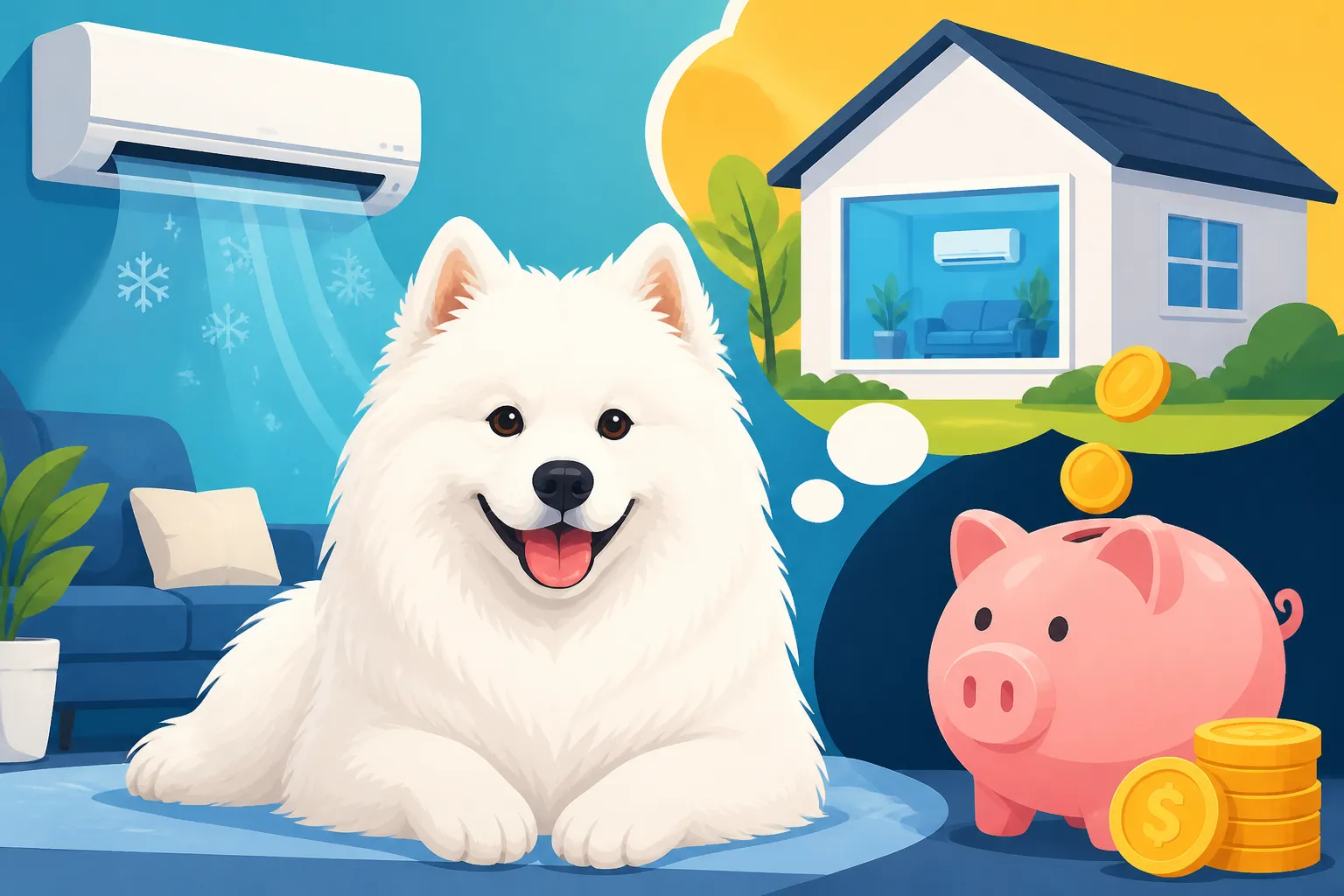
For many Samoyed owners, central air conditioning is the most effective way to keep an entire home at a comfortable, consistent temperature. It provides widespread cooling, reducing humidity, and creating an even environment that your dog can enjoy in any room. The primary cost here is, of course, your electricity bill. Running central AC for extended periods, especially during peak summer months, can significantly increase your monthly expenses. What Air Conditioning Adds to a Samoyed Household goes into more detail about these financial considerations.
Factors affecting this cost include the age and efficiency of your unit, the insulation of your home, and your local electricity rates. An older, less efficient unit might constantly struggle to reach and maintain your desired temperature, essentially running non-stop and guzzling power. Newer, high-efficiency models, while a larger upfront investment, can save a substantial amount on energy bills over time. Regular maintenance, like changing filters and professional servicing, also plays a crucial role in keeping your system running optimally and preventing unnecessary energy waste.
Window Units and Portable Coolers: Spot Cooling Solutions
If central air isn't an option, or if you live in a climate where only certain rooms need significant cooling, window units or portable air conditioners can be viable alternatives. These devices are generally less expensive to purchase than a full central system installation, making them an attractive option for renters or those on a tighter budget. However, their operational costs can still add up, particularly if you run multiple units or rely on them heavily.
Window units are typically more efficient than portable units because they vent heat directly outside. Portable units, while offering flexibility, can be less efficient as they operate within the room and often require a vent hose to a window, which can still allow some heat back in. The challenge with these solutions is that they often cool only a specific area, meaning your Samoyed might be comfortable in the living room, but the bedroom or kitchen could still be too warm. This creates "hot zones" in your home, which isn't ideal for a dog sensitive to heat. You might find yourself needing to keep your Samoyed confined to the cooled room, which can restrict their freedom and your own.
Fans and Ventilation: Supporting Your Primary System
Fans – whether ceiling fans, box fans, or tower fans – are not true cooling devices, as they don't lower the ambient air temperature. What they do is create a wind-chill effect, making the air feel cooler by evaporating moisture from the skin. For humans, this is often enough for comfort, but for a Samoyed, whose primary cooling mechanism is panting, a fan simply moving warm air around may not be sufficient on its own.
However, fans are excellent support systems. When used in conjunction with air conditioning, they can help distribute cool air more effectively throughout a room, allowing you to potentially raise your thermostat a degree or two, saving on energy. Strategic placement of fans can also aid in ventilation, drawing cooler air in from outside during the evening or pushing hot air out. While the electricity cost of running fans is minimal compared to AC, it's important to understand their limitations for a heat-sensitive breed like the Samoyed. They provide comfort, not core temperature reduction.
Strategies for Minimizing Energy Consumption
Let's face it, keeping your home arctic-cool for your Samoyed can feel like a direct assault on your wallet. But it doesn't have to be a choice between your dog's comfort and your financial solvency. There are plenty of smart, proactive strategies you can implement to reduce your energy footprint while still ensuring your fluffy companion stays happy and healthy. It's all about working smarter, not just harder, against the heat.
Optimizing Thermostat Settings and Smart Devices
The most immediate and impactful way to manage cooling costs is by how you set and manage your thermostat. While you might be tempted to blast the AC to a frigid 68 degrees, most dogs, including Samoyeds, can be comfortable a few degrees warmer, especially if other cooling strategies are in place. Aiming for a consistent indoor temperature between 72-75 degrees Fahrenheit is often a good starting point for a Samoyed, though individual dogs vary. Experiment to find the lowest comfortable setting without overcooling.
Smart thermostats, like those from Ecobee or Nest, can be a game-changer. They learn your habits, can be programmed with schedules, and can even be controlled remotely via your phone. This means you can raise the temperature a few degrees while you're at work, saving energy, and then cool it down before you and your Samoyed arrive home. Some even have occupancy sensors, further optimizing energy use. While there's an upfront cost for the device itself, the long-term savings on your energy bill can be substantial, making it a worthwhile investment for any Samoyed owner.
Home Insulation and Sealing Drafts
Think of your home as a giant cooler. If it's well-insulated, it holds its temperature efficiently. If it has gaps and poor insulation, it's like a leaky cooler where all the cold air escapes. Investing in good home insulation – in your attic, walls, and crawl spaces – can dramatically reduce the amount of heat that penetrates your home in summer and escapes in winter. This means your AC unit won't have to work nearly as hard to maintain a comfortable temperature.
Beyond major insulation projects, addressing smaller issues like drafts around windows and doors can make a surprising difference. Gaps where conditioned air can escape or hot air can seep in are energy vampires. Weatherstripping, door sweeps, and caulking around window frames are relatively inexpensive fixes that can yield noticeable savings. Take a walk around your home on a hot day and feel for warm spots near windows and doors; those are prime targets for sealing.
Strategic Shade and Landscaping
Sometimes the best cooling strategies don't involve electricity at all! External factors, like direct sunlight beating down on your roof and windows, significantly contribute to internal heat gain. Strategically planting trees or large shrubs on the south and west sides of your home can provide natural shade, blocking the sun's harsh rays before they even hit your house. Deciduous trees are particularly clever, offering shade in summer and allowing sunlight through in winter when their leaves fall.
If trees aren't an option, consider awnings over windows or installing reflective window films. Even closing blinds and curtains during the hottest parts of the day can block a surprising amount of heat. Think about your Samoyed's favorite napping spots; if they're near a window, closing the blinds can make that spot far more comfortable. Water, Shade and the Summer Plan for a Samoyed offers more ideas for keeping your dog cool outdoors and indoors through passive methods.
Harnessing Natural Ventilation and Night Cooling
There are times when the outside air can actually help cool your home, reducing your reliance on air conditioning. On cooler evenings or early mornings, especially if you live in a climate with significant temperature drops overnight, opening windows on opposite sides of your house can create a cross-breeze. This "night purge" allows cooler air to flush out the heat that has accumulated throughout the day.
This strategy is particularly effective when coupled with ceiling or exhaust fans to draw the cooler air in and push warmer air out. Just remember to close everything up before the outdoor temperatures start to climb again in the morning to trap that cooler air inside. This isn't a year-round solution for everyone, especially in humid climates, but when the conditions are right, it's a wonderfully energy-efficient way to give your Samoyed a breath of fresh, cool air.
Beyond the Air Conditioner: Supplemental Cooling Solutions
While a well-regulated indoor temperature is paramount, there are many other tools and tricks you can employ to ensure your Samoyed stays comfortable, especially when temperatures are particularly challenging or if you need to offer a little extra relief. These supplemental solutions often work in tandem with your primary cooling system, providing targeted comfort for your furry friend.
Cooling Mats and Beds
Cooling mats have become a popular choice for pet owners, and for good reason. They offer a self-contained, often gel-filled, surface that absorbs your dog's body heat and dissipates it, creating a noticeably cooler spot for them to lie on. Many don't require refrigeration or electricity, making them convenient and cost-effective to use. You can often find these mats on retailers like Chewy or specialty pet stores.
However, it's worth noting that not all cooling mats are created equal. Some are designed for short-term relief, while others offer more sustained coolness. For a Samoyed, who generates a fair amount of body heat, you'll want to look for durable, larger mats that can handle their weight and fur. While the initial investment might seem like a lot for a "mat," the comfort it provides your Samoyed can be priceless, especially if they spend a lot of time lounging indoors. We have a whole discussion about these in Whether a Cooling Mat Helps a Samoyed and Whether a Samoyed Owner Needs a Cooling Mat.
Water-Based Cooling: Kiddie Pools and Sprinklers
For Samoyeds who enjoy water, a shallow kiddie pool in a shaded spot in the yard can be an absolute lifesaver on a hot day. It allows them to cool down their paws and belly, which are key areas for heat dissipation. Some Samoyeds will even lie down in the water completely, while others prefer to just wade and splash. Supervise them closely, and make sure the water is fresh and not too deep.
Sprinklers also offer a fun, interactive way for your Samoyed to cool off. Chasing and playing in the spray allows them to wet their fur and paws, providing evaporative cooling. Just ensure the water isn't too cold initially, which can be a shock, and never force a Samoyed into water if they're not comfortable. Remember, their heavy coat can hold a lot of water, so make sure they have a chance to dry completely afterward to prevent skin issues.
Grooming Practices and Professional Services
While we've already established that shaving a Samoyed is a big no-no, proper grooming is incredibly important for their comfort in the heat. A well-maintained coat, free of mats and excessive dead undercoat, allows for better air circulation and insulation. During a coat blow, which can happen once or twice a year, your Samoyed will shed massive amounts of undercoat. Removing this dead fur is vital.
Regular brushing, especially with a good undercoat rake or slicker brush, can help remove loose hair, making their coat more efficient at regulating temperature. A professional groomer who understands double-coated breeds can perform a thorough "deshedding" treatment, which involves special tools and techniques to remove even more undercoat. This service usually comes with a significant price tag, but many Samoyed owners find it worth the investment for their dog's comfort and to reduce the amount of fur tumbleweeds in their home. The costs are outlined more fully in The Grooming Bill on Twenty Pounds of Samoyed Undercoat.
Hydration and Dietary Considerations
Keeping your Samoyed well-hydrated is critical, especially in warmer weather. Always provide fresh, cool water in multiple locations throughout your home and yard. Consider adding ice cubes to their water bowl, or even setting up a pet-specific water fountain to encourage drinking. On hot days, offering frozen treats like ice cubes, pet-safe popsicles, or frozen Kongs filled with yogurt or peanut butter can provide both hydration and a refreshing cool-down.
When it comes to diet, some owners consider switching to a slightly lighter, less calorie-dense food during the hottest months, especially if their Samoyed's activity level naturally decreases due to the heat. High-fat meals can sometimes generate more metabolic heat during digestion, so a diet with moderate fat content might be beneficial. Consult your vet before making any drastic dietary changes. Brands like Ollie, known for fresh, human-grade food, might offer options that are easily digestible and provide good hydration if moisture content is higher.
Long-Term Financial Planning for Samoyed Owners
Owning a Samoyed, particularly in a climate that isn't naturally cold, requires foresight when it comes to finances. The costs associated with keeping them cool aren't just monthly utility bills; they involve strategic planning, potential investments, and sometimes, unexpected veterinary expenses. Approaching this aspect of Samoyed ownership with a clear financial plan will help ensure both your peace of mind and your dog's enduring comfort.
Anticipating Seasonal Spikes in Energy Bills
The most obvious financial impact of cooling a house for a Samoyed is the seasonal spike in your electricity bill. Depending on your climate, this could mean significantly higher utility costs for several months out of the year. In hot regions, these increases can be substantial, transforming a manageable monthly bill into a budget buster. It's not uncommon for Samoyed owners to see their energy costs jump by a significant percentage during the summer.
To prepare for this, consider setting aside a little extra money each month during the cooler seasons to create a "cooling fund." Alternatively, some utility companies offer "budget billing" or "average monthly payment" plans, which level out your energy costs across the entire year, so you pay a consistent amount rather than facing huge spikes. This doesn't reduce your overall consumption, but it makes budgeting much more predictable and less stressful.
The Cost-Benefit of Energy-Efficient Upgrades
While the upfront cost of energy-efficient home improvements can seem daunting, they often pay for themselves over time through reduced energy bills. Upgrading to a high-efficiency HVAC system, replacing old windows with energy-efficient models, or adding insulation might require a substantial initial investment. However, these improvements can lead to significant long-term savings, sometimes cutting your cooling costs by a noticeable percentage.
Before diving into major renovations, it's wise to get an energy audit of your home. Many utility companies offer these, sometimes for free or at a reduced cost. An auditor can identify exactly where your home is losing energy and recommend the most impactful improvements for your specific situation. Consider it an investment in your home and your Samoyed's future comfort, creating a more sustainable and cost-effective environment for both of you.
Considering Pet Insurance for Heat-Related Illnesses
Despite all your best efforts, accidents and emergencies can happen, and heat-related illnesses can be severe and incredibly expensive to treat. Conditions like heatstroke can require emergency veterinary care, intravenous fluids, medication, and sometimes even overnight hospitalization. These bills can quickly run into hundreds or even thousands of dollars, causing immense financial strain during an already stressful time.
This is where pet insurance can provide a crucial safety net. Policies from providers like Healthy Paws can help cover a significant portion of unexpected veterinary costs, including those arising from heatstroke or other heat-induced complications. While you'll have a monthly premium and potentially a deductible, the peace of mind knowing you can provide the best possible care for your Samoyed without worrying solely about the cost is invaluable. It's always best to get pet insurance when your Samoyed is young and healthy, as pre-existing conditions are typically not covered.
General Monthly Budgeting for a Samoyed
Keeping a Samoyed is a commitment, and budgeting for their comfort, especially in warmer climates, needs to be integrated into your overall financial plan. Beyond the obvious food and routine vet visits, factor in those elevated summer utility bills, potential grooming costs (especially if you opt for professional deshedding), and perhaps even the occasional purchase of cooling accessories like mats or a kiddie pool.
Creating a detailed monthly budget that accounts for these "Samoyed-specific" expenses will prevent unwelcome surprises. You might find that during summer, you need to reallocate funds from other discretionary spending categories to ensure your energy bill is covered. It's about being realistic about the needs of this magnificent breed and making sure you can provide them with a high quality of life, regardless of the season. The Full Cost of Thirteen Years With a Samoyed offers a broader look at the long-term financial commitment involved.
| Cooling Method | Initial Cost (Estimate) | Ongoing Cost (Estimate) | Effectiveness for Samoyed | Notes |
|---|---|---|---|---|
| Central Air Conditioning | High | High (Electricity) | High | Best for whole-house, consistent cooling. |
| Window/Portable AC Unit | Medium | Medium (Electricity) | Medium (Spot Cooling) | Good for specific rooms, can be less efficient. |
| Fans (Ceiling/Box) | Low | Low (Electricity) | Low to Medium | Aids circulation, creates wind chill, not true cooling. |
| Cooling Mats/Beds | Medium | Low (None or minor) | Medium (Direct Contact) | Provides cool spot for lounging, non-electric options available. |
| Strategic Landscaping | Medium to High | Low (Maintenance) | Medium (Passive) | Long-term sun blocking, improves home energy efficiency. |
| Home Insulation | High | Low (None after install) | High (Passive) | Reduces heat gain significantly, long-term savings. |
| Water-Based Cooling (Pool) | Low | Low (Water) | Medium to High (Outdoor) | Great for outdoor relief, supervise always. |
| Professional Deshedding | Medium | Medium (Per visit) | Medium | Improves coat's natural insulation, enhances comfort. |
Disclaimer
This article is for general informational purposes only and does not constitute professional advice. Laws, prices and regulations vary by location and change over time. Consult a qualified professional for guidance on your specific situation.