Whether a Cooling Mat Helps a Samoyed
The summer months can be a real struggle for our beloved Samoyeds, with their glorious, thick coats that are so perfectly designed for the freezing Arctic. It’s heart-wrenching to see them panting heavily, desperately trying to find a cool spot, and many of us wonder if those cooling mats we see advertised actually make a difference. This guide will dive deep into whether a cooling mat truly helps a Samoyed cope with the heat, what kind of mats are out there, and how to best use them to give your fluffy friend some much-needed relief.
Understanding Your Samoyed's Natural Cooling System and its Limits
Before we talk about external aids like cooling mats, it’s crucial to understand why Samoyeds struggle with heat and how their bodies are meant to keep them comfortable in their native environment. Their natural adaptations are incredible for extreme cold but become a significant hurdle in warmer climates.
The Double Coat: Friend and Foe
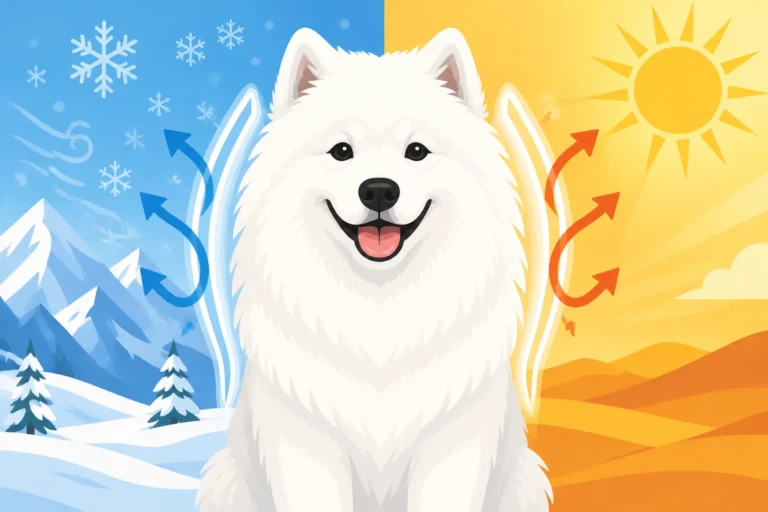
The Samoyed's iconic coat is a masterpiece of natural engineering, truly a marvel to behold. It's a double coat, meaning it has two distinct layers. The outer layer consists of long, coarse guard hairs that are designed to shed dirt, snow, and moisture. They create a protective barrier, almost like a waterproof outer shell. Then, underneath this, lies the truly incredible part: a dense, woolly undercoat. This undercoat is what provides the extraordinary insulation, trapping air close to the body. In winter, this trapped air warms up, keeping the Samoyed cozy even when temperatures plummet far below freezing.
The paradox, however, is that this very same coat, which is a lifesaver in the cold, can become a significant challenge in the heat. Many people mistakenly think shaving a Samoyed will help them cool down, but it actually disrupts this natural insulation. The coat is designed to not only trap warm air in winter but also to keep hot air out in summer, acting as a barrier against solar radiation. However, if the undercoat isn't properly maintained through regular brushing, it can become matted and compacted. When this happens, it ceases to allow air circulation, turning into a thick, suffocating blanket that traps heat against the skin. This is a common pitfall for owners, leading to a lot of discomfort for the dog. Regular grooming, especially during a coat blow, is far more effective than shaving.
Why Samoyeds Struggle in Heat
Our Samoyeds hail from the vast, icy expanses of Siberia, where temperatures routinely dip to extremes that most of us can barely imagine. Their ancestors lived alongside the Nenets people, pulling sleds and herding reindeer in a world dominated by snow and ice. Their entire physiology is geared towards thriving in such an environment. When we bring them into a typical American summer, with its humidity and high temperatures, their bodies are simply not equipped to handle it efficiently. Think about A Samoyed Built for Sixty Below in an American Summer and then imagine that same dog in a sweltering July afternoon. It's a mismatch.
Dogs primarily cool themselves by panting, which allows moisture to evaporate from their respiratory tract, carrying heat away from the body. Unlike humans, they don't sweat significantly through their skin (they do have sweat glands in their paw pads, but this is minor). In high humidity, the evaporative cooling from panting becomes much less effective because the air is already saturated with moisture. This means your Samoyed is working harder to cool down, but getting less relief. They are also much closer to the ground, where heat radiates off pavement and asphalt, creating a miniature heat island effect around them. This is why you'll often see them seeking out any patch of cool tile or shady grass they can find. If you notice Signs a Samoyed Is Overheating, it's crucial to act quickly.
What Exactly is a Cooling Mat and How Does It Work?
Given their struggles with heat, many Samoyed owners look for supplemental ways to help their dogs stay comfortable. Cooling mats are a popular option, but not all mats are created equal, and understanding their mechanism can help you choose the right one for your furry friend.
Types of Cooling Mats Available
The market for pet cooling products has expanded quite a bit, offering a few different types of mats, each with its own way of providing a cool surface.
Firstly, and probably the most common, are gel-filled mats. These are usually sealed mats containing a non-toxic cooling gel. The magic here is often pressure-activated. When your Samoyed lies down on the mat, the pressure of their body weight activates the gel, causing it to draw heat away from their body and dissipate it into the mat itself. These mats typically don't require refrigeration or electricity, making them quite convenient. They slowly re-cool themselves when not in use.
Secondly, you'll find water-filled mats. These mats have a chamber that you fill with water, often with a small amount of liquid to help with heat transfer. Some might even have a removable insert that you can chill in the refrigerator or freezer before placing it back into the mat. These can be very effective as water has a great capacity to absorb heat. However, they require a bit more effort to maintain, needing to be filled and potentially refilled, and there's always the slight risk of a leak, especially if your Samoyed is a chewer.
Lastly, though less common for direct "mats," you might encounter systems that use circulation or active cooling. These are more elaborate, often involving a small pump that circulates chilled water through a pad, or even battery-operated fans integrated into a bed. While powerful, they are typically more expensive, require a power source or battery charging, and might not be as durable for a large, playful Samoyed. For the average owner, the passive gel or water-filled mats are usually the go-go options available widely on Chewy or Amazon.
The Science Behind the Chill
At its heart, the concept behind cooling mats is pretty straightforward: heat transfer. When your Samoyed lies on a surface that is cooler than its body temperature, heat naturally flows from the warmer object (your dog) to the cooler object (the mat). This process is called conduction.
With gel-filled mats, the specialized gel inside has a phase-change material that remains cooler than ambient temperature for a period, or it simply absorbs heat from your dog and then slowly releases it into the surrounding air once the dog moves off. The pressure activation helps concentrate the cooling effect where your dog is actually lying. It's not actively refrigerating, but rather creating a heat sink. Imagine placing your hand on a cool tile floor – that immediate relief is similar to what a gel mat offers.
Water-filled mats work on a similar principle, but water is an excellent conductor of heat. When cool water is inside the mat, it readily absorbs heat from your Samoyed. As the water warms up, the mat's effectiveness diminishes, which is why chilling the water or mat beforehand can boost its performance. The larger the volume of water, the more heat it can absorb before warming up significantly. Both types are designed to offer a localized, cool surface that helps bring down your dog's core body temperature by providing a comfortable spot for them to lie.
Does a Cooling Mat Actually Help a Samoyed?
Now for the million-dollar question: are cooling mats truly beneficial for a Samoyed, or are they just a gimmick? The answer, like most things in dog ownership, is a nuanced one. They can certainly help, but they are not a complete solution.
The Benefits: Targeted Relief
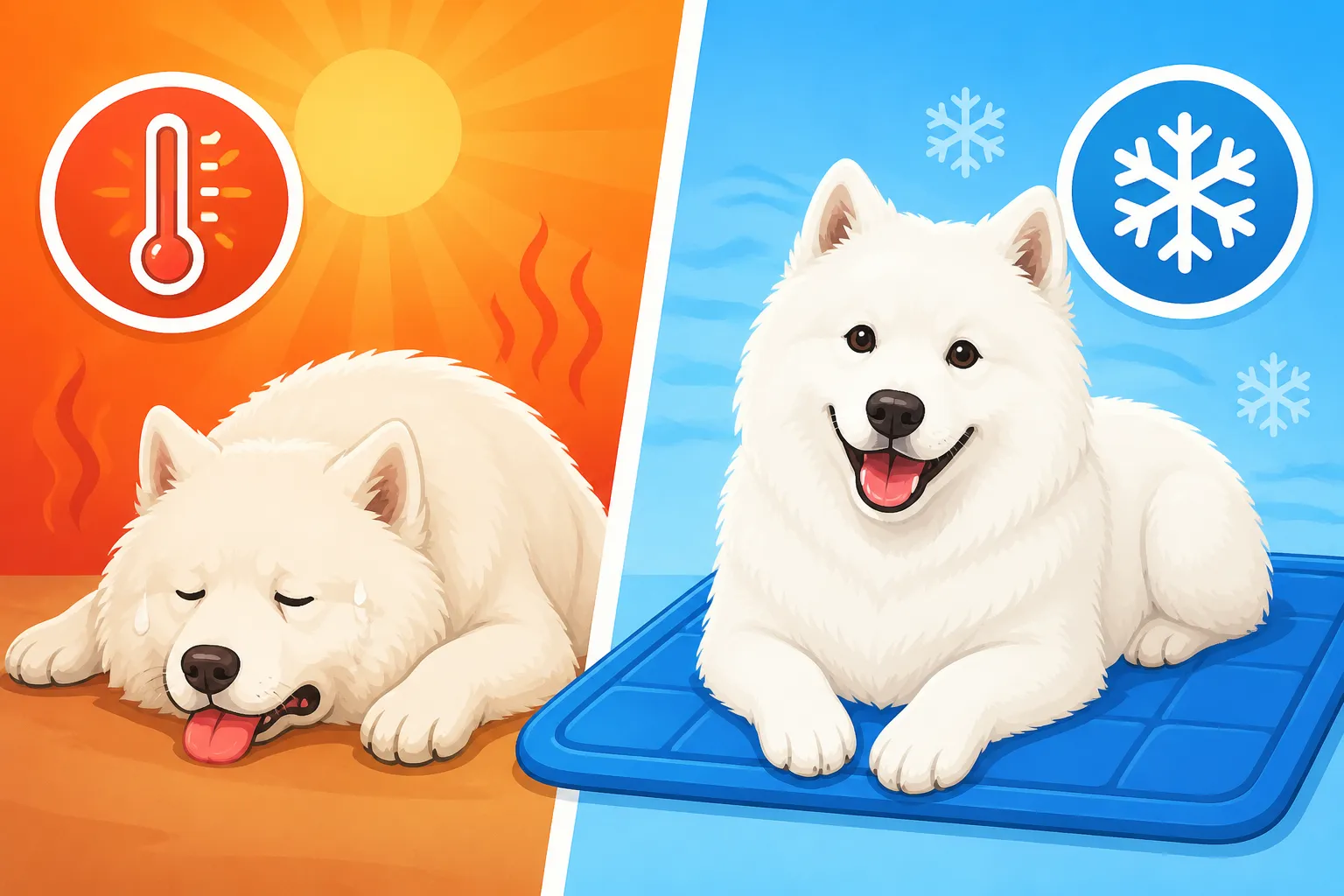
A cooling mat can be a wonderful tool for providing targeted, immediate relief to your Samoyed, especially on those sweltering days or after a bit of light activity. Think of it this way: your Samoyed is overheating, panting, and constantly seeking out the coolest spot on your floor. A cooling mat provides that exact desired cool surface. When your Samoyed lies on it, the mat draws heat directly away from their body through conduction, offering a localized drop in temperature.
This immediate sensation of coolness can significantly increase your dog's comfort. It's particularly helpful for older Samoyeds or those with mobility issues who might struggle to shift positions frequently to find cool spots. For a senior dog, who might already be Caring for an Old Samoyed and less tolerant of heat, a mat can provide a welcome sanctuary. We've seen our own Samoyeds practically melt onto a cool surface, sighing with relief, and a mat offers a reliable spot without them having to search the entire house for it. It can also aid in a quicker cool-down period after a short walk in the early morning or late evening, helping them regulate their temperature more efficiently.
The Limitations: Not a Magic Bullet
While beneficial, it's crucial to understand that a cooling mat is not a magical solution to all your Samoyed's heat problems. It's a supplementary tool, not a primary defense against severe heat. The mat only cools the parts of the dog's body that are in direct contact with it. This means it's not going to bring down their entire core body temperature dramatically, especially if the ambient air temperature in the room is still very high. It's like putting an ice pack on your forehead when the whole room is 95 degrees – it helps a little, but you're still hot.
Another limitation is that it doesn't address the overall humidity, which, as we discussed, severely impacts a Samoyed's ability to pant effectively. If your home is stifling and humid, a cooling mat alone won't prevent overheating. Furthermore, some Samoyeds are natural chewers, and a gel or water-filled mat might prove too tempting, leading to leaks or destruction. You'll want to supervise initial use. And finally, Samoyeds are instinctively driven to create cool spots by digging – a behavior we know as The Digging a Samoyed Does Because It Is Hot. While a mat offers a similar benefit, it's a fixed surface and doesn't allow for the same behavioral outlet.
Considerations for Samoyed Owners
When considering a cooling mat for your Samoyed, a few practical points come to mind. First, durability is key. Samoyeds can be powerful chewers, and even if they're not actively trying to destroy it, their strong teeth and claws can accidentally puncture softer materials. Look for mats made with robust, tear-resistant fabrics. Second, size matters. Your Samoyed should be able to stretch out comfortably on the mat, with plenty of surface area for contact. A small mat that only covers a portion of their belly won't be as effective. A quick browse on Chewy or Amazon will show you various sizes, so measure your dog!
Finally, placement is crucial. A cooling mat placed in direct sunlight or in a hot, stuffy room will be much less effective than one positioned in a shaded, well-ventilated area, or even better, in a room with Whether a Samoyed Needs Air Conditioning. Consider where your Samoyed naturally seeks out cool spots – that's likely the best place for the mat.
Maximizing the Effectiveness of Your Cooling Mat
To get the most out of your cooling mat and ensure your Samoyed truly benefits, it's important to integrate it into a broader heat management strategy. A cooling mat is a piece of the puzzle, not the whole picture.
Strategic Placement and Usage Tips
The placement of your cooling mat can make a world of difference. Don't just toss it anywhere and expect miracles. Find the coolest spot in your home that your Samoyed already frequents. This might be a tile floor in the kitchen, a shady corner in a room with good airflow, or near a fan. If you have air conditioning, placing the mat in the coldest room will naturally amplify its cooling potential. You want to make it an inviting oasis.
When you first introduce the mat, do so positively. Let your Samoyed explore it at their own pace. You can entice them with a favorite toy or a tasty treat from a brand like Ollie. Gently guide them to lie on it. Some dogs take to it immediately, while others might be wary of the new texture or sensation. Make it a comfortable, rewarding experience. If you have a particularly fluffy Samoyed, you might find that after a good brushing to remove loose undercoat, the mat's cooling effect is even more noticeable, as there's less insulating fluff between their body and the cool surface. How Often a Samoyed Needs Brushing is a critical part of summer care.
When to Seek Other Cooling Methods
Remember, a cooling mat is a supplemental aid. It works best when combined with other strategies to beat the heat. Ensuring your Samoyed has constant access to fresh, cool water is non-negotiable. You might even add ice cubes to their water bowl. Utilizing fans around the house, especially pointing towards their resting areas, can create a refreshing breeze and help with evaporative cooling. As mentioned, air conditioning is often a necessity for Samoyeds in warm climates; What Air Conditioning Costs a Samoyed Owner in Summer is simply a part of responsible ownership in these areas.
Limiting outdoor exercise to the very early morning or late evening is crucial. Avoid walks during the hottest parts of the day, as Whether a Samoyed Should Walk at Midday is almost always a resounding no. Pavement can get scorching hot and burn their paw pads, not to mention rapidly overheating their bodies. For those Samoyeds who love water, a shallow kiddie pool can be an absolute lifesaver. Whether a Kiddie Pool Cools a Samoyed dramatically, providing a full-body cool-down. If you suspect your Samoyed is truly struggling with the heat, don't hesitate to wet them down with a hose (avoiding their face) or apply cool, damp towels to their groin, armpits, and neck. These areas have large blood vessels close to the surface, making them effective cooling points.
Ultimately, a cooling mat is a fantastic piece of equipment to have in your Samoyed's heat-management arsenal. It provides a consistent, comfortable cool spot for them to retreat to, offering relief from the relentless summer heat. Just be sure to use it as part of a comprehensive strategy to keep your fluffy companion happy and healthy through the warmer months.
Here’s a quick comparison of popular cooling mat types:
| Feature | Gel-Filled Cooling Mat | Water-Filled Cooling Mat |
|---|---|---|
| Cooling Mechanism | Pressure-activated gel absorbs and dissipates heat. | Water absorbs heat; may require pre-chilling. |
| Setup | Ready to use; no external power or refrigeration needed. | Requires filling with water (sometimes chilling). |
| Maintenance | Wipes clean; self-recharges when not in use. | May need water refilling/changing; potential for leaks. |
| Portability | Generally highly portable and foldable. | Can be bulky when filled; less portable if full. |
| Durability Concern | Puncture risk from chewing/claws (gel contents). | Puncture risk (water leakage). |
| Initial Coolness | Consistent, moderate coolness. | Can be very cold if pre-chilled. |
| Recharge Time | Minutes to an hour or two without pressure. | Depends on water temperature, faster if re-chilled. |
| Price Point | Varies widely, generally mid-range. | Similar to gel, can be higher for advanced models. |
Disclaimer
This article is for general informational purposes only and does not constitute professional advice. Laws, prices and regulations vary by location and change over time. Consult a qualified professional for guidance on your specific situation.