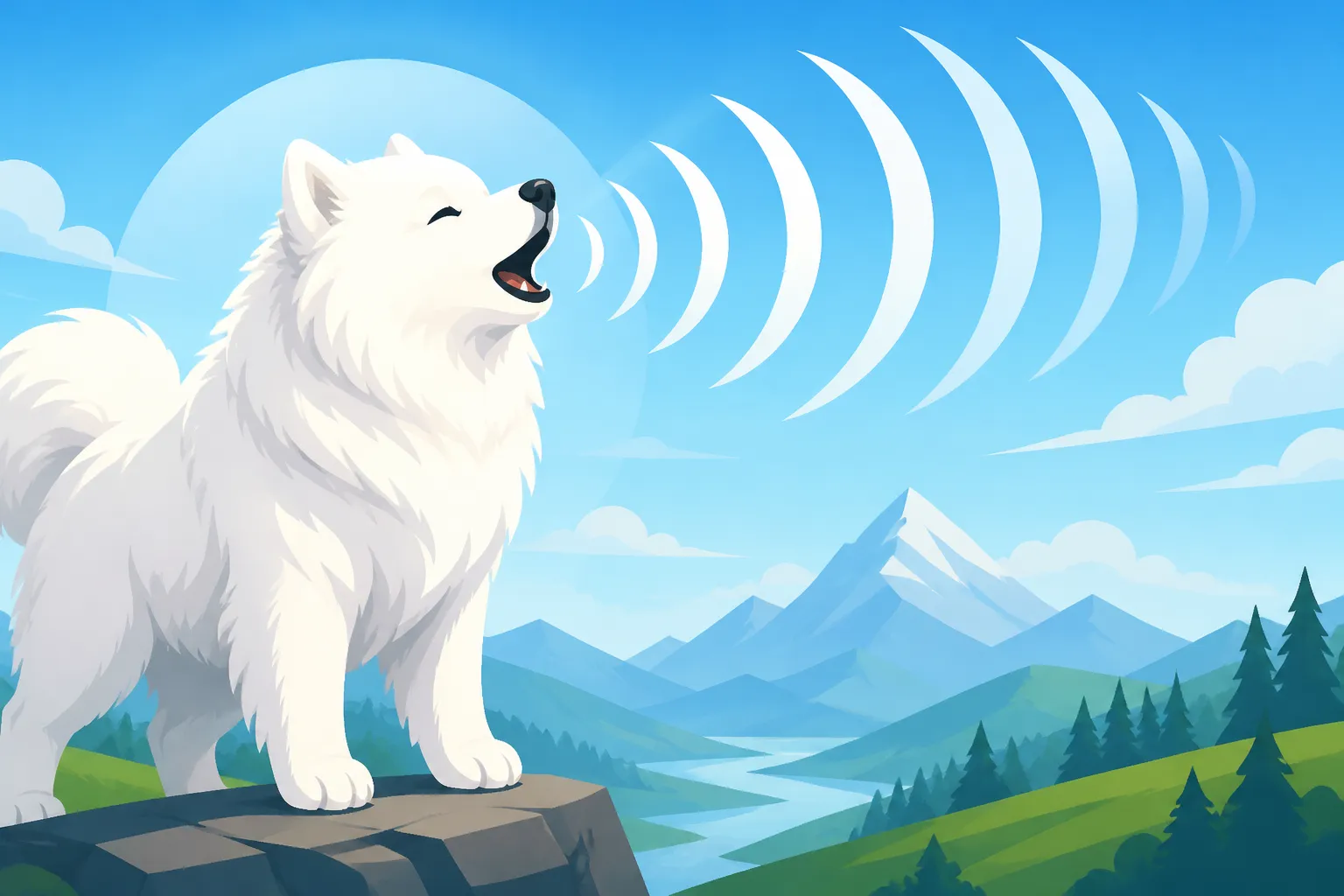
How Far a Samoyed’s Voice Carries
It's a familiar scenario for many Samoyed owners: you're enjoying a quiet morning, your fluffy companion is out in the yard, and then it happens. That distinctive, melodious, yet incredibly far-reaching Samoyed vocalization rings out, seemingly traveling for miles. It’s enough to make you wonder just how far that beautiful, albeit sometimes disruptive, voice truly carries. This guide will explore the unique acoustics of the Samoyed's voice, delve into real-world scenarios of its travel, and offer practical strategies to manage those impressive vocalizations.
The Unique Acoustics of the Samoyed's Voice
Samoyeds are renowned for their incredible vocal range, which goes far beyond a simple "bark." They have a whole dictionary of sounds, from the happy "woo-woo" to the infamous "Samoyed Scream." What makes these sounds travel so effectively, reaching ears far and wide? It's a combination of breed characteristics and the nature of sound itself.
Why Samoyed Vocalizations Carry So Well
Unlike many breeds that primarily bark, Samoyeds often lean into a variety of howls, yips, and what can only be described as full-throated "talking." These vocalizations are often higher in pitch and can sustain longer than a typical dog bark. Higher-pitched sounds, especially sustained ones, tend to travel further and are less absorbed by obstacles in their path, particularly in open environments. Think about how a siren cuts through ambient noise compared to a deep rumble; a Samoyed's high-frequency "woo-woo" has a similar advantage. It’s not just noise; it's a communication style refined over centuries. What a Samoyed Sounds Like When It Talks delves deeper into their varied vocabulary.
Moreover, the sheer volume some Samoyeds can produce is astounding. It’s not a quiet yip; it's a robust, full-bodied expression. This high volume, combined with the sound frequencies they produce, means less energy is lost over distance, allowing their voice to maintain clarity and presence further away from the source. It’s a bit like a natural megaphone built right into their fluffy throats, designed to communicate across wide, open tundra.
The Impact of Environmental Factors on Sound Travel
The environment plays a huge role in how far any sound, including your Samoyed's vocalizations, will travel. If your Samoyed is letting out a happy greeting in a wide-open park, that sound will diffuse and dissipate over a larger area relatively quickly, reaching many ears but perhaps not with intense clarity. However, the same vocalization in a dense urban canyon between tall buildings can bounce and echo, amplifying its reach and intensity.
Humidity, temperature, and wind also affect sound propagation. In still, humid air, sound can travel surprisingly far. Wind, especially when blowing in the direction of the sound, can carry those barks and howls much further than usual. If you live near a large body of water, sound often travels incredibly well across it, sometimes catching you by surprise at how far your Samoyed's joyful yodels can be heard by distant boaters or neighbors across a lake. Understanding these factors can help explain why your Samoyed's morning serenade might be a bigger deal on some days than others.
Real-World Scenarios: How Far Can That Sound Actually Go?
It's one thing to understand the physics, but what does it mean for you and your neighbors? How far can a Samoyed's voice really carry in everyday situations? The answer, as you might expect, depends heavily on the specific situation and the type of vocalization.
Apartment Living vs. Suburban Yards
In an apartment building, the concern isn't usually miles, but floors and shared walls. A Samoyed's persistent "talking" or excited barks can easily penetrate typical apartment walls and floors, traveling to adjacent units, upstairs, downstairs, and out into hallways. This is often why Whether a Samoyed Suits an Apartment Building is such a common question. Even with thicker walls, the high-pitched components of their vocalizations can find a way through, especially during moments of high excitement or separation anxiety. A stressed Samoyed's howl can echo through stairwells and elevator shafts, carrying its message of distress to a surprisingly large portion of the building.
In a suburban yard, the range expands significantly. Imagine your Samoyed sees a squirrel or hears another dog down the street and launches into a series of enthusiastic barks and howls. In a typical residential area with houses and trees, these sounds can easily carry several houses down the block, sometimes even across a street or two. On a quiet evening, with less ambient noise to contend with, their vocalizations can be heard even further, potentially reaching neighbors several hundred feet away. Many Samoyed owners can attest to neighbors mentioning hearing their dog even when they felt the dog was "just talking to himself" in their own yard. This often leads to concerned questions like What Neighbors Say About a Samoyed.
Open Spaces and Rural Environments
When you take your Samoyed to an open field, a hiking trail, or live in a more rural setting, that's where their voice truly demonstrates its impressive carrying power. In these less obstructed environments, with fewer buildings to absorb or block sound, a Samoyed's howl can travel for incredible distances. Owners have reported hearing their Samoyeds from half a mile or even a full mile away in very quiet, open conditions, such as during a hike through a forest or across a field.
Consider a scenario where you're at a dog park, and your Samoyed is having a blast. Their excited yips and joyful woos might be heard from the parking lot or even by people walking on a nearby path a fair distance away. While this can be charming, it also underscores the need for excellent recall training, as their vocalizations can easily give away their position if they've managed to get out of bounds. The natural world might absorb some of the sound with foliage and uneven terrain, but the open air allows it to travel with remarkable efficiency.
Mitigating the Reach of Your Samoyed's Voice
While a Samoyed's vocalizations are part of their charm, their ability to carry far can sometimes lead to issues with neighbors or simply be overwhelming. Thankfully, there are steps you can take to manage and reduce the reach of their glorious, yet loud, expressions.
Training for Quieter Behavior
The most effective long-term solution is consistent training. Teaching a "quiet" cue is paramount. This involves rewarding silence after a vocal outburst. For example, when your Samoyed barks at something outside, let them get a few barks out, then redirect their attention with a treat and praise when they're silent. The BAXTER & Bella online puppy training program or similar positive reinforcement courses can provide structured guidance for this, helping you build a strong foundation of communication with your Samoyed.
Addressing the root cause of the vocalization is also crucial. Is your Samoyed barking out of boredom? Anxiety? Excitement? If it's boredom, increasing exercise and mental stimulation can help. A long walk, a stimulating puzzle toy, or even training sessions focusing on new tricks can reduce the need for excessive vocalization. If it's excitement when people arrive, practicing "place" or "settle" commands can teach them to manage their enthusiasm more quietly. Consistency is key, and every family member needs to be on board with the training plan. You might find Teaching a Samoyed a Quiet Cue offers more specific techniques.
Soundproofing and Environmental Adjustments
Physical barriers can help, especially in smaller spaces like apartments or shared walls in houses. Heavy curtains or sound-absorbing panels on walls can make a noticeable difference in preventing sound from traveling. For a particularly vocal dog in a crate, a crate cover can sometimes dampen sound and also provide a sense of security, which might reduce anxiety-induced vocalizations. When searching for sound-dampening materials or heavy-duty crate covers, online retailers like Amazon offer a wide array of options that can fit various needs and budgets.
Outdoors, consider creating physical buffers. Dense plantings, solid fencing, or even strategically placed outdoor structures can absorb some sound. If your Samoyed barks at passersby, an opaque fence can remove the visual trigger. Planting a row of evergreen trees or a thick hedge can also serve as a natural sound barrier, both absorbing and deflecting sound waves. This isn't just about blocking sound; it's about altering the environment to reduce the stimuli that cause the vocalization in the first place.
Living with a Vocal Samoyed: Acceptance and Management
Ultimately, owning a Samoyed means embracing their vocal nature to some extent. They are a talking breed, and trying to silence them completely would be like trying to silence a bird – it goes against their very essence. The goal is management, not eradication.
Setting Expectations and Communicating with Neighbors
It’s important to have realistic expectations for your Samoyed's vocalizations. While you can train them to be quieter, some level of "Samoyed talk" will always be present. Proactive communication with your neighbors can make a huge difference. Letting them know you're working on training, providing them with your contact information in case of an issue, and even a small gesture like a plate of cookies can go a long way in fostering understanding and goodwill. Most people are more tolerant when they know you're aware of the issue and actively addressing it. This is especially important for The Samoyed That Wakes the Neighbors.
For those who travel or leave their Samoyed alone for periods, consider options like dog walkers or doggy daycare to break up long stretches of solitude, which can often lead to boredom or anxiety-induced vocalizations. If these aren't feasible, using white noise machines or leaving on a radio can help mask external sounds that might trigger vocalization, offering a bit more peace for your Samoyed and quieter moments for your neighbors.
When to Seek Professional Help
If you've tried consistent training and environmental adjustments and your Samoyed's vocalizations are still excessive, disruptive, or seem rooted in deep-seated anxiety or fear, it's time to consult a professional. A certified dog trainer or a veterinary behaviorist can provide personalized guidance and uncover underlying issues you might not have identified. They can offer advanced training techniques, discuss behavior modification plans, and even recommend medication if severe anxiety is a factor.
Ignoring persistent, problematic vocalizations won't make them go away; in fact, they often get worse over time. Investing in professional help early can save you a lot of stress and prevent issues from escalating, helping both you and your Samoyed live a happier, quieter life together.
| Vocalization Type | Typical Volume (Relative) | Carrying Distance (Suburban) | Common Triggers | Management Strategies |
|---|---|---|---|---|
| Bark | High | 100-300 feet | Strangers, squirrels, other dogs, doorbells | "Quiet" cue, opaque fencing, desensitization |
| Howl | Very High | 300-600 feet+ | Sirens, loneliness, other howling dogs | Address separation anxiety, white noise, mental stimulation |
| Yip/Yap | Medium-High | 50-150 feet | Excitement, play, mild frustration | Redirect energy, teach "settle" |
| "Woo-Woo" Talk | Medium | 20-100 feet | Greeting, attention-seeking, happiness | Reward calm greetings, redirect attention |
| Samoyed Scream | Extreme | 500 feet+ | Frustration (e.g., vet, grooming), high excitement | Desensitization, positive association, professional help |
While the charming "Samoyed smile" is world-famous, their impressive vocal range is equally a hallmark of the breed. Understanding The Samoyed Scream and Why It Is Not Barking helps owners appreciate the distinction between typical barks and their more dramatic vocalizations. With patience, consistent training, and sometimes a few strategic environmental changes, you can manage the impressive reach of your Samoyed's voice, ensuring harmony not just within your home, but also with your neighbors. Remember, your Samoyed wants to communicate, and learning to understand and guide that communication is part of the joy of sharing your life with these wonderful, expressive dogs.
Disclaimer
This article is for general informational purposes only and does not constitute professional advice. Laws, prices and regulations vary by location and change over time. Consult a qualified professional for guidance on your specific situation.