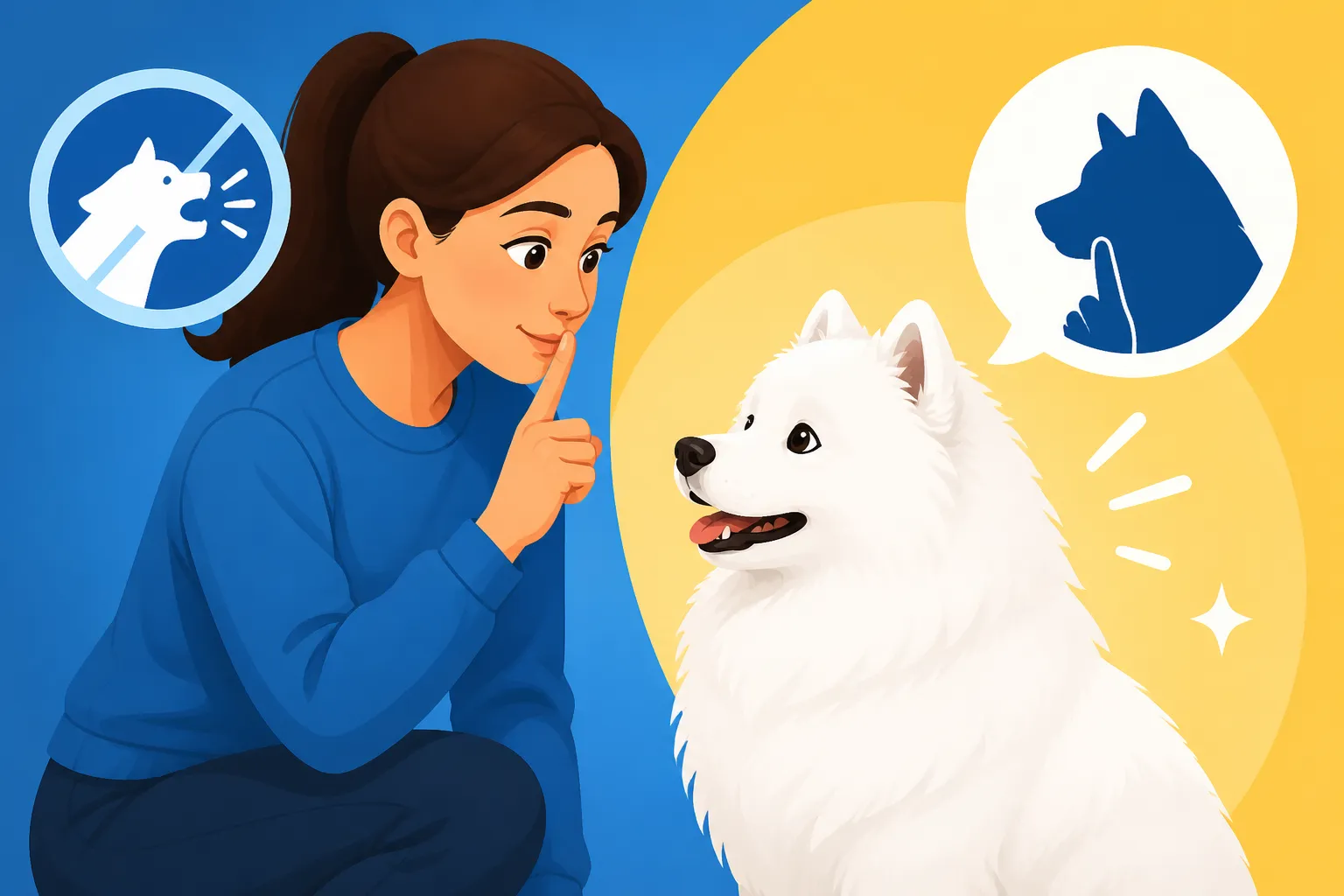
Teaching a Samoyed a Quiet Cue
Living with a Samoyed often means living with a lot of joyful, enthusiastic noise. That signature "Samoyed scream" or insistent "talking" can be endearing, but when it ramps up to excessive levels, it can quickly become overwhelming, not just for you but for your neighbors as well. This comprehensive guide will walk you through the practical steps and empathetic understanding needed to teach your beloved fluffy companion a reliable "quiet" cue, bringing a much-needed sense of calm back to your home.
Understanding Your Samoyed's Vocal Nature
Before we can even begin to tackle the "how" of teaching a quiet cue, it's absolutely crucial to understand the "why" behind your Samoyed's vocalizations. These aren't just random noises; they're deeply ingrained behaviors that served a purpose for their ancestors and continue to be a primary way your Samoyed communicates. Trying to shut down a behavior without understanding its root cause is like trying to fix a leaky faucet by painting over the water stain – it won't solve the real problem.
The Samoyed Scream vs. Barking
Many people confuse the various sounds a Samoyed makes with typical dog barking, but there's a distinct difference, and appreciating this can change your entire approach to training. While a Samoyed can bark, they often prefer a whole repertoire of other sounds. The "Samoyed scream" is a prime example – it's a high-pitched, often sustained vocalization that can sound almost like a human shouting in excitement or distress. It's truly unique to the breed and can be incredibly startling and loud, easily carrying across a neighborhood. Then there's the "woo-woo" sound, the yodels, the growls that are often playful, and the various murmurs and grumbles they use to express themselves.
These aren't always a sign of aggression or distress; sometimes, they're simply expressions of pure joy, anticipation, or a desire for attention. Imagine your Samoyed seeing you pull out their leash for a walk – instead of a bark, you might get a full-throated, excited scream that echoes through the house. Or perhaps a visitor arrives, and your Samoyed greets them with a series of happy yodels. Understanding these nuances helps you realize that you're not trying to silence your dog entirely, but rather to teach them when and how to be quiet on cue, rather than leaving it up to their whims. They're telling you something, and while we want them to quiet down, we also want to acknowledge their communication. This often leads people to ask What a Samoyed Sounds Like When It Talks.
Why Samoyeds Are So Vocal
So, why are Samoyeds such chatty Cathys (or Catherines, as the case may be)? Their history offers a big clue. The Nenets people, who bred Samoyeds in Siberia, relied on these dogs for herding reindeer, pulling sleds, and even sleeping alongside them in tents to provide warmth. In such close quarters and with such varied tasks, communication was key. While barking might alarm prey or predators, varied vocalizations were likely important for working with their human partners and other dogs in a team. They didn't just bark; they used a whole language to convey messages.
Today's Samoyeds retain that strong genetic predisposition for vocalization. They're intelligent, social, and often have a strong desire to interact with their environment and their people. For many Samoyeds, vocalizing is a self-reinforcing behavior – it gets a reaction from you, whether it's attention, a scolding, or an attempt to quiet them down, all of which can be seen as a form of attention. This can make them feel like their voice is effective, which only encourages them to be more vocal. If you've ever wondered How Loud a Samoyed Gets, you already know the answer is "very loud," and this deeply embedded trait is why.
Identifying Triggers for Loud Vocalizations
To effectively teach a quiet cue, you need to become a detective and figure out what sets off your Samoyed's vocal symphony. Is it the doorbell? The mail carrier? Other dogs walking by the window? Or is it something internal, like boredom, anxiety, or a desperate plea for playtime? Keep a journal for a few days, noting down the time, the type of vocalization, and what was happening just before it started.
Common triggers include:
- Arrivals/Departures: Someone coming to the door, family members leaving or returning, or even just hearing car doors outside.
- External Stimuli: Squirrels in the yard, passing pedestrians, other dogs, loud noises from neighbors, or even changes in weather.
- Attention Seeking: Wanting to play, demanding food, or simply wanting you to acknowledge their presence. They learn quickly that Why a Samoyed Vocalizes Instead of Barking often gets them what they want.
- Boredom/Lack of Stimulation: A Samoyed with pent-up energy, whether physical or mental, is a vocal Samoyed. They need a "job" to do, and if they don't have one, making noise can become their job. This is often linked to What a Bored Samoyed Does to a House.
- Anxiety/Fear: While Samoyeds are generally friendly, some can be reactive to certain situations or suffer from Separation Anxiety in a Samoyed which often manifests as prolonged howling or distress cries when left alone.
Once you identify these triggers, you can begin to strategize how to either manage the environment to reduce the trigger or work on counter-conditioning your Samoyed's reaction to it. It's not about making them stop reacting, but teaching them to react in a more appropriate, less noisy way.
Setting the Stage for Successful Quiet Training
You wouldn't expect a Broadway star to perform without a stage, props, and a receptive audience, right? The same goes for your Samoyed. Setting up the right environment, having the necessary tools, and adopting the correct mindset are all foundational elements for successfully teaching a "quiet" cue. Without these pieces in place, you're likely to find yourself frustrated and making less progress than you'd like.
Creating a Calm Environment
A chaotic or overstimulating environment is the enemy of quiet training. Your Samoyed is acutely aware of its surroundings, and every sound, sight, and scent can be a potential trigger for vocalization. Before you even think about starting specific "quiet" exercises, take a good look at your dog's living space and daily routine.
Start by trying to minimize obvious triggers. If your Samoyed barks incessantly at people walking by the front window, consider using privacy film on the lower panes, closing blinds, or even moving their favorite resting spot to a less stimulating area during peak pedestrian traffic times. For outdoor triggers, a solid fence can block visual access, though it might not block sounds. Inside, providing a quiet, comfortable "den" – perhaps a cozy crate covered with a blanket, or a dog bed tucked away in a low-traffic room – can give them a safe retreat where they feel less compelled to react to every little noise.
Routine is another huge factor in creating calm. Dogs thrive on predictability. Consistent feeding times, regular potty breaks, and a predictable schedule for walks and playtime can significantly reduce anxiety and attention-seeking vocalizations. For example, knowing exactly when their next meal is coming can reduce frantic cries for food. You might consider looking at advice like Whether a Samoyed Needs a Consistent Feeding Schedule to help establish good routines.
Essential Tools for Training
You don't need a professional training studio, but having a few key tools on hand will make your "quiet" training much smoother and more effective.
- High-Value Treats: Forget the dry kibble. For training a challenging cue like "quiet," you need treats that are irresistible to your Samoyed. Think small pieces of cooked chicken, cheese, hot dogs, or liver. These are your primary motivators. What Actually Motivates a Samoyed is almost always high-value food, so don't skimp here.
- Treat Pouch: This might seem minor, but it's a game-changer. A treat pouch worn around your waist (easily found on platforms like Amazon) means treats are always immediately accessible. Timeliness is critical in dog training; a delay of even a few seconds can dilute the impact of your reward.
- Clicker (Optional but Recommended): A clicker marks the exact moment your dog performs the desired behavior (being quiet). It's a clear, consistent sound that is far more precise than your verbal praise. If you haven't clicker-trained before, it's easy to learn, and there are many online resources, including from programs like BAXTER & Bella, that can guide you.
- Durable Chews/Puzzle Toys: These aren't for active training of the "quiet" cue, but they are invaluable for managing downtime and preventing boredom-related vocalizations. A KONG stuffed with peanut butter or a puzzle toy that dispenses treats can keep your Samoyed happily occupied for a significant period, reinforcing quiet behavior indirectly.
- Leash and Collar/Harness: Even for indoor training, having your Samoyed on a leash can be helpful in managing their movements and gently guiding them if they get too excited or distracted.
The Importance of Consistency and Patience
If there's one thing Samoyed owners know, it's that these dogs are often described as "stubborn" or "independent." While I prefer to call them "thinking dogs" who like to negotiate, this trait means that consistency and patience are not just virtues – they are absolute necessities for success.
- Consistency: Every member of the household needs to be on the same page regarding the "quiet" cue, how it's delivered, and how rewards are given. If one person allows barking and another tries to enforce quiet, your Samoyed will quickly learn that the rules are flexible and may choose to ignore the cue entirely. It's crucial that the cue is always followed by the desired response (quiet) and rewarded. Even if your Samoyed only gives a momentary pause, reward that.
- Patience: You're working against deeply ingrained instincts and learned behaviors. There will be setbacks. There will be days when your Samoyed seems to have forgotten everything you taught them. This is normal. Resist the urge to get frustrated or raise your voice; this often only escalates the vocalization. Take a deep breath, go back to basics, and remember that progress isn't always linear. Celebrate the small victories, like a shorter barking spell or a quicker response to the cue. Remember, Why Raising Your Voice Fails on a Samoyed is because it often just adds to the noise and excitement, which can be exactly what they wanted in the first place.
| Aspect of Training | Description | Why It Matters |
|---|---|---|
| High-Value Treats | Cooked chicken, cheese, hot dogs, specific wet dog treats. Must be small and easy to swallow quickly. | Samoyeds are highly motivated by food, especially for challenging behaviors. Standard kibble usually isn't exciting enough to override strong instincts. |
| Timing of Rewards | Deliver the treat immediately (within 1-2 seconds) of the desired behavior (quiet). | Dogs live in the moment. Delayed rewards make it difficult for them to connect the reward to the specific action you want to reinforce. |
| Positive Reinforcement | Focus on rewarding quiet behavior, rather than punishing vocalizations. Avoid yelling, pushing, or using harsh corrections. | Punishing vocalization can create fear or anxiety, leading to more vocalization or other behavioral issues. Positive reinforcement builds trust and a desire to please. |
| Short Training Sessions | Aim for 5-10 minute sessions multiple times a day. | Samoyeds can get bored with repetition. Short, frequent sessions keep them engaged and prevent mental fatigue. How Many Repetitions a Samoyed Needs is often fewer but more varied. |
| Generalization | Practice the "quiet" cue in various locations and with different types of distractions. | A cue learned in one context (e.g., quiet house) won't automatically transfer to another (e.g., doorbell ringing) without specific practice. |
Step-by-Step: Teaching the "Quiet" Cue
Now that we've laid the groundwork, let's get into the nitty-gritty of how to actually teach your Samoyed to be quiet on command. This isn't a quick fix, but a process of careful observation, rewarding, and gradual progression. The key here is to capture and reinforce moments of silence, making "quiet" a rewarding behavior for your Samoyed.
Capturing Quiet Moments
This is often where people get stuck because they only try to teach "quiet" when their dog is already barking. The trick is to start when your Samoyed is already quiet. This might sound counterintuitive, but it's much easier to put a name to a behavior that's already happening than to try to stop an active, excited vocalization.
Here’s how to do it:
- Observe Your Samoyed: Wait for a moment when your Samoyed is naturally calm and quiet. Perhaps they're lying on their bed, chewing a toy, or just resting peacefully.
- Mark the Moment: As soon as you notice this silence, quietly say your chosen cue word, such as "Quiet" or "Enough." Don't shout it; keep it calm.
- Reward Immediately: Immediately follow your cue word with a high-value treat and gentle praise. The goal is for your Samoyed to associate the word "Quiet" with the pleasant sensation of receiving a treat and your approval.
- Repeat, Repeat, Repeat: Practice this many times throughout the day, in various quiet scenarios. The more you reinforce these natural moments of silence with the cue and a reward, the stronger the association will become. You are building a positive connection to the word "quiet" before you ever need to use it in a demanding situation. How a Samoyed Responds to Praise and treats is generally very well, so lean into that!
This method avoids any confrontation or punishment, which can be counterproductive for Samoyeds. You're not telling them off; you're simply acknowledging and rewarding a desirable state.
Managing Excessive Barking During Training
While you're capturing quiet moments, your Samoyed will inevitably still vocalize excessively at times, especially in response to triggers like the doorbell or external noises. This is where you start to apply the "quiet" cue in a more active way, but still with a positive, management-focused approach.
Here’s a technique often called "Bark and Quiet":
- Trigger the Bark: Sometimes, you can intentionally trigger a mild vocalization. Have a family member gently knock on the door or make a small noise outside. You want a moderate level of barking, not a full-blown frenzy.
- Wait for a Pause: Let your Samoyed bark for a few seconds. The crucial step is to wait for even a tiny, momentary pause in their vocalization. This pause doesn't have to be long – just a breath between barks.
- Say Your Cue and Reward: The instant your Samoyed takes that pause, say "Quiet" (or your chosen cue) and immediately offer a high-value treat. Your timing here is everything. The treat should appear the moment they are quiet.
- Increase the Duration of Quiet: As your Samoyed starts to understand the connection, gradually increase the amount of time they need to be quiet before receiving the treat. Start with half a second, then a full second, then two seconds, and so on. If they break the quiet, don't scold them; simply reset and try again.
- Remove the Trigger: Once your Samoyed is quiet and has received their treat, remove the trigger (e.g., the person knocking stops). This helps reinforce that quiet behavior makes the annoying thing go away.
This method helps your Samoyed learn that being quiet gets them a reward and makes the perceived threat or excitement disappear. Never use aversive methods like yelling or spray bottles; these can damage your bond and make your Samoyed anxious, leading to more vocalization in the long run.
Gradually Increasing Distractions
Once your Samoyed is reliably responding to "quiet" in a calm, low-distraction environment, it's time to slowly introduce more challenging scenarios. This is called "generalization" – teaching your dog that the cue applies everywhere, not just in one specific context.
Think of it like this: your Samoyed might be great at being quiet when sitting next to you on the couch, but can they do it when the doorbell rings, when a squirrel runs across the yard, or when they hear a distant siren? These are very different situations, and each one requires specific practice.
- Start Small: Begin by adding very minor distractions. Perhaps you jingle your keys, or walk across the room. If your Samoyed vocalizes, go back to a less distracting environment and solidify the cue.
- Gradual Escalation: Slowly increase the intensity and variety of distractions.
- Sound: Play recordings of doorbells, knocks, or other dogs barking at a low volume, gradually increasing it.
- Sight: Practice near a window with the blinds slightly open, then more open. Have a friend walk past the house at a distance.
- Movement: Practice when family members are moving around the house or when another pet is present.
- Vary Locations: Practice in different rooms of your house, then in the yard, then on a quiet street, and eventually in more stimulating environments. A program like BAXTER & Bella offers structured approaches to introduce distractions progressively.
- Manageable Success: Always aim for success. If your Samoyed consistently fails at a certain level of distraction, reduce it and build back up more slowly. It’s better to have many small successes than a few big failures. Always end your training sessions on a positive note, even if it means going back to an easier step your dog can ace.
Remember that Why a Samoyed Ignores a Cue It Knows is often due to context or distraction levels. They might know the cue, but in a highly exciting situation, their instinct can override their training. This is why gradual, systematic practice with distractions is so important.
Common Challenges and Troubleshooting
Even with the best intentions and a solid plan, teaching a Samoyed a "quiet" cue can present its own unique set of hurdles. Their intelligent, independent nature means they're not always going to fall in line on the first try. It's important to anticipate these challenges and have strategies in place to troubleshoot them without losing your cool or your progress.
When Your Samoyed Just Won't Stop
You’ve given the cue, you’ve waited, but the vocalization just continues, maybe even escalates. This is a common and frustrating scenario. It often happens because the "quiet" cue hasn't been thoroughly proofed or because the underlying motivation for the barking is extremely strong.
Here's how to approach it:
- Re-evaluate the Reinforcer: Are your treats truly high-value? Sometimes what was motivating yesterday isn't today. Experiment with different types of treats to find something irresistible.
- Check Your Timing: If the vocalization is ongoing, you might be missing the split-second pause to mark and reward. If you can't get even a tiny pause, go back to "capturing quiet" in a completely calm environment. You might need to make the scenario less exciting, wait for a longer natural lull, and then slowly introduce the trigger again.
- Management Over Training (Temporarily): If your Samoyed is overstimulated and just can't calm down, sometimes the best training is to temporarily remove them from the stimulating environment. If they're barking at the window, lead them calmly to another room. If they're demanding attention, ignore them completely (turn your back, walk away) until there's a moment of silence, and then reward that silence. This teaches them that barking doesn't get them what they want.
- "Emergency" Interruption: For those moments when the barking is truly incessant and you need it to stop now, a gentle interruption might be necessary. This is not punishment, but a neutral interruption. A loud, unexpected clap (not directed at the dog), dropping a set of keys, or even a sudden change in your posture can create a moment of surprise that might break their focus, giving you that split second to say "Quiet" and reward any silence. This should be used sparingly, as you want to rely on the positive cue as much as possible.
Remember, the goal is not to punish them for being vocal, but to teach them an alternative, more appropriate behavior. Shouting "NO!" or scolding them rarely works and often just adds to the noise, making the situation worse. Why Raising Your Voice Fails on a Samoyed is something you'll quickly discover!
Dealing with Environmental Triggers
Many Samoyeds are highly reactive to what's happening outside their home. The mail carrier, the neighborhood cat, the delivery truck – all can ignite a flurry of barks, screams, and howls. Systematically addressing these triggers is essential for long-term success.
- Manage Visual Access: As mentioned earlier, if visual stimuli are a big trigger, block them. Use frosted window film, close blinds, or arrange furniture to prevent your Samoyed from seeing out. This immediately reduces the frequency of reactive vocalizations, giving you fewer opportunities to fail and more chances to practice quiet.
- Desensitization and Counter-Conditioning: This is a powerful technique. Start by identifying the trigger (e.g., doorbell). Play a recording of the doorbell sound at a very low volume, so low that your Samoyed barely notices it or doesn't react. The moment they hear it and remain quiet, give them a high-value treat. Repeat this many times, gradually increasing the volume over days or weeks, always rewarding quiet. The goal is to change their emotional response from "intruder!" to "yay, doorbell means treats!"
- You can apply this to other sounds or sights. Have a friend walk past your window at a distance where your Samoyed notices but doesn't react, then reward. Gradually decrease the distance.
- Redirection: When a trigger appears and your Samoyed starts to vocalize, immediately redirect their attention to something else that is highly rewarding. This could be a favorite toy, a puzzle feeder, or a quick session of tricks for treats. The idea is to break their focus on the trigger and engage them in an incompatible, quiet activity. This is particularly useful for those moments when you can't completely avoid the trigger.
The Role of Exercise and Mental Stimulation
A tired Samoyed is often a quiet Samoyed. These dogs were bred for working, and they have boundless energy and keen minds. If they don't get enough physical exercise and mental engagement, that excess energy and intelligence will often manifest as undesirable behaviors, including excessive vocalization.
- Physical Exercise: A simple stroll around the block usually isn't enough for a Samoyed. They need vigorous exercise daily. This could be long walks, runs (if appropriate for their age and health), hiking, or off-leash play in a secure area. Consider activities they were bred for, like sledding or The Age a Samoyed Can Start Pulling activities. A good, solid hour of activity can make a world of difference.
- Mental Stimulation: Don't forget their brains! Samoyeds are smart and need to think.
- Puzzle Toys: These are fantastic for mental exercise. Fill a KONG with kibble and a bit of peanut butter, freeze it, and your Samoyed will spend a good chunk of time quietly working to get the food out. Many varieties of puzzle toys are available on Amazon.
- Training Sessions: Even 10-15 minute training sessions daily, focusing on new tricks or practicing obedience cues, can be mentally exhausting in a good way. They enjoy learning, even if Training a Samoyed That Finds Obedience Negotiable can sometimes feel like a personal challenge.
- Sniffing Games: Hide treats around the house or yard and encourage your Samoyed to find them. This engages their powerful sense of smell and is mentally stimulating.
- Balance is Key: The combination of physical and mental exercise helps fulfill your Samoyed's inherent needs, reducing boredom and anxiety, which are frequent culprits behind excessive vocalization. When their needs are met, they are much more likely to be calm and receptive to your "quiet" cue. You might be surprised at How Much Exercise Quiets a Samoyed.
Advanced "Quiet" Scenarios and Long-Term Management
Once your Samoyed is pretty reliable with the "quiet" cue in various everyday situations, it's time to solidify that training and ensure it sticks for the long haul. This means pushing the boundaries a bit more, addressing potential relapses, and knowing when to call in the cavalry if you're truly stuck.
Applying the Cue in Different Situations
The real test of a "quiet" cue is its effectiveness in real-world, high-stakes situations. You've worked through basic distractions, but now it's about generalization across all aspects of their life.
- During Greetings: This is a big one for many Samoyeds. They are exuberant greeters! When guests arrive, or you come home, your Samoyed's excitement can easily lead to a vocal explosion.
- Practice with calm arrivals: Ask a friend to come over. Before they knock, have your Samoyed on a leash in a calm spot. As the knock happens, immediately redirect them to "sit" and "quiet," rewarding for any silence. Only allow greeting after they are quiet and calm.
- Start small, with just a single knock, and build up to sustained knocking or the doorbell.
- On Walks: A Samoyed on a walk is exposed to a world of triggers – other dogs, squirrels, bicycles, children.
- Proactive "Quiet": If you see a potential trigger approaching, get your Samoyed's attention before they react. Ask for a "sit" or "watch me," then give your "quiet" cue, rewarding them for remaining silent as the trigger passes.
- Distance is Your Friend: If your Samoyed is highly reactive to other dogs, increase the distance between them and the trigger. Work at a distance where they can see the other dog but are not yet barking. Practice "quiet" there, and slowly decrease the distance over time. This is part of Whether a Samoyed Can Compete in Obedience work, as it builds focus and control.
- When Left Alone: Vocalizations due to isolation or separation anxiety require a slightly different approach, often involving a comprehensive plan beyond just a "quiet" cue. However, the cue can be a piece of the puzzle.
- Crate Training: A comfortable, positively reinforced crate can be a safe, quiet space.
- Desensitization to Departure Cues: Practice going through your departure routine (grabbing keys, putting on shoes) without actually leaving, and reward your Samoyed for remaining quiet.
- For serious Separation Anxiety in a Samoyed, consult a professional behaviorist.
Preventing Relapses and Maintaining the Cue
Training isn't a "one and done" activity. Like any skill, if it's not used, it can fade. Consistent maintenance is key to ensuring your "quiet" cue remains reliable throughout your Samoyed's life.
- Continue to Practice: Even after your Samoyed is a pro, incorporate "quiet" into your daily routine. Randomly ask for it during calm moments, or during mild distractions, and always reward. This keeps the behavior fresh and reinforced.
- Don't Let it Slide: It's tempting, when things are going well, to stop being as diligent. But letting your Samoyed "get away with" barking without addressing it can quickly erode their understanding of the cue. Every vocalization you allow without intervention (or a "quiet" cue followed by a reward) reinforces the barking behavior.
- Adjust Expectations: Understand that Samoyeds are naturally vocal. The goal isn't to create a completely silent dog (which is unnatural and unhealthy for the breed), but to manage their vocalizations and teach them an "off switch." An occasional excited yodel or bark is still part of their charm!
- Review and Re-train as Needed: If you notice a regression in their response, don't panic. Simply go back to an earlier, easier step in your training (e.g., lower distractions, more frequent rewards) and rebuild from there. Just like us, dogs have good days and bad days.
Knowing When to Seek Professional Help
Sometimes, despite your best efforts, you might feel like you're hitting a wall. Excessive vocalization can be a deeply entrenched behavior, or it might stem from underlying issues that are difficult for an owner to address alone. This is when a professional can be an invaluable resource.
- When to Consider a Professional:
- No Progress: If you've been consistent for several weeks and see little to no improvement.
- Escalation: If the vocalization is getting worse, more frequent, or more intense.
- Aggression or Fear: If the barking is accompanied by signs of aggression (lunging, snapping) or extreme fear (shaking, hiding).
- Separation Anxiety: As mentioned, true separation anxiety is complex and almost always requires professional intervention. The Noise a Samoyed Makes When Left Alone can be heartbreaking, and a behaviorist can create a tailored plan.
- Impact on Quality of Life: If the barking is severely impacting your life, your neighbors' lives, or your Samoyed's well-being.
- Types of Professionals:
- Certified Professional Dog Trainer (CPDT-KA): A good starting point for general obedience and behavior modification. Look for trainers who use positive reinforcement methods.
- Certified Dog Behavior Consultant (CDBC): These professionals have more extensive education and experience in dealing with complex behavioral issues.
- Veterinary Behaviorist (Dip ACVB): A veterinarian with specialized training in animal behavior. They can diagnose and treat behavioral issues that may have a medical component, and they can prescribe medication if necessary. This might be relevant if you're wondering What a Behaviorist Costs a Samoyed Owner With a Barker.
Choosing the right professional is crucial. Always seek out individuals who use humane, force-free, and positive reinforcement-based methods. Avoid anyone who suggests aversive tools like shock collars or harsh punishments, as these can cause more harm than good, especially with a sensitive breed like the Samoyed. They need to understand Why a Samoyed Sulks After a Correction and tailor their approach accordingly.
Disclaimer
This article is for general informational purposes only and does not constitute professional advice. Laws, prices and regulations vary by location and change over time. Consult a qualified professional for guidance on your specific situation.