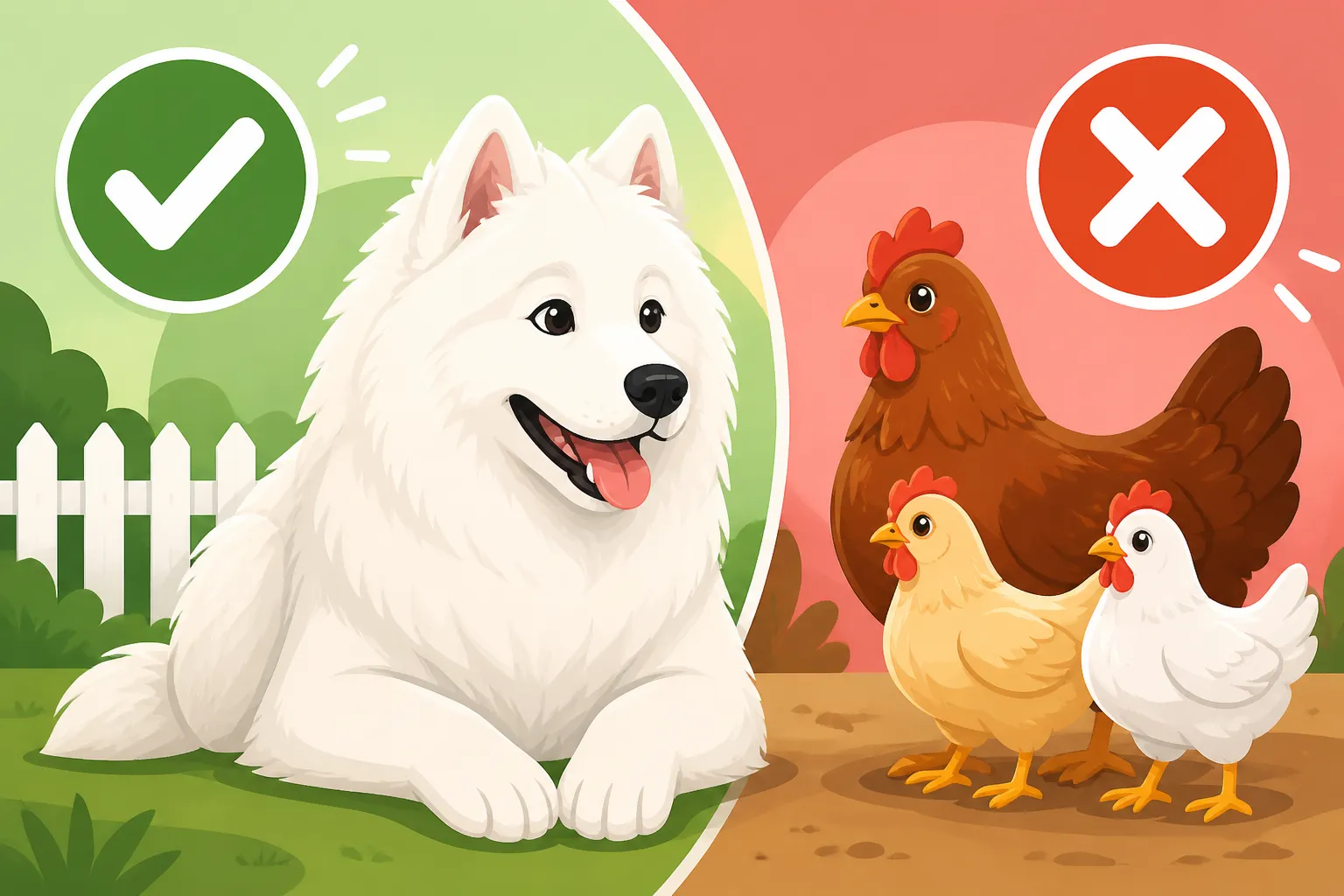
Whether a Samoyed Is Safe With Chickens
The idea of a Samoyed, with their fluffy white coat and perpetually smiling face, happily trotting alongside your backyard flock of chickens sounds like a pastoral dream straight out of a storybook. Many of us envision a world where all our beloved pets can coexist peacefully, but the reality with a Samoyed and chickens can be far more complex, often fraught with instinctual challenges that can lead to heartbreak. This guide will help you understand the inherent drives of your Samoyed, assess the very real risks, and explore realistic strategies for managing this potentially volatile combination, offering a clear picture of whether true "safety" is truly achievable.
Understanding the Samoyed's Ancestral Drives
Before we even begin to think about introducing a Samoyed to chickens, it's vital to understand the millennia of instinct woven into their very DNA. These aren't just pretty faces; they are working dogs with a rich history that dictates much of their behavior, especially when it comes to smaller, flapping creatures.
Their Ancient Purpose: More Than Just Fluffy Friends
Samoyeds hail from Siberia, where they lived and worked closely with the Nenets people. Their primary roles were herding reindeer, pulling sleds, and even sleeping with their human families for warmth. While herding involves controlling the movement of other animals, it's crucial to differentiate this from a guardian role or a complete lack of prey drive. The reindeer they herded were large, powerful animals, not small, easily caught birds. The instinct was to gather and guide, not necessarily to protect smaller, vulnerable creatures from themselves or other predators. This distinction is paramount when considering a Samoyed's interaction with fowl. Their intelligence and biddability were channeled into tasks like moving a herd, not necessarily resisting the urge to chase a fluttering bird.
The Lure of the Flap and Scurry
Chickens, with their sudden movements, loud squawks, and often chaotic flapping, are practically custom-designed to trigger a predator's chase instinct. For a Samoyed, whose ancestors needed quick reflexes to manage reindeer or perhaps even hunt smaller game when resources were scarce, a chicken isn't just a bird; it's a moving target. It’s the visual stimulus of a sudden burst of movement, the sound of their high-pitched calls, and the very scent of them that can ignite that deeply ingrained drive. It’s not about malice; it’s about instinct. Even the most well-behaved, gentle Samoyed can have this switch flipped in an instant, often to their owner's surprise and dismay. Many Samoyed owners can attest to their dog's undeniable urge to chase squirrels or rabbits, and chickens are, unfortunately, often viewed through a similar lens.
Not a Natural Fowl Guardian
Despite their background living alongside humans and their generally friendly demeanor, Samoyeds were not historically bred to guard poultry. Their herding instinct for large animals like reindeer doesn't automatically translate to protecting a vulnerable flock of chickens. In fact, their very instinct to move animals can be detrimental to delicate birds. A gentle nudge from a powerful Samoyed trying to "herd" can easily injure or kill a chicken, let alone a full-blown chase. Expecting a Samoyed to guard chickens is a common misconception that often leads to tragic outcomes, because their internal programming simply doesn't align with that job description. The Herding Instinct Nobody Expects From a Samoyed is a really eye-opening read on this topic.
The Reality of Prey Drive and Its Dangers
When we talk about Samoyeds and chickens, we're not just discussing a little playful romp in the yard. We are talking about a powerful prey drive that, when triggered, can have fatal consequences for your flock. It's a sobering reality, but one that every prospective Samoyed owner considering backyard chickens must face head-on.
The Thrill of the Chase: Play Can Turn Fatal
For a Samoyed, chasing is inherently fun. It's an exhilarating game, much like chasing a ball or a Frisbee. The problem is, chickens aren't toys, and their fragility means that even a "playful" chase can quickly become deadly. A Samoyed might not intend to kill, but their size, speed, and powerful jaws mean that a snap, a pounce, or even just the force of their body colliding with a chicken can easily break bones, cause internal injuries, or lead to instant death. I've heard countless stories from heartbroken owners who witnessed their gentle giant suddenly "play" too rough, ending a chicken's life in mere seconds. It's a deeply rooted instinct that, once engaged, is incredibly difficult to interrupt or redirect, especially in the heat of the moment.
Size and Power Disparity
A typical Samoyed male can weigh anywhere from 45 to 65 pounds, with females slightly less at 35 to 50 pounds. Compare that to a chicken, which might weigh 5 to 10 pounds at most. This massive size disparity means that even accidental contact can be devastating. A Samoyed's strong bite, designed for tearing meat, can easily crush the delicate bones of a bird. Their powerful legs, built for pulling sleds and traversing snowy terrain, can deliver lethal kicks. It's simply an unfair match, and no amount of "good intentions" from your Samoyed can change the physical reality of this imbalance.
| Feature | Samoyed | Chicken (Adult) | Risk to Chickens |
|---|---|---|---|
| Weight | 35-65 lbs | 5-10 lbs | Extreme physical injury from impact or bite |
| Speed | Fast runner, agile | Quick bursts, easily tripped | Cannot outrun a determined Samoyed |
| Mouth/Jaws | Strong, designed for tearing | Beak, not defensive | Fatal crushing or tearing bite |
| Instinct | Prey drive, chase, "herding" | Flight, panic | Triggers Samoyed's chase response, vulnerable |
| Intent (Dog) | Often "playful," but instinctual | Survival | Regardless of intent, outcome can be fatal |
One Moment of Lapse Can Mean Everything
Perhaps the most critical danger is the speed at which a situation can escalate. You might have your Samoyed doing beautifully on a leash, ignoring the chickens, or perhaps they've been together under strict supervision for months without incident. But it only takes one second of distraction, one moment where the gate isn't latched properly, one instance of your attention wandering, for that deeply buried prey drive to surface. A chicken squawks, flaps its wings, and runs – and suddenly, your Samoyed is no longer your calm, fluffy companion but an instinct-driven predator. This is why many experienced Samoyed owners and chicken keepers will strongly advise against mixing them, or at least emphasize that constant, unwavering supervision is the absolute minimum for any attempt at coexistence. Why a Samoyed's Recall Cannot Be Trusted is especially relevant here, as even a well-trained Samoyed might ignore a recall if that prey drive is fully engaged.
Training and Management Strategies for Mitigation
While the risks are significant, some owners attempt to manage the situation through rigorous training and stringent management. It’s important to preface this by saying that "mitigation" is the goal here, not "elimination" of risk. The prey drive is rarely, if ever, truly eliminated.
Supervision is Non-Negotiable and Constant
This cannot be stressed enough: if your Samoyed is ever around your chickens, you must be actively supervising. This means your eyes are on both animals at all times, you are within arm's reach, and you are ready to intervene instantly. Even a quick trip inside to grab a cup of coffee is too long to leave them unattended. Think of it like supervising a toddler near a busy street – you wouldn't just glance over occasionally. This level of vigilance is exhausting and often unrealistic for the average busy household. If you are serious about this, invest in a good, sturdy long line from somewhere like Amazon and keep your Samoyed tethered to you, even in a fenced yard, if chickens are present. This provides an extra layer of control.
Desensitization and Counter-Conditioning
This is a long-term, intensive training process that aims to change your Samoyed's emotional response to chickens.
- Start from a distance: Begin with your Samoyed on a leash, far enough away from the chickens that they barely notice them or show only mild interest.
- Positive Association: Every time your Samoyed looks at the chickens calmly (without lunging, barking, or fixating), mark the behavior (with a clicker or a verbal "yes!") and immediately give them a high-value treat. The goal is for the Samoyed to associate the sight of chickens with something wonderful happening to them, not with chasing.
- Gradual Reduction of Distance: Slowly, over weeks or months, decrease the distance as your Samoyed consistently remains calm. If they react, you've moved too fast; increase the distance again.
- Controlled Interactions: Only once they are consistently calm at a closer distance would you even consider any form of direct interaction, and even then, it would be through a secure barrier and under constant, active supervision.
This process requires immense patience, consistency, and a deep understanding of dog behavior. Resources like BAXTER & Bella's online puppy training courses, though not specifically for chickens, offer foundational obedience and impulse control training that are critical for any desensitization work. These skills form the bedrock for asking your Samoyed to control their powerful instincts. Training a Samoyed That Finds Obedience Negotiable delves into the specific challenges of training this breed.
Secure Enclosures: Physical Barriers Are Paramount
Even with the best training, physical barriers are your absolute best defense. This means a securely fenced coop and run for your chickens that your Samoyed cannot breach.
- Double Fencing: Consider having a separate, secure fence around the chicken run that creates a "buffer zone" between your Samoyed and the chickens, even if your main yard is fenced.
- Dig-Proofing: Samoyeds are notorious diggers, especially if they are hot or bored. Ensure your chicken coop and run fences are dug-proofed, either with buried wire or by burying the fence line deep into the ground. The Digging a Samoyed Does Because It Is Hot highlights this behavior.
- Overhead Protection: If you have free-range chickens, this becomes significantly more challenging. For a contained run, consider overhead netting to prevent your Samoyed from jumping over (which they are capable of) and to protect chickens from aerial predators.
Never underestimate a Samoyed's ingenuity when it comes to getting where they want to go. Remember, How a Samoyed Gets Out of Anything You Build is a very real concern when protecting your flock.
High-Value Rewards for Calmness
For this kind of intensive training, standard kibble just won't cut it. You need truly high-value rewards to motivate your Samoyed to choose calmness over chasing. Think small pieces of cooked chicken (ironically), cheese, or specially made soft training treats. These rewards must be instantly available when your Samoyed exhibits the desired calm behavior near the chickens. The goal is to make the reward for not chasing far more appealing than the thrill of the chase itself. This helps to counter-condition their instincts by associating chickens with positive outcomes for the dog, rather than a prey trigger.
Coexistence Scenarios and Realistic Expectations
So, with all this in mind, what does "safe" actually look like? The honest answer is that for many, true, unsupervised coexistence is a gamble not worth taking. It's about setting realistic expectations for what you can achieve and being prepared for the consequences if those expectations aren't met.
"Safe" Doesn't Mean Unsupervised Freedom
When people ask if a Samoyed is "safe" with chickens, what they often mean is "Can I let them roam together without me worrying?" For the vast majority of Samoyeds, the answer is a resounding no. Even after months or years of careful training and management, the deeply ingrained prey drive can resurface under specific circumstances: a sudden loud noise, a chicken panicking and flapping wildly, or even just a moment of your dog feeling particularly bored or predatory. "Safe" in this context usually means "managed with extreme vigilance" rather than "free to interact." It requires a lifestyle commitment to constant supervision and layered safety protocols.
Separate Spaces: The Most Common and Safest Approach
For most Samoyed owners who also want to keep chickens, the most realistic and safest scenario involves strictly separate living spaces. Your chickens have their secure coop and run, and your Samoyed has its own dedicated yard space, ideally with no shared access or even visual access during unsupervised times. This might mean:
- A completely separate, robust chicken run: Think fortress-like, with buried wire, sturdy fencing, and an overhead cover.
- Designated "chicken time" and "Samoyed time": Your chickens are allowed to free-range only when your Samoyed is securely inside the house or on a leash with you, far away. The Samoyed only gets yard time when the chickens are safely tucked away in their coop.
This approach removes the temptation and the opportunity for instincts to take over, significantly reducing the risk of a tragic incident. It acknowledges that sometimes, the best solution is simply to prevent the interaction entirely. What a Samoyed Needs Every Day includes secure outdoor space, and for a chicken owner, this needs to be doubled up.
When Coexistence Is Simply Not Possible
It's also crucial to understand that despite your best efforts, training might not always overcome instinct. Some Samoyeds will simply have too strong a prey drive for chickens, and no amount of counter-conditioning will make them truly reliable. In such cases, forcing the issue is unfair to both the dog and the chickens. You might see signs like:
- Constant fixation on the chickens, even from a distance.
- Lunging, barking, or intense whining whenever chickens are visible.
- A history of chasing or harming other small animals (squirrels, rabbits, cats).
- Inability to remain calm even with high-value treats and distance.
If you observe these behaviors consistently, it's a strong indication that true coexistence is an unrealistic goal. At this point, you must make a decision for the safety of your flock and the well-being of your Samoyed, which might mean choosing one over the other, or committing to absolutely no unsupervised interaction ever.
The Risk of Casual Introductions
Never, ever make a casual introduction between your Samoyed and your chickens. There's no such thing as "just seeing how they do" in this scenario. Every single interaction needs to be planned, controlled, and executed with extreme caution and a full understanding of the risks. A sudden, unplanned meeting is almost guaranteed to end badly. If you're serious about trying to have them coexist, approach it with the same gravity and meticulous planning as you would for any high-risk training endeavor. It's a journey that requires commitment, investment in secure infrastructure, and a realistic understanding of your dog's individual temperament and drives.
Ultimately, while a Samoyed's gentle nature and social disposition might make you hope for harmony with your chickens, their inherent prey drive makes it a challenging and often dangerous proposition. Prioritizing the safety of both your beloved Samoyed and your flock means making informed choices, often leaning heavily on prevention and strict management.
Disclaimer
This article is for general informational purposes only and does not constitute professional advice. Laws, prices and regulations vary by location and change over time. Consult a qualified professional for guidance on your specific situation.