Why a Samoyed’s Recall Cannot Be Trusted
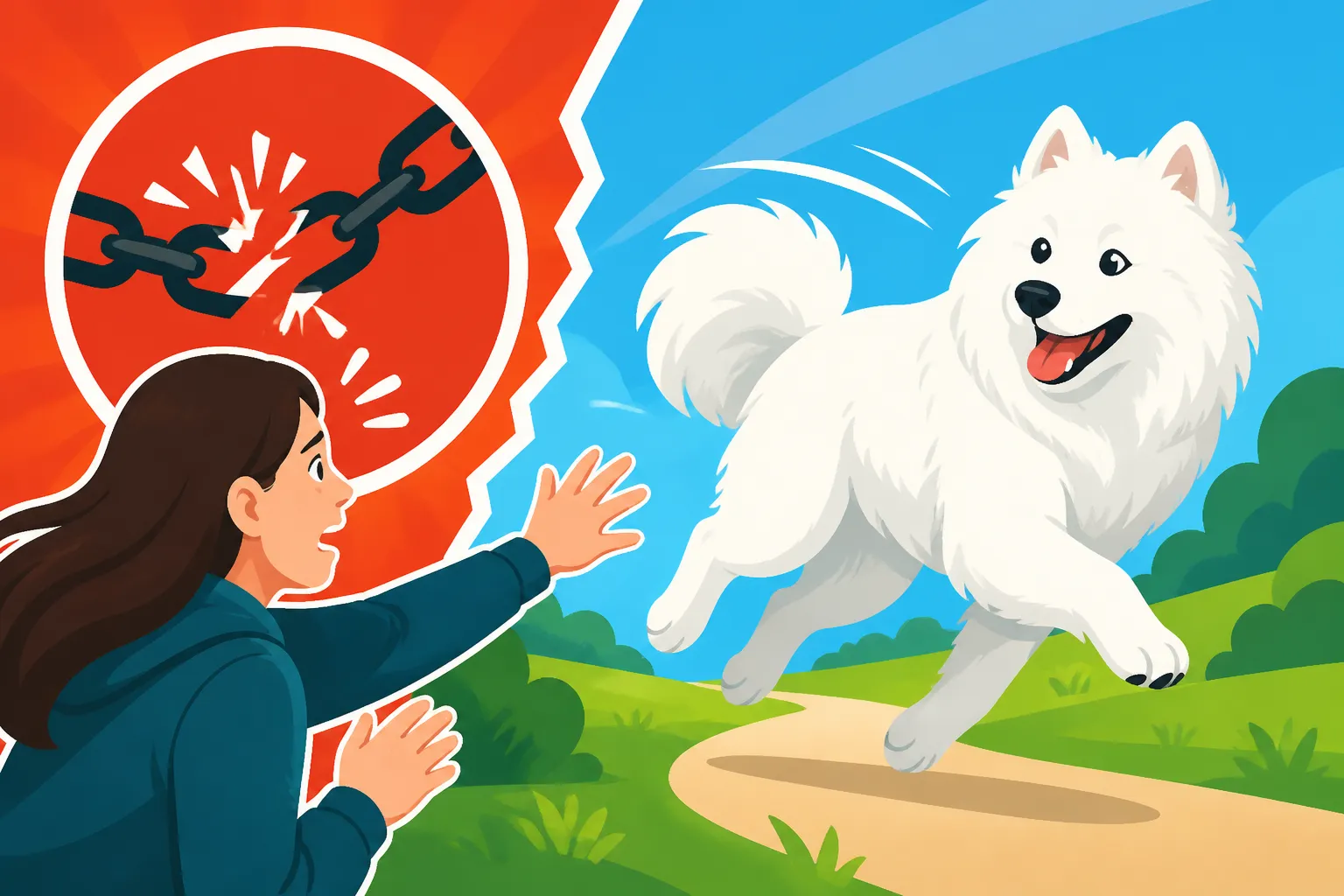
It's a familiar scenario for many Samoyed owners: you’re out enjoying a beautiful day with your fluffy companion, confident they’ll come when called, only to have them spot a squirrel or another dog and suddenly, your voice seems to vanish into thin air. The truth is, while Samoyeds are incredibly intelligent and eager to please on their own terms, their deep-seated instincts often make a truly bomb-proof recall an uphill battle, leading to genuine frustration and even scary situations. This guide will dive deep into why your Samoyed's recall might not be as reliable as you'd hoped and offer realistic strategies to manage this common challenge.
Understanding the Samoyed's Instinctive Nature
When we talk about Samoyed behavior, we have to go back to their roots. These aren't just pretty faces; they are working dogs through and through, bred for centuries in Siberia. Their instincts are strong, and they were developed for tasks that required a good deal of independent thought, not constant, unwavering obedience to a human voice when more interesting things were happening. Understanding this fundamental aspect of their being is the first step in managing your expectations and training approach.
The Independent Mindset of a Northern Breed
Unlike some breeds that were developed to work intimately with a human handler, like a retriever fetching game or a Border Collie moving sheep under precise command, Samoyeds historically operated with a significant degree of autonomy. They were guardians of reindeer herds, a task that demanded vigilance and the ability to make quick decisions without waiting for a human's permission. If a reindeer strayed or a predator approached, they needed to act. This ingrained independence means that while they love and bond deeply with their families, they often process commands through a lens of "What's in it for me right now?" or "Is this more important than that fascinating smell/moving object/other dog over there?"
This independent streak isn't a flaw in their character; it's a feature of their heritage. When you call your Samoyed, and they look at you, assess the situation (the distant rustle in the bushes, the enticing whiff of something incredible), and then choose to ignore you, it's not defiance as much as it is a natural inclination to prioritize their own perceived "job" or interest. They are thinkers, not mindless automatons, and that thinking process often leads them down a path of exploration rather than immediate return. This is why you often hear Samoyed owners lamenting their dog's "selective hearing." It's not selective hearing; it's a prioritization matrix running in their fluffy brains!
A History of Free-Ranging Herding
The nomadic Nenets people, who developed the Samoyed breed, relied on these dogs to manage their reindeer herds. These herds would roam vast, open tundras, and the dogs were expected to keep them together, round up stragglers, and protect them from wolves and bears. This wasn't a job where the dog was always on a leash or working within a small, fenced area. They ranged widely, often out of sight of their human companions, returning when they felt it was appropriate, or when the task was done. This inherent ability to work at a distance, to explore and patrol, translates directly into their desire to roam today.
When your Samoyed takes off after a scent or another dog, they're not necessarily trying to escape you; they're often following a powerful, ancient urge to investigate, herd, or explore. The open field, the dense woods, or even the bustling park becomes their personal tundra, and the "reindeer" (squirrels, rabbits, children on bikes, other dogs) become targets for their natural instincts. This instinct is very strong, so strong that it often overrides even the most tempting treat or the most practiced "come" command. It's why many experienced Samoyed owners will tell you that a completely reliable off-leash recall, especially in an unfenced or highly distracting environment, is less of a goal and more of a mythical creature. If you want to dive deeper into this fascinating aspect, check out The Herding Instinct Nobody Expects From a Samoyed.
The World is Too Exciting for a Samoyed
Let's be honest: for a Samoyed, the world is a giant playground filled with a million fascinating things. That boring human calling their name often pales in comparison to the sheer thrill of what's just beyond reach. Their senses are constantly on overdrive, and their curiosity is boundless. This makes recall training a particular challenge, as you're constantly competing with an entire sensory buffet.
Prey Drive and the Allure of Movement
Samoyeds possess a distinct prey drive, which means moving objects are incredibly stimulating to them. A squirrel darting up a tree, a rabbit hopping across a field, or even a child running with a ball can trigger an immediate, almost uncontrollable urge to chase. This isn't them being "naughty"; it's a hardwired instinct that has been essential for their survival and work for thousands of years. In their ancestral role, chasing stray reindeer or confronting a predator was a vital skill. Today, that skill manifests as a powerful desire to pursue anything that moves quickly.
Imagine your Samoyed is peacefully sniffing around, and suddenly a bunny hops across their path. In that instant, every part of their brain and body is screaming "CHASE!" Your voice, no matter how sweet or urgent, becomes muffled static against the primal call of the hunt. This is particularly noticeable in unfenced areas where they have space to really open up and run. Training can mitigate this, of course, but it's crucial to acknowledge the strength of this drive. It’s why you might struggle with Why a Loose Samoyed Runs Toward Traffic if they spot something moving on the other side.
Social Butterflies and Distraction by Dogs and People
Samoyeds are famously friendly dogs. They love people and they often adore other dogs. This charming trait, while wonderful for socialization, can be a major hurdle for recall. If your Samoyed sees another dog or a friendly person, their instinct often tells them to go say hello, even if it means blowing past your frantic calls. For them, it's an opportunity for connection and fun, not an act of disobedience. They simply want to be where the action is, and if the action is with a new friend, they're off!
This is especially true in places like dog parks or busy walking trails. While these places offer great opportunities for mental and physical exercise, they are also a minefield of distractions for recall. One minute your Samoyed is trotting beside you, the next they've spotted a Golden Retriever two fields over and they're off like a shot, a white blur disappearing into the distance. It can be embarrassing, frustrating, and, most importantly, dangerous. They greet strangers with enthusiasm, which is lovely, but not when you need them to come back to you right now.
Common Recall Challenges and Why They Happen
Beyond their natural instincts and love of novelty, there are common pitfalls in how owners approach recall that can inadvertently make the problem worse. It's not always about the dog being stubborn; sometimes, it's about unintentional training errors that undermine your efforts.
Selective Hearing: When "Come" Means "Later"
Many Samoyed owners eventually feel like their dog has "selective hearing." You call, they might even glance at you, and then they carry on with whatever fascinating activity they were engaged in. This isn't usually an intentional snub; it often comes down to the dog having learned that "come" doesn't always mean something wonderful. If "come" is primarily used to end fun (like leaving the dog park) or to scold, the dog quickly forms a negative association. Why would they rush back to you if it means the end of playtime or a stern tone?
Furthermore, if you call your Samoyed repeatedly without them coming, and then eventually give up or go get them, you've inadvertently taught them that your command isn't mandatory. They learn that "come" is more of a suggestion than an absolute requirement, and that they can choose to ignore it. This dilutes the power of the word. Consistency and positive reinforcement are absolutely key here. Every time you say "come," your Samoyed needs to believe that something amazing is about to happen, or at the very least, nothing bad.
The "Gotcha!" Game and Why It Backfires
Another common mistake is turning recall into a "gotcha!" game. This happens when owners only call their dog when they need to physically grab them for something undesirable – like going home, getting bathed, or getting medicine. The dog quickly associates coming to you with being caught and having something unpleasant happen. This is especially true if you then chase them around the yard or park. The chase itself can be fun for the Samoyed (it's a game!), but being caught at the end of it, especially if it leads to leaving a fun environment, teaches them to evade you.
Instead of running to you, they start running from you. They learn that the best way to prolong their fun is to stay out of arm's reach. This creates a deeply rooted negative association that can be incredibly hard to undo. To be successful, your Samoyed needs to view coming to you as the most rewarding option available at that moment.
Building a Reliable Recall: Strategies and Tools
While a 100% bomb-proof recall in every single scenario might be an ambitious goal for a Samoyed, you can absolutely make significant strides toward a much more reliable response. It requires consistency, patience, and understanding your Samoyed's unique motivations.
High-Value Rewards and Consistent Practice
The golden rule of Samoyed recall is: make coming back to you the most exciting thing in their world. This means using high-value rewards. Forget dry kibble; we're talking about tiny pieces of cooked chicken, cheese, hot dogs, or whatever your Samoyed absolutely goes wild for. These treats should ideally only be used for recall practice, making them extra special.
Start practicing in a quiet, low-distraction environment, like your living room or a securely fenced yard. Call your Samoyed's name, then immediately follow with your recall cue ("Come!" or "Here!"). As soon as they turn towards you or take a step in your direction, mark that behavior with a verbal "Yes!" or a clicker, and then reward them lavishly as they reach you. Practice this dozens of times a day, in short, fun sessions. As they improve, gradually introduce more distractions, always ensuring success before increasing the challenge. Always remember to make it a positive experience! Many owners find that a structured online course can provide the consistency needed, and platforms like BAXTER & Bella offer comprehensive puppy training programs that cover recall basics using positive reinforcement techniques.
Long Lines and Secure Environments
A long line (a leash typically 15-30 feet or more) is an indispensable tool for recall training with a Samoyed. It allows you to give your dog the illusion of freedom while maintaining control. Practice your recall cue while your Samoyed is on the long line in a safe, open area. If they ignore your call, gently reel them in, praising and rewarding them enthusiastically when they reach you. This teaches them that "come" isn't optional – you can enforce it – but the enforcement is gentle and leads to a reward, not punishment.
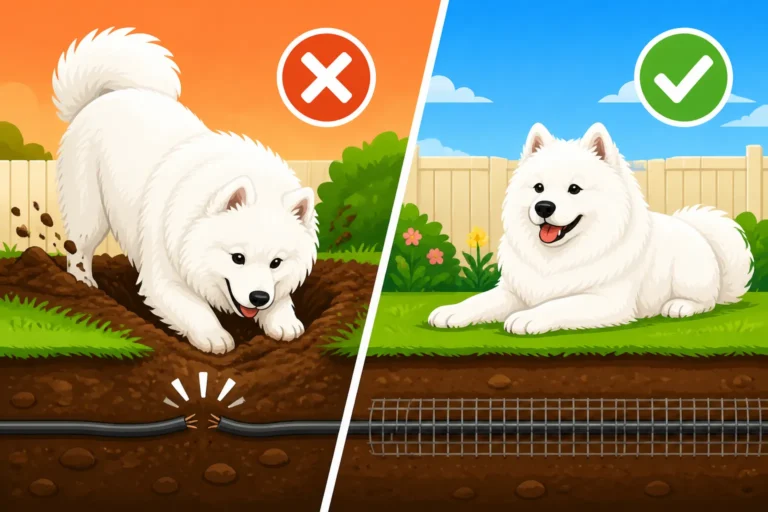
Never let your Samoyed off-leash in an unfenced area if their recall isn't absolutely solid. The risk is simply too high. Samoyeds can cover vast distances quickly, and their friendly nature means they might run up to people or other dogs, or worse, into traffic. A secure, tall fence is essential for any Samoyed household. Even with a good fence, always double-check gates and latches; Samoyeds are notorious escape artists and can figure out how to open things or dig under them if motivated. For more on keeping your Samoyed contained, consider reading How High a Samoyed Can Jump a Fence or The Tunnel a Samoyed Digs Under a Fence.
Professional Guidance and Advanced Training
If you're struggling, don't hesitate to seek help from a certified professional dog trainer. They can offer personalized advice, help you identify specific triggers for your Samoyed, and refine your training techniques. Sometimes, an experienced eye can spot subtle cues or training errors that you might be missing. Look for trainers who use positive reinforcement methods and understand northern breed characteristics.
Beyond basic obedience classes, consider enrolling in advanced recall workshops or even sports like Rally or Agility. These activities build a strong bond between you and your Samoyed, improve their focus, and make coming to you a highly engaging and rewarding activity. What Training Classes Cost a Samoyed Owner can give you an idea of what to expect if you decide to go this route, and it's often a worthwhile investment. For dogs with a very high prey drive, sometimes working with a trainer on impulse control exercises can also be very beneficial.
Living with an Unreliable Recall
Even with the best training, there will be days when your Samoyed's recall isn't perfect, especially if an irresistible distraction presents itself. It's crucial to acknowledge this reality and prioritize their safety above all else.
Safety First: Leashes and Secure Fencing
For a Samoyed, a leash isn't just a training tool; it's a safety device. It's often said that a Samoyed should never be off-leash in an unsecured area, and for good reason. Their wanderlust and independent spirit make them prone to exploring, and a strong prey drive can send them chasing after a critter with complete disregard for their surroundings. Invest in a good, comfortable harness and a sturdy leash. Even if you're just stepping out for a moment, having them securely leashed is paramount.
When it comes to your yard, a tall, secure fence is non-negotiable. Many Samoyeds can jump surprisingly high or are adept diggers. Regular checks of your fence line for weak spots or potential escape routes are a must. Consider burying hardware cloth along the bottom of the fence to deter digging. While invisible fences can work for some dogs, many Samoyed owners find that their powerful desire to chase or greet far outweighs the deterrent of a mild static shock. It's why many owners will tell you Whether an Invisible Fence Holds a Samoyed is a gamble not worth taking. For extra peace of mind, a GPS collar, easily found on Amazon or other retailers, can be a lifesaver if they do manage to get out, helping you track them quickly. This is crucial for their safety, as How Far a Loose Samoyed Travels can be astonishingly far in a short amount of time.
| Recall Strategy | Pros | Cons | Best Use |
|---|---|---|---|
| High-Value Rewards | Highly motivating, builds positive association | Can be messy, requires preparation | Initial training, high-distraction scenarios |
| Long Line Practice | Provides control, allows freedom simulation | Can get tangled, requires open space | Proofing recall in varied environments |
| Secure Fenced Area | Safest environment for off-leash practice | Requires constant maintenance, can be expensive to build | Daily exercise, proofing recall |
| "Come" for Good Things | Reinforces positive association with recall | Requires owner consistency, prevents "gotcha" situations | All interactions, especially leaving fun places |
| Professional Trainer | Expert guidance, personalized plans | Cost, time commitment | Persistent issues, advanced goals |
| GPS Collar | Locates lost dog quickly | Does not prevent escape, subscription fees possible | Backup safety measure for all dogs |
Finding Alternative Ways to Exercise
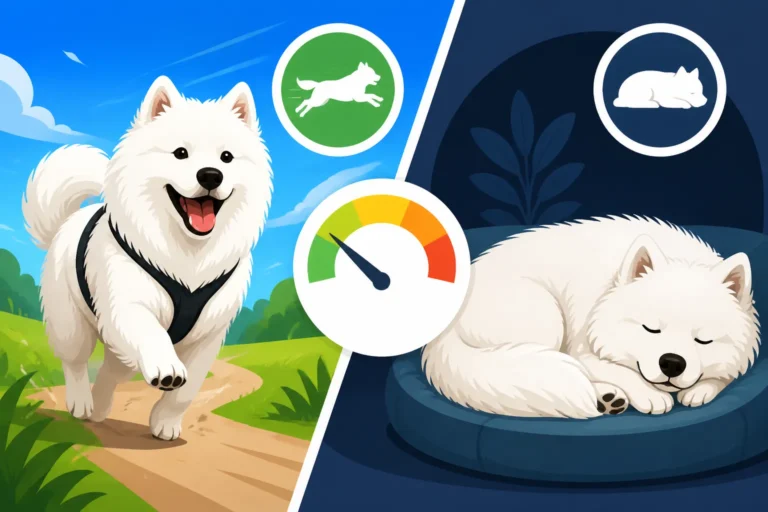
Since extended off-leash freedom might not be a safe option for your Samoyed, it's vital to find other ways to meet their substantial exercise and mental stimulation needs. Samoyeds are active dogs; How Much Exercise a Samoyed Needs is quite a lot, and a bored Samoyed is often a destructive or vocal one.
Activities like Pulling: What a Samoyed Was Actually Bred to Do (canicross, bikejoring, or urban mushing) are fantastic outlets for their energy and innate desire to pull. These activities keep them safely leashed while allowing them to burn off steam and engage their working instincts. Long walks or hikes on a leash, especially in varied terrain, can also be stimulating. Puzzle toys, interactive feeders, and scent work games within the house or a secure yard can also provide mental enrichment. Remember, a tired Samoyed is a well-behaved Samoyed, but mental exercise is just as important as physical exertion. A Samoyed truly wants to engage with you, even if their instincts occasionally pull them in other directions. Giving them appropriate jobs and activities will strengthen your bond and make them more inclined to listen when it truly matters.
Ultimately, accepting that your Samoyed's recall might never be 100% perfect, and prioritizing their safety with leashes and secure boundaries, will save you a lot of stress and prevent potentially tragic situations. Focus on building a strong, positive relationship, and make coming to you the most wonderful thing in their world.
Disclaimer
This article is for general informational purposes only and does not constitute professional advice. Laws, prices and regulations vary by location and change over time. Consult a qualified professional for guidance on your specific situation.