Whether a Samoyed’s Guard Hairs Come Out Before Spinning
It’s a common dream for many Samoyed parents: looking down at that incredible fluff, especially during a notorious "coat blow," and imagining it transformed into something beautiful and warm. You see all that gorgeous, soft undercoat shedding out, and the thought inevitably sparks: "Can I spin this into yarn?" Absolutely, you can! But a big question often pops up for those new to fiber arts or those just starting their Samoyed yarn journey: what about those coarser, longer hairs mixed in? Do a Samoyed's guard hairs come out before spinning, or do you have to do something about them? This guide is here to unravel that mystery, explaining the different types of fur your fluffy companion provides and how to best prepare it for a truly luxurious end product.
Understanding the Samoyed's Unique Double Coat
Before we dive into the nitty-gritty of spinning, it’s essential to appreciate the magnificent coat your Samoyed wears. It's not just for looks; it's a marvel of natural engineering, perfectly adapted for their ancestral life in harsh Arctic climates. This understanding forms the foundation of knowing which hairs are best for what purpose, especially when you’re thinking about transforming them into yarn. When we talk about a Samoyed's coat, we’re really talking about two distinct types of hair working in harmony. You can read more about how their unique coat works in A Samoyed Built for Sixty Below in an American Summer and A Samoyed's Coat Is Insulation, Not Decoration.
The Marvel of the Undercoat – The "Cloud" We Love
Ah, the undercoat! This is the stuff dreams are made of for spinners. Imagine the softest, downiest cloud you've ever seen, and you’re pretty close to describing a Samoyed’s undercoat. These hairs are fine, crimpy, and incredibly soft, much like angora rabbit wool or cashmere. Their primary purpose on your Samoyed is insulation, trapping air close to the body to keep them warm in winter and surprisingly, cool in summer by creating a buffer against the heat. It’s this incredible density and texture that gives Samoyeds their iconic "fluffy" appearance.
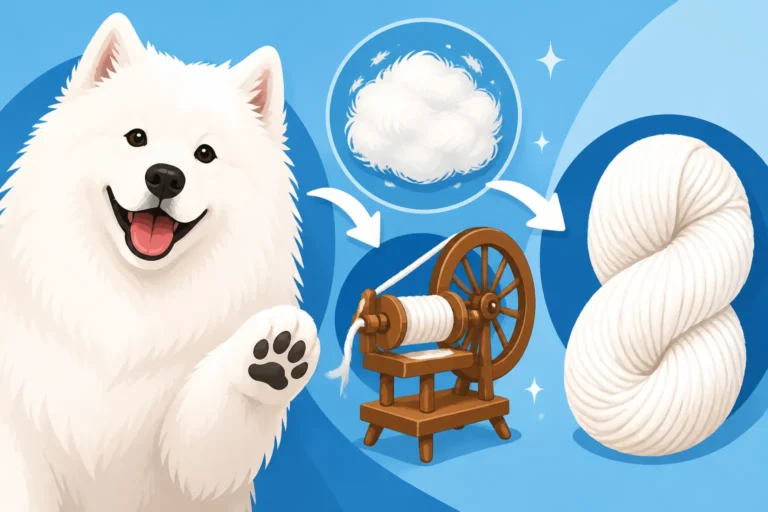
When it comes to spinning, the undercoat is your gold standard. Its softness makes for a truly luxurious yarn, perfect for garments that will be worn close to the skin, like scarves, hats, or even baby blankets. The crimp in the individual fibers helps them lock together beautifully when spun, creating a strong yet elastic yarn. This is the part of the coat that makes Samoyed yarn so sought after, and it's the component you want in the highest concentration for the softest results.
The Role of the Guard Hairs – The "Shield"
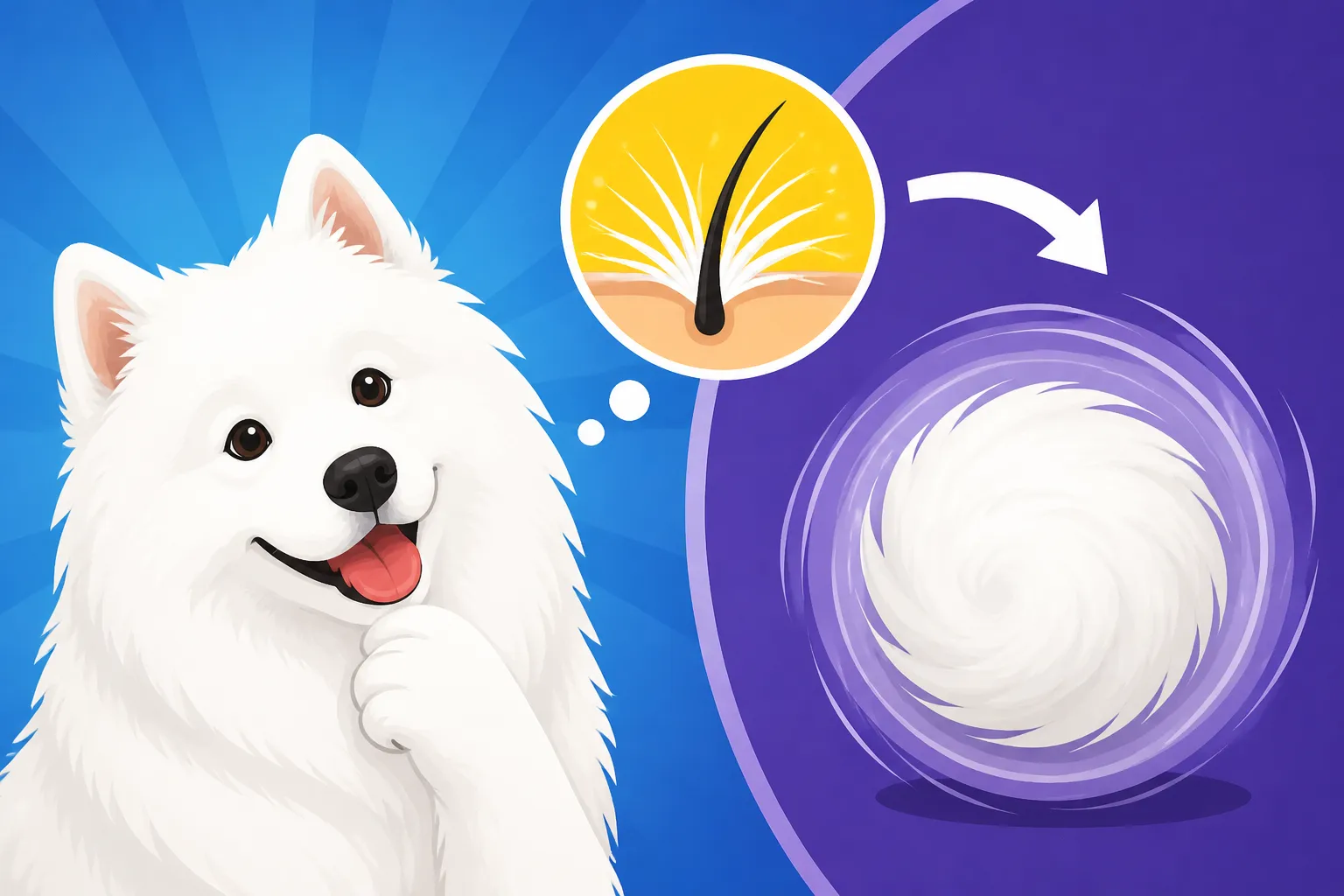
Now, let's talk about the guard hairs. These are the longer, straighter, and noticeably coarser hairs that form the outer layer of your Samoyed's coat. You can easily spot them by their glossy appearance and their stiffer feel compared to the undercoat. Think of them as the protective armor for your dog. They repel water and dirt, shielding the delicate undercoat from the elements, much like a good rain jacket. This protective layer is crucial for keeping your Samoyed clean and dry in snow and sleet.
During a normal shed, and especially during one of those legendary "coat blows" when your Samoyed seems to explode into a walking snowstorm, both the undercoat and the guard hairs will shed. It’s impossible to brush your dog and collect only the undercoat; some guard hairs are always going to come along for the ride. These guard hairs, while essential for your dog’s health and comfort, present a bit of a challenge when you're aiming for a super-soft, luxurious yarn for spinning. They simply don’t have the same soft, pliable texture as the undercoat.
The Shedding Cycle and Hair Collection for Spinning
The sheer volume of fur a Samoyed produces, particularly during their seasonal coat blows, can be both astonishing and, let’s be honest, a little overwhelming. But for aspiring spinners, it’s a treasure trove! Knowing when and how to collect this precious fiber efficiently is key to getting a good haul, and understanding what you’re collecting is the first step toward preparing it for its second life as yarn.
The Great "Coat Blow" and What It Means for Spinners
If you own a Samoyed, you're intimately familiar with the "coat blow." This is when your dog sheds their entire undercoat (and quite a few guard hairs along with it) to prepare for a new season. Typically, this happens twice a year, usually in spring and fall, but factors like climate, spaying/neutering status, and even individual genetics can influence the timing and duration. It’s a spectacular event that leaves fluffy tumbleweeds drifting through your house and demands serious grooming attention. You can estimate the sheer volume of fur you'll be dealing with and the costs associated with managing it by reading What Twenty Pounds of Samoyed Undercoat Does to a House and The Grooming Bill on Twenty Pounds of Samoyed Undercoat.
For spinners, the coat blow is prime collection time. During this period, the undercoat detaches easily from the skin, practically begging to be brushed out. While the undercoat is the bulk of what comes out, and certainly what you're primarily aiming for, you will absolutely collect guard hairs too. They shed alongside the undercoat, and no amount of careful brushing will completely separate them on the dog. Think of it this way: the undercoat is the delicious frosting, and the guard hairs are the sprinkles – they often come off the cake together! The trick is to collect as much clean, loose fur as possible during this time, knowing that some separation work will happen later.
How to Collect and Store Samoyed Fur for Spinning
Collecting your Samoyed's fur for spinning requires consistency and the right tools. Regular brushing, especially during the coat blow, is your best friend. A good quality slicker brush, an undercoat rake, or a deshedding tool can be incredibly effective. Many Samoyed owners swear by a powerful force dryer, which not only speeds up drying after a bath but can also blast out loose undercoat. You can find excellent grooming tools from online retailers like Chewy or Amazon, helping you manage this process effectively. For more details on maintaining your dog's coat, check out How Often a Samoyed Needs Brushing.
As you collect the fur, try to keep it as clean as possible. While you can wash the fur later, starting with clean fiber always makes the process smoother. Store the collected fur in breathable bags, like pillowcases or mesh laundry bags, rather than sealed plastic bags. This prevents mildew and allows any residual moisture to evaporate. Label your bags with the date and perhaps which part of the dog the fur came from (e.g., "ruff," "body," "pants") as some areas might yield slightly different fiber qualities.
It's important to accept that your collected fiber will be a mix of the soft, downy undercoat and the coarser guard hairs. This is completely normal! The answer to "do a Samoyed's guard hairs come out before spinning?" is technically yes, they come out of the dog with the undercoat. The separation of these guard hairs for optimal spinning comes later in the preparation process. Saving this brushed fur is a great step towards creating something truly unique from your companion, as highlighted in Whether Brushed Samoyed Fur Should Be Saved.
The Art of Preparing Samoyed Fur for Spinning
Once you've collected a significant amount of your Samoyed's beautiful fluff, the real magic (and a little bit of elbow grease) begins. This is where you transform that raw fiber into something ready for the spinning wheel or spindle. The key to a soft, luxurious yarn lies in a crucial step: separating the desirable undercoat from the less desirable guard hairs.
The Crucial Step: Dehairing or Carding for Quality Yarn
This is where your initial question about guard hairs truly gets answered. The guard hairs absolutely need to be addressed before you start spinning, if you want a soft, comfortable yarn. While they come out of the dog alongside the undercoat, they don't magically disappear or separate themselves. You, or your professional spinner, will manually remove them during the fiber preparation stage. This process is often called "dehairing" or involves very careful carding.
Imagine you're trying to make a blanket that feels like a cloud. If you leave in stiff, poky hairs, that cloud suddenly feels like it's full of tiny thorns. Guard hairs, if spun directly into yarn, will make the finished product feel scratchy, prickly, and significantly less comfortable against the skin. They don't absorb dye as well, can make the yarn look duller, and might even cause issues with tangling or breaking during the spinning process due to their different texture and length compared to the undercoat. For these reasons, most experienced spinners go to great lengths to separate them. You can delve into the specific advantages of the undercoat in Which Part of a Samoyed's Coat Spins Best.
The process usually involves tools like hand carders or a drum carder. These tools have fine, wire teeth that comb through the fiber, disentangling it and aligning the fibers. When done skillfully, the softer, shorter undercoat fibers will cling to the carder, while the longer, straighter, and stiffer guard hairs tend to be "flicked" off or remain on the surface, making them easier to pick out. It takes patience and a good eye, but the difference in the final yarn is profound. You can often find hand carders and other fiber preparation tools on sites like Amazon. For some really specialized equipment, independent fiber art suppliers can also be a great resource.
The goal is to produce "rovings" or "batts" of mostly pure undercoat, ready for spinning. This meticulously prepared fiber will spin into a uniform, exquisitely soft yarn that truly showcases the Samoyed's magnificent coat. Without this step, your Samoyed yarn, while still unique, would likely be relegated to more rustic projects where softness isn't the primary concern.
When and Why You Might Leave Guard Hairs In (or Don't)
While removing guard hairs is generally preferred for creating the softest, most luxurious Samoyed yarn, there are niche cases where some might choose to leave them in, or simply not be as meticulous with their removal. If you're aiming for a very rustic, coarse yarn for, say, a sturdy bag, a rug, or perhaps a decorative wall hanging where texture is part of the aesthetic, a certain percentage of guard hairs might be acceptable. This type of yarn won't be worn against the skin, so comfort isn't the driving factor.
However, for anything intended to be worn, such as sweaters, scarves, or even mittens, skipping the dehairing step is almost always a regrettable decision. The scratchiness of guard hairs can be quite irritating, making the finished item uncomfortable and less enjoyable to wear. Moreover, the presence of guard hairs can affect how the yarn behaves over time. The undercoat is incredibly warm, as discussed in Whether Samoyed Yarn Is Warmer Than Sheep's Wool, but guard hairs don't contribute to that softness or warmth in the same way.
Another factor to consider is the potential smell. While Samoyed undercoat yarn is surprisingly odor-free, even when wet, the guard hairs tend to retain a bit more of a "doggy" smell, especially if they weren't thoroughly washed and dried. This is often the focus of discussions like Whether Spun Samoyed Fur Smells When Wet. Therefore, for a pleasant-smelling and feeling final product, meticulous guard hair removal is usually the way to go. It’s a labor of love, but the payoff is a truly unique, wonderfully soft, and cherished keepsake.
Working with Professional Spinners and Your Samoyed's Fiber
Deciding to transform your Samoyed's luscious coat into yarn is an exciting endeavor. While some passionate owners learn to spin themselves, many opt to send their collected fluff to a professional spinner. This can be a fantastic option, but knowing how to communicate your expectations and what to anticipate from the process is crucial for a successful outcome. The journey from brushings to beautiful yarn is a testament to the bond you share with your Samoyed.
Communicating Your Desired Yarn Outcome
When you entrust your Samoyed's fur to a professional spinner, clear communication is paramount. Remember that crucial step of dehairing? This is a key point to discuss. Let them know whether your priority is the absolute softest yarn possible, which would require extensive guard hair removal, or if you're open to a slightly more rustic texture. Some spinners have specialized equipment for dehairing, while others rely more on careful hand-carding. The amount of work involved in separating the guard hairs will often influence the cost of their service, so being clear upfront helps manage expectations and budgets.
You should also discuss the desired weight of the yarn (e.g., lace, fingering, sport), the ply (single, 2-ply, 3-ply), and any other special requests. A good professional spinner will be able to guide you through these choices based on the quality and quantity of fiber you provide. They might even request a small sample of your collected fur to assess its characteristics before committing to the full batch. This ensures that the beautiful fur you’ve saved, as discussed in Whether Samoyed Fur Can Be Spun Into Yarn, is handled expertly.
Expecting the Final Product: What Samoyed Yarn Feels Like
When you finally receive your spun Samoyed yarn, it's a truly special moment. If the guard hairs have been diligently removed, you will be holding a yarn that feels incredibly soft, often compared to cashmere or angora. It has a unique halo effect, a slight fuzziness that adds to its luxurious feel and warmth. This is the ultimate reward for all that brushing and careful preparation. You’ll understand why people rave about it and why it's such a cherished item.
The color will typically be the natural color of your Samoyed's undercoat – usually a creamy white, though some Samoyeds have biscuit-tipped guard hairs or a faint biscuit cast to their undercoat. This natural hue is often celebrated, reflecting the purity of the breed.
The amount of yarn you get will depend on how much fur you've collected and how much shrinkage occurs during washing and dehairing. Typically, a large Samoyed's full coat blow can yield enough fiber for a small garment like a hat or a pair of mittens, or even a small shawl, as explored in How Much Samoyed Fur Makes a Sweater. Each skein of Samoyed yarn is a tangible piece of your beloved companion, carrying memories and warmth, literally. It’s more than just yarn; it's a legacy.
| Fur Type | Texture | Purpose in Yarn | Why Remove/Include | Best for… |
|---|---|---|---|---|
| Undercoat | Soft, crimpy, fluffy | Core fiber for softness and warmth | Essential for high-quality yarn | Garments, scarves, hats, baby items |
| Guard Hair | Coarse, straight, stiff | Adds rustic texture, minimal warmth | Removed for softness; included for durability/rustic look | Rugs, bags, decorative items, very sturdy outerwear (rarely) |
Disclaimer
This article is for general informational purposes only and does not constitute professional advice. Laws, prices and regulations vary by location and change over time. Consult a qualified professional for guidance on your specific situation.