Whether a Samoyed Puppy’s Biscuit Markings Fade
A Samoyed puppy’s biscuit shading can look surprisingly noticeable beside its fluffy white coat, then change as the puppy matures. That can leave owners wondering whether the color is temporary, a sign of staining, or something that will remain into adulthood. Here’s what biscuit markings usually mean, how the coat can change, and how to tell natural color from a grooming or health concern.
What biscuit markings mean on a Samoyed puppy
Biscuit is a recognized coat color
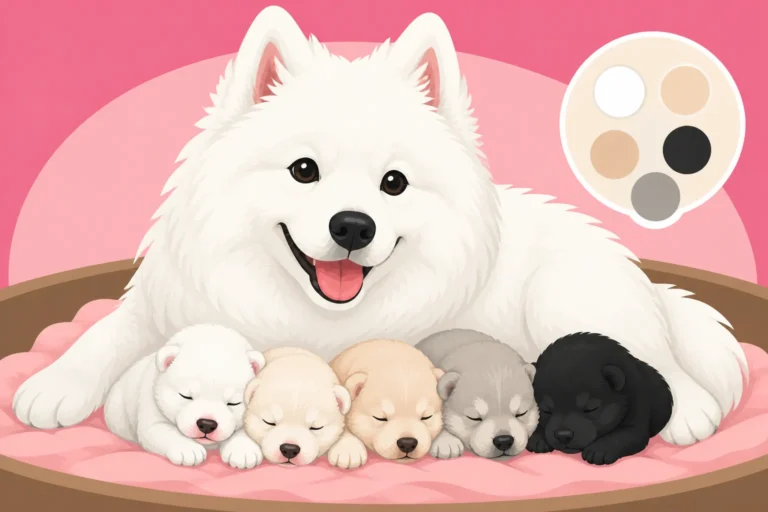
“Biscuit” describes a warm cream, pale gold, or light tan shade in the coat. It may appear as soft shading on a puppy’s ears, back, shoulders, or around the face rather than as sharply outlined patches. Some puppies have only a faint tint; others have enough color to make their coat look creamier overall.
Biscuit coloring is not automatically dirt, a defect, or proof that a dog is not a Samoyed. The breed’s accepted coat colors include white, cream, biscuit, and combinations of these shades. For a closer look at the range, see The Colors a Samoyed Comes In and What Biscuit Means on a Samoyed.
The word “markings” can be a little misleading because the color often blends gradually into the surrounding coat. A puppy may have a pale biscuit wash rather than distinct spots. That shading can be easier to see in natural daylight, while indoor lighting or a phone camera may make the same coat appear pure white, cream, or even slightly yellow.
Why puppy coat color can be hard to judge
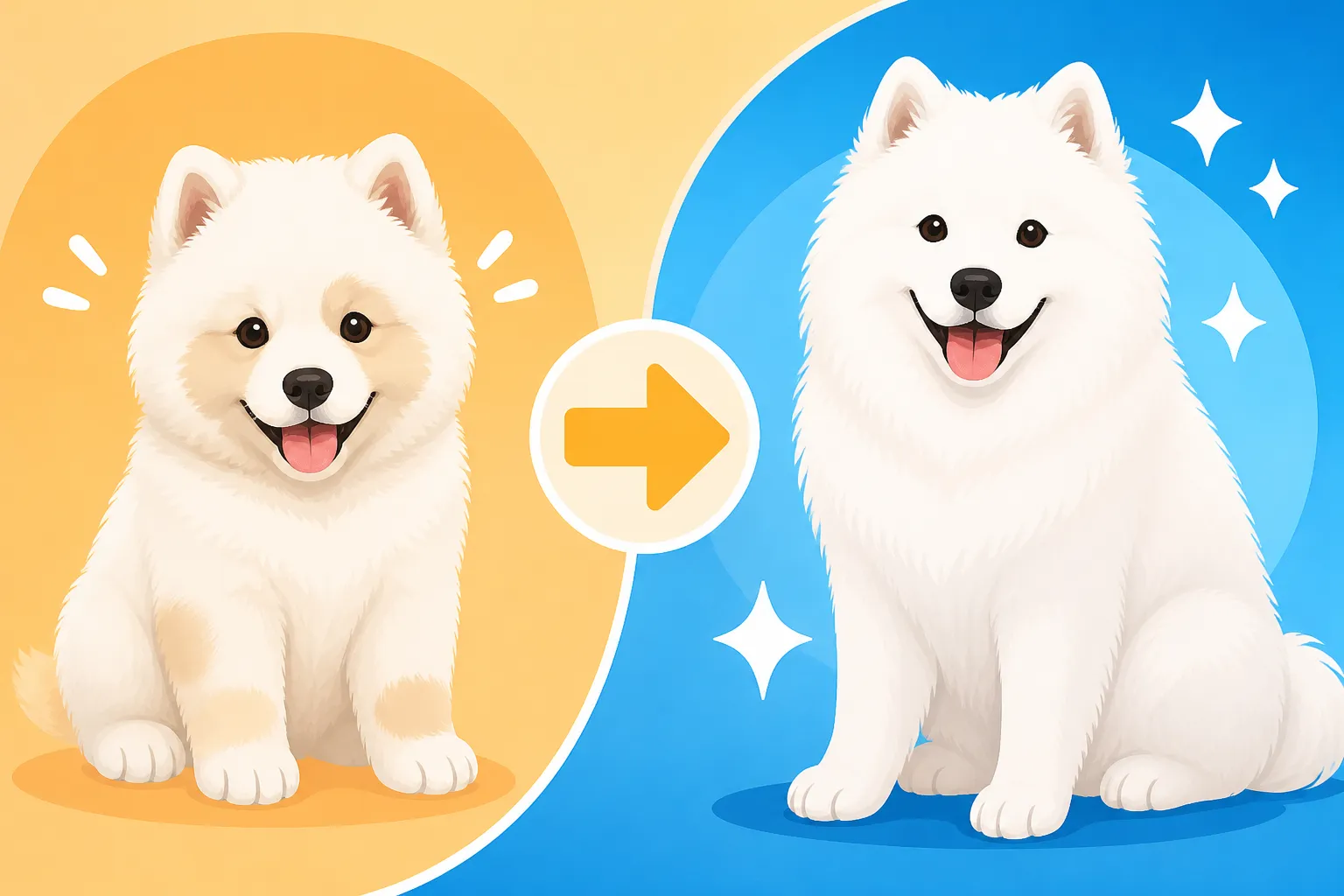
A Samoyed puppy’s coat is still developing. The soft puppy coat gradually gives way to a fuller adult coat, and the texture and appearance can shift during that process. A color that looks strong against short, soft puppy fur may seem much less obvious once the adult coat grows in. In other cases, the mature coat retains some cream or biscuit shading.
Photos can add to the confusion. Warm household lights, shadows, camera exposure, and the color of nearby walls or floors can change how white fur appears. A puppy photographed beside a bright white background may look more cream-colored than the same puppy outdoors. Comparing pictures taken in different conditions is therefore not a reliable way to decide whether the coat color has truly changed.
Biscuit coloring can also be more noticeable when the coat is wet, compressed, or newly brushed. A dry, fluffed coat reflects light differently from damp fur, so a temporary change in appearance does not necessarily mean the pigment itself has changed. For broader context on permitted shades, read Whether a Samoyed Can Be Any Color but White and Whether a Biscuit Marked Samoyed Is Still White.
Do Samoyed puppy biscuit markings fade with age
The short answer is that they may soften, but not always
Many Samoyed puppies’ biscuit shading becomes less noticeable as they mature. Their coat changes in length, density, and texture, and pale shading may blend into the adult coat. Owners sometimes describe this as the markings fading, though it may be more accurate to say the coat’s overall appearance has changed.
There is no single timeline or guaranteed result. One puppy’s biscuit markings may seem to fade substantially, while another’s cream or biscuit tone remains visible as an adult. Even within one litter, puppies can develop differently. A breeder may be able to share what has happened with relatives, but family history is a clue, not a promise about one puppy’s adult coat.
It’s also possible for color to look different without the coat pigment having changed. A fuller coat can soften the contrast between shaded and white areas. Seasonal coat changes, grooming, sunlight, and the angle of a photograph may also affect what you notice. The changes that occur as the coat matures are covered in How a Samoyed's Coat Changes With Age.
Coat development is gradual rather than a sudden switch
A young Samoyed does not usually go from “biscuit” to “white” overnight. The coat changes over time, and owners may notice subtle differences from one month to another rather than one obvious turning point. The puppy’s first coat is replaced and altered as the adult coat develops; later, normal shedding cycles can change how full or even the coat looks.
If you are trying to track the change, take occasional photographs in the same place, under similar daylight, with the coat dry and brushed. A monthly photo is more useful than checking every day, when small variations in light and fluff can make the color seem to shift back and forth. Note where the shading appears and whether its edges remain the same, become less visible, or spread into a more general cream tone.
| What you notice | What it may mean | A useful next step |
|---|---|---|
| Soft, even cream or pale gold shading | Natural biscuit coloring | Photograph the coat in consistent daylight |
| A gradual reduction in contrast as the puppy matures | Coat development or color blending | Keep a simple photo record |
| Dark or reddish staining around the mouth or feet | Saliva, moisture, or another source of staining | Check for repeated licking or dampness |
| Sudden color change with itching, odor, or skin irritation | A possible skin or coat problem | Contact your veterinarian |
| A yellow cast that appears mainly in photos or indoor light | Lighting or camera settings may be affecting the appearance | Compare in neutral natural light |
Why the coat can look lighter or darker over time
Maturity, texture, and shedding all affect appearance
A Samoyed’s coat is made up of different layers, and the adult coat can look quite different from the puppy coat. Changes in coat length and density affect how light travels through the fur and how clearly you can see the color beneath the outer hairs. That is one reason a puppy’s biscuit tint may look less defined later, even if some warm shading remains.
Shedding can make the coat look uneven for a while. As older hair comes out and new hair grows, areas may appear more or less shaded depending on which coat is visible and how it lies. Brushing can also lift the coat and reveal color that was harder to see when the fur was flattened. These effects are part of coat maintenance, not proof that a marking is disappearing permanently.
Sun exposure may also influence how a coat looks. Some white coats can develop a yellowish or cream cast, particularly in areas exposed to outdoor conditions or repeated contact with dirt and moisture. That is different from natural biscuit coloring, which is part of the coat’s underlying shade. If you are unsure whether a change is natural color or yellowing, Whether a Samoyed's Coat Yellows With Age and Whether a Samoyed's Coat Yellows in the Sun offer useful distinctions.
Natural biscuit color is not the same as a stain
Natural shading tends to look like part of the coat: it is often soft, fairly even, and not accompanied by a change in skin condition. Stains, by contrast, may cluster where saliva, food, moisture, or dirt repeatedly contacts the fur. The mouth, paws, and areas that stay damp deserve a closer look if the coat color seems to be changing there.
Check whether the color follows a pattern. A light cream tone on the ears or back may be natural biscuit coloring. A rusty or brownish area around the mouth, for example, may be related to saliva or food residue. Discoloration between the toes may be associated with licking or persistent moisture. These clues do not diagnose the cause, but they help you describe what you see to a veterinarian or groomer.
Avoid trying to bleach, dye, or aggressively scrub the coat to make it look whiter. Strong products and repeated bathing can irritate a puppy’s skin or damage the coat, and they will not change natural pigmentation. If you are shopping for gentle grooming basics, retailers such as Chewy may be one place to compare puppy-appropriate brushes and shampoos; choose products based on veterinary or grooming guidance, not on promises to erase natural color.
How to care for the coat and know when to ask for help
Keep grooming simple and observe changes
Regular, gentle brushing helps remove loose hair and gives you a chance to check the skin beneath the coat. Work patiently, especially while your puppy is learning to enjoy grooming. Short sessions with praise and breaks are usually easier than trying to brush the entire coat when the puppy is restless. Advice on building a routine is available in How Often a Samoyed Needs Brushing.
When a puppy gets muddy, let the mud dry and brush it out if possible rather than scrubbing at once. If a bath is needed, use a product intended for dogs and follow its directions. A puppy with persistent staining may need a different plan from one with normal biscuit shading, so take note of where the color appears and whether it returns after cleaning. Chewy or another pet retailer can be useful for comparing basic grooming supplies, but avoid whitening products unless your veterinarian or an experienced groomer recommends them for your dog.
It can help to keep a small coat log with a few notes: your puppy’s age, where the color is visible, whether it is changing, and any new grooming or outdoor exposure. Add occasional photos taken in natural daylight. This record makes gradual changes easier to recognize and gives your veterinarian a clearer picture if the coat’s appearance becomes a concern.
Seek veterinary advice for changes beyond color
Biscuit markings alone are usually a coat-color question, not a health emergency. A sudden change paired with itching, redness, sores, hair loss, a strong odor, or frequent licking is different. Those signs may point to irritation or another skin issue and are worth discussing with a veterinarian rather than treating at home with stain removers.
Also pay attention if discoloration is concentrated around the eyes, mouth, or paws and comes with discharge, discomfort, or persistent moisture. A veterinarian can help identify whether the cause is simple staining, a skin problem, or something that needs treatment. Bring photos if the appearance changes between appointments, and mention any new shampoo, food, cleaning product, or grooming routine.
If your puppy is healthy and the coat simply has a warm cream or biscuit tint, there is generally no need to try to make it disappear. Some Samoyed puppy markings soften as the adult coat develops; others remain visible. Either outcome can be normal, and the coat’s color does not determine whether your puppy is a good companion or a well-loved member of the family.
Disclaimer
This article is for general informational purposes only and does not constitute professional advice. Laws, prices and regulations vary by location and change over time. Consult a qualified professional for guidance on your specific situation.