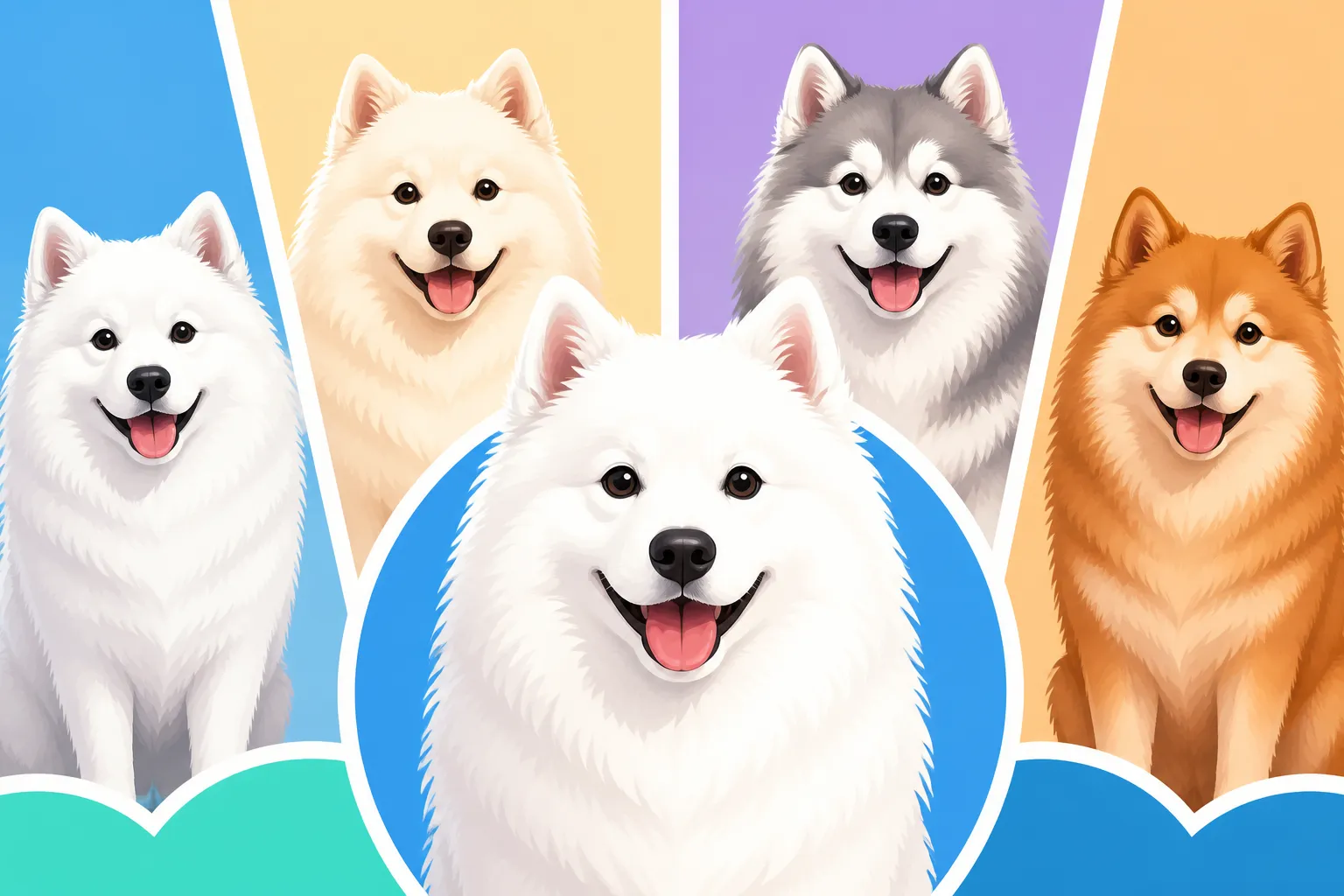
The Colors a Samoyed Comes In
It’s a common scenario: you see a picture of a magnificent, fluffy white Samoyed, a vision of pristine snow, and you think, "That’s the color Samoyeds come in!" Then you meet one in person, or start researching, and suddenly you’re seeing shades of cream or patches of light tan, and you wonder if you’ve been misled or if that dog isn’t quite purebred. The truth is, while the pure white Samoyed is iconic, the breed actually boasts a small, delightful spectrum of coat colors. This guide is here to clear up any confusion and help you understand the beautiful nuances of the Samoyed's coat, from brilliant white to lovely biscuit.
The Iconic White Samoyed Coat
When most people picture a Samoyed, they envision a cloud of pure, unadulterated white fluff. This image is certainly a strong one, cultivated over decades through popular culture and the breed's prominent presence in snow-laden landscapes. There's an undeniable allure to that pristine, snow-white appearance, and it's often what draws people to the breed in the first place.
The Ideal: Pure White as per Standard
For many years, and still strongly preferred in the show ring, the ideal Samoyed coat is described as pure white. This means no visible shading, no creamy undertones, just that crisp, clean white that makes them look like a living snowdrift. Breeders striving for show-quality dogs often put a significant emphasis on achieving and maintaining this brilliant white hue, which can be a monumental task as any Samoyed owner will tell you!
This pursuit of pure white isn't just about aesthetics; it has deep roots in the breed's history. The ancestral Samoyed dogs, bred by the Nenets people, lived and worked in environments dominated by snow and ice. While a pure white coat offers practical camouflage in such settings, helping them blend into their surroundings, it also became a symbol of purity and the breed's Arctic heritage. It’s a stunning visual, and when you see a truly perfectly groomed, pure white Samoyed, it’s like looking at a piece of living art.
However, achieving this pristine white isn't always easy. Samoyeds are active dogs, they love to roll in mud, dig in the dirt, and explore every interesting scent with their noses to the ground. Maintaining that "ideal" show-ring white often involves meticulous grooming routines, special shampoos, and a good deal of vigilance. Many owners find themselves waging a constant, good-natured battle against the natural tendency of a white dog to pick up every speck of dirt!
The Functionality of White in Arctic Climates
Beyond the visual appeal, the white coat of a Samoyed offered tangible benefits to its ancestors in the harsh Arctic environment. It wasn't just for looking pretty; it was a survival trait. While many associate white with absorbing less heat, the primary benefit of their thick, white coat in the Arctic was often debated. Some argue the white reflects sunlight, preventing overheating during long, sunny Arctic days, while others point to the coat's density as the primary insulator against both heat and cold.
What's truly remarkable about the Samoyed's coat isn't just its color, but its structure. The double coat, comprising a soft, dense undercoat and longer, coarser guard hairs, works as incredible insulation. What a Samoyed's Double Coat Is Made Of This dual layer traps air, creating a thermal barrier that keeps the dog warm in sub-zero temperatures and, surprisingly, helps to cool them in milder weather by preventing external heat from reaching the skin. The white color, in this context, might also have helped them blend into the snowy landscape, a useful trait for herding reindeer or for their human companions who relied on them. The indigenous Nenets people, who developed this breed over centuries, chose dogs that thrived in their environment, and the coat was a central part of that adaptation. The Nenets of the Yamal Peninsula Bred the Samoyed
Imagine a Samoyed curled up in the snow, almost invisible against the backdrop of a winter storm. This natural camouflage would have been incredibly important for dogs whose lives were intertwined with the vast, white expanses of Siberia. The white coat wasn't just a beauty statement; it was a testament to their deep connection with their frigid homeland, allowing them to disappear and reappear as needed, whether for herding, guarding, or simply resting.
Beyond Pure White: Biscuit Markings
While the pure white Samoyed often dominates our imagination, the reality is that many, if not most, Samoyeds carry some degree of "biscuit" markings. This isn't a flaw; it's a natural and accepted variation within the breed, and it adds a charming depth to their already stunning appearance. Many people are genuinely surprised to learn that their pure white puppy might develop these subtle hues, or that a truly white dog is actually quite rare in the broader Samoyed population.
Understanding "Biscuit" on a Samoyed
So, what exactly is biscuit? It's not dirt, nor is it a sign of an impure lineage. Biscuit refers to a creamy, light tan, or pale yellowish hue that appears on certain areas of a Samoyed's white coat. Think of the color of a digestive biscuit, or a very light coffee with a lot of cream. These markings are typically seen on the ears, along the back, and sometimes on the legs or around the face. The intensity can vary greatly, from a barely perceptible wash of color to more distinct, soft patches.
It’s often a very subtle shading, almost like a faint watercolor brushstroke against the white canvas of their fur. Many Samoyed puppies are born with these markings, which can sometimes deepen or lighten slightly as they mature. The Color Samoyed Puppies Are Born Owners new to the breed might initially worry that their puppy isn't "white enough," but quickly come to appreciate the warmth and character these biscuit tones add. It gives each Samoyed a unique signature, a slightly toasted marshmallow look that is just as endearing as pure white.
Sometimes, the biscuit color is more pronounced on the tips of the ears or along the spine, creating a lovely contrast. It can be particularly noticeable when the dog is shedding its undercoat, or when the light catches their fur just right. Instead of a uniform expanse of white, you get a beautiful interplay of cream and white, making their coat even more dynamic and interesting to look at.
The Genetics Behind Biscuit
The presence of biscuit markings isn't random; it's rooted in genetics. Without diving too deep into the complex world of canine coat color genetics, suffice it to say that the genes responsible for producing white in Samoyeds don't always result in absolute pigment suppression everywhere on the coat. Some residual pheomelanin (red/yellow pigment) can express itself, resulting in these lovely biscuit hues. It's not about the dog being "dirty" or "stained"; it's about the natural expression of their genetic makeup.
This means that even two seemingly pure white Samoyeds can produce puppies with biscuit markings if they both carry the genetic predisposition for it. It's a testament to the natural genetic diversity within the breed. These subtle differences in shading don't impact the quality of the dog's coat, its famous double layer, or its inherent Samoyed characteristics. Whether a Samoyed Puppy's Biscuit Markings Fade The genes for biscuit are just part of the rich tapestry of the breed's genetic heritage.
Understanding this can bring a lot of peace of mind to new owners who might have heard misconceptions. Your Samoyed with biscuit tips on its ears is just as much a Samoyed as its pure white cousin, and these markings are a perfectly natural part of its beauty. In fact, many people find the biscuit markings add a certain charm and warmth to the Samoyed's overall look, making them even more cuddly and inviting. It's truly a celebration of the breed's natural variation.
The Rare "Cream" Samoyed
Beyond white and biscuit, there's another, much rarer, shade that sometimes appears in Samoyeds: cream. This color is less commonly seen and often misunderstood, but it's a legitimate, though not universally favored, part of the Samoyed color spectrum. It's important to differentiate it from biscuit, as cream typically refers to a more uniform, overall coloration rather than just markings.
What Constitutes a Cream Samoyed
A truly "cream" Samoyed isn't just white with biscuit patches; it's a dog whose entire coat is a uniform, light golden, or ivory color. Think of a very pale golden retriever puppy, but with the distinct Samoyed coat texture and density. The cream color is richer and more saturated than the pale biscuit markings you might see on an otherwise white dog. It’s a full-bodied color, even if it remains quite light.
These dogs are quite striking precisely because they stand out from the typical white Samoyed crowd. While white Samoyeds reflect the Arctic snow, a cream Samoyed might evoke images of golden sunsets over frosty plains. They possess all the wonderful characteristics of the breed – the thick double coat, the curled tail, the famous "Samoyed smile" – just wrapped in a less common hue. Their eyes and nose pigmentation will still be dark, providing a lovely contrast to the lighter fur.
Due to their rarity and the strong cultural preference for white in the show ring, a solid cream Samoyed might not often be seen winning top prizes. However, for a pet owner, the color is irrelevant to the dog's companionship and health. A cream Samoyed is a Samoyed through and through, with all the joyful, mischievous, and affectionate traits we adore. It's a delightful surprise for those who might not have known such a variation existed, proving just how diverse even a "white" breed can be.
Living with a Cream Samoyed
Owning a cream Samoyed is, in most respects, exactly like owning a white or white-and-biscuit Samoyed. The care requirements for their magnificent coat remain the same: regular brushing to prevent matting, occasional baths, and careful drying to ensure the thick undercoat doesn't retain moisture. Just like white coats, cream coats can show dirt and stains, perhaps even more so as the contrast isn't as stark as pure white against mud. So, don't think a cream coat will save you from the occasional muddy adventure!
From a practical standpoint, the nuances of coat color are often a minor detail compared to the immense pleasure and occasional challenges of living with a Samoyed. Their vibrant personalities, their love for their families, and their unwavering enthusiasm for life are universal across all acceptable coat colors. Whether they are pure white, sport charming biscuit markings, or are a rare cream, their core Samoyed identity remains unchanged (see How a Samoyed's Coat Changes With Age).
If you encounter a cream Samoyed, celebrate its unique beauty! It’s a testament to the natural genetic variety that still exists within this ancient breed. While their color might make them stand out in a crowd of typical Samoyeds, it certainly doesn't diminish their breed purity or their ability to be an incredible companion. Indeed, some owners specifically seek out these rarer shades for their distinctiveness.
White and Biscuit: A Common Combination
It's truly a fantastic experience to see a Samoyed that isn't just pure white but embraces the charming blend of white and biscuit. This combination is, in reality, far more common than the perfectly unblemished pure white that often comes to mind when one thinks of the breed. It speaks to the natural beauty and genetic heritage of these wonderful dogs, offering a softer, warmer aesthetic.
The Spectrum of White and Biscuit
The "white and biscuit" description covers a wide range of appearances. You might see a Samoyed with a predominantly white coat, but with delicate, creamy tips on its ears and perhaps a faint wash of biscuit over its back or tail. Other Samoyeds might have more pronounced biscuit patches, such as a distinct tan saddle marking, or deeper cream shading on their legs and hocks. There's no single "correct" way for the biscuit to manifest; it's a beautiful spectrum.
These variations often add a delightful dimension to the Samoyed's already expressive appearance. The biscuit tones can highlight the beautiful arch of their neck, the curve of their tail, or the gentle contours of their face. It's like nature's subtle artistry, giving each dog a unique touch. Instead of a uniform canvas, you get a textured masterpiece, where the white provides the brightness and the biscuit adds warmth and shadow. It truly is a lovely blend. Whether a Biscuit Marked Samoyed Is Still White
Many Samoyed puppies will show some biscuit from a young age, and these markings might develop further or even soften as they grow. It's part of the fascinating journey of watching your Samoyed mature and embrace its full, magnificent coat. For those who appreciate natural beauty over rigid conformity, the white and biscuit combination is often cherished for its character and uniqueness.
Acceptance in Breed Standards and Everyday Life
Here’s where a lot of the confusion and frustration often lies for prospective owners: navigating breed standards versus real-world dogs. While many kennel clubs' breed standards for Samoyeds prefer pure white, they typically allow for white, biscuit, and cream, or white with biscuit markings. This means a Samoyed with biscuit is absolutely a legitimate, purebred Samoyed. The preference for pure white is often an aesthetic choice for the show ring, not a judgment on the dog's overall quality or health. Whether a Biscuit Samoyed Can Be Shown
In everyday life, among pet owners, the presence of biscuit is rarely, if ever, an issue. In fact, many find it incredibly endearing. It gives the dog a slightly more "natural" or "rustic" look, reminiscent of their ancient heritage working alongside the Nenets people. Owners often brag about their dog's unique biscuit patches, seeing them as charming identifiers rather than imperfections.
So, if you’re looking for a Samoyed, don’t let a few biscuit markings deter you. Focus on the dog's temperament, health clearances, and the ethical practices of the breeder. A Samoyed with beautiful biscuit markings will bring just as much joy, fluff, and "Sammy smiles" into your home as a pure white one. It’s a color combination that is rich in history and utterly beautiful in its own right, showcasing the full, wonderful range of the breed.
Myths and Misconceptions About Samoyed Colors
When it comes to Samoyed coat colors, there are more than a few myths floating around. These misconceptions can lead to confusion, unnecessary worry for owners, and sometimes even unfair judgments about these beautiful dogs. It’s important to separate fact from fiction to truly appreciate the Samoyed in all its variations.
The "Yellowing" Samoyed
One of the most common concerns I hear from new Samoyed owners is about their dog "yellowing." They bought a pure white puppy, only to see it develop a yellowish tint around the ears, back, or legs, especially as it gets older. Whether a Samoyed's Coat Yellows With Age This can be frustrating, leading owners to question if they're doing something wrong with grooming or if their dog isn't as "pure" as they thought.
The reality is that this "yellowing" is often one of two things: either it’s the natural expression of biscuit coloring as the dog matures, or it’s actual staining. As we discussed, many Samoyeds naturally carry biscuit genes, and these subtle, creamy hues can become more apparent as the puppy coat transitions to the adult coat. It's not a flaw; it's simply their natural color emerging. Secondly, Samoyeds are, well, dogs. They play, they roll, they explore. White fur, unfortunately, is a magnet for all sorts of environmental stains: dirt, mud, grass, urine, tears, and even certain foods can leave a yellowish or brownish residue. Whether a Samoyed's Coat Yellows in the Sun
Addressing actual staining involves regular grooming. For minor stains, a simple spot cleaning with a damp cloth or a dab of dog-safe whitening shampoo can work wonders. For more pervasive issues, particularly around the mouth or eyes, ensuring good hygiene and regular cleaning can help. Investing in quality shampoos, perhaps a whitening one designed for white coats, can be beneficial. Many great options are available at retailers like Chewy, specifically formulated to brighten and clean without harsh chemicals. But always remember, a little bit of biscuit is likely just part of your dog's natural charm, not a sign of neglect.
The "Samoyed Can Only Be White" Myth
This is perhaps the most persistent and frustrating myth for Samoyed enthusiasts. The idea that a Samoyed must be pure white, and anything else signifies impurity or a mixed breed, is simply untrue. This misconception often stems from the prevalence of pure white Samoyeds in advertising and competitive show circuits, where pure white is frequently favored for its striking appearance. However, as we’ve explored, biscuit and cream are perfectly natural and accepted colors within the breed standard of most major kennel clubs.
This myth can be particularly disheartening for owners of beautiful white and biscuit Samoyeds, who may feel their dog is somehow "less than" because of its natural coloration. It's crucial to remember that a dog's color has absolutely no bearing on its health, temperament, genetic purity, or ability to be a loving family member. Samoyeds have been bred for centuries for their working ability, resilience, and characteristic temperament, not solely for a uniform pure white coat. The nuances of their color spectrum are part of their ancient heritage.
When looking for a Samoyed, it’s far more important to focus on the health clearances of the parents, the breeder's ethical practices, and the puppy's socialization, rather than getting hung up on an outdated and incorrect notion of coat color. Embrace the beautiful range of shades these dogs naturally come in! A Samoyed with subtle biscuit markings is just as much a Samoyed, radiating the same joy and fluffy charm that draws us to the breed.
The Importance of Coat Quality Over Color
While we've spent time discussing the various colors a Samoyed can sport, it's absolutely crucial to emphasize that the quality and structure of their coat far outweigh its exact shade. A Samoyed's coat is not just for aesthetics; it is a vital functional component, central to their health and well-being, especially given their Arctic origins.
The Double Coat and Its Function
The hallmark of a Samoyed, regardless of whether it's pure white or biscuit-marked, is its magnificent double coat. This isn't just a lot of fur; it's a precisely engineered system designed by nature for survival in extreme conditions. It consists of two distinct layers:
- The Undercoat: This is a dense, soft, woolly layer, much like cotton or down. It's incredibly thick and provides the primary insulation. It traps air close to the dog's body, creating a warm buffer in winter and, somewhat counterintuitively, a cool barrier in summer. This layer is what gives the Samoyed its incredible fluffiness. Why a Samoyed's Coat Insulates Against Heat as Well as Cold
- The Guard Hairs: These are longer, coarser, and straighter hairs that form the outer layer. They are designed to be weather-resistant, shedding dirt and snow, and protecting the softer undercoat from moisture and damage. They also contribute to the Samoyed's distinctive "sparkle" in sunlight.
This double coat is a marvel of natural engineering. It repels water, shrugs off dirt (to a surprising degree!), and provides incredible thermal regulation. It's what allowed their ancestors to thrive in some of the coldest places on Earth. Without a proper double coat, a Samoyed would be ill-equipped to handle temperature extremes, making its overall quality and health compromised. You can actually feel the difference between a well-maintained, healthy coat and one that is sparse or improperly cared for.
Grooming for Health, Not Just Aesthetics
Given the importance of their coat, grooming a Samoyed is not merely about making them look pretty; it's a critical aspect of their health and comfort. Regular grooming maintains the integrity of the double coat, preventing mats and tangles that can pull on the skin, cause discomfort, and even lead to skin infections. It also helps to distribute natural oils, keeping the skin healthy and the coat lustrous.
Brushing is paramount, especially during their "coat blow" seasons when they shed massive amounts of undercoat. Tools like a good slicker brush and an undercoat rake are essential. A high-velocity dryer is also a game-changer for drying them thoroughly after a bath, ensuring no moisture is trapped against the skin, which could lead to hot spots or fungal issues. You can find excellent grooming supplies like these at online pet retailers like Chewy, making it easier to manage this fluffy responsibility.
Think of grooming as a regular health check. It allows you to inspect their skin for any irritations, lumps, or parasites. It's a bonding experience. While we want our Samoyeds to look their best, the primary goal of grooming should always be to maintain their health and ensure their incredible coat can do its job properly. The exact shade of white or biscuit is secondary to the functional integrity of that glorious fluff.
Show Ring Preferences vs. Pet Samoyed Realities
The world of dog shows often operates on a different set of priorities than the everyday life of a pet owner. This can create a disconnect, particularly when it comes to something like coat color in Samoyeds. Understanding this distinction is key to appreciating your Samoyed, whether it's a champion or a couch potato.
What Judges Look For
In the competitive show ring, judges are evaluating dogs against a very specific breed standard. While the standard typically allows for white, biscuit, and cream, or white with biscuit markings, there's often an unspoken preference for the purest white possible. A truly dazzling, pristine white Samoyed with excellent conformation and movement will often catch a judge's eye and fare well.
Minor biscuit markings, such as a touch of cream on the ears or a faint wash over the back, are usually acceptable and rarely penalized significantly if the dog excels in all other areas. However, a Samoyed that is heavily biscuit or a uniform cream color might face a tougher challenge in a lineup of predominantly pure white competitors. It's an aesthetic preference, focusing on the classic, ethereal image of the "snow dog." This doesn't mean these dogs are "bad" or "incorrect"; it just means they might not fit the current favored interpretation of the standard for top wins in that particular venue.
For breeders aiming for show success, this preference can sometimes influence breeding decisions, leading them to prioritize pure white coats. However, responsible breeders will always balance aesthetic goals with health, temperament, and genetic diversity, understanding that color is just one piece of the puzzle. The goal is a healthy, sound dog that represents the breed well, in all its permitted colors.
The Pet Owner's Perspective
For the vast majority of Samoyed owners, those whose dogs are beloved family members and not show ring contenders, the exact shade of white or the presence of biscuit markings is utterly irrelevant. What matters is the dog's joyful "Samoyed smile," its playful spirit, its gentle nature, and its unwavering loyalty. A Samoyed's color has absolutely no bearing on its ability to cuddle on the sofa, join you for a hike, or shower you with affection.
When you're bringing a Samoyed into your home, your focus should be on finding a puppy from a reputable breeder who prioritizes health testing, sound temperament, and proper socialization. Ask about the parents' health clearances, like those for hips and eyes. The Health Tests Both Samoyed Parents Should Have Inquire about the puppy's personality and how it's being raised. These factors will have a far greater impact on your life with your Samoyed than whether it has a faint biscuit patch on its ear.
Embrace the individuality of your Samoyed, whatever its coat color. Whether it's a pure white cloud, a charming white and biscuit blend, or a rare creamy dream, it's a magnificent creature with a heart full of love. The minor differences in coat color are simply part of the breed's rich heritage and natural variation, adding to the endless charm of these fluffy, smiling companions.
| Color Description | Typical Appearance | Breed Standard Acceptance | Common Public Perception |
|---|---|---|---|
| Pure White | Uniform, pristine white across the entire body, without any shading or cream tones. | Highly favored in show rings; fully accepted. | The "ideal" Samoyed color; often assumed to be the only acceptable color. |
| White & Biscuit | Predominantly white coat with distinct areas of cream, light tan, or pale yellow markings, often on ears, back, or tail. | Fully accepted; common and natural variation. | Often mistaken for a dirty or stained white coat, or a sign of mixed breeding by uninformed individuals. |
| Cream | A uniform light golden or ivory color across the entire coat, more saturated than biscuit markings. | Accepted, but rarer and less frequently seen in top show placements. | Sometimes confused with heavy biscuit markings; often surprising to those who expect only pure white. |
Disclaimer
This article is for general informational purposes only and does not constitute professional advice. Laws, prices and regulations vary by location and change over time. Consult a qualified professional for guidance on your specific situation.